

Patriarch
Abraham
Father of Faith · Patriarchal · c. 2166-1991 BC
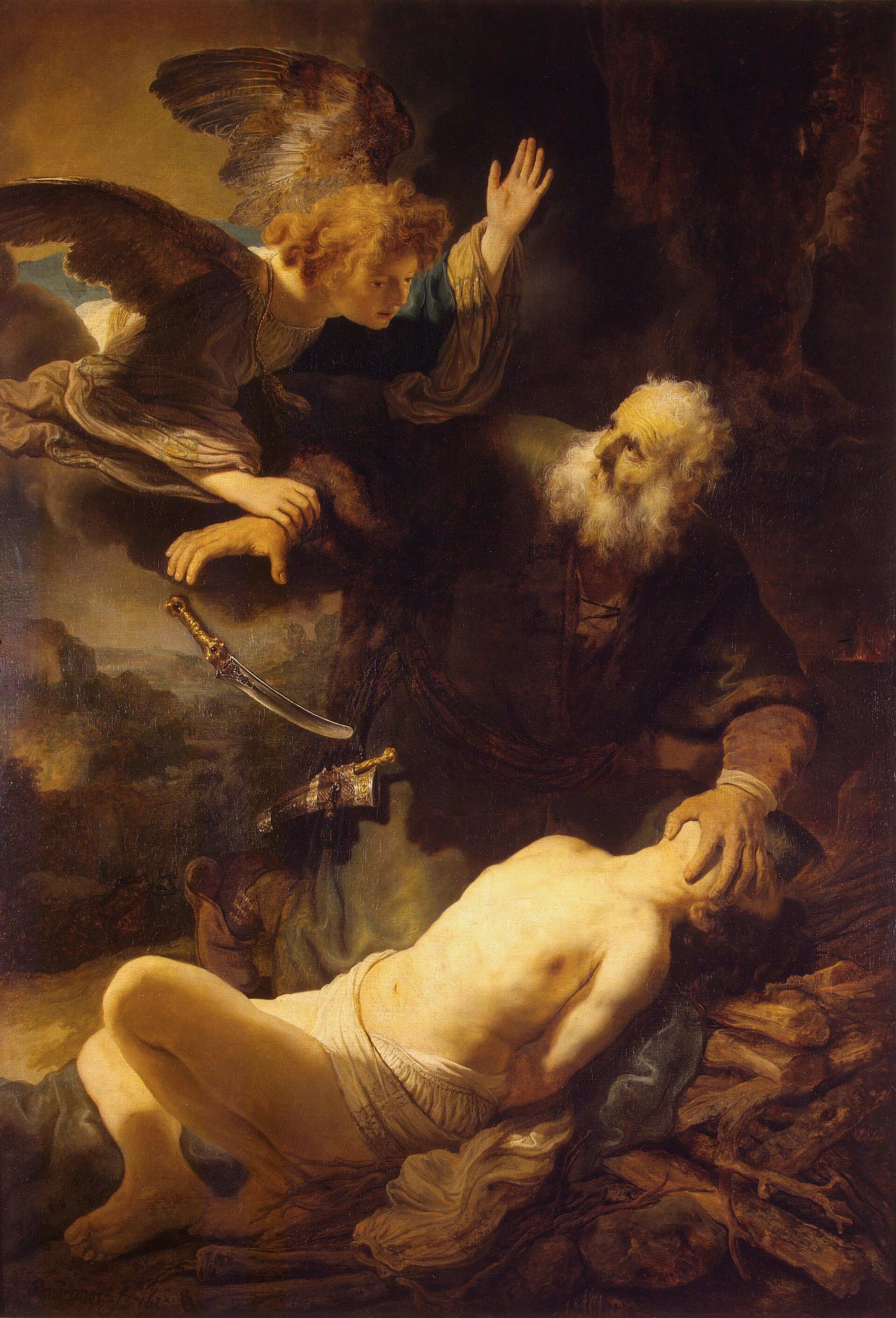
Abraham and Isaac — Rembrandt
Summary
Abraham, originally Abram, was called by God to leave his homeland for an unknown land. His faith in God's impossible promises made him the father of all who believe, and through his seed all nations would be blessed.
- Abraham left Ur and Haran at seventy-five for a land he had never seen, on a promise that every family on earth would be blessed through him.
- Genesis 15:6 says he believed the LORD and it was credited to him as righteousness, and the New Testament builds justification by faith on that verse.
- God cut the covenant of Genesis 15 alone, passing between the pieces while Abram slept, so its keeping never rested on Abram.
- The same book records the sister lie twice and the taking of Hagar, and it softens neither.
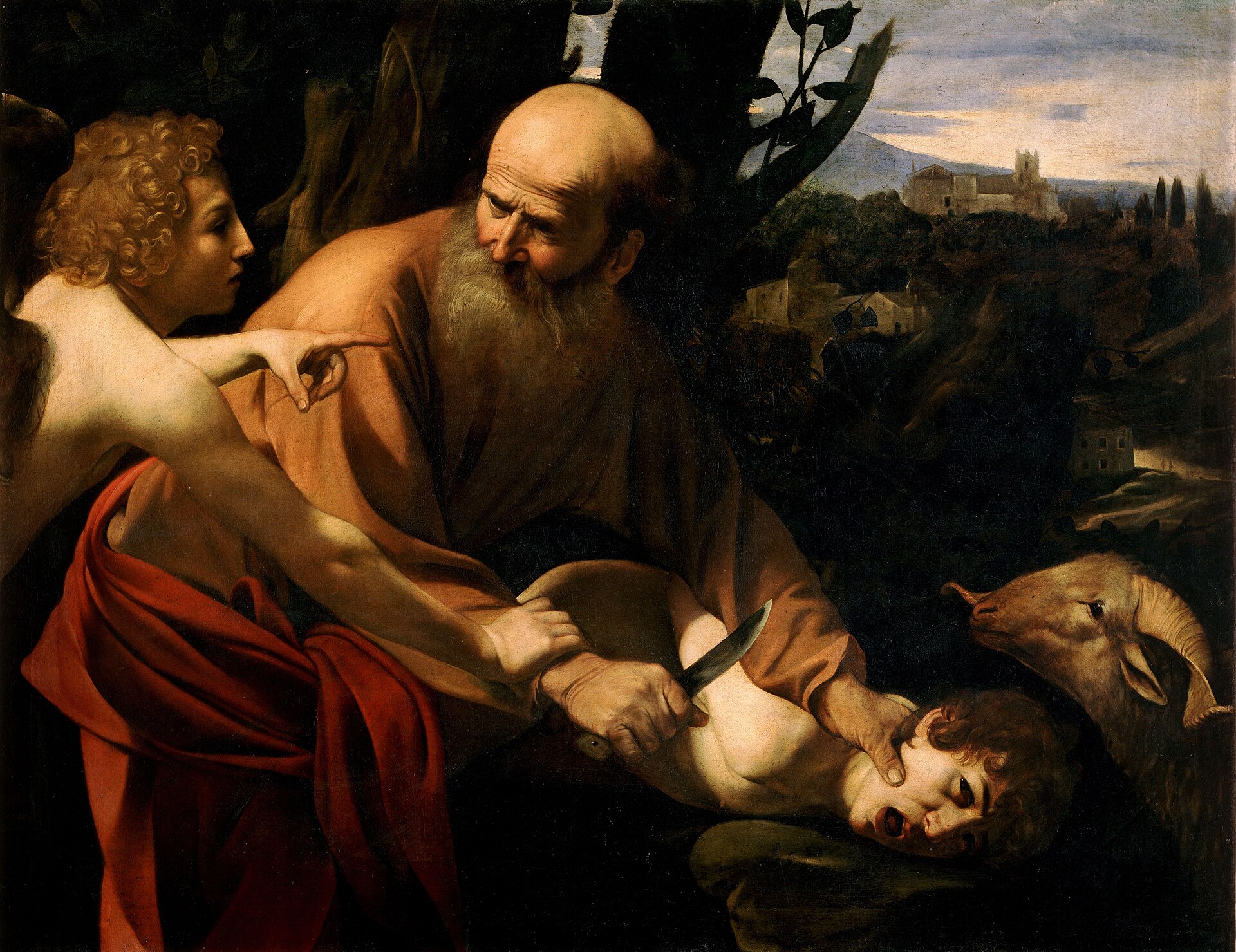
- On Moriah he raised the knife over Isaac, the angel stopped his hand, and a ram died in his son's place.
On this page
Start here
Abram believed the LORD, and it was credited to him as righteousness.
Genesis 15:6→- 6 key events in order
- 246 verses name Abraham, across 27 books
In Scripture
- Verses
- 246
- Books
- 27
Abraham
- Role
- Father of Faith
- Era
- Patriarchal
- Dates
- c. 2166-1991 BC
- Tribe
- Chaldean (later Hebrew)
- Father
- Terah
- Mother
- Unknown
- Spouse
- Sarah
- Children
- Ishmael, Isaac
The life in order
in the order the canon tells it
- Terah takes the family out of Ur, and they stop at HaranGenesis 11:31And Terah took his son Abram, his grandson Lot son of Haran, and his daughter-in-law Sarai the wife of Abram, and they set out from Ur of the Chaldeans for the land of Canaan. But when they arrived in Haran, they settled there.
- The call: leave your country and goGenesis 12:1Then the LORD said to Abram, “Leave your country, your kindred, and your father’s household, and go to the land I will show you.
- He departs at seventy-fiveGenesis 12:4So Abram departed, as the LORD had directed him, and Lot went with him. Abram was seventy-five years old when he left Haran.
- The first altar in the land, at ShechemGenesis 12:7Then the LORD appeared to Abram and said, “I will give this land to your offspring.” So Abram built an altar there to the LORD, who had appeared to him.
- The sister lie in EgyptGenesis 12:13Please say you are my sister, so that I will be treated well for your sake, and on account of you my life will be spared.”
- He gives Lot the first choice of the landGenesis 13:9Is not the whole land before you? Now separate yourself from me. If you go to the left, I will go to the right; if you go to the right, I will go to the left.”
- He gives Melchizedek a tenth of everythingGenesis 14:20and blessed be God Most High, who has delivered your enemies into your hand.” Then Abram gave Melchizedek a tenth of everything.
- Taken outside to count the starsGenesis 15:5And the LORD took him outside and said, “Now look to the heavens and count the stars, if you are able.” Then He told him, “So shall your offspring be.”
- He believed, and it was credited to him as righteousnessGenesis 15:6Abram believed the LORD, and it was credited to him as righteousness.
- The firepot and the torch pass between the pieces aloneGenesis 15:17When the sun had set and darkness had fallen, behold, a smoking firepot and a flaming torch appeared and passed between the halves of the carcasses.
- He listens to the voice of Sarai and takes HagarGenesis 16:2So Sarai said to Abram, “Look now, the LORD has prevented me from bearing children. Please go to my maidservant; perhaps I can build a family by her.” And Abram listened to the voice of Sarai.
- Abram becomes AbrahamGenesis 17:5No longer will you be called Abram, but your name will be Abraham, for I have made you a father of many nations.
- He obeys the circumcision command the same day, at ninety-nineGenesis 17:23On that very day Abraham took his son Ishmael and all those born in his household or purchased with his money—every male among the members of Abraham’s household—and he circumcised them, just as God had told him.
- He argues with God for SodomGenesis 18:23Abraham stepped forward and said, “Will You really sweep away the righteous with the wicked?
- The same lie again, at GerarGenesis 20:2Abraham said of his wife Sarah, “She is my sister.” So Abimelech king of Gerar had Sarah brought to him.
- Isaac is born, and Abraham is a hundredGenesis 21:5Abraham was a hundred years old when his son Isaac was born to him.
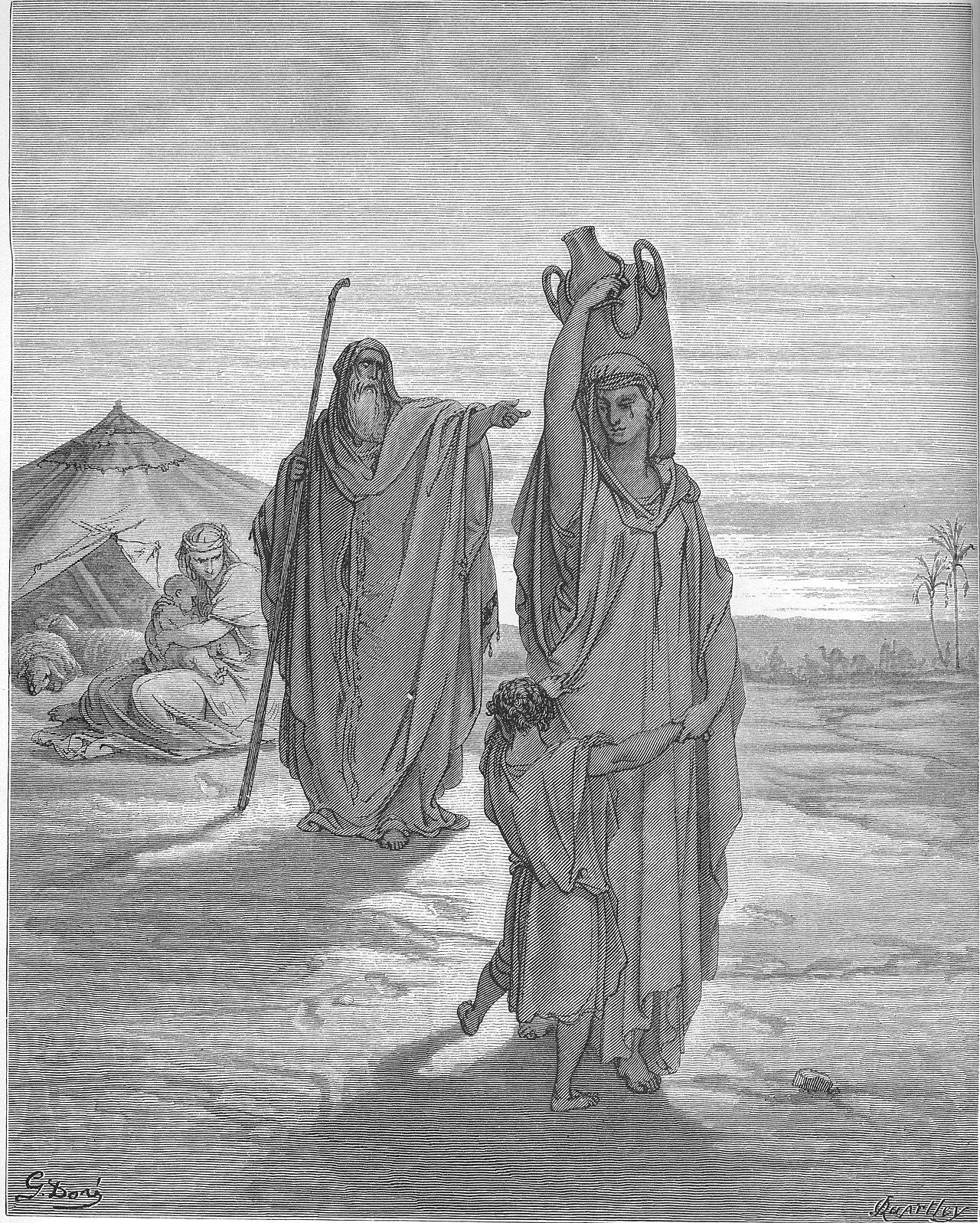
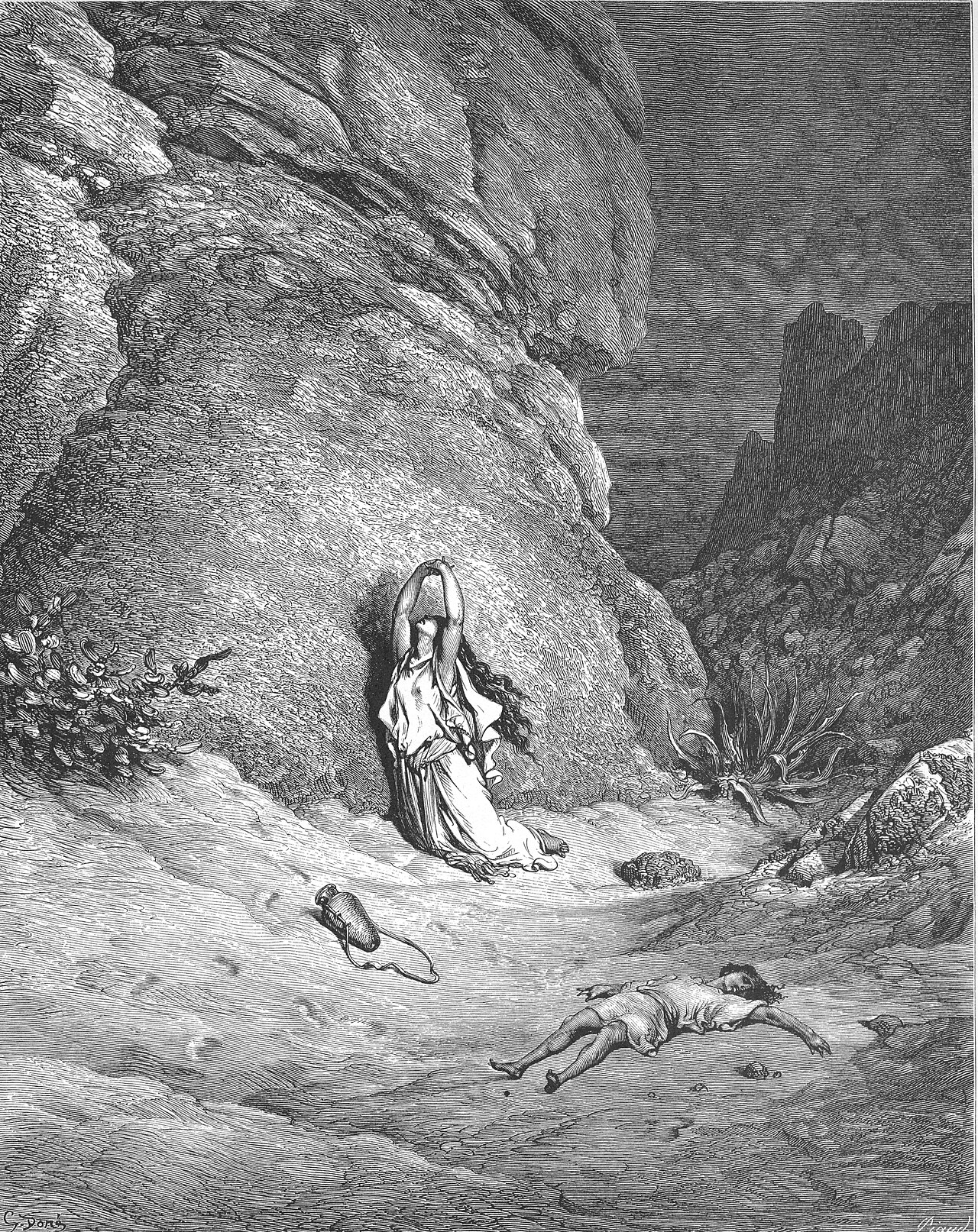
- Hagar and Ishmael are sent away, with a promise attachedGenesis 21:12But God said to Abraham, “Do not be distressed about the boy and your maidservant. Listen to everything that Sarah tells you, for through Isaac your offspring will be reckoned.
- After Moriah, God swears by HimselfGenesis 22:16saying, “By Myself I have sworn, declares the LORD, that because you have done this and have not withheld your only son,
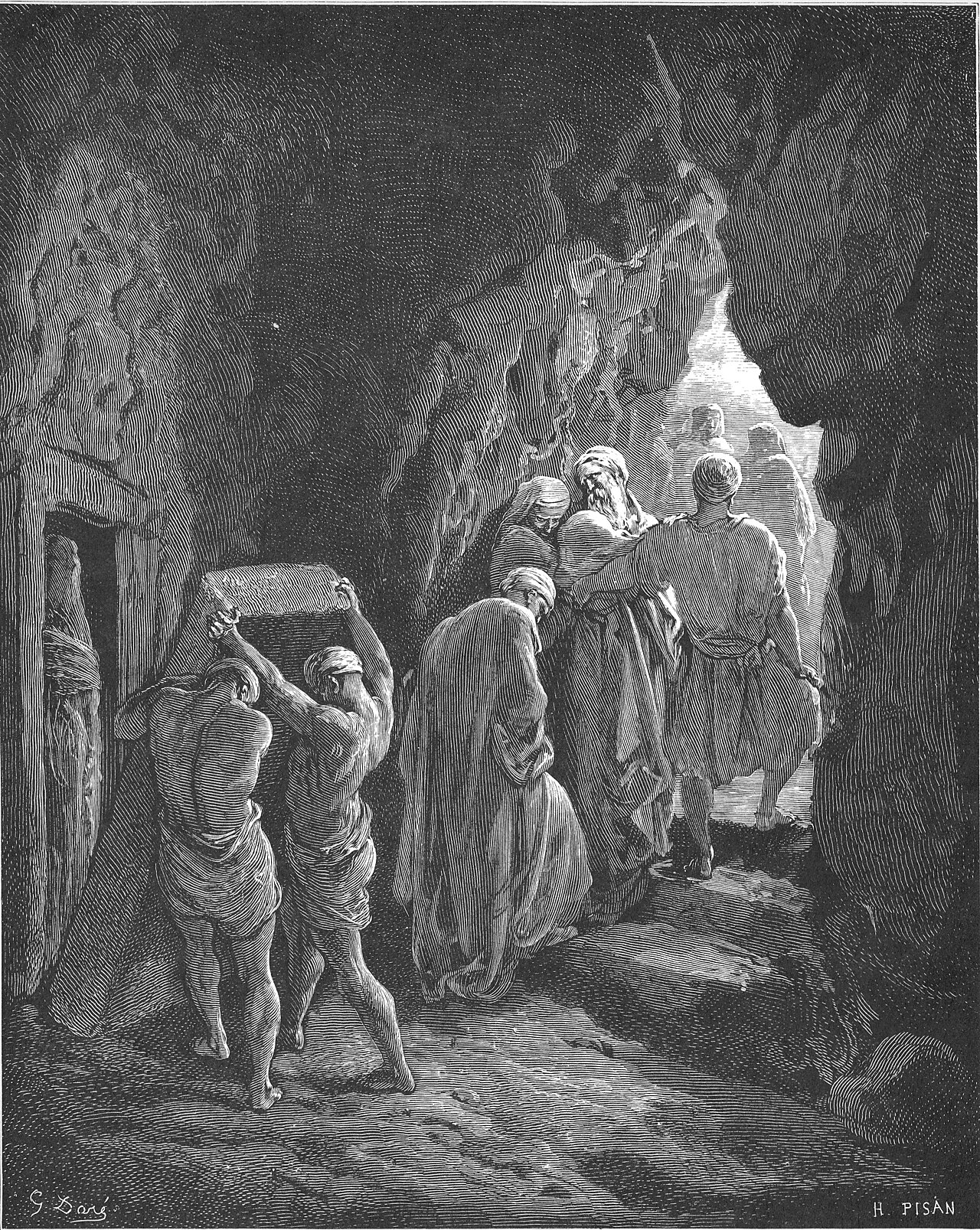
- He weighs out four hundred shekels for a burial caveGenesis 23:16Abraham agreed to Ephron’s terms and weighed out for him the price he had named in the hearing of the Hittites: four hundred shekels of silver, according to the standard of the merchants.
- Isaac and Ishmael bury him at MachpelahGenesis 25:9His sons Isaac and Ishmael buried him in the cave of Machpelah near Mamre, in the field of Ephron son of Zohar the Hittite.
Why Abraham matters
Abraham is the man God called out of a Mesopotamian city and made the head of a family through which He promised to bless every nation on earth. He was born Abram, son of Terah, in Ur of the Chaldeans. He went on to Canaan at seventy-five on a word and nothing else, and he lived there for a hundred years as a foreigner in tents. The promise was land and offspring, and for twenty-five years neither one arrived. Sarai was barren. Abram was seventy-five at the call and a hundred when Isaac was born. Genesis spends those years on a man waiting, and it records what the waiting did to him. What he got right is in the text. He went without being told where. He built altars and called on the name of the LORD at every place he stopped. He gave Lot the first choice of the land. He refused the king of Sodom's money so that no pagan king could ever say he had made Abram rich. He argued with God for a city that had nothing to do with him, six times, from fifty righteous men down to ten. What he got wrong is in the same text. Twice he told a king that Sarah was his sister to save his own life, once in Egypt and once at Gerar, and at Gerar he admitted it had been a standing arrangement since the day they first set out. He took Hagar at Sarai's suggestion, and Genesis 16:2 marks the decision in one line: "And Abram listened to the voice of Sarai." Then he handed a pregnant woman back to a mistress who was mistreating her, and she ran. Genesis 15:6 is the verse the New Testament builds on. Abram believed the LORD, and it was credited to him as righteousness. Paul's argument in Romans 4 turns on when that was said. It was said before the circumcision of Genesis 17, which is why Abraham is the father of believing Gentiles as well as of the circumcised. The one story he is known for is Genesis 22. God tells him to take Isaac into the land of Moriah and offer him on a mountain there. He goes, the angel of the LORD stops his hand, and a ram caught in a thicket dies in the son's place. That is where the New Testament goes when it wants a picture of a father who did not spare his own son. He died at a hundred and seventy-five and was buried by Isaac and Ishmael together, in the only piece of ground he ever owned. The whole land had been promised to him. He paid four hundred shekels of silver in public for a grave. Hebrews 11 reads that as a man who was waiting for a different city.
Biography
Abraham, originally named Abram, was called by God to leave his country, his kindred, and his father's house to journey to an unknown land. This call, received in Ur of the Chaldeans and confirmed in Haran, began the story of Israel and established the pattern of faith as obedient response to God's word. God's promises to Abraham were threefold: land, descendants, and blessing to all nations. These promises seemed impossible—Abraham was seventy-five when called and had no children, yet God promised offspring as numerous as the stars. Abraham "believed the LORD, and he counted it to him as righteousness"—the foundational text for the doctrine of justification by faith. Abraham's journey tested his faith repeatedly. In Egypt, he compromised by claiming Sarah was his sister. He attempted to fulfill God's promise through Hagar, producing Ishmael. Yet his faith grew through each test. When three visitors announced Sarah would bear a son within a year, Abraham believed despite being nearly one hundred years old. The supreme test came when God commanded Abraham to sacrifice Isaac—the son of promise, the miracle child through whom the promises would be fulfilled. Abraham's obedience to this terrible command demonstrated the depth of his faith. He reasoned that God could raise the dead, and he told Isaac that God would provide the lamb. At the crucial moment, God stopped Abraham's hand and provided a ram instead. Abraham died at 175 years old, the friend of God, having seen the beginning of God's fulfillment. Though he possessed only a burial cave in Canaan, he died in faith, looking for a city whose builder and maker is God.
Abram believed the LORD, and it was credited to him as righteousness.
Faith was counted to him as righteousness
Moriah: the binding of Isaac
Genesis 22, in the order it happens
- God tests him, and he answersGenesis 22:1Some time later God tested Abraham and said to him, “Abraham!” “Here I am,” he answered.
- Take your son, your only sonGenesis 22:2“Take your son,” God said, “your only son Isaac, whom you love, and go to the land of Moriah. Offer him there as a burnt offering on one of the mountains, which I will show you.”
- He gets up early and splits the woodGenesis 22:3So Abraham got up early the next morning, saddled his donkey, and took along two of his servants and his son Isaac. He split the wood for a burnt offering and set out for the place God had designated.
- We will return to youGenesis 22:5“Stay here with the donkey,” Abraham told his servants. “The boy and I will go over there to worship, and then we will return to you.”
- The son carries the woodGenesis 22:6Abraham took the wood for the burnt offering and placed it on his son Isaac. He himself carried the fire and the sacrificial knife, and the two of them walked on together.
- Where is the lamb, and the answerGenesis 22:7-8Then Isaac said to his father Abraham, “My father!” “Here I am, my son,” he replied. “The fire and the wood are here,” said Isaac, “but where is the lamb for the burnt offering?” Abraham answered, “God Himself will provide the lamb for the burnt offering, my son.” And the two walked on together.
- The altar, the binding, the knifeGenesis 22:9-10When they arrived at the place God had designated, Abraham built the altar there and arranged the wood. He bound his son Isaac and placed him on the altar, atop the wood. Then Abraham reached out his hand and took the knife to slaughter his son.
- The angel of the LORD stops his handGenesis 22:12“Do not lay a hand on the boy or do anything to him,” said the angel, “for now I know that you fear God, since you have not withheld your only son from me.”
- A ram caught by its horns, offered in his placeGenesis 22:13Then Abraham looked up and saw behind him a ram in a thicket, caught by its horns. So he went and took the ram and offered it as a burnt offering in place of his son.
- He names the place The LORD Will ProvideGenesis 22:14And Abraham called that place The LORD Will Provide. So to this day it is said, “On the mountain of the LORD it will be provided.”
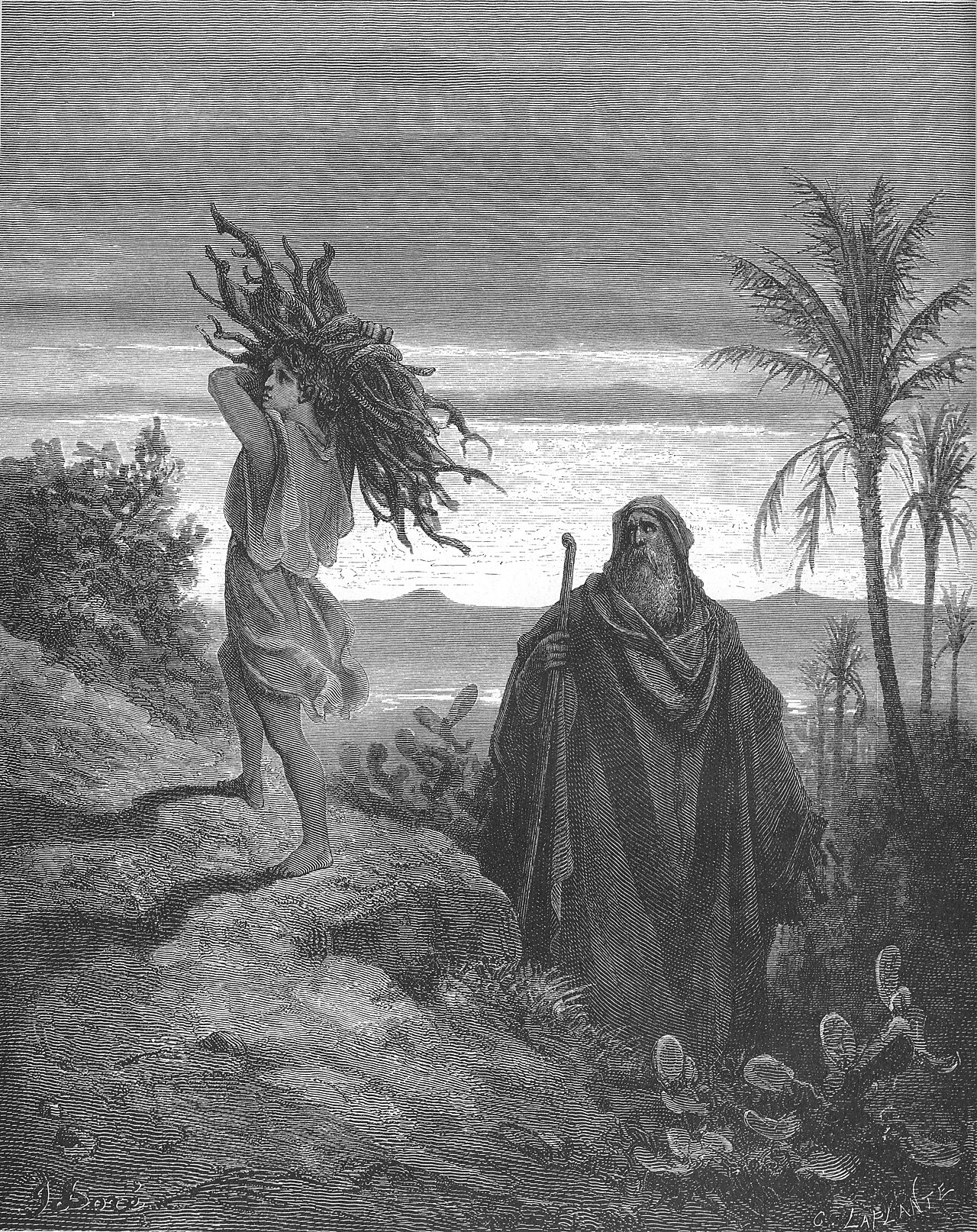
Abraham told his servants at 22:5 that both of them would come back, and told Isaac at 22:8 that God would provide the lamb. Hebrews 11:19 says he reasoned that God could raise the dead. Genesis never gives Isaac's age anywhere in the chapter; the questions below set out the evidence and the positions.
The Aqedah: the full studyKey events
- 1Called from UrGenesis 12:1-3→
God called Abram to leave his homeland with promises of blessing
Read the verse here
Genesis 12:1-3Then the LORD said to Abram, “Leave your country, your kindred, and your father’s household, and go to the land I will show you.
- 2Promise of descendantsGenesis 15:5-6→
God promised offspring like the stars; Abram believed and was counted righteous
Read the verse here
Genesis 15:5-6And the LORD took him outside and said, “Now look to the heavens and count the stars, if you are able.” Then He told him, “So shall your offspring be.”
- 3Covenant ceremonyGenesis 15:7-21→
God made a covenant, passing between the pieces alone
Read the verse here
Genesis 15:7-21The LORD also told him, “I am the LORD, who brought you out of Ur of the Chaldeans to give you this land to possess.”
- 4Circumcision covenantGenesis 17:1-14→
God established circumcision as the covenant sign; Abram became Abraham
Read the verse here
Genesis 17:1-14When Abram was ninety-nine years old, the LORD appeared to him and said, “I am God Almighty. Walk before Me and be blameless.
- 5Isaac's birthGenesis 21:1-7→
Sarah bore Isaac when Abraham was 100 years old
Read the verse here
Genesis 21:1-7Now the LORD attended to Sarah as He had said, and the LORD did for Sarah what He had promised.
- 6Binding of IsaacGenesis 22:1-19→
Abraham's faith was tested when commanded to sacrifice Isaac
Read the verse here
Genesis 22:1-19Some time later God tested Abraham and said to him, “Abraham!” “Here I am,” he answered.
More key verses
Text: Berean Standard Bible.
For what does the Scripture say? “Abraham believed God, and it was credited to him as righteousness.”
“By faith Abraham, when called to go to a place he would later receive as his inheritance, obeyed and went, without knowing where he was going.”
What they got right, and what they got wrong
Strengths
Believed God against impossible odds, obeyed immediately when called, generous toward Lot, intercessory prayer for Sodom, willing to sacrifice Isaac
Weaknesses
Lied about Sarah being his wife, took Hagar to produce an heir, sometimes acted in fear rather than faith
Lessons
Faith involves trusting God against impossible odds. Obedience follows genuine faith. God's timing is not ours. Human schemes cannot accomplish divine purposes.
Spiritual significance
Abraham is the paradigm of saving faith—believing God against all natural evidence and being counted righteous. His story establishes that salvation has always been by grace through faith, not by works.
How Abraham points to Jesus
Genesis 22:12 has the angel say that Abraham had not withheld his only son, and 22:16 repeats it. Romans 8:32 uses the same construction of God, who did not spare His own Son but gave Him up for us all. Origen of Alexandria set the two side by side in a homily delivered at Caesarea in the middle of the third century and named the difference in one sentence: Abraham offered a mortal son who was not put to death, and God delivered an immortal Son to death. The reading does not make Abraham resemble God in strength. It makes the point that Abraham was stopped and God was not. Genesis 22:6 puts the wood for the burnt offering on Isaac's back, and John 19:17 has Jesus carrying His own cross. Clement of Alexandria drew that line at the end of the second century, and Origen worked it further: carrying the wood for a burnt offering is a priest's duty, so Isaac stands as victim and priest at once. John Wesley said the same in one sentence in 1765. These are readings offered by named men, presented as readings, and Genesis does not make the claim about itself. Genesis 22:13 says the ram was offered "in place of his son." The Hebrew behind that phrase is tachath, the same word Judah uses at Genesis 44:33 when he offers himself in place of Benjamin. Substitution is taught here in narrative before it is set out anywhere in law. Abraham said God would provide a lamb and God provided a ram, and John 1:29 answers Isaac's question. Athanasius of Alexandria set the limit that keeps the reading honest in a festal letter in the fourth century: the death of Isaac would not buy freedom for the world, and only the death of the Savior could. Galatians 3:16 reads the promised offspring of Genesis 22:18 as one person and names Him Christ. That thread runs back to Genesis 3:15 and forward into Matthew 1:1, which opens the New Testament by calling Jesus the son of Abraham. Hebrews 7 builds a whole argument on the priest-king who met Abram at Genesis 14:18, a priesthood older than Levi and outside his line. John 8:56 has Jesus say that Abraham rejoiced to see His day, and saw it, and was glad. Irenaeus at the end of the second century and Augustine of Hippo in the early fifth both take that as a real seeing. Jamieson, Fausset and Brown, writing in 1871, tie it to Abraham's own meetings with the Angel of the LORD, which is what calls to him from heaven at Genesis 22:11 and swears by Himself at 22:16. Hebrews 11:9-10 gives the reason he stayed in tents in a land already promised to him. He was looking for the city with foundations, whose architect and builder is God, and that is why the only ground he ever bought was a grave. None of this takes anything from Israel. Romans 11:1 asks whether God rejected His people and answers no. Romans 11:18 tells the grafted Gentile not to boast over the branches, because he does not support the root; the root supports him. Romans 11:29 says God's gifts and His call are irrevocable. Genesis 17:7-8 gives the covenant and the land to Abraham's descendants as an everlasting covenant and an eternal possession, and 2 Chronicles 20:7 says God gave that land to the descendants of Abraham His friend forever. Being a child of Abraham by faith means being brought into a promise that was already made, and not taking it from anyone. This site's tradition holds that God's promises to Israel stand.
Abraham offering Isaac prefigures the Father offering the Son. Isaac carrying wood prefigures Christ carrying the cross. The ram caught in thorns prefigures Christ as our substitute, crowned with thorns.
The voices
each quoted from the work named
Abraham, styled "the friend," [Isaiah 41:8] was found faithful, inasmuch as he rendered obedience to the words of God. He, in the exercise of obedience, went out from his own country, and from his kindred, and from his father's house, in order that, by forsaking a small territory, and a weak family, and an insignificant house, he might inherit the promises of God. For God said to him, "Get you out from your country, and from your kindred, and from your father's house, into the land which I shall show you. And I will make you a great nation, and will bless you, and make your name great, and you shall be blessed. And I will bless them that bless you, and curse them that curse you; and in you shall all the families of the earth be blessed." [Genesis 12:1-3] And again, on his departing from Lot, God said to him, "Lift up your eyes, and look from the place where you now are, northward, and southward, and eastward, and westward; for all the land which you see, to you will I give it, and to your seed forever. And I will make your seed as the dust of the earth, [so that] if a man can number the dust of the earth, then shall your seed also be numbered." [Genesis 13:14-16] And again [the Scripture] says, "God brought forth Abram, and spoke unto him, Look up now to heaven, and count the stars if you are able to number them; so shall your seed be. And Abram believed God, and it was counted to him for righteousness." [Genesis 15:5-6] On account of his faith and hospitality, a son was given him in his old age; and in the exercise of obedience, he offered him as a sacrifice to God on one of the mountains which He showed him.
But grant that these words are spoken to Abraham, and he is said to fear God. Why? Because he did not spare his son. But let us compare these words with those of the apostle, where he says of God: "who spared not his own Son but delivered him up for us all." Behold God contending with people in magnificent generosity: Abraham offered God a mortal son who was not put to death; God delivered to death an immortal Son for humanity.
Thus the sacrifice was not for the sake of Isaac but for that of Abraham, who was tested by being called upon to make this offering. And of course, God accepted his intentions, but he prevented him from slaying Isaac. The death of Isaac would not buy freedom for the world. No, that could be accomplished only by the death of our Savior, by whose stripes we are all healed.
4 more teachers on these versesAmbrose of Milan · John Wesley · Adam Clarke · Charles Spurgeon
And how did Abraham's progeny spread? Only through the inheritance he transmitted in virtue of faith. On this basis the faithful are assimilated to heaven, made comparable to the angels, equal to the stars. This is why he said, "So will your descendants be. And Abraham," the text says, "believed in God." What exactly did he believe? Prefiguratively he believed that Christ through the incarnation would become his heir. In order that you may know that this was what he believed, the Lord says, "Abraham saw my day and rejoiced."
Herein, though he may be excused, he cannot be justified; for from the beginning it was not so: and when it was so, it seems to have proceeded from an irregular desire to build up their families, for the speedier peopling of the world.
Took the wood - and laid it upon Isaac - Probably the mountain-top to which they were going was too difficult to be ascended by the ass; therefore either the father or the son must carry the wood, and it was most becoming in the latter.
I believe that the Truth of God contained in the expression, "Jehovah-jireh," was ruling Abraham's thoughts long before he uttered it and appointed it to be the memorial name of the place where the Lord had provided a substitute for Isaac. It was this thought, I think, which enabled him to act as promptly as he did under the trying circumstances. His reason whispered within him, "If you slay your son, how can God keep His promise to you that your seed shall be as many as the stars of Heaven?"
Abraham in Scripture
Open a book to read its mentions here. Text: Berean Standard Bible. Names repeat in Scripture, so some of these verses may speak of another person called Abraham. The two marks are drawn from the chapters this page's own references stand in.
Old TestamentNew Testamentsegment width = share of mentions
Old Testament16 books · 168 mentions
Genesis126 mentions
- Genesis 17:5No longer will you be called Abram, but your name will be Abraham, for I have made you a father of many nations.
- Genesis 17:9God also said to Abraham, “You must keep My covenant—you and your descendants in the generations after you.
- Genesis 17:15Then God said to Abraham, “As for Sarai your wife, do not call her Sarai, for her name is to be Sarah.
- Genesis 17:17Abraham fell facedown. Then he laughed and said to himself, “Can a child be born to a man who is a hundred years old? Can Sarah give birth at the age of ninety?”
- Genesis 17:18And Abraham said to God, “O that Ishmael might live under Your blessing!”
121 further mentions in Genesis, read them in the book.
Exodus9 mentions
- Exodus 2:24So God heard their groaning, and He remembered His covenant with Abraham, Isaac, and Jacob.
- Exodus 3:6Then He said, “I am the God of your father, the God of Abraham, the God of Isaac, and the God of Jacob.” At this, Moses hid his face, for he was afraid to look at God.
- Exodus 3:15God also told Moses, “Say to the Israelites, ‘The LORD, the God of your fathers—the God of Abraham, the God of Isaac, and the God of Jacob—has sent me to you.’ This is My name forever, and this is how I am to be remembered in every generation.
- Exodus 3:16Go, assemble the elders of Israel and say to them, ‘The LORD, the God of your fathers—the God of Abraham, Isaac, and Jacob—has appeared to me and said: I have surely attended to you and have seen what has been done to you in Egypt.
- Exodus 4:5“This is so that they may believe that the LORD, the God of their fathers—the God of Abraham, the God of Isaac, and the God of Jacob—has appeared to you.”
4 further mentions in Exodus, read them in the book.
Leviticus1 mention
Numbers1 mention
Deuteronomy7 mentions
- Deuteronomy 1:8See, I have placed the land before you. Enter and possess the land that the LORD swore He would give to your fathers Abraham, Isaac, and Jacob, and to their descendants after them.”
- Deuteronomy 6:10And when the LORD your God brings you into the land He swore to your fathers, to Abraham, Isaac, and Jacob, that He would give you—a land with great and splendid cities that you did not build,
- Deuteronomy 9:5It is not because of your righteousness or uprightness of heart that you are going in to possess their land, but it is because of their wickedness that the LORD your God is driving out these nations before you, to keep the promise He swore to your fathers, to Abraham, Isaac, and Jacob.
- Deuteronomy 9:27Remember Your servants Abraham, Isaac, and Jacob. Overlook the stubbornness of this people and the wickedness of their sin.
- Deuteronomy 29:13and so that He may establish you today as His people, and He may be your God as He promised you and as He swore to your fathers, to Abraham, Isaac, and Jacob.
2 further mentions in Deuteronomy, read them in the book.
Joshua2 mentions
- Joshua 24:2And Joshua said to all the people, “This is what the LORD, the God of Israel, says: ‘Long ago your fathers, including Terah the father of Abraham and Nahor, lived beyond the Euphrates and worshiped other gods.
- Joshua 24:3But I took your father Abraham from beyond the Euphrates and led him through all the land of Canaan, and I multiplied his descendants. I gave him Isaac,
1 Kings1 mention
2 Kings1 mention
1 Chronicles6 mentions
- 1 Chronicles 1:27and Abram (that is, Abraham).
- 1 Chronicles 1:28The sons of Abraham were Isaac and Ishmael.
- 1 Chronicles 1:32The sons born to Keturah, Abraham’s concubine: Zimran, Jokshan, Medan, Midian, Ishbak, and Shuah. The sons of Jokshan: Sheba and Dedan.
- 1 Chronicles 1:34Abraham was the father of Isaac. The sons of Isaac: Esau and Israel.
- 1 Chronicles 16:16the covenant He made with Abraham, and the oath He swore to Isaac.
1 further mention in 1 Chronicles, read them in the book.
2 Chronicles2 mentions
- 2 Chronicles 20:7Our God, did You not drive out the inhabitants of this land before Your people Israel and give it forever to the descendants of Abraham Your friend?
- 2 Chronicles 30:6So the couriers went throughout Israel and Judah with letters from the king and his officials, which read: “Children of Israel, return to the LORD, the God of Abraham, Isaac, and Israel, so that He may return to those of you who remain, who have escaped the grasp of the kings of Assyria.
Nehemiah1 mention
Psalms4 mentions
- Psalms 47:9The nobles of the nations have assembled as the people of the God of Abraham; for the shields of the earth belong to God; He is highly exalted.
- Psalms 105:6O offspring of His servant Abraham, O sons of Jacob, His chosen ones.
- Psalms 105:9the covenant He made with Abraham, and the oath He swore to Isaac.
- Psalms 105:42For He remembered His holy promise to Abraham His servant.
Isaiah4 mentions
- Isaiah 29:22Therefore the LORD who redeemed Abraham says of the house of Jacob: “No longer will Jacob be ashamed and no more will his face grow pale.
- Isaiah 41:8“But you, O Israel, My servant, Jacob, whom I have chosen, descendant of Abraham My friend—
- Isaiah 51:2Look to Abraham your father, and to Sarah who gave you birth. When I called him, he was but one; then I blessed him and multiplied him.
- Isaiah 63:16Yet You are our Father, though Abraham does not know us and Israel does not acknowledge us. You, O LORD, are our Father; our Redeemer from Everlasting is Your name.
Jeremiah1 mention
Ezekiel1 mention
New Testament11 books · 78 mentions
Matthew6 mentions
- Matthew 1:1This is the record of the genealogy of Jesus Christ, the son of David, the son of Abraham:
- Matthew 1:2Abraham was the father of Isaac, Isaac the father of Jacob, and Jacob the father of Judah and his brothers.
- Matthew 1:17In all, then, there were fourteen generations from Abraham to David, fourteen from David to the exile to Babylon, and fourteen from the exile to the Christ.
- Matthew 3:9And do not presume to say to yourselves, ‘We have Abraham as our father.’ For I tell you that out of these stones God can raise up children for Abraham.
- Matthew 8:11I say to you that many will come from the east and the west to share the banquet with Abraham, Isaac, and Jacob in the kingdom of heaven.
1 further mention in Matthew, read them in the book.
Mark1 mention
Luke15 mentions
- Luke 1:55as He promised to our fathers, to Abraham and his descendants forever.”
- Luke 1:73the oath He swore to our father Abraham, to grant us
- Luke 3:8Produce fruit, then, in keeping with repentance. And do not begin to say to yourselves, ‘We have Abraham as our father.’ For I tell you that out of these stones God can raise up children for Abraham.
- Luke 3:34the son of Jacob, the son of Isaac, the son of Abraham, the son of Terah, the son of Nahor,
- Luke 13:16Then should not this daughter of Abraham, whom Satan has kept bound for eighteen long years, be released from her bondage on the Sabbath day?”
10 further mentions in Luke, read them in the book.
John9 mentions
- John 8:33“We are Abraham’s descendants,” they answered. “We have never been slaves to anyone. How can You say we will be set free?”
- John 8:37I know you are Abraham’s descendants, but you are trying to kill Me because My word has no place within you.
- John 8:39“Abraham is our father,” they replied. “If you were children of Abraham,” said Jesus, “you would do the works of Abraham.
- John 8:40But now you are trying to kill Me, a man who has told you the truth that I heard from God. Abraham never did such a thing.
- John 8:52“Now we know that You have a demon!” declared the Jews. “Abraham died, and so did the prophets, yet You say that anyone who keeps Your word will never taste death.
4 further mentions in John, read them in the book.
Acts10 mentions
- Acts 3:13The God of Abraham, Isaac, and Jacob, the God of our fathers, has glorified His servant Jesus. You handed Him over and rejected Him before Pilate, even though he had decided to release Him.
- Acts 3:25And you are sons of the prophets and of the covenant God made with your fathers when He said to Abraham, ‘Through your offspring all the families of the earth will be blessed.’
- Acts 7:2And Stephen declared: “Brothers and fathers, listen to me! The God of glory appeared to our father Abraham while he was still in Mesopotamia, before he lived in Haran,
- Acts 7:4So Abraham left the land of the Chaldeans and settled in Haran. After his father died, God brought him out of that place and into this land where you are now living.
- Acts 7:5He gave him no inheritance here, not even a foot of ground. But God promised to give possession of the land to Abraham and his descendants, even though he did not yet have a child.
5 further mentions in Acts, read them in the book.
Romans11 mentions
- Romans 4:1What then shall we say that Abraham, our forefather, has discovered?
- Romans 4:2If Abraham was indeed justified by works, he had something to boast about, but not before God.
- Romans 4:3For what does the Scripture say? “Abraham believed God, and it was credited to him as righteousness.”
- Romans 4:9Is this blessing only on the circumcised, or also on the uncircumcised? We have been saying that Abraham’s faith was credited to him as righteousness.
- Romans 4:12And he is also the father of the circumcised who not only are circumcised, but who also walk in the footsteps of the faith that our father Abraham had before he was circumcised.
6 further mentions in Romans, read them in the book.
2 Corinthians1 mention
Galatians9 mentions
- Galatians 3:6So also, “Abraham believed God, and it was credited to him as righteousness.”
- Galatians 3:7Understand, then, that those who have faith are sons of Abraham.
- Galatians 3:8The Scripture foresaw that God would justify the Gentiles by faith, and foretold the gospel to Abraham: “All nations will be blessed through you.”
- Galatians 3:9So those who have faith are blessed along with Abraham, the man of faith.
- Galatians 3:14He redeemed us in order that the blessing promised to Abraham would come to the Gentiles in Christ Jesus, so that by faith we might receive the promise of the Spirit.
4 further mentions in Galatians, read them in the book.
Hebrews13 mentions
- Hebrews 2:16For surely it is not the angels He helps, but the descendants of Abraham.
- Hebrews 6:13When God made His promise to Abraham, since He had no one greater to swear by, He swore by Himself,
- Hebrews 6:15And so Abraham, after waiting patiently, obtained the promise.
- Hebrews 7:1This Melchizedek was king of Salem and priest of God Most High. He met Abraham returning from the slaughter of the kings and blessed him,
- Hebrews 7:2and Abraham apportioned to him a tenth of everything. First, his name means “king of righteousness.” Then also, “king of Salem” means “king of peace.”
8 further mentions in Hebrews, read them in the book.
James2 mentions
Common questions
Why did God ask Abraham to sacrifice his son?
Genesis 22:1 says plainly that God tested him, and Genesis 22:12 gives the result: "now I know that you fear God." The command was stopped before it was carried out, and a ram died in Isaac's place.
Hebrews 11:19 says Abraham reasoned that God could raise the dead, so he was not obeying against the promise but through it. The chapter also does something larger than test one man. It is the first place in Scripture where a father, a beloved only son, a mountain and a substitute stand together, and the New Testament goes back to it again and again.
How old was Isaac on the mountain?
Readers differ; the positions are named
The text never says. The Hebrew word used of him at 22:5 and 22:12 is naar, the same word Genesis uses of Joseph at seventeen in 37:2 and of Benjamin in chapter 44, where he is a grown man with sons of his own. The word covers a wide range of ages and settles nothing on its own.
What the text does give is a ceiling and a load. Sarah dies at 127 in the next chapter and she bore Isaac at ninety, so if the binding sits immediately before Genesis 23 then Isaac was at most thirty-seven. He carried the wood for a burnt offering up a mountain while his father, a hundred and thirty or more, carried the fire and the knife, and he worked out for himself what was missing from the procession.
Three positions are held. A boy, which the word allows and which almost all the art on this page shows. A youth in his teens, which leans on the word at its Joseph range and on the wood. A grown man in his twenties or thirties, with Josephus giving twenty-five directly (Antiquities of the Jews 1.13.2: "Now Isaac was twenty-five years old") and Jewish tradition commonly giving thirty-seven, which is the arithmetic from Genesis 23:1. Adam Clarke reports a late Aramaic targum that puts the words "Behold, I am now thirty-six years old" in Isaac's mouth, and that is a targumic tradition rather than the text of Genesis. This page names the positions and settles none of them.
Was Abraham lying when he told his servants that both of them would come back?
Readers differ; the positions are named
Adam Clarke asks the question directly and does not soften it. How could Abraham say this consistently with truth when he knew what he was going up the mountain to do. Jamieson, Fausset and Brown answer that the words were spoken in ignorance of the outcome and in confidence that the son, though sacrificed, would somehow be restored.
Hebrews 11:19 gives the reasoning behind the confidence: Abraham considered that God was able to raise the dead. Both readings sit in the commentary tradition, and Hebrews weighs heavily for the second.
Did Abraham do wrong when he said Sarah was his sister?
Yes, and Genesis does not hide it. He did it in Egypt at 12:13 and again at Gerar at 20:2, and at 20:13 he admitted it had been a standing arrangement made with Sarah when they first left home.
Both times a pagan king rebuked him and God protected Sarah. That is the point the text is making. The promise was preserved over his failure rather than because of his management. The second time happens after the covenant of Genesis 15, after the name change of Genesis 17, and within a year of Isaac's birth.
Was Abraham wrong to take Hagar?
Genesis 16:2 marks the decision with a sentence about him rather than about Sarai: "And Abram listened to the voice of Sarai." Taking a maidservant for an heir was a normal arrangement in that world. John Wesley drew the line in 1765 and it is the line this page keeps. He may be excused; he cannot be justified.
What follows shows the cost. Hagar despises Sarai, Sarai mistreats Hagar, Hagar runs, and the angel of the LORD finds her at a spring in the desert. She gives God a name that nobody else in Scripture gives Him: "You are the God who sees me." Ishmael is not the mistake. Genesis 17:20 and 21:13 both have God promising to make him a great nation, and 25:9 puts him at his father's graveside beside Isaac.
Where was Ur, and was Abraham really from there?
Readers differ; the positions are named
The majority identification is the southern Mesopotamian city at Tell el-Muqayyar. Alan Millard argued it in Biblical Archaeology Review in 2001 and stated the limit himself: the case is strong, and the available information precludes certainty.
A northern Ur has real defenders. Cyrus Gordon argued in 1958 for the region of Urha, later Edessa, and Hershel Shanks put the northern case to a wide readership in 2000. The argument runs on the family's repeated returns to Haran and to Aram-naharaim in the north.
What nobody disputes is that the family came out of Mesopotamia, moved through Haran, and left for Canaan from there. The site's Ur page carries the whole question, including what Leonard Woolley did and did not claim about the houses he excavated.
What does Jewish tradition say Abraham did in Ur, before Genesis 12?
Readers differ; the positions are named
Genesis itself says almost nothing. Genesis 11:28 records one bare fact: "Haran died in the presence of his father Terah in Ur of the Chaldeans," and gives no cause. Two later Jewish writings fill the silence with different stories, and neither is Scripture.
The book of Jubilees, from the second century BC, says Abram burned his father's house of idols by night, that Haran ran in to save them, and that the fire killed him there in Ur (Jubilees 12:12-14). Genesis Rabbah, a rabbinic commentary compiled centuries later, tells a different and better known story: Nimrod cast Abraham into a fiery furnace for refusing to worship idols or fire, Abraham came out alive, and Haran, who wavered on which side to take, was thrown in after him and died (Genesis Rabbah 38:13). The Mishnah counts this as the first of ten trials Abraham withstood, beginning with Ur and ending on Moriah (Mishnah, Avot 5:3).
Both accounts agree that Abraham broke with his father's idols before God ever called him, and Joshua 24:2 says as much in one line: Terah served other gods beyond the Euphrates. The specific stories are legend built on that verse and on the silence of Genesis 11:28, not the text of Genesis itself.
Where was Moriah?
Readers differ; the positions are named
2 Chronicles 3:1 is the only other place in Scripture that uses the name, and it puts Solomon's temple on Mount Moriah. Josephus states the identification with the temple mount outright, Jerome glosses the name the same way, and the rabbinic tradition is unanimous on it, so that reading leads.
The Samaritan Pentateuch does not read the same word at Genesis 22:2, and the Samaritan tradition puts the binding at Mount Gerizim. Other readers weigh the three days of travel and the wording of 22:2, which speaks of a land and one of its mountains, toward an unidentified site further off. The one place that could settle the question has never been excavated.
What did Jewish writers before the New Testament say about Abraham?
Three works from the Second Temple period name him. They are labeled study resources on this site rather than Scripture, and the text quoted here is the King James Version with Apocrypha.
Sirach, whose Hebrew original is commonly dated to the early second century BC, gives the earliest surviving Jewish summary of the whole life, and it already carries the four pieces the New Testament will use. Sirach 44:19: "Abraham was a great father of many people: in glory was there none like unto him;" Sirach 44:20: "Who kept the law of the most High, and was in covenant with him: he established the covenant in his flesh; and when he was proved, he was found faithful." Sirach 44:21: "Therefore he assured him by an oath, that he would bless the nations in his seed, and that he would multiply him as the dust of the earth, and exalt his seed as the stars, and cause them to inherit from sea to sea, and from the river unto the utmost part of the land."
1 Maccabees, second century BC, has Mattathias on his deathbed read Genesis 15:6 through Genesis 22 in a single line. 1 Maccabees 2:52: "Was not Abraham found faithful in temptation, and it was imputed unto him for righteousness?" That is the same fusion James makes at James 2:21-23, which shows the reading was standard Jewish teaching two centuries before James wrote.
Judith 8:26 remembers the testing with Isaac as its subject rather than as its object: "Remember what things he did to Abraham, and how he tried Isaac, and what happened to Jacob in Mesopotamia of Syria, when he kept the sheep of Laban his mother’s brother." 2 Esdras names him twice. At 3:13 he is the man God chose out of a wicked generation: "Now when they lived so wickedly before thee, thou didst choose thee a man from among them, whose name was Abraham." At 7:36 he is remembered as the first intercessor: "Then said I, Abraham prayed first for the Sodomites, and Moses for the fathers that sinned in the wilderness:"
If Abraham is the father of all who believe, has the church replaced Israel?
No. Romans 11:1 asks the question in the form Paul himself puts it and answers it, "Certainly not!" Romans 11:18 tells the grafted Gentile not to boast over the branches, because he does not support the root; the root supports him. Romans 11:29 says God's gifts and His call are irrevocable.
Genesis 17:7-8 gives the covenant and the land to Abraham's descendants as an everlasting covenant and an eternal possession, and 2 Chronicles 20:7 says God gave that land to the descendants of Abraham His friend forever. Being a child of Abraham by faith means being brought into a promise that was already made, and not taking it from anyone. This site's tradition holds that God's promises to Israel stand.
Notable art
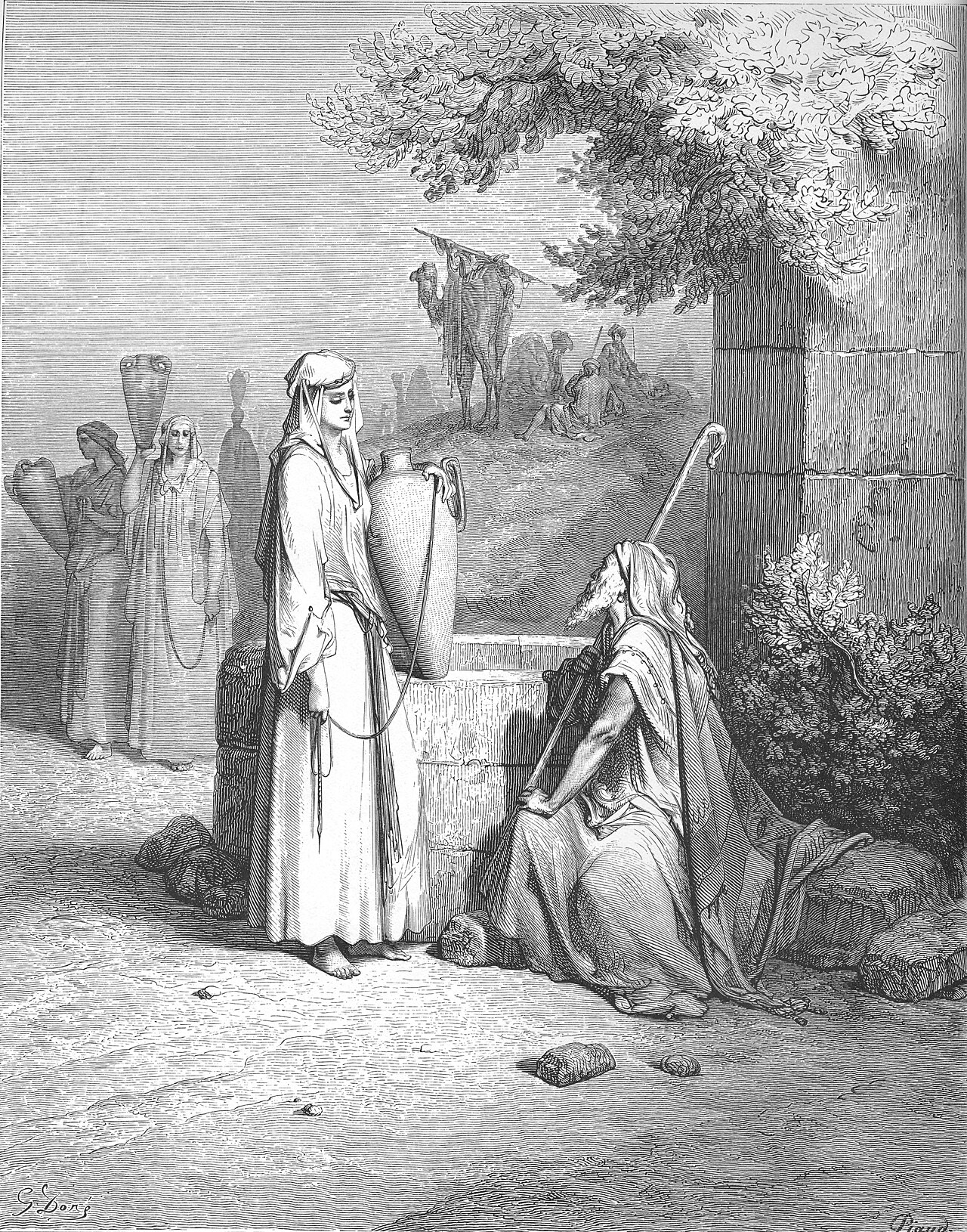
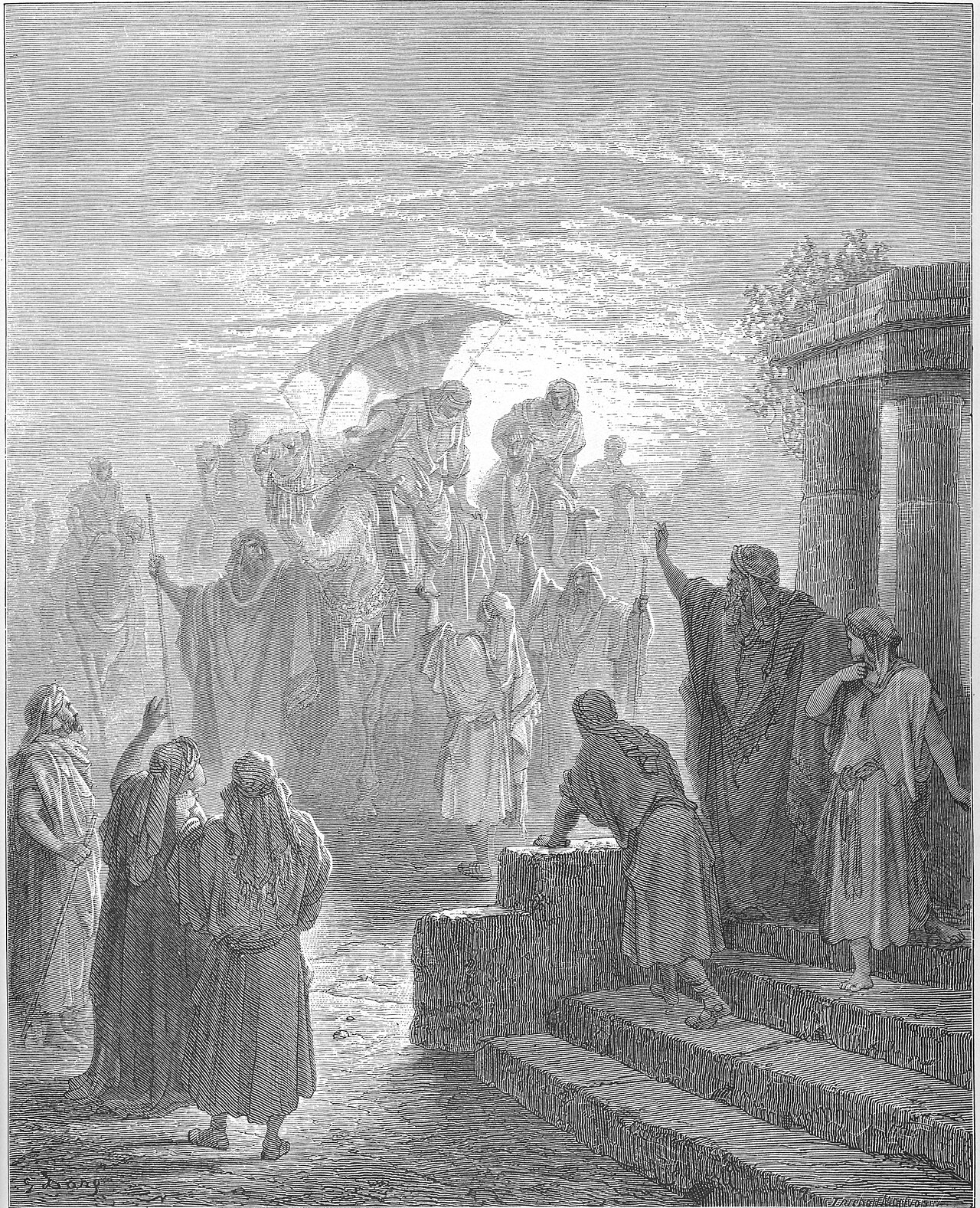
12 verified pieces depicting Abraham
Sources cited
- Berean Standard BibleThe Scripture quoted on this page, byte for byte. Public domain since 2023.
- King James Version with Apocrypha, standardized 1769 text, eBible.org USFX editionThe text of Sirach, 1 Maccabees, Judith and 2 Esdras quoted here. Labeled study resources rather than Scripture. Public domain.
- Clement of Rome, Irenaeus, Clement of Alexandria, Origen, Athanasius and Ambrose, in the Ante-Nicene and Nicene and Post-Nicene FathersThe early Christian readings quoted and named on this page. Public domain, CCEL editions. Where a date is printed it is the date of the work, not the author's death year.
- Augustine of Hippo, Tractates on the Gospel of JohnThe reading of John 8:56 named in where he points. Public domain, CCEL edition.
- John Wesley, Explanatory Notes upon the Old Testament (1765) and upon the New Testament (1755)Quoted on Genesis 16:2 and cited on Genesis 22 and James 2. Public domain.
- Adam Clarke, Commentary on the Bible (1832)Quoted on Genesis 22:6 and cited on Genesis 22:5 and the targumic tradition about Isaac's age. Public domain.
- Jamieson, Fausset & Brown, Commentary Critical and Explanatory on the Whole Bible (1871)Cited on Genesis 22:5 and on John 8:56. Public domain.
- Charles H. Spurgeon, The Metropolitan Tabernacle Pulpit, Sermon No. 1803The Jehovah-Jireh sermon quoted here. Public domain, CCEL edition.
- Alan R. Millard, "Where Was Abraham's Ur? The Case for the Babylonian City," Biblical Archaeology Review 27:3 (2001)The southern identification of Ur, argued with the author's own limit stated.
- Hershel Shanks, "Abraham's Ur: Is the Pope Going to the Wrong Place?", Biblical Archaeology Review 26:1 (2000)The northern case put to a wide readership, which Millard was answering.
- Cyrus H. Gordon, "Abraham and the Merchants of Ura," Journal of Near Eastern Studies 17 (1958)The earlier scholarly statement of the northern position.
- C. Leonard Woolley, Ur of the Chaldees: A Record of Seven Years of Excavation (London: Ernest Benn, 1929)The excavation of the southern city, cited for what its excavator did and did not claim about the houses.
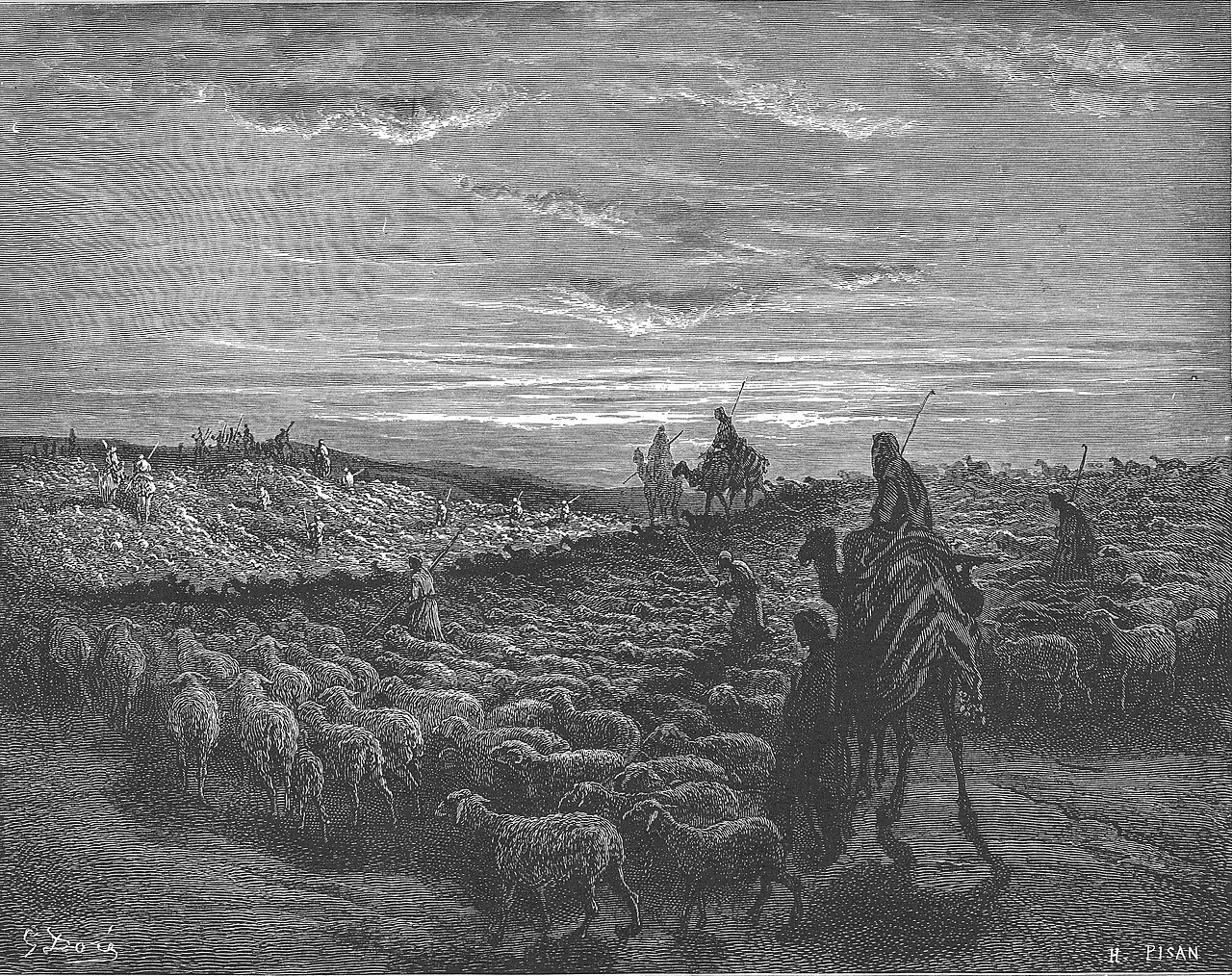
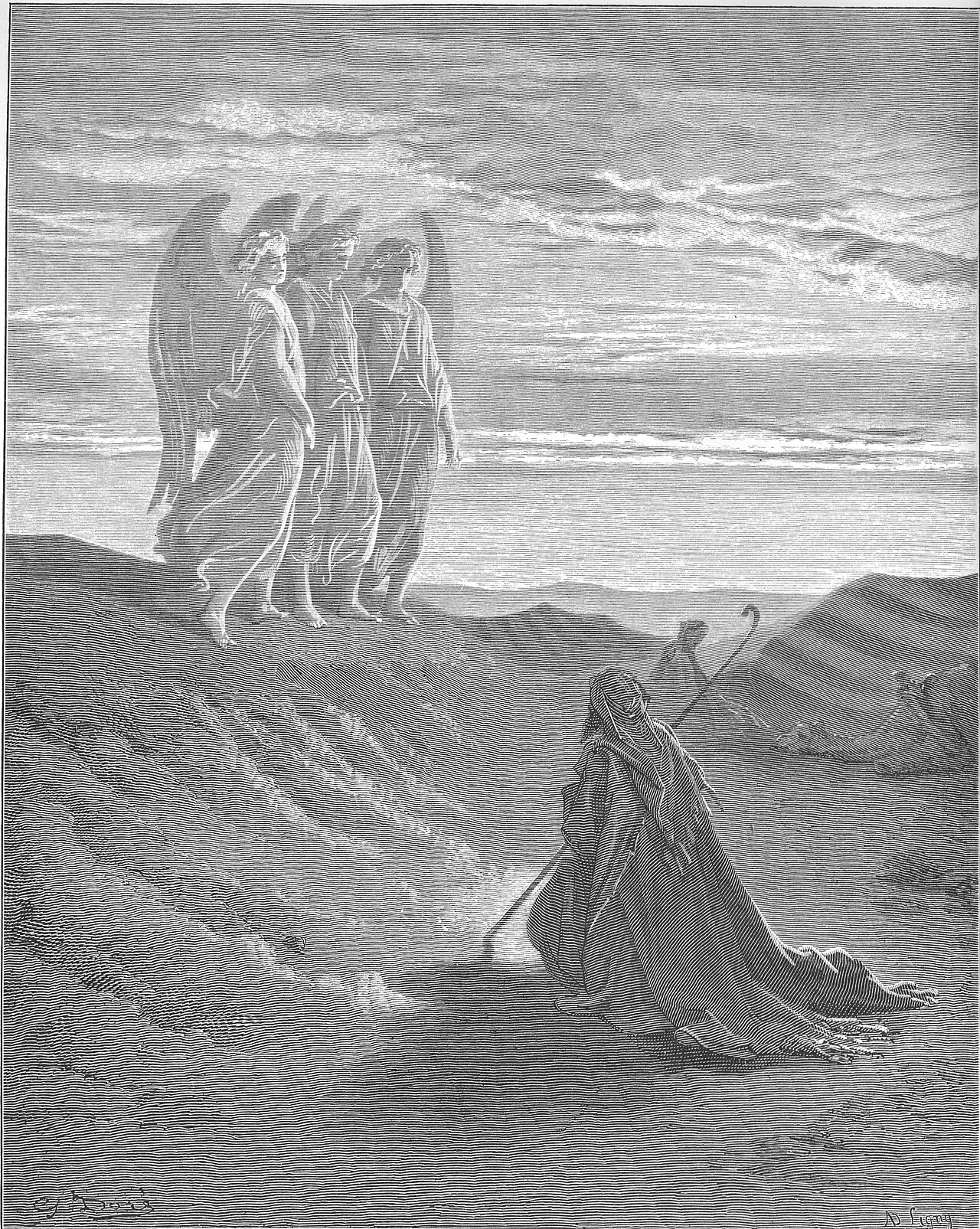
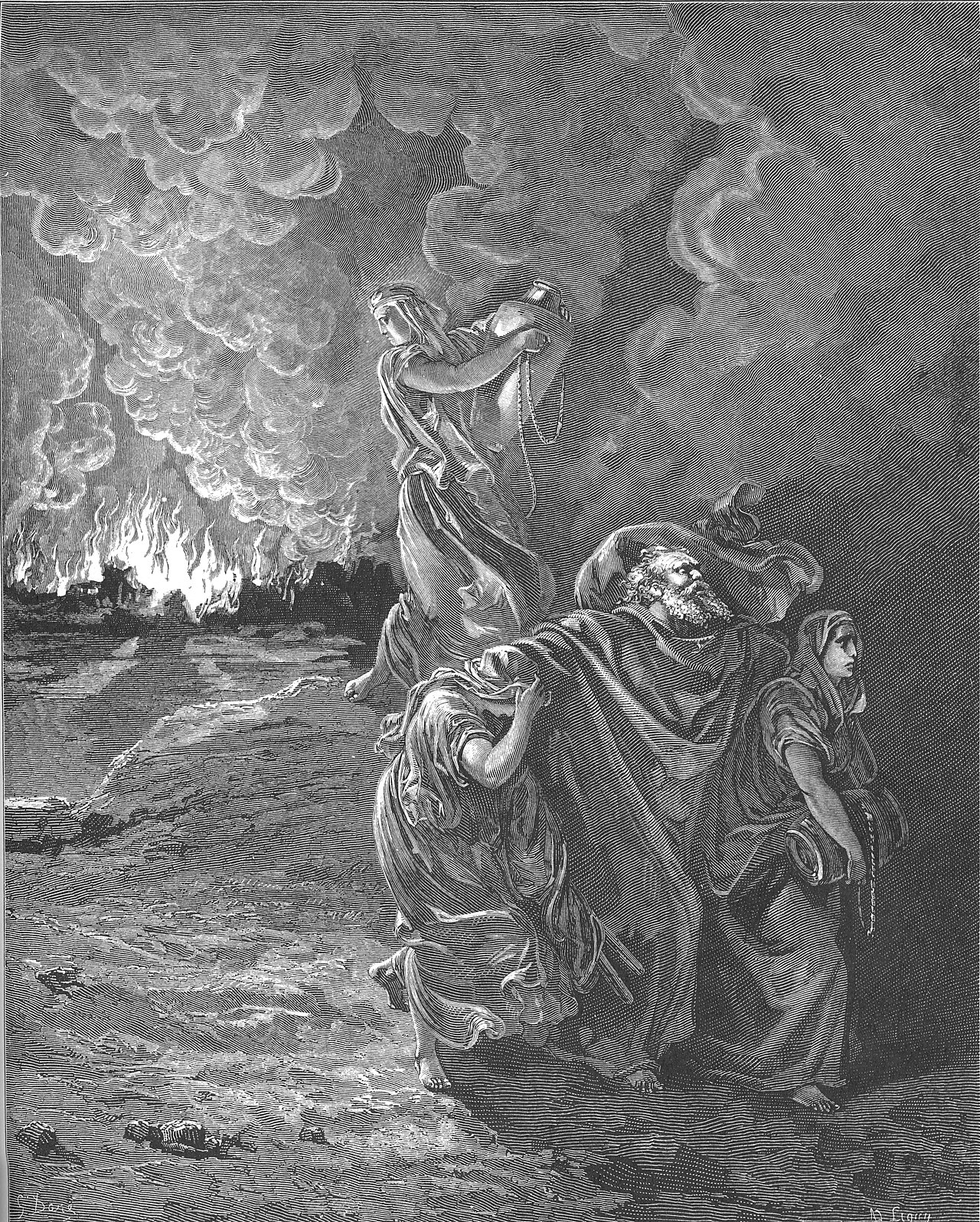
- Gustave Doré, La Sainte Bible (Tours: Alfred Mame et fils, 1866)The nine engravings on this page. Public domain.
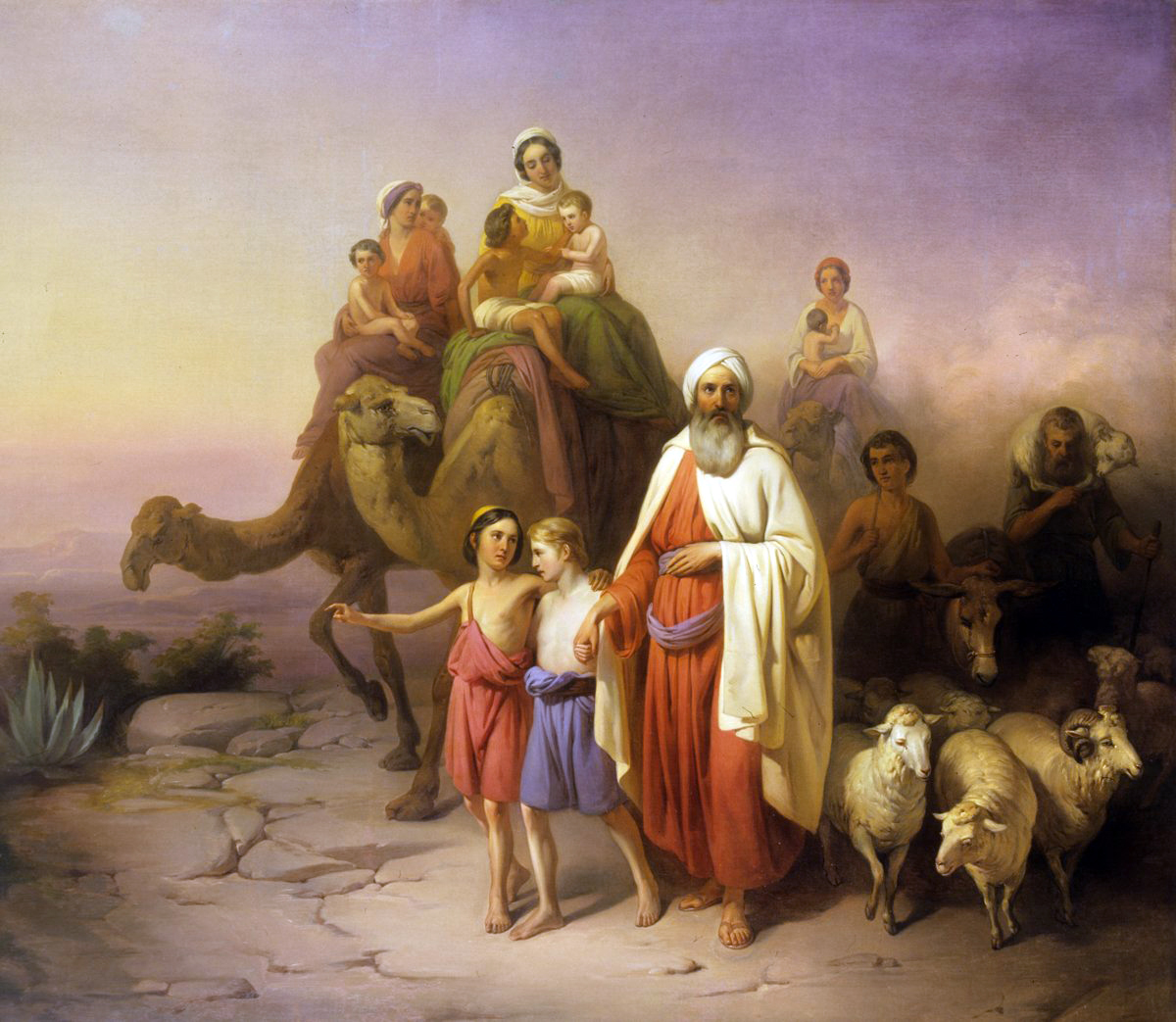
- Wikimedia Commons, for the three paintingsJózsef Molnár, The March of Abraham (1850); Rembrandt, The Sacrifice of Isaac (1635); Caravaggio, Sacrifice of Isaac (c. 1603). All public domain, licence verified at Commons.
- Flavius Josephus, Antiquities of the Jews 1.13.2 (William Whiston translation)"Now Isaac was twenty-five years old" and the identification of Moriah with the temple mount. Cited on this page as Josephus's own claim, not the text of Genesis.
- Book of Jubilees 12Second century BC. Abram burns his father's idols; Haran dies trying to save them. Labeled study resource, not Scripture.
- Genesis Rabbah 38:13The furnace of Nimrod and the death of Haran. Rabbinic midrash, compiled centuries after Jubilees. Labeled as tradition, not Scripture.
- Mishnah, Pirkei Avot 5:3The ten trials of Abraham, Ur to Moriah.
Keep studying
On this page
Studies13
On this person
On this passage
- The Burning Bush: the Name Revealed
- The Resurrection and the Sadducees
- The Baptism of Jesus: Matthew 3
- The Land Covenant
- Rebekah: Genesis 24-27
- The Twelve Tribes
- The Abrahamic Covenant: Genesis 12 · 15 · 17
- The Flight to Egypt: Matthew 2
- Luke (the Savior of All)
- Deuteronomy: the Study Guide
- Sarah: Mother of Nations
- Hagar and Sarah: the Allegory
Books25
Doorway1
Keep this page