
Ezekiel 16:17
in Ezekiel 16You also took the fine jewelry of gold and silver I had given you, and you made male idols with which to prostitute yourself.
BSB
The same verse in ASV and KJV ▾
ASV
Thou didst also take thy fair jewels of my gold and of my silver, which I had given thee, and madest for thee images of men, and didst play the harlot with them;
KJV
Thou hast also taken thy fair jewels of my gold and of my silver, which I had given thee, and madest to thyself images of men, and didst commit whoredom with them,
⋯
This verse in Ezekiel 16
Commentary
3 notes on this verse(Verse 17) And you took the vessels of your adornment from my gold and silver, which I gave to you; and you made for yourself male images, and you committed fornication with them. According to the letter of the Lord's Law, it was commanded that incense burners, vases, candlesticks, the Ark of the Covenant, and all things golden or gilded, and other things made of silver, were to be made. All of these were made in Jerusalem and turned into idols of Baal, Baalim, Chemosh, Ashtaroth, and Milcom.
This site's exposition
But thou didst trust in thine own beauty
on Ezekiel 16:15-19
The turn is abrupt and total: trust in her own beauty becomes harlotry offered to every passerby, and the very gifts of gold, oil, incense and fine flour the Lord gave her are melted into idols and burned before them. Calvin reads the idol-making from God's own gold as the chapter's sharpest irony, ingratitude turning the giver's gifts into weapons against him. Fairbairn notes the political sense running underneath, the high places and foreign shrines built with royal wealth during the divided kingdom.
The record, by era
The Nineteenth Century1 voice
And madest to thyself images of men - צלמי זכר tsalmey zachar, male images. Priapi are here meant, which were carried about in the ceremonies of Osiris, Bacchus, and Adonis; and were something like the lingam among the Hindoos. Herodotus, lib. ii, c. 48, 49, gives us an account of these male images: Πηχυαια αγαλματα νευροσπαστα, τα περιφορεουσι κατα κωμας ται γυναικες, νευον το αιδοιον, ου πολλῳ τεῳ ελασσον εον του αλλου σωματος. This was done at the worship of Bacchus in Egypt: and they who wish to see more may consult Herodotus as above.
The words behind it
14 Hebrew wordsEvery Hebrew word of this verse in the order it stands, with what it means and the door to its own study. The last column counts the times a word stands in the whole Bible: the rarer the word, the more the places it appears belong together.
| Hebrew | Sound | Meaning | Word study | In the Bible |
|---|---|---|---|---|
| וַתִּקְחִ֞י | vatikchi | and you took | H3947 → | 966 times |
| כְּלֵ֣י | kelei | [the] articles of | H3627 → | 325 times |
| תִפְאַרְתֵּ֗ךְ | tifartekh | beauty your | H8597 → | 51 times |
| מִזְּהָבִ֤י | mizehavi | some of gold my | H2091 → | 389 times |
| וּמִכַּסְפִּי֙ | umikaspi | and some of silver my | H3701 → | 403 times |
| אֲשֶׁ֣ר | ʾasher | which | H834 → | 5497 times |
| נָתַ֣תִּי | natati | I had given | H5414 → | 2011 times |
| לָ֔ךְ | lakh | to you | ||
| וַתַּעֲשִׂי־ | vataasi- | and you made | H6213 → | 2628 times |
| לָ֖ךְ | lakh | for yourself | ||
| צַלְמֵ֣י | tzalmei | images of | H6754 → | 17 times |
| זָכָ֑ר | zakhar | a male | H2145 → | |
| וַתִּזְנִי־ | vatizni- | and you acted as a prostitute | H2181 → | 94 times |
| בָֽם׃ | vam | with them |
וַתִּקְחִ֞יand you took
vatikchiH3947 →966 times
כְּלֵ֣י[the] articles of
keleiH3627 →325 times
תִפְאַרְתֵּ֗ךְbeauty your
tifartekhH8597 →51 times
מִזְּהָבִ֤יsome of gold my
mizehaviH2091 →389 times
וּמִכַּסְפִּי֙and some of silver my
umikaspiH3701 →403 times
אֲשֶׁ֣רwhich
ʾasherH834 →5497 times
נָתַ֣תִּיI had given
natatiH5414 →2011 times
לָ֔ךְto you
lakh
וַתַּעֲשִׂי־and you made
vataasi-H6213 →2628 times
לָ֖ךְfor yourself
lakh
צַלְמֵ֣יimages of
tzalmeiH6754 →17 times
זָכָ֑רa male
zakharH2145 →
וַתִּזְנִי־and you acted as a prostitute
vatizni-H2181 →94 times
בָֽם׃with them
vam
A shaded row is a word that stands 400 times or fewer in the Bible.
The walk
8 stopsEach card is a verse this one points to, and under it the verses that one points to in turn. Where several paths arrive at the same place, that place is listed first: the text keeps returning to it.
Through
Hosea 2:13I will punish her for the days of the Baals when she burned incense to them, when she decked herself with rings and jewelry, and went after her lovers. But Me she forgot,” declares…
it leads to
- Judges 3:7
So the Israelites did evil in the sight of the LORD; they forgot the LORD their God and served the Baals and the Asherahs.
- Hosea 13:6
When they had pasture, they became satisfied; when they were satisfied, their hearts became proud, and as a result they forgot Me.
- Hosea 13:1
When Ephraim spoke, there was trembling; he was exalted in Israel. But he incurred guilt through Baal, and he died.
- Hosea 11:2
But the more I called Israel, the farther they departed from Me. They sacrificed to the Baals and burned incense to carved images.
- Jeremiah 7:9
Will you steal and murder, commit adultery and perjury, burn incense to Baal, and follow other gods that you have not known,
- Judges 3:7
Through
Jeremiah 3:9Indifferent to her own infidelity, Israel had defiled the land and committed adultery with stones and trees.
it leads to
- Jeremiah 2:27
say to a tree, ‘You are my father,’ and to a stone, ‘You gave me birth.’ For they have turned their backs to Me and not their faces, yet in the time of trouble…
- Isaiah 57:6
Your portion is among the smooth stones of the valley; indeed, they are your lot. Even to them you have poured out a drink offering and offered a grain offering. Should I relent because…
- Jeremiah 3:2
“Lift up your eyes to the barren heights and see. Is there any place where you have not been violated? You sat beside the highways waiting for your lovers, like a nomad in the…
- Jeremiah 2:27
Where this verse is studied
On this page
About Ezekiel
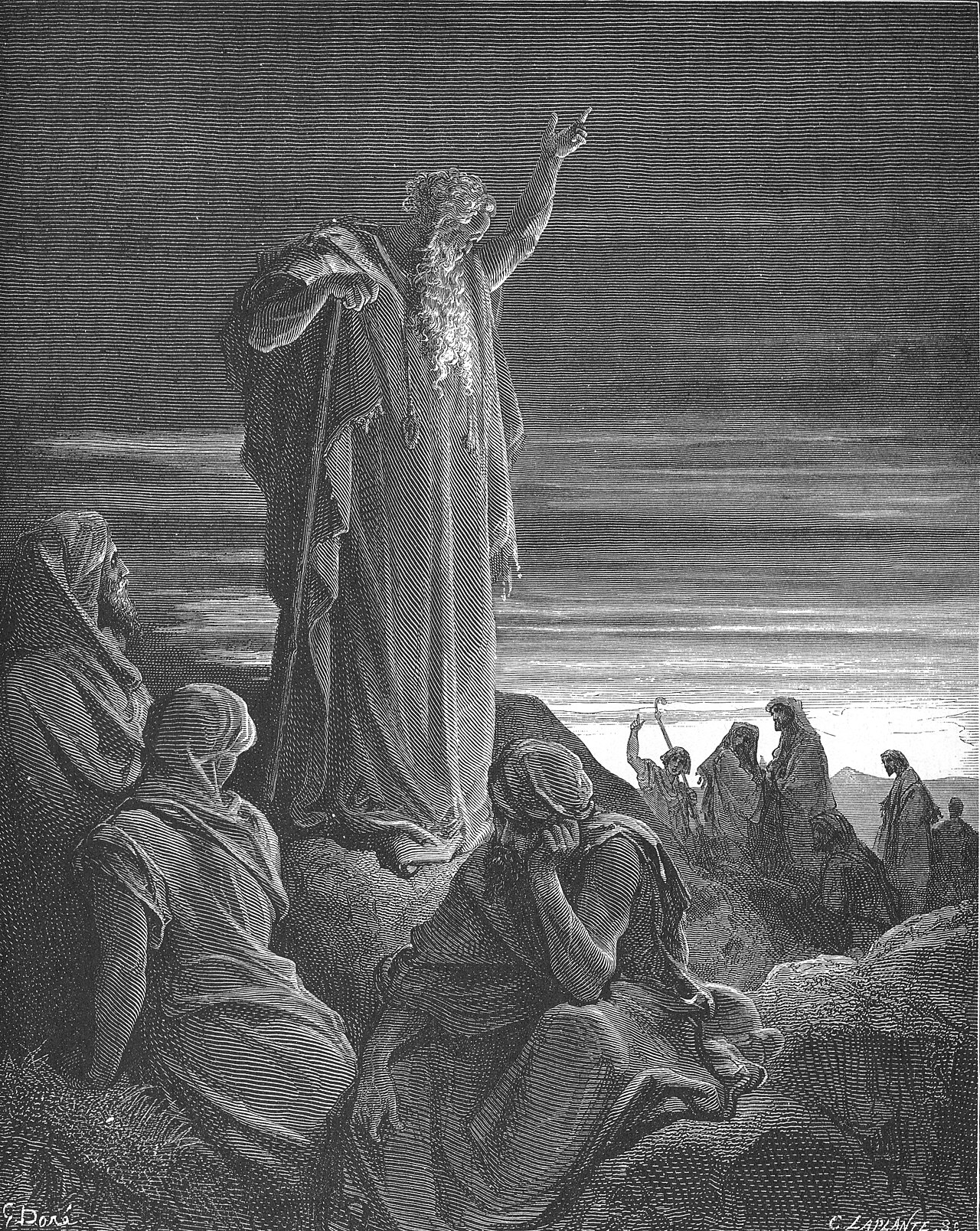
This page draws on Adam Clarke, Commentary on the Bible; Jerome, Commentary on Ezekiel; John Calvin, Commentaries on the First Twenty Chapters of the Book of the Prophet Ezekiel and Patrick Fairbairn, An Exposition of Ezekiel.