
Exodus 33:4
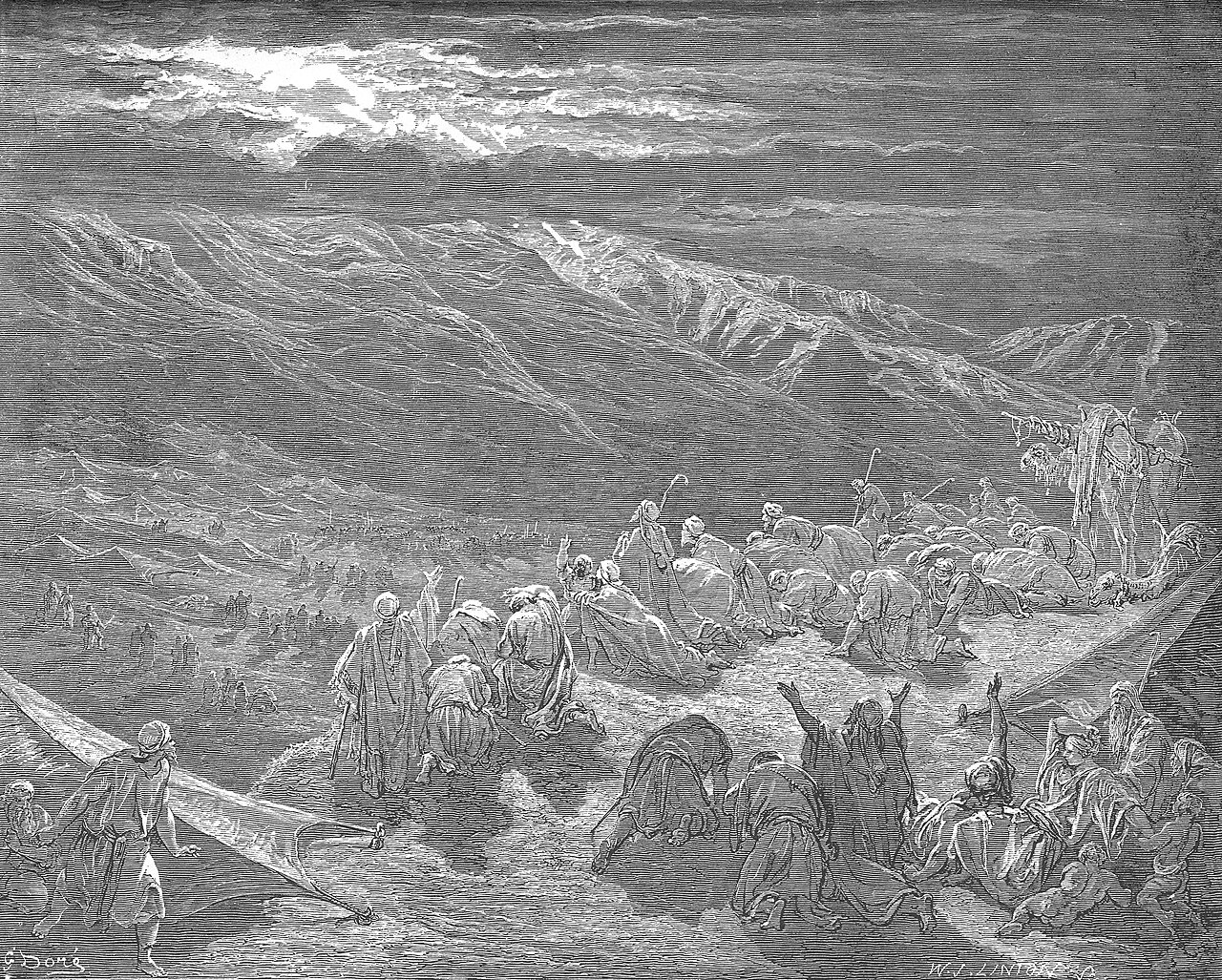
in Exodus 33When the people heard these bad tidings, they went into mourning, and no one put on any of his jewelry.
BSB
The same verse in ASV and KJV ▾
ASV
And when the people heard these evil tidings, they mourned: and no man did put on him his ornaments.
KJV
And when the people heard these evil tidings, they mourned: and no man did put on him his ornaments.
⋯
This verse in Exodus 33
Commentary
5 notes on this verseNote, Of all the bitter fruits and consequences of sin, that which true penitents most lament, and dread most, is God's departure from them. God had promised that, notwithstanding their sin, he would give them the land flowing with milk and honey. but they could have small joy of that if they had not God's presence with them.
This site's exposition
when the people heard these evil tidings
on Exodus 33:4-6
The people mourn at the withdrawal, and the sign of the mourning is that no man puts on his ornaments. God's own order at verse 5 leaves the outcome open, put off thy ornaments from thee, that I may know what to do unto thee, so the stripping is a posture taken before a decision rather than after one. The gold that went into the calf at 32:2 and 32:3 comes off here, and the same kind of freewill gold is brought for the tabernacle at 35:22. Verse 6 sets the scene by mount Horeb, the mountain of the bush at 3:1 and of the water from the rock at 17:6.
The record, by era
The Puritans and the Awakening3 voices
And when the people heard these evil tidings,....
He settles a correspondence between God and them, and both God and the people signify their approbation of that correspondence, God by descending in a cloudy pillar, and the people by worshipping at the tent doors,
"Go," says God to Moses, "go and tell them that they are so." He that knows them better than they know themselves says so of them. God would have brought them under the yoke of his law, and into the bond of his covenant, but their necks were too stiff to bow to them.
The words behind it
12 Hebrew wordsEvery Hebrew word of this verse in the order it stands, with what it means and the door to its own study. The last column counts the times a word stands in the whole Bible: the rarer the word, the more the places it appears belong together.
| Hebrew | Sound | Meaning | Word study | In the Bible |
|---|---|---|---|---|
| וַיִּשְׁמַ֣ע | vaiyishma' | and it heard | H8085 → | 1159 times |
| הָעָ֗ם | haam | the people | H5971 → | 1873 times |
| אֶת־ | ʾet- | <obj.> | H853 → | 10935 times |
| הַדָּבָ֥ר | hadavar | the word | H1697 → | 1440 times |
| הָרָ֛ע | hara' | <the> bad | H7451 → | 662 times |
| הַזֶּ֖ה | hazeh | <the> this | H2088 → | 1180 times |
| וַיִּתְאַבָּ֑לוּ | vaiyitabalu | and they mourned | H56 → | |
| וְלֹא־ | velo'- | and not | H3808 → | 5168 times |
| שָׁ֛תוּ | shatu | they placed | H7896 → | 83 times |
| אִ֥ישׁ | ʾish | anyone | H376 → | 1663 times |
| עֶדְי֖וֹ | edyo | ornament[s] his | H5716 → | 14 times |
| עָלָֽיו׃ | ʾalav | on himself | H5921 → | 5755 times |
וַיִּשְׁמַ֣עand it heard
vaiyishma'H8085 →1159 times
הָעָ֗םthe people
haamH5971 →1873 times
אֶת־<obj.>
ʾet-H853 →10935 times
הַדָּבָ֥רthe word
hadavarH1697 →1440 times
הָרָ֛ע<the> bad
hara'H7451 →662 times
הַזֶּ֖ה<the> this
hazehH2088 →1180 times
וַיִּתְאַבָּ֑לוּand they mourned
vaiyitabaluH56 →
וְלֹא־and not
velo'-H3808 →5168 times
שָׁ֛תוּthey placed
shatuH7896 →83 times
אִ֥ישׁanyone
ʾishH376 →1663 times
עֶדְי֖וֹornament[s] his
edyoH5716 →14 times
עָלָֽיו׃on himself
ʾalavH5921 →5755 times
A shaded row is a word that stands 400 times or fewer in the Bible.
The walk
8 stopsEach card is a verse this one points to, and under it the verses that one points to in turn. Where several paths arrive at the same place, that place is listed first: the text keeps returning to it.
Through
Ezekiel 24:17Groan quietly; do not mourn for the dead. Put on your turban and strap your sandals on your feet; do not cover your lips or eat the bread of mourners.”
it leads to
- Hosea 9:4
They will not pour out wine offerings to the LORD, and their sacrifices will not please Him, but will be to them like the bread of mourners; all who eat will be defiled. For…
- 2 Samuel 15:30
But David continued up the Mount of Olives, weeping as he went up. His head was covered, and he was walking barefoot. And all the people with him covered their heads and went up,…
- Hosea 9:4
Through
Ezekiel 26:16All the princes of the sea will descend from their thrones, remove their robes, and strip off their embroidered garments. Clothed with terror, they will sit on the ground, trembling every moment, appalled over…
it leads to
- Ezekiel 32:10
I will cause many peoples to be appalled over you, and their kings will shudder in horror because of you when I brandish My sword before them. On the day of your downfall each…
- Jonah 3:6
When word reached the king of Nineveh, he got up from his throne, took off his royal robe, covered himself with sackcloth, and sat in ashes.
- Hosea 11:10
They will walk after the LORD; He will roar like a lion. When He roars, His children will come trembling from the west.
- Job 8:22
Your enemies will be clothed in shame, and the tent of the wicked will be no more.”
- Ezekiel 32:10
Through
Leviticus 10:6Then Moses said to Aaron and his sons Eleazar and Ithamar, “Do not let your hair become disheveled and do not tear your garments, or else you will die, and the LORD will be…
it leads to
- Numbers 1:53
But the Levites are to camp around the tabernacle of the Testimony and watch over it, so that no wrath will fall on the congregation of Israel. So the Levites are responsible for the…
- Numbers 16:22
But Moses and Aaron fell facedown and said, “O God, the God of the spirits of all flesh, when one man sins, will You be angry with the whole congregation?”
- Numbers 1:53
Where this verse is studied
On this page
About Exodus
This page draws on John Gill, Exposition of the Old Testament (1748-1763); Keil and Delitzsch, Biblical Commentary on the Old Testament: The Pentateuch and Matthew Henry, Commentary on the Whole Bible.