
Exodus 14:31
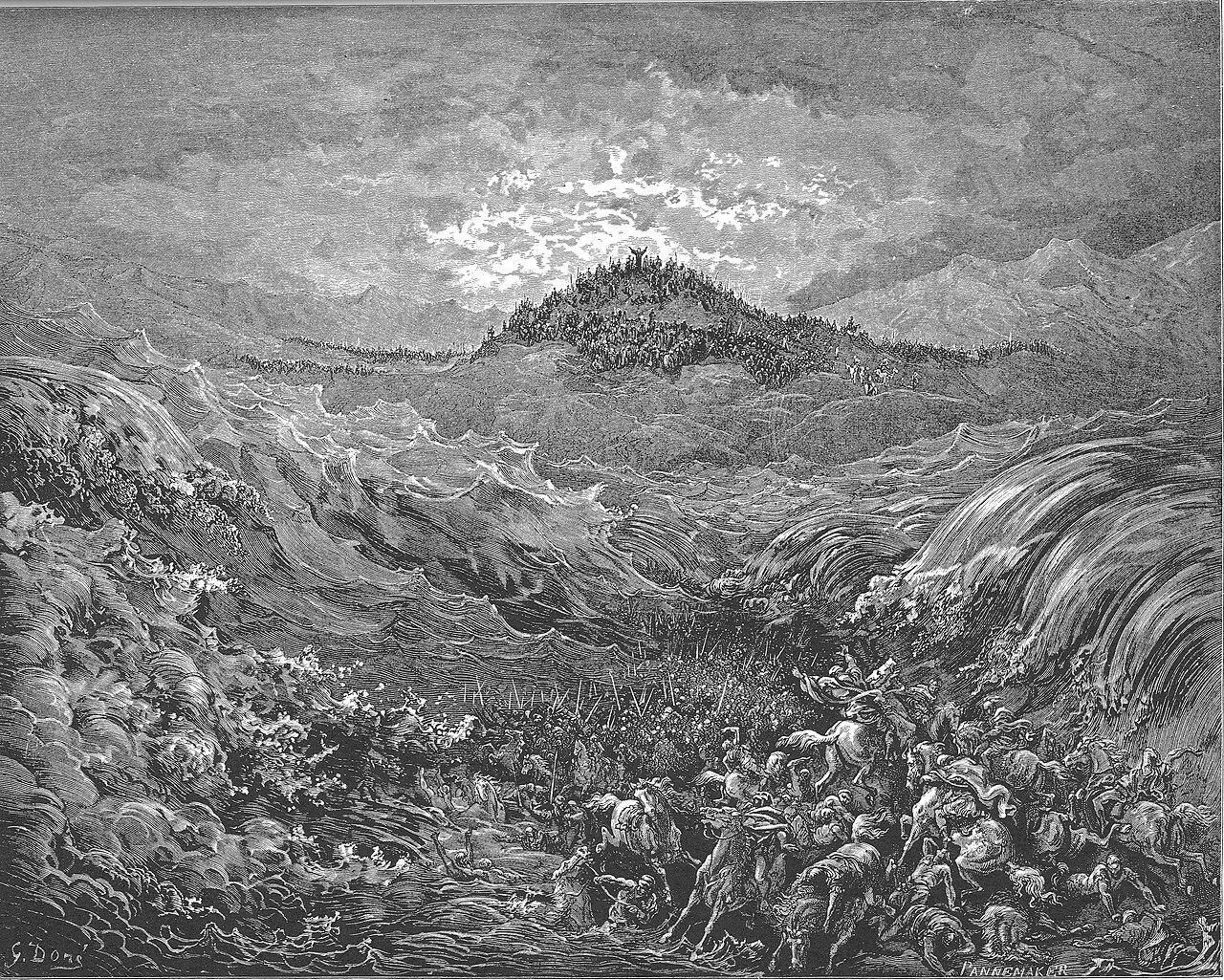
in Exodus 14When Israel saw the great power that the LORD had exercised over the Egyptians, the people feared the LORD and believed in Him and in His servant Moses.
BSB
The same verse in ASV and KJV ▾
ASV
And Israel saw the great work which Jehovah did upon the Egyptians, and the people feared Jehovah: and they believed in Jehovah, and in his servant Moses.
KJV
And Israel saw that great work which the Lord did upon the Egyptians: and the people feared the Lord, and believed the Lord, and his servant Moses.
⋯
This verse in Exodus 14
Commentary
9 notes on this verseBut belief in Moses not only does not show our belief in the Spirit to be worthless, but, if we adopt our opponents' line of argument, it rather weakens our confession in the God of the universe. "The people," it is written, "believed the Lord and his servant Moses." Moses then is joined with God, not with the Spirit; and he was a type not of the Spirit, but of Christ. For at that time in the ministry of the law, he by means of himself typified "the Mediator between God and men."
This site's exposition
But the children of Israel walked upon dry land
on Exodus 14:29-31
The crossing is stated a second time in the words of verse 22 and then summed up, thus the LORD saved Israel that day out of the hand of the Egyptians. The people feared the LORD and believed him and his servant Moses, which they had done once before at 4:31 when the signs were shown, and had stopped doing at 6:9 for anguish of spirit and cruel bondage. The song begins in the next verse, and 15:1 is the first place in Scripture where anyone sings.
This site's exposition
the people feared the LORD
The verb for the terror of verse 10 returns here, and its object has moved from the Egyptians to the LORD. The narrator first calls Moses His servant here. Basil of Caesarea took Moses in this verse as a type of Christ, the one mediator between God and men of 1 Timothy 2:5.
The record, by era
The Puritans and the Awakening5 voices
5 And it was told the king of Egypt that the people fled: and the heart of Pharaoh and of his servants was turned against the people, and they said, Why have we done this, that we have let Israel go from serving us?
quarantine:scripture (2026-07-29) — verbatim-scripture
They would never again quarrel with Moses; nor talk of returning to Egypt. How well were it for us, if we were, always in as good a frame, as we are in sometimes!
And Israel saw the great work,....
Note, It is very common, but very absurd and criminal, for people to repent of their good deeds; their justice and charity, and even their repentance, are repented of.
This confirmed their faith in the promises that were yet to be fulfilled; and, being brought thus triumphantly out of Egypt, they did not doubt that they should be in Canaan shortly, having such a God to trust to, and such a mediator between them and him.
1 more voice on this verse
The Nineteenth Century1 voice
The people feared the Lord - They were convinced by the interference of Jehovah that his power was unlimited, and that he could do whatsoever he pleased, both in the way of judgment and in the way of mercy. And believed the Lord, and his servant Moses - They now clearly discerned that God had fulfilled all his promises; and that not one thing had failed of all the good which he had spoken concerning Israel.
The words behind it
17 Hebrew wordsEvery Hebrew word of this verse in the order it stands, with what it means and the door to its own study. The last column counts the times a word stands in the whole Bible: the rarer the word, the more the places it appears belong together.
| Hebrew | Sound | Meaning | Word study | In the Bible |
|---|---|---|---|---|
| וַיַּ֨רְא | vaiyar' | and it saw | H7200 → | 1300 times |
| יִשְׂרָאֵ֜ל | yisrael | Israel | H3478 → | 2507 times |
| אֶת־ | ʾet- | <obj.> | H853 → | 10935 times |
| הַיָּ֣ד | haiyad | the hand | H3027 → | 1618 times |
| הַגְּדֹלָ֗ה | hagedolah | <the> great | H1419 → | 526 times |
| אֲשֶׁ֨ר | ʾasher | which | H834 → | 5497 times |
| עָשָׂ֤ה | ʾasah | he had used | H6213 → | 2628 times |
| יְהוָה֙ | yahweh | Yahweh | H3068 → | 6520 times |
| בְּמִצְרַ֔יִם | bemitzrayim | on Egypt | H4714 → | 641 times |
| וַיִּֽירְא֥וּ | vaiyireu | and they feared | H3372 → | 315 times |
| הָעָ֖ם | haam | the people | H5971 → | 1873 times |
| אֶת־ | ʾet- | <obj.> | H853 → | 10935 times |
| יְהוָ֑ה | yahweh | Yahweh | H3068 → | 6520 times |
| וַיַּֽאֲמִ֙ינוּ֙ | vaiyaaminu | and they believed | H539 → | 106 times |
| בַּֽיהוָ֔ה | bayahweh | in Yahweh | H3068 → | 6520 times |
| וּבְמֹשֶׁ֖ה | uvemosheh | and in Moses | H4872 → | 765 times |
| עַבְדּֽוֹ׃ פ | avdo | servant his | H5650 → | 799 times |
וַיַּ֨רְאand it saw
vaiyar'H7200 →1300 times
יִשְׂרָאֵ֜לIsrael
yisraelH3478 →2507 times
אֶת־<obj.>
ʾet-H853 →10935 times
הַיָּ֣דthe hand
haiyadH3027 →1618 times
הַגְּדֹלָ֗ה<the> great
hagedolahH1419 →526 times
אֲשֶׁ֨רwhich
ʾasherH834 →5497 times
עָשָׂ֤הhe had used
ʾasahH6213 →2628 times
יְהוָה֙Yahweh
yahwehH3068 →6520 times
בְּמִצְרַ֔יִםon Egypt
bemitzrayimH4714 →641 times
וַיִּֽירְא֥וּand they feared
vaiyireuH3372 →315 times
הָעָ֖םthe people
haamH5971 →1873 times
אֶת־<obj.>
ʾet-H853 →10935 times
יְהוָ֑הYahweh
yahwehH3068 →6520 times
וַיַּֽאֲמִ֙ינוּ֙and they believed
vaiyaaminuH539 →106 times
בַּֽיהוָ֔הin Yahweh
bayahwehH3068 →6520 times
וּבְמֹשֶׁ֖הand in Moses
uvemoshehH4872 →765 times
עַבְדּֽוֹ׃ פservant his
avdoH5650 →799 times
A shaded row is a word that stands 400 times or fewer in the Bible.
The walk
8 stopsEach card is a verse this one points to, and under it the verses that one points to in turn. Where several paths arrive at the same place, that place is listed first: the text keeps returning to it.
Through
John 2:11Jesus performed this, the first of His signs, at Cana in Galilee. He thus revealed His glory, and His disciples believed in Him.
it leads to
- John 20:30–31
Jesus performed many other signs in the presence of His disciples, which are not written in this book.
- John 1:14
The Word became flesh and made His dwelling among us. We have seen His glory, the glory of the one and only Son from the Father, full of grace and truth.
- John 3:2
He came to Jesus at night and said, “Rabbi, we know that You are a teacher who has come from God. For no one could perform the signs You are doing if God were…
- John 6:2
A large crowd followed Him because they saw the signs He was performing on the sick.
- John 6:14
When the people saw the sign that Jesus had performed, they began to say, “Truly this is the Prophet who is to come into the world.”
- John 20:30–31
Through
Exodus 19:9The LORD said to Moses, “Behold, I will come to you in a dense cloud, so that the people will hear when I speak with you, and they will always put their trust in…
it leads to
- Deuteronomy 4:36
He let you hear His voice from heaven to discipline you, and on earth He showed you His great fire, and you heard His words out of the fire.
- Exodus 24:15–16
When Moses went up on the mountain, the cloud covered it,
- Deuteronomy 4:36
Through
John 11:45Therefore many of the Jews who had come to Mary, and had seen what Jesus did, believed in Him.
it leads to
- John 2:23
While He was in Jerusalem at the Passover Feast, many people saw the signs He was doing and believed in His name.
- John 2:23
Where this verse is studied
By subject
Faith34 verses
On this page
Studies4
About Exodus
Who and where
1 name in this verse with a page on the site.
This page draws on Adam Clarke, Commentary on the Bible; Basil of Caesarea, ON THE SPIRIT 14.33; Basil of Caesarea, On the Spirit 14.33; John Gill, Exposition of the Old Testament (1748-1763); John Wesley, Explanatory Notes upon the Old Testament; Keil and Delitzsch, Biblical Commentary on the Old Testament: The Pentateuch and Matthew Henry, Commentary on the Whole Bible.