
Exodus 14:17
in Exodus 14And I will harden the hearts of the Egyptians so that they will go in after them. Then I will gain honor by means of Pharaoh and all his army and chariots and horsemen.
BSB
The same verse in ASV and KJV ▾
ASV
And I, behold, I will harden the hearts of the Egyptians, and they shall go in after them: and I will get me honor upon Pharaoh, and upon all his host, upon his chariots, and upon his horsemen.
KJV
And I, behold, I will harden the hearts of the Egyptians, and they shall follow them: and I will get me honour upon Pharaoh, and upon all his host, upon his chariots, and upon his horsemen.
⋯
This verse in Exodus 14
Commentary
7 notes on this verseThe manner of expression is observable: I, behold I, will do it. "I, that may do it;" so it is the language of his sovereignty. We may not contribute to the hardening of any man's heart, nor withhold any thing that we can do towards the softening of it; but God's grace is his own, he hath mercy on whom he will have mercy, and whom he will be hardeneth.
This site's exposition
I will harden the hearts of the Egyptians
on Exodus 14:17-18
This is the last of the nineteen hardening statements in Exodus, and it widens from one man to a whole army. The purpose given twice is that the Egyptians will know that I am the LORD, the reason attached to the first sign at 7:5.
The record, by era
The Puritans and the Awakening4 voices
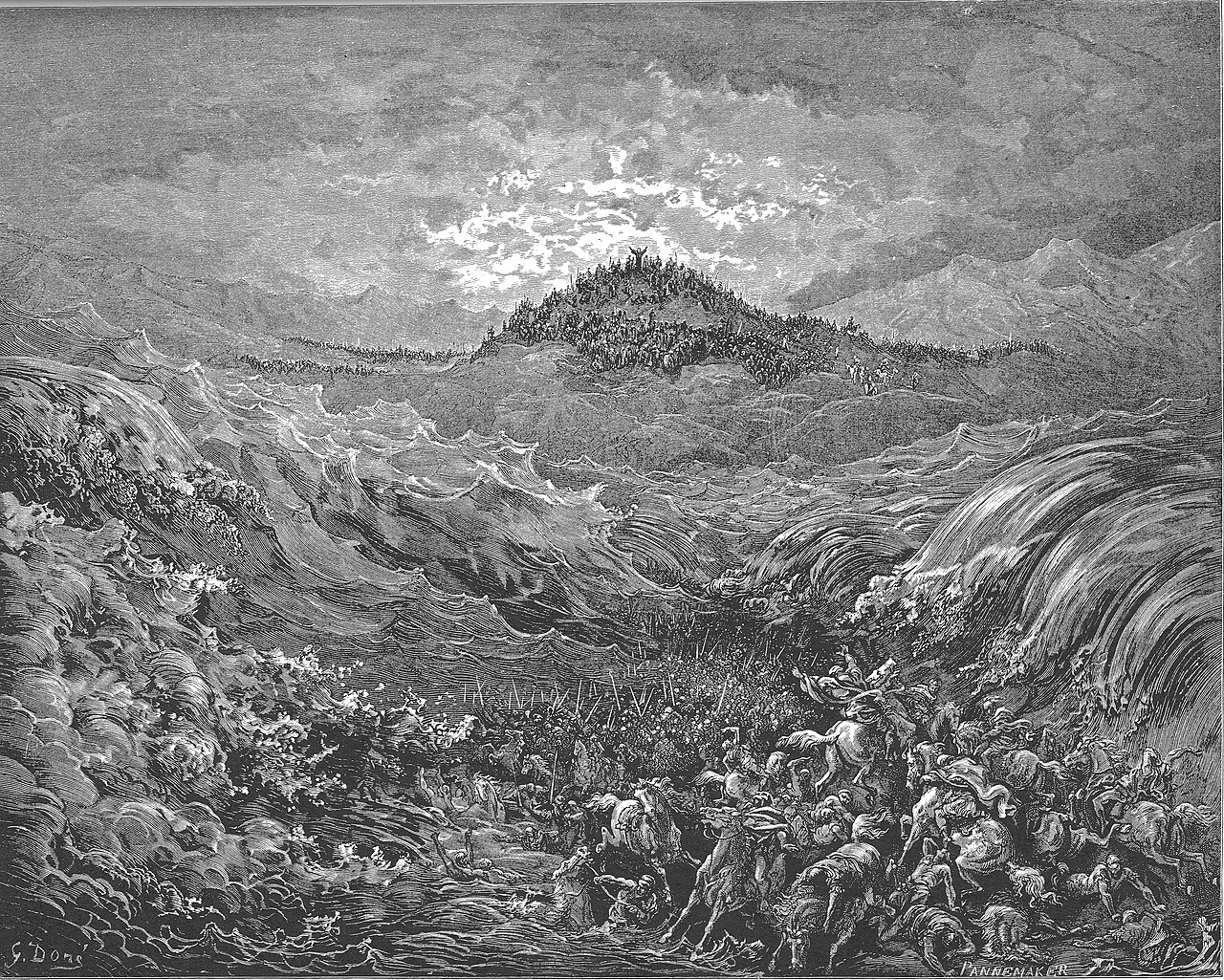
Lines that could not be forced are set between the camp of Israel and Pharaoh's camp, ver. 19, 20. By the divine power the Red-sea is divided, ver. 21. and is made, 1.
quarantine:anchor (2026-07-29) — cites-ver-21-anchored-15-18
And I, behold, I will harden the hearts of the Egyptians,....
God designs, not only to deliver the Israelites, but to destroy the Egyptians; and the plan of his counsels is accordingly. (1.) He will show favour to Israel; the waters shall be divided for them to pass through,
Note, It is very common, but very absurd and criminal, for people to repent of their good deeds; their justice and charity, and even their repentance, are repented of.
The Nineteenth Century1 voice
A commentator
Jamieson, Fausset & Brown1802–1910
Commentary Critical and Explanatory on the Whole Bible (1871)
proposed
the Lord said unto Moses, Wherefore criest thou unto me? &c.--When in answer to his prayers, he received the divine command to go forward, he no longer doubted by what kind of miracle the salvation of his mighty charge was to be effected.
quarantine:debris (2026-07-29) — starts-lowercase
The words behind it
14 Hebrew wordsEvery Hebrew word of this verse in the order it stands, with what it means and the door to its own study. The last column counts the times a word stands in the whole Bible: the rarer the word, the more the places it appears belong together.
| Hebrew | Sound | Meaning | Word study | In the Bible |
|---|---|---|---|---|
| וַאֲנִ֗י | vaani | and I | H589 → | 874 times |
| הִנְנִ֤י | hini | here I | H2005 → | 316 times |
| מְחַזֵּק֙ | mechazek | [am] about to make strong | H2388 → | 291 times |
| אֶת־ | ʾet- | <obj.> | H853 → | 10935 times |
| לֵ֣ב | lev | [the] heart of | H3820 → | 595 times |
| מִצְרַ֔יִם | mitzrayim | Egypt | H4713 → | 70 times |
| וְיָבֹ֖אוּ | veyavou | so they may go | H935 → | 2568 times |
| אַחֲרֵיהֶ֑ם | ʾachareihem | after them | H310 → | 715 times |
| וְאִכָּבְדָ֤ה | veikavedah | and I will gain honor | H3513 → | 113 times |
| בְּפַרְעֹה֙ | befaroh | by Pharaoh | H6547 → | 274 times |
| וּבְכָל־ | uvekhol- | and by all | H3605 → | 5413 times |
| חֵיל֔וֹ | cheilo | army his | H2428 → | 246 times |
| בְּרִכְבּ֖וֹ | berikhbo | by chariot[s] his | H7393 → | 119 times |
| וּבְפָרָשָֽׁיו׃ | uvefarashav | and by horsemen his | H6571 → | 57 times |
וַאֲנִ֗יand I
vaaniH589 →874 times
הִנְנִ֤יhere I
hiniH2005 →316 times
מְחַזֵּק֙[am] about to make strong
mechazekH2388 →291 times
אֶת־<obj.>
ʾet-H853 →10935 times
לֵ֣ב[the] heart of
levH3820 →595 times
מִצְרַ֔יִםEgypt
mitzrayimH4713 →70 times
וְיָבֹ֖אוּso they may go
veyavouH935 →2568 times
אַחֲרֵיהֶ֑םafter them
ʾachareihemH310 →715 times
וְאִכָּבְדָ֤הand I will gain honor
veikavedahH3513 →113 times
בְּפַרְעֹה֙by Pharaoh
befarohH6547 →274 times
וּבְכָל־and by all
uvekhol-H3605 →5413 times
חֵיל֔וֹarmy his
cheiloH2428 →246 times
בְּרִכְבּ֖וֹby chariot[s] his
berikhboH7393 →119 times
וּבְפָרָשָֽׁיו׃and by horsemen his
uvefarashavH6571 →57 times
A shaded row is a word that stands 400 times or fewer in the Bible.
The walk
8 stopsEach card is a verse this one points to, and under it the verses that one points to in turn. Where several paths arrive at the same place, that place is listed first: the text keeps returning to it.
Through
Deuteronomy 32:39See now that I am He; there is no God besides Me. I bring death and I give life; I wound and I heal, and there is no one who can deliver from My…
it leads to
- 1 Samuel 2:6
The LORD brings death and gives life; He brings down to Sheol and raises up.
- Hosea 6:1
Come, let us return to the LORD. For He has torn us to pieces, but He will heal us; He has wounded us, but He will bind up our wounds.
- Job 5:18
For He wounds, but He also binds; He strikes, but His hands also heal.
- Isaiah 45:5
I am the LORD, and there is no other; there is no God but Me. I will equip you for battle, though you have not known Me,
- Isaiah 45:22
Turn to Me and be saved, all the ends of the earth; for I am God, and there is no other.
- 1 Samuel 2:6
Through
Ezekiel 34:11For this is what the Lord GOD says: ‘Behold, I Myself will search for My flock and seek them out.
it leads to
- John 10:16
I have other sheep that are not of this fold. I must bring them in as well, and they will listen to My voice. Then there will be one flock and one shepherd.
- Luke 19:10
For the Son of Man came to seek and to save the lost.”
- Jeremiah 23:3
Then I Myself will gather the remnant of My flock from all the lands to which I have banished them, and I will return them to their pasture, where they will be fruitful and…
- John 10:16
Where this verse is studied
On this page
About Exodus
This page draws on Jamieson, Fausset & Brown, Commentary Critical and Explanatory on the Whole Bible; John Gill, Exposition of the Old Testament; John Gill, Exposition of the Old Testament (1748-1763); John Wesley, Explanatory Notes upon the Old Testament; Keil and Delitzsch, Biblical Commentary on the Old Testament: The Pentateuch and Matthew Henry, Commentary on the Whole Bible.