
Exodus 14:6
in Exodus 14So Pharaoh prepared his chariot and took his army with him.
BSB
The same verse in ASV and KJV ▾
ASV
And he made ready his chariot, and took his people with him:
KJV
And he made ready his chariot, and took his people with him:
⋯
This verse in Exodus 14
Commentary
4 notes on this verseAnd he made ready his chariot,.... Which he usually rode in when he went forth to war; for this seems to be a military chariot, and not for show or grandeur; and this was got ready not by himself, as Jarchi, but rather by his orders, as Aben Ezra: and took his people with him; the Greek version reads, "all his people"; not all his subjects, but his soldiers; at least a great number, and especially his cavalry.
This site's exposition
the king of Egypt was told
on Exodus 14:5-7
Pharaoh's own words name what he counts as lost, We have released Israel from serving us. The root behind serving is the one 1:13 and 1:14 used for the bondage.
This site's exposition
So Pharaoh prepared his chariot
Pharaoh goes out in person, in the chariot a king of Egypt rode to war. John Gill takes the army as his soldiers, the cavalry above all, and notes that the Greek version reads all his people. At 12:32 the same king had asked for a blessing.
The record, by era
The Puritans and the Awakening1 voice
It is easy to imagine what a rage Pharaoh was now in, roaring like a lion disappointed of his prey, how his proud heart aggravated the affront, swelled with indignation, scorned to be baffled, longed to be revenged: and now all the plagues are as if they had never been.
The words behind it
7 Hebrew wordsEvery Hebrew word of this verse in the order it stands, with what it means and the door to its own study. The last column counts the times a word stands in the whole Bible: the rarer the word, the more the places it appears belong together.
| Hebrew | Sound | Meaning | Word study | In the Bible |
|---|---|---|---|---|
| וַיֶּאְסֹ֖ר | vaiye'sor | and he harnessed | H631 → | |
| אֶת־ | ʾet- | <obj.> | H853 → | 10935 times |
| רִכְבּ֑וֹ | rikhbo | chariot his | H7393 → | 119 times |
| וְאֶת־ | veet | and <obj.> | H853 → | 10935 times |
| עַמּ֖וֹ | amo | people his | H5971 → | 1873 times |
| לָקַ֥ח | lakach | he took | H3947 → | 966 times |
| עִמּֽוֹ׃ | imo | with him | H5973 → | 1050 times |
וַיֶּאְסֹ֖רand he harnessed
vaiye'sorH631 →
אֶת־<obj.>
ʾet-H853 →10935 times
רִכְבּ֑וֹchariot his
rikhboH7393 →119 times
וְאֶת־and <obj.>
veetH853 →10935 times
עַמּ֖וֹpeople his
amoH5971 →1873 times
לָקַ֥חhe took
lakachH3947 →966 times
עִמּֽוֹ׃with him
imoH5973 →1050 times
A shaded row is a word that stands 400 times or fewer in the Bible.
Where this verse is studied
On this page
About Exodus
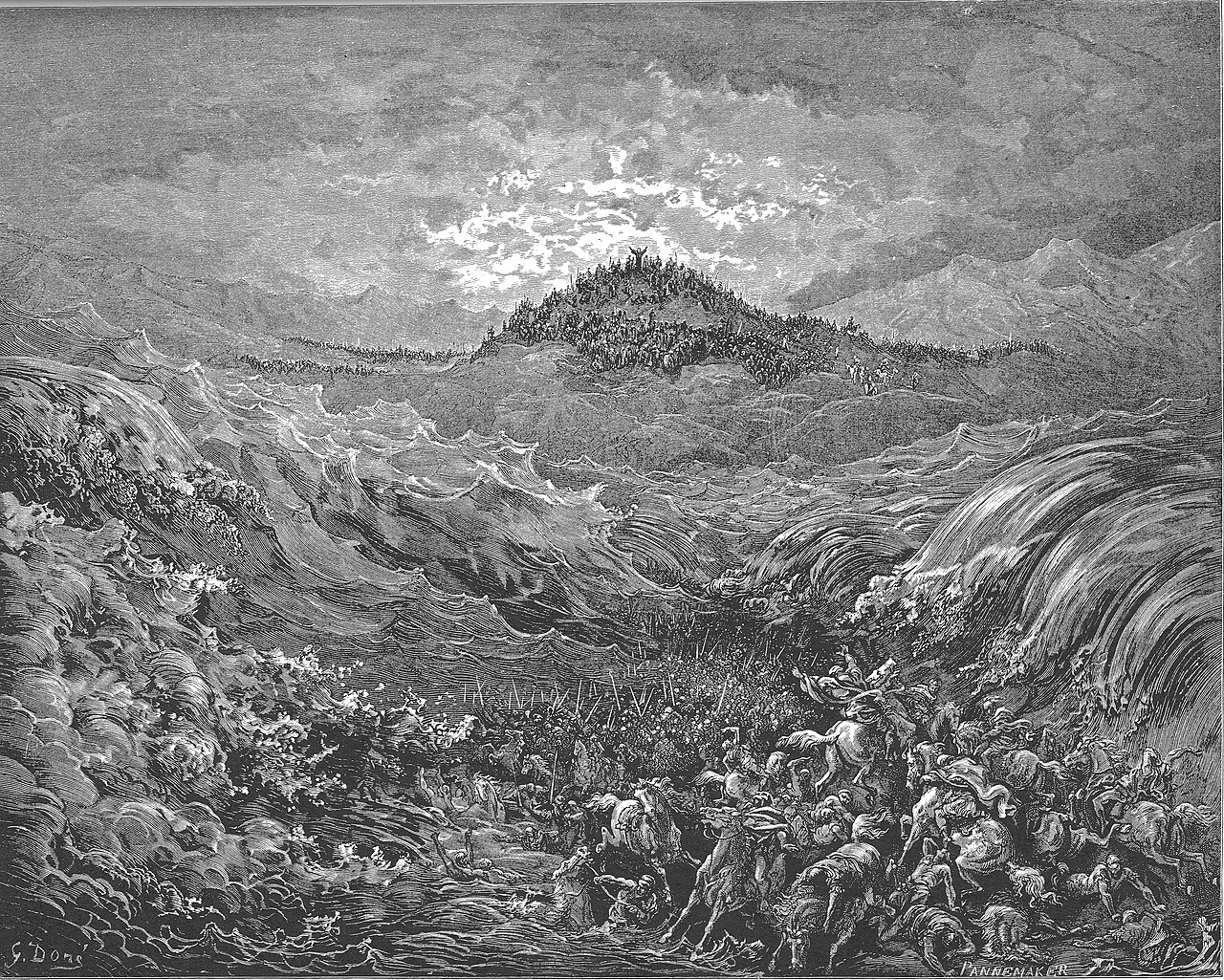
This page draws on John Gill, Exposition of the Old Testament (1748-1763); John Gill, Exposition of the Old Testament and Matthew Henry, Commentary on the Whole Bible.