
Exodus 12:49
in Exodus 12The same law shall apply to both the native and the foreigner who resides among you.”
BSB
The same verse in ASV and KJV ▾
ASV
One law shall be to him that is home-born, and unto the stranger that sojourneth among you.
KJV
One law shall be to him that is homeborn, and unto the stranger that sojourneth among you.
⋯
This verse in Exodus 12
Commentary
4 notes on this verseA commentator
Jamieson, Fausset & Brown1802–1910
Commentary Critical and Explanatory on the Whole Bible (1871)
One law shall be to him that is homeborn, and unto the stranger--This regulation displays the liberal spirit of the Hebrew institutions. Any foreigner might obtain admission to the privileges of the nation on complying with their sacred ordinances. In the Mosaic equally as in the Christian dispensation, privilege and duty were inseparably conjoined.
The record, by era
The Puritans and the Awakening2 voices
One law shall be to him that is homeborn,....
This was a mortification to the Jews, and taught them that it was their dedication to God, not their descent from Abraham, that entitled them to their privileges. A sincere proselyte was as welcome to the passover as a native Israelite, Isa. lvi.
The Nineteenth Century1 voice
One law shall be to him that is home-born, etc. - As this is the first place that the term תורה torah or Law occurs, a term of the greatest importance in Divine revelation, and on the proper understanding of which much depends, I judge it best to give its genuine explanation once for all.
How the passage was read
On Exodus 12:1-51On Exodus 12:1-51
The night Israel still keeps
This chapter founds Passover, in Hebrew Pesach, the spring feast that remembers the night God struck Egypt's firstborn and passed over the blood-marked houses. Jewish families keep it to this day with a ceremonial meal called the seder (Hebrew for “order”): unleavened flatbread (matzah), bitter herbs, cups of wine, and the retelling of this chapter's story, with the children asking the questions.
Honesty about the timeline helps the reader: in the Bible's own period the center of the feast was the lamb, slain and eaten as this chapter commands. The seder as now practiced took its shape after the Temple fell in AD 70 and the lamb could no longer be offered; its oldest written outline is in the Mishnah, the first code of Jewish oral law (about AD 200), which already includes the four cups and the rule that “in every generation a person must see himself as if he personally came out of Egypt.”
This section is reception history: how the passage was read and kept in the Jewish tradition. Where a reading parts from an essential of the Christian faith, the section says so at that point.
Sources: Mishnah Pesachim 10 (the seder's oldest outline) · Mishnah Pesachim 10:5 (“in every generation”) · The Feasts of the LORD (this site's study)
The words behind it
7 Hebrew wordsEvery Hebrew word of this verse in the order it stands, with what it means and the door to its own study. The last column counts the times a word stands in the whole Bible: the rarer the word, the more the places it appears belong together.
| Hebrew | Sound | Meaning | Word study | In the Bible |
|---|---|---|---|---|
| תּוֹרָ֣ה | torah | law | H8451 → | 219 times |
| אַחַ֔ת | ʾachat | one | H259 → | 971 times |
| יִהְיֶ֖ה | yihyeh | it will be[long] | H1961 → | 3559 times |
| לָֽאֶזְרָ֑ח | laezrach | to the native-born | H249 → | 17 times |
| וְלַגֵּ֖ר | velager | and to the sojourner | H1616 → | 92 times |
| הַגָּ֥ר | hagar | who sojourns | H1481 → | 97 times |
| בְּתוֹכְכֶֽם׃ | betokhem | in midst of you | H8432 → | 418 times |
תּוֹרָ֣הlaw
torahH8451 →219 times
אַחַ֔תone
ʾachatH259 →971 times
יִהְיֶ֖הit will be[long]
yihyehH1961 →3559 times
לָֽאֶזְרָ֑חto the native-born
laezrachH249 →17 times
וְלַגֵּ֖רand to the sojourner
velagerH1616 →92 times
הַגָּ֥רwho sojourns
hagarH1481 →97 times
בְּתוֹכְכֶֽם׃in midst of you
betokhemH8432 →418 times
A shaded row is a word that stands 400 times or fewer in the Bible.
The walk
8 stopsEach card is a verse this one points to, and under it the verses that one points to in turn. Where several paths arrive at the same place, that place is listed first: the text keeps returning to it.
Through
Galatians 3:28There is neither Jew nor Greek, slave nor free, male nor female, for you are all one in Christ Jesus.
it leads to
- Romans 3:29–30
Is God the God of Jews only? Is He not the God of Gentiles too? Yes, of Gentiles too,
Reached by 2 separate paths from here.
- 1 Corinthians 12:12–13
The body is a unit, though it is composed of many parts. And although its parts are many, they all form one body. So it is with Christ.
- Colossians 3:11
Here there is no Greek or Jew, circumcised or uncircumcised, barbarian, Scythian, slave, or free, but Christ is all and is in all.
- Galatians 5:6
For in Christ Jesus neither circumcision nor uncircumcision has any value. All that matters is faith, expressed through love.
- Romans 10:12–15
For there is no difference between Jew and Greek: The same Lord is Lord of all, and gives richly to all who call on Him,
- Romans 3:29–30
Through
Leviticus 24:22You are to have the same standard of law for the foreign resident and the native; for I am the LORD your God.’”
it leads to
- Numbers 9:14
If a foreigner dwelling among you wants to observe the Passover to the LORD, he is to do so according to the Passover statute and its ordinances. You are to apply the same statute…
Reached by 2 separate paths from here.
- Numbers 15:15–16
The assembly is to have the same statute both for you and for the foreign resident; it is a permanent statute for the generations to come. You and the foreigner shall be the same…
- Numbers 9:14
Through
Numbers 9:14If a foreigner dwelling among you wants to observe the Passover to the LORD, he is to do so according to the Passover statute and its ordinances. You are to apply the same statute…
it leads to
- Exodus 12:48–49
If a foreigner resides with you and wants to celebrate the LORD’s Passover, all the males in the household must be circumcised; then he may come near to celebrate it, and he shall be…
- Exodus 12:48–49
Where this verse is studied
About Exodus
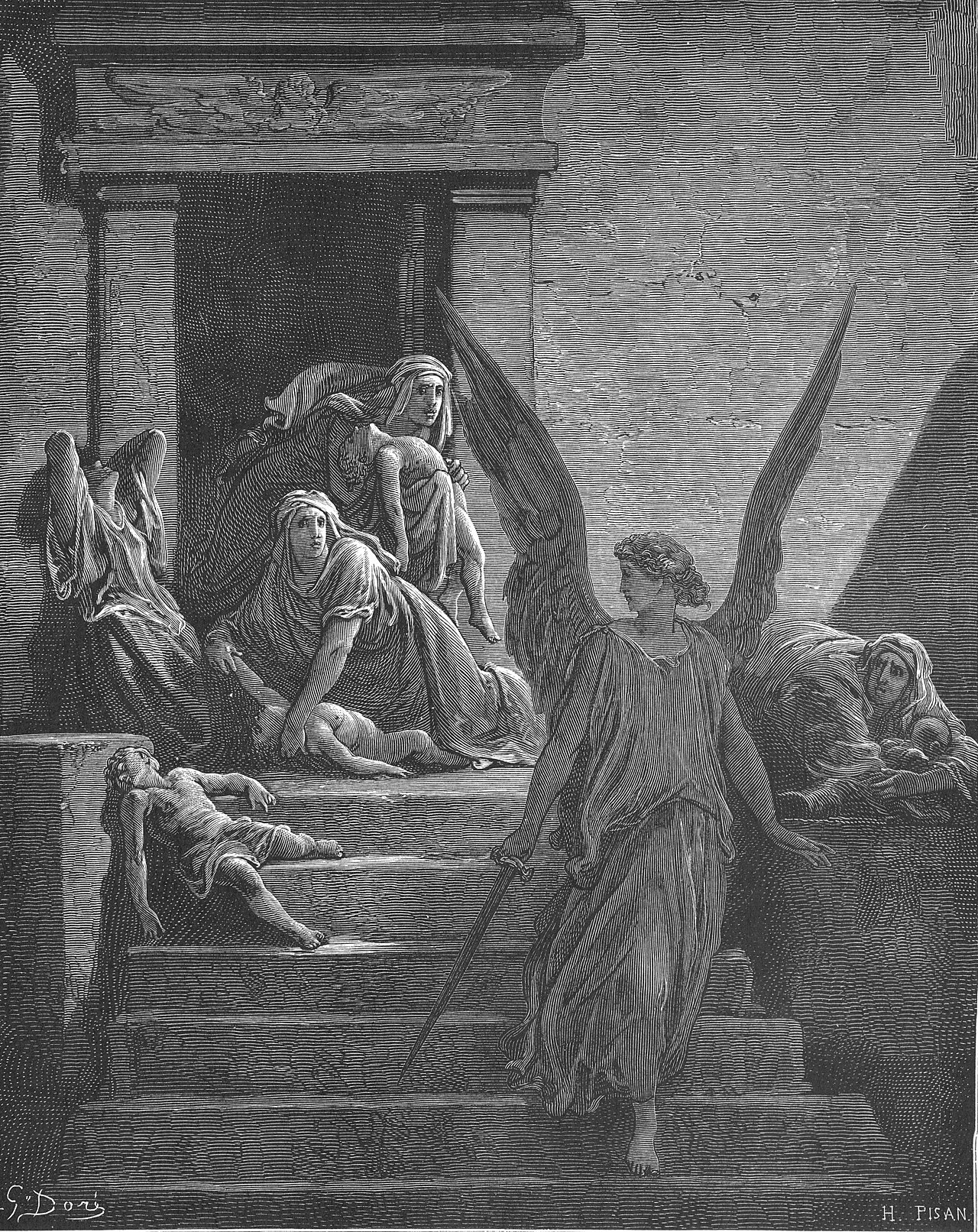
This page draws on Adam Clarke, Commentary on the Bible; Jamieson, Fausset & Brown, Commentary Critical and Explanatory on the Whole Bible; John Gill, Exposition of the Old Testament (1748-1763) and Matthew Henry, Commentary on the Whole Bible.