
2 Samuel 13:19
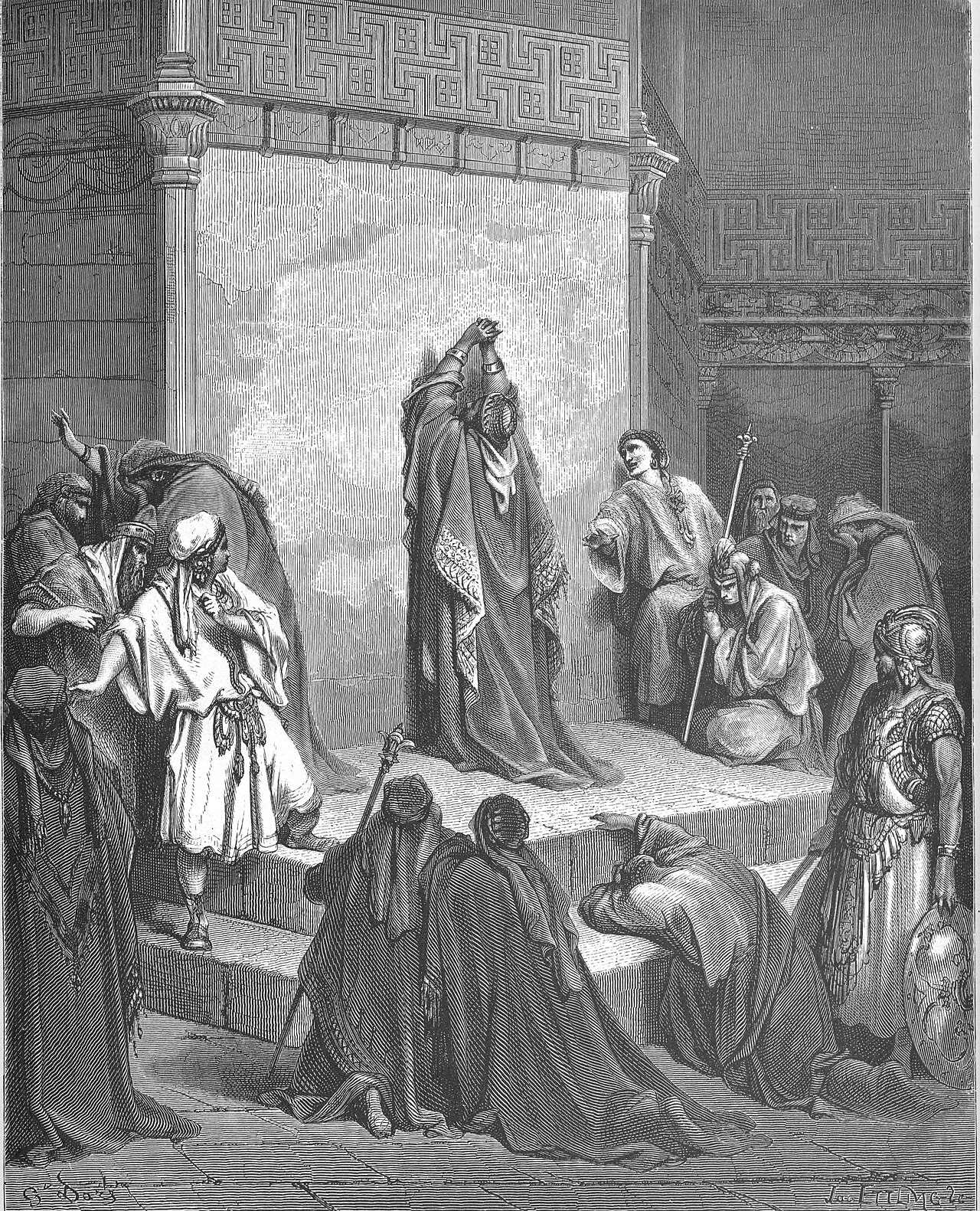
in 2 Samuel 13And Tamar put ashes on her head and tore her robe. And putting her hand on her head, she went away crying bitterly.
BSB
The same verse in ASV and KJV ▾
ASV
And Tamar put ashes on her head, and rent her garment of divers colors that was on her; and she laid her hand on her head, and went her way, crying aloud as she went.
KJV
And Tamar put ashes on her head, and rent her garment of divers colours that was on her, and laid her hand on her head, and went on crying.
⋯
This verse in 2 Samuel 13
Commentary
3 notes on this verseAnd Tamar put ashes on her head,.... In token of sorrow and distress; see Jos 7:6, and rent her garment of divers colours that was on her; signifying that her virginity was rent from her in a forcible manner, or that she was ravished: and laid her hand on her head; through grief and shame; see Jer 2:37, and went on crying; from Amnon's house to her brother Absalom's, as one abused and injured.
This site's exposition
for with such robes were
on 2 Samuel 13:18-19
Tamar's garment of divers colours marks her as a king's daughter still a virgin, and the phrase occurs in only one other place in Scripture, the coat Jacob made for Joseph at Genesis 37:3. She tears it herself, the garment meant to mark her standing now torn to mark her ruin, and puts ashes on her head, the plain sign of mourning used throughout Israel's story. The narrator lingers on the robe long enough that its tearing reads as testimony spoken in cloth, where her own household refuses to speak.
The record, by era
The Puritans and the Awakening1 voice
(2.) She retired to her brother Absalom's house, because he was her own brother, and there she lived in solitude and sorrow, in token of her modesty and detestation of uncleanness.
The words behind it
17 Hebrew wordsEvery Hebrew word of this verse in the order it stands, with what it means and the door to its own study. The last column counts the times a word stands in the whole Bible: the rarer the word, the more the places it appears belong together.
| Hebrew | Sound | Meaning | Word study | In the Bible |
|---|---|---|---|---|
| וַתִּקַּ֨ח | vatikach | and she took | H3947 → | 966 times |
| תָּמָ֥ר | tamar | Tamar | H8559 → | 25 times |
| אֵ֙פֶר֙ | ʾefer | ash[es] | H665 → | |
| עַל־ | ʾal- | on | H5921 → | 5755 times |
| רֹאשָׁ֔הּ | roshah | head her | H7218 → | 599 times |
| וּכְתֹ֧נֶת | ukhetonet | and [the] long garment of | H3801 → | 29 times |
| הַפַּסִּ֛ים | hapasim | the palms and soles | H6446 → | |
| אֲשֶׁ֥ר | ʾasher | which | H834 → | 5497 times |
| עָלֶ֖יהָ | ʾaleiha | [was] on her | H5921 → | 5755 times |
| קָרָ֑עָה | karaah | she tore | H7167 → | 63 times |
| וַתָּ֤שֶׂם | vatasem | and she put | H7760 → | 584 times |
| יָדָהּ֙ | yadah | hand her | H3027 → | 1618 times |
| עַל־ | ʾal- | on | H5921 → | 5755 times |
| רֹאשָׁ֔הּ | roshah | head her | H7218 → | 599 times |
| וַתֵּ֥לֶךְ | vatelekh | and she went | H1980 → | 1546 times |
| הָל֖וֹךְ | halokh | continuously <to go> | H1980 → | 1546 times |
| וְזָעָֽקָה׃ | vezaakah | and she cried out | H2199 → | 73 times |
וַתִּקַּ֨חand she took
vatikachH3947 →966 times
תָּמָ֥רTamar
tamarH8559 →25 times
אֵ֙פֶר֙ash[es]
ʾeferH665 →
עַל־on
ʾal-H5921 →5755 times
רֹאשָׁ֔הּhead her
roshahH7218 →599 times
וּכְתֹ֧נֶתand [the] long garment of
ukhetonetH3801 →29 times
הַפַּסִּ֛יםthe palms and soles
hapasimH6446 →
אֲשֶׁ֥רwhich
ʾasherH834 →5497 times
עָלֶ֖יהָ[was] on her
ʾaleihaH5921 →5755 times
קָרָ֑עָהshe tore
karaahH7167 →63 times
וַתָּ֤שֶׂםand she put
vatasemH7760 →584 times
יָדָהּ֙hand her
yadahH3027 →1618 times
עַל־on
ʾal-H5921 →5755 times
רֹאשָׁ֔הּhead her
roshahH7218 →599 times
וַתֵּ֥לֶךְand she went
vatelekhH1980 →1546 times
הָל֖וֹךְcontinuously <to go>
halokhH1980 →1546 times
וְזָעָֽקָה׃and she cried out
vezaakahH2199 →73 times
A shaded row is a word that stands 400 times or fewer in the Bible.
The walk
8 stopsEach card is a verse this one points to, and under it the verses that one points to in turn. Where several paths arrive at the same place, that place is listed first: the text keeps returning to it.
Through
Joshua 7:6Then Joshua tore his clothes and fell facedown before the ark of the LORD until evening, as did the elders of Israel; and they all sprinkled dust on their heads.
it leads to
- Genesis 37:29
When Reuben returned to the pit and saw that Joseph was not there, he tore his clothes,
Reached by 2 separate paths from here.
- Genesis 37:34
Then Jacob tore his clothes, put sackcloth around his waist, and mourned for his son many days.
Reached by 2 separate paths from here.
- Genesis 37:29
Through
2 Samuel 1:11Then David took hold of his own clothes and tore them, and all the men who were with him did the same.
it leads to
- 2 Samuel 13:31
Then the king stood up, tore his clothes, and lay down on the ground; and all his servants stood by with their clothes torn.
Reached by 2 separate paths from here.
- 2 Samuel 3:31
Then David ordered Joab and all the people with him, “Tear your clothes, put on sackcloth, and mourn before Abner.” And King David himself walked behind the funeral bier.
- 2 Samuel 13:31
Through
Esther 4:1When Mordecai learned of all that had happened, he tore his clothes, put on sackcloth and ashes, and went out into the middle of the city, wailing loudly and bitterly.
it leads to
- Daniel 9:3
So I turned my attention to the Lord God to seek Him by prayer and petition, with fasting, sackcloth, and ashes.
- 2 Samuel 1:11
Then David took hold of his own clothes and tore them, and all the men who were with him did the same.
- Ezekiel 27:30–31
They will raise their voices for you and cry out bitterly. They will throw dust on their heads and roll in ashes.
- Daniel 9:3
Through
2 Samuel 1:2On the third day a man with torn clothes and dust on his head arrived from Saul’s camp. When he came to David, he fell to the ground to pay him homage.
it leads to
- 1 Samuel 4:12
That same day a Benjamite ran from the battle line all the way to Shiloh, with his clothes torn and dirt on his head.
- 1 Samuel 4:12
Where this verse is studied
On this page
About 2 Samuel
This page draws on Albert Barnes, Notes on the Old Testament; John Gill, Exposition of the Old Testament (1748-1763); John Gill, Exposition of the Old Testament and Matthew Henry, Commentary on the Whole Bible.