
1 Samuel 15:33
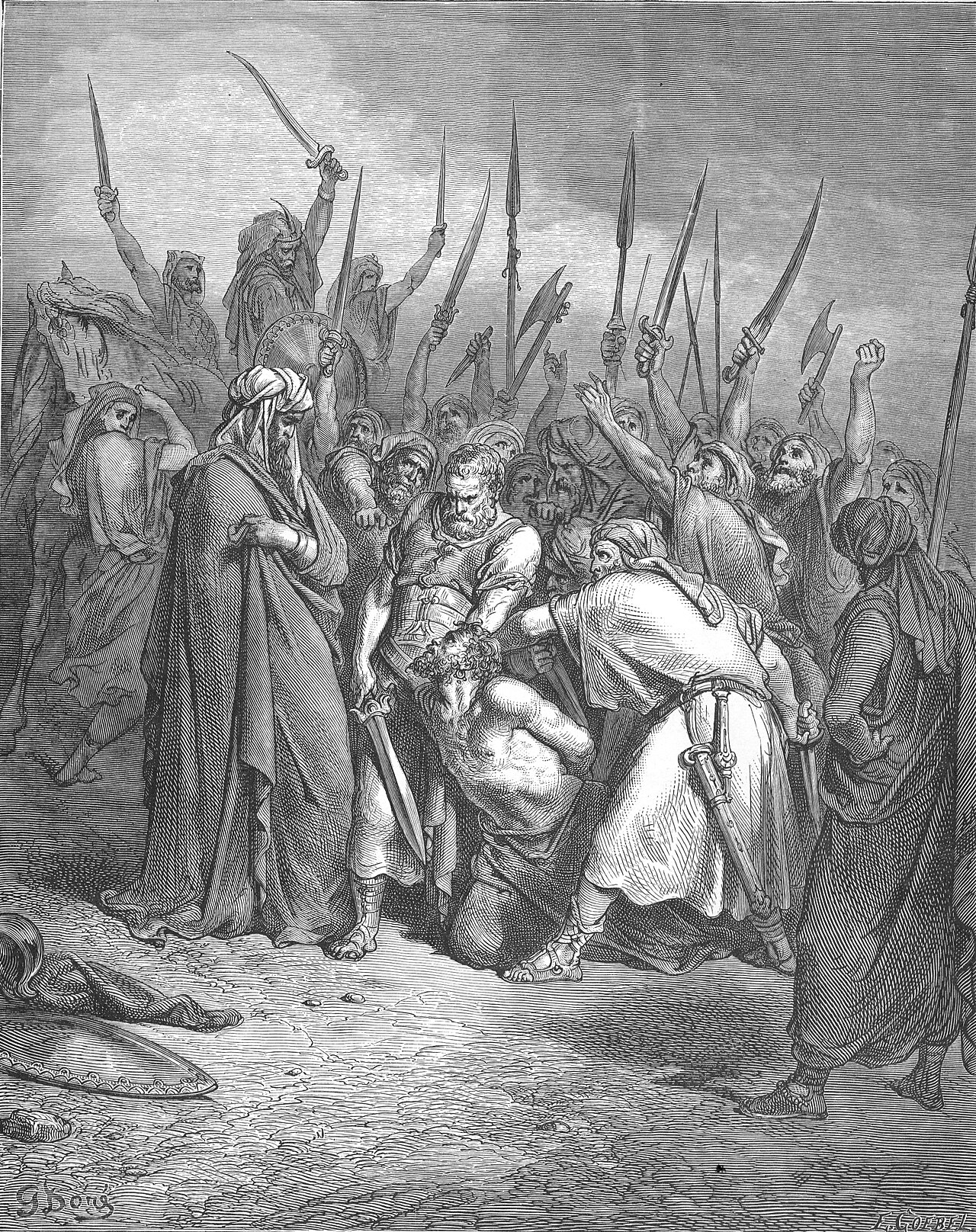
in 1 Samuel 15But Samuel declared: “As your sword has made women childless, so your mother will be childless among women.” And Samuel hacked Agag to pieces before the LORD at Gilgal.
BSB
The same verse in ASV and KJV ▾
ASV
And Samuel said, As thy sword hath made women childless, so shall thy mother be childless among women. And Samuel hewed Agag in pieces before Jehovah in Gilgal.
KJV
And Samuel said, As thy sword hath made women childless, so shall thy mother be childless among women. And Samuel hewed Agag in pieces before the Lord in Gilgal.
⋯
This verse in 1 Samuel 15
Commentary
11 notes on this verseA commentator
Albert Barnes1798–1870
Notes, Explanatory and Practical, on the Old and New Testaments (1832-1869)
Hewed in pieces - Only found in this passage. Samuel thus executed the חרם chērem 1Sa 15:3 which Saul had violated, and so both saved the nation from the guilt of a broken oath, and gave a final example to Saul, but apparently in vain, of uncompromising obedience to the commandments of God. There is something awful in the majesty of the prophet rising above and eclipsing that of the king (compare 1Ki 21:20; Jer 38:14 ff; Dan 2:46; Dan 4:27).
This site's exposition
Surely the bitterness of death is past
on 1 Samuel 15:32-33
Agag comes before Samuel delicately, expecting the courtesy shown to a captured king, and his own words betray the hope: Surely the bitterness of death is past. Samuel's sentence answers Agag's own record, as thy sword hath made women childless, so shall thy mother be childless among women, and he carries out with his own hand the destruction Saul had left undone. Agag's line is picked up centuries later at Esther 3:1, which names Haman the Agagite; the descent from this king to that enemy of the Jews is the church's tradition rather than a stated genealogy, and it is held so.
The record, by era
The Medieval Church3 voices
And Samuel said, "As your sword has made women childless, etc." Understand the sword of Agag as the most effective fury of pride; the Hebrew women bereft of children by him, as faithful souls deprived of the fruit of good works by victorious pride. But …
And Samuel hewed Agag in pieces, etc. And every spiritual and prophetic teacher hews the king of the licking people in pieces; when, diligently exposing the manifold deceptions of pride, carefully disemboweling the vice, he considers and explains what must be done against each of …
A commentator
Gregory the DialogistCommentary on 1 Kings, Book 6, Chapter 2 · Written before 604.
proposed
38. What is the mother of carnal sense, if not original sin? For since before the sin of the first man no lust was present in the members, the Amalekite king did not exist. There was indeed the sense of the flesh, but it was not shameful and lustful; but as soon as he fell into sin, he felt the itching of his members, because he could not have obedient movement of the flesh when he himself was disobedient to God.
The Puritans and the Awakening2 voices
Hewed - This he did by divine instinct, and in pursuance of God's express command, which being sinfully neglected by Saul, is now executed by Samuel. But these are no precedents for private persons to take the sword of justice into their hands.
He trod in the steps of his ancestors' cruelty, and those under him, it is likely, did the same; justly therefore is all the righteous blood shed by Amalek required of this generation, Matt. xxiii. Agag, that was delicate and luxurious himself, was cruel and barbarous to others.
4 more voices on this verse
The Puritans and the Awakening2 voices
), and sacrifices used to be cut in pieces. How Agag's present vain hopes were frustrated: He came delicately, in a stately manner, to show that he was a king, and therefore to be treated with respect, or in a soft effeminate manner, as one never used to hardship, that could not set the sole of his foot to the ground for tenderness and delicacy ( Deut. xxviii.
quarantine:debris (2026-07-29) — leading-punctuation
And Samuel said, as thy sword hath made women childless,....
The Nineteenth Century2 voices
A commentator
Jamieson, Fausset & Brown1802–1910
Commentary Critical and Explanatory on the Whole Bible (1871)
Samuel hewed Agag--This cruel tyrant met the retribution of a righteous Providence. Never has it been unusual for great or official personages in the East to perform executions with their own hands. Samuel did it "before the Lord" in Gilgal, appointing that same mode of punishment (hitherto unknown in Israel) to be used towards him, which he had formerly used towards others.
As thy sword hath made women childless - It appears that Agag had forfeited his life by his own personal transgressions, and that his death now was the retribution of his cruelties. And Samuel hewed Agag in pieces - 1. What Samuel did here he did in his magisterial capacity; and, 2. It is not likely he did it by his own sword, but by that of an executioner. What kings, magistrates, and generals do, in an official way, by their subjects, servants, or soldiers, they are said to do themselves; qui facit per alterum, facit per se.
The words behind it
17 Hebrew wordsEvery Hebrew word of this verse in the order it stands, with what it means and the door to its own study. The last column counts the times a word stands in the whole Bible: the rarer the word, the more the places it appears belong together.
| Hebrew | Sound | Meaning | Word study | In the Bible |
|---|---|---|---|---|
| וַיֹּ֣אמֶר | vaiyomer | and he said | H559 → | 5305 times |
| שְׁמוּאֵ֔ל | shemuel | Samuel | H8050 → | 141 times |
| כַּאֲשֶׁ֨ר | kaasher | just as | H834 → | 5497 times |
| שִׁכְּלָ֤ה | shikelah | it has made childless | H7921 → | |
| נָשִׁים֙ | nashim | women | H802 → | 781 times |
| חַרְבֶּ֔ךָ | charbekha | sword your | H2719 → | 413 times |
| כֵּן־ | ken- | so | H3651 → | 771 times |
| תִּשְׁכַּ֥ל | tishkal | she will become childless | H7921 → | |
| מִנָּשִׁ֖ים | minashim | from women | H802 → | 781 times |
| אִמֶּ֑ךָ | ʾimekha | mother your | H517 → | 220 times |
| וַיְשַׁסֵּ֨ף | vayshasef | and he cut to pieces | H8158 → | |
| שְׁמוּאֵ֧ל | shemuel | Samuel | H8050 → | 141 times |
| אֶת־ | ʾet- | <obj.> | H853 → | 10935 times |
| אֲגָ֛ג | ʾagag | Agag | H90 → | 8 times |
| לִפְנֵ֥י | lifnei | <to> before | H6440 → | 2123 times |
| יְהוָ֖ה | yahweh | Yahweh | H3068 → | 6520 times |
| בַּגִּלְגָּֽל׃ ס | bagilgal | in <the> Gilgal | H1537 → | 41 times |
וַיֹּ֣אמֶרand he said
vaiyomerH559 →5305 times
שְׁמוּאֵ֔לSamuel
shemuelH8050 →141 times
כַּאֲשֶׁ֨רjust as
kaasherH834 →5497 times
שִׁכְּלָ֤הit has made childless
shikelahH7921 →
נָשִׁים֙women
nashimH802 →781 times
חַרְבֶּ֔ךָsword your
charbekhaH2719 →413 times
כֵּן־so
ken-H3651 →771 times
תִּשְׁכַּ֥לshe will become childless
tishkalH7921 →
מִנָּשִׁ֖יםfrom women
minashimH802 →781 times
אִמֶּ֑ךָmother your
ʾimekhaH517 →220 times
וַיְשַׁסֵּ֨ףand he cut to pieces
vayshasefH8158 →
שְׁמוּאֵ֧לSamuel
shemuelH8050 →141 times
אֶת־<obj.>
ʾet-H853 →10935 times
אֲגָ֛גAgag
ʾagagH90 →8 times
לִפְנֵ֥י<to> before
lifneiH6440 →2123 times
יְהוָ֖הYahweh
yahwehH3068 →6520 times
בַּגִּלְגָּֽל׃ סin <the> Gilgal
bagilgalH1537 →41 times
A shaded row is a word that stands 400 times or fewer in the Bible.
The walk
8 stopsEach card is a verse this one points to, and under it the verses that one points to in turn. Where several paths arrive at the same place, that place is listed first: the text keeps returning to it.
Through
Matthew 7:2For with the same judgment you pronounce, you will be judged; and with the measure you use, it will be measured to you.
it leads to
- James 2:13
For judgment without mercy will be shown to anyone who has not been merciful. Mercy triumphs over judgment.
Reached by 2 separate paths from here.
- Mark 4:24
He went on to say, “Pay attention to what you hear. With the measure you use, it will be measured to you, and even more will be added to you.
- Obadiah 1:15
For the Day of the LORD is near for all the nations. As you have done, it will be done to you; your recompense will return upon your own head.
- Luke 6:38
Give, and it will be given to you. A good measure, pressed down, shaken together, and running over will be poured into your lap. For with the measure you use, it will be measured…
- James 2:13
Through
Genesis 9:6Whoever sheds the blood of man, by man his blood will be shed; for in His own image God has made mankind.
it leads to
- Revelation 13:10
“If anyone is destined for captivity, into captivity he will go; if anyone is to die by the sword, by the sword he must be killed.” Here is a call for the perseverance and…
Reached by 2 separate paths from here.
- Leviticus 24:17
And if a man takes the life of anyone else, he must surely be put to death.
- Matthew 26:52
“Put your sword back in its place,” Jesus said to him. “For all who draw the sword will die by the sword.
- Revelation 13:10
Through
Revelation 16:6For they have spilled the blood of saints and prophets, and You have given them blood to drink, as they deserve.”
it leads to
- Isaiah 49:26
I will make your oppressors eat their own flesh; they will be drunk on their own blood, as with wine. Then all mankind will know that I, the LORD, am your Savior and your…
- Isaiah 49:26
Where this verse is studied
On this page
Studies3
On this verse
About 1 Samuel
Who and where
3 names in this verse with a page on the site.
- PersonJudges to monarchySamuelAsked of God by Hannah and lent to the LORD at Shiloh; the last judge and first of the prophets after Moses, who anointed both Sau…
- PersonEarly monarchyAgagKing of Amalek, spared by Saul against the express command — the partial obedience that cost Saul the kingdom; hewed in pieces bef…
- PlaceJordan valley near JerichoGilgalIsrael's first Canaan camp where the stones were set and the reproach rolled away (Josh 4-5); later a corrupted shrine the prophet…
This page draws on Adam Clarke, Commentary on the Bible; Albert Barnes, Notes, Explanatory and Practical, on the Old and New Testaments (1832-1869); Bede, Commentary on Samuel; Gregory the Dialogist, Commentary on 1 Kings, Book 6, Chapter 2; Jamieson, Fausset & Brown, Commentary Critical and Explanatory on the Whole Bible; John Gill, Exposition of the Old Testament (1748-1763); John Wesley, Explanatory Notes upon the Old Testament and Matthew Henry, Commentary on the Whole Bible.