
1 Kings 22:13
in 1 Kings 22Then the messenger who had gone to call Micaiah instructed him, “Behold now, with one accord the words of the prophets are favorable to the king. So please let your words be like theirs, and speak favorably.”
BSB
The same verse in ASV and KJV ▾
ASV
And the messenger that went to call Micaiah spake unto him, saying, Behold now, the words of the prophets declare good unto the king with one mouth: let thy word, I pray thee, be like the word of one of them, and speak thou good.
KJV
And the messenger that was gone to call Micaiah spake unto him, saying, Behold now, the words of the prophets declare good unto the king with one mouth: let thy word, I pray thee, be like the word of one of them, and speak that which is good.
⋯
This verse in 1 Kings 22
Commentary
5 notes on this verseA commentator
Albert Barnes1798–1870
Notes, Explanatory and Practical, on the Old and New Testaments (1832-1869)
And the messenger spake unto him ... - There seems to have been a widespread notion among the irreligious and the half-religious of the ancient world, that their prophets were not the mere mouth-pieces of the god, but that they were persons who had power with the god, and could compel, or at least induce, Him to work their will (compare Num 24:10; Isa 30:10). They saw that the prophet’s word was accomplished; they did not understand that if he falsified his message the accomplishment would no longer follow.
This site's exposition
let thy word, I pray
on 1 Kings 22:13-14
The messenger sent to fetch Micaiah presses him to match the other four hundred before he has even spoken. Micaiah's answer sets the office in one sentence, As the Lord liveth, what the Lord saith unto me, that will I speak, the same oath by which Balaam once bound himself in Num 22:18 and 24:13 against a king's pressure to bless what should not be blessed.
The record, by era
The Puritans and the Awakening2 voices
And the messenger that was gone to call Micaiah spake unto him,....
He told Micaiah how unanimous the other prophets were in foretelling the king's good success, how agreeable it was to the king, intimating that it was his interest to say as they said--he might thereby gain, not only enlargement, but preferment.
The Nineteenth Century1 voice
The words of the prophets declare good - What notion could these men have of prophecy, when they supposed it was in the power of the prophet to model the prediction as he pleased, and have the result accordingly?
The words behind it
25 Hebrew wordsEvery Hebrew word of this verse in the order it stands, with what it means and the door to its own study. The last column counts the times a word stands in the whole Bible: the rarer the word, the more the places it appears belong together.
| Hebrew | Sound | Meaning | Word study | In the Bible |
|---|---|---|---|---|
| וְהַמַּלְאָ֞ךְ | vehamalakh | and the messenger | H4397 → | 213 times |
| אֲשֶׁר־ | ʾasher- | who | H834 → | 5497 times |
| הָלַ֣ךְ׀ | halakh | he had gone | H1980 → | 1546 times |
| לִקְרֹ֣א | likro' | to summon | H7121 → | 733 times |
| מִיכָ֗יְהוּ | mikhayehu | Micaiah | H4321 → | 21 times |
| דִּבֶּ֤ר | diber | he spoke | H1696 → | 1141 times |
| אֵלָיו֙ | ʾelav | to him | H413 → | 5510 times |
| לֵאמֹ֔ר | lemor | <to> saying | H559 → | 5305 times |
| הִנֵּה־ | hineh- | here! | H2009 → | 843 times |
| נָ֞א | na' | please | H4994 → | 404 times |
| דִּבְרֵ֧י | divrei | [the] words of | H1697 → | 1440 times |
| הַנְּבִיאִ֛ים | haneviim | the prophets | H5030 → | 314 times |
| פֶּֽה־ | peh- | a mouth | H6310 → | 498 times |
| אֶחָ֥ד | ʾechad | one | H259 → | 971 times |
| ט֖וֹב | tov | [is] good | H2896 → | 538 times |
| אֶל־ | ʾel- | to | H413 → | 5510 times |
| הַמֶּ֑לֶךְ | hamelekh | the king | H4428 → | 2525 times |
| יְהִֽי־ | yehi- | let it be | H1961 → | 3559 times |
| נָ֣א | na' | please | H4994 → | 404 times |
| דְבָרְךָ֗ | divreikha | word your | H1697 → | 1440 times |
| כִּדְבַ֛ר | kidvar | like [the] word of | H1697 → | 1440 times |
| אַחַ֥ד | ʾachad | one | H259 → | 971 times |
| מֵהֶ֖ם | mehem | from them | ||
| וְדִבַּ֥רְתָּ | vedibarta | and you will speak | H1696 → | 1141 times |
| טּֽוֹב׃ | tov | good | H2896 → | 538 times |
וְהַמַּלְאָ֞ךְand the messenger
vehamalakhH4397 →213 times
אֲשֶׁר־who
ʾasher-H834 →5497 times
הָלַ֣ךְ׀he had gone
halakhH1980 →1546 times
לִקְרֹ֣אto summon
likro'H7121 →733 times
מִיכָ֗יְהוּMicaiah
mikhayehuH4321 →21 times
דִּבֶּ֤רhe spoke
diberH1696 →1141 times
אֵלָיו֙to him
ʾelavH413 →5510 times
לֵאמֹ֔ר<to> saying
lemorH559 →5305 times
הִנֵּה־here!
hineh-H2009 →843 times
נָ֞אplease
na'H4994 →404 times
דִּבְרֵ֧י[the] words of
divreiH1697 →1440 times
הַנְּבִיאִ֛יםthe prophets
haneviimH5030 →314 times
פֶּֽה־a mouth
peh-H6310 →498 times
אֶחָ֥דone
ʾechadH259 →971 times
ט֖וֹב[is] good
tovH2896 →538 times
אֶל־to
ʾel-H413 →5510 times
הַמֶּ֑לֶךְthe king
hamelekhH4428 →2525 times
יְהִֽי־let it be
yehi-H1961 →3559 times
נָ֣אplease
na'H4994 →404 times
דְבָרְךָ֗word your
divreikhaH1697 →1440 times
כִּדְבַ֛רlike [the] word of
kidvarH1697 →1440 times
אַחַ֥דone
ʾachadH259 →971 times
מֵהֶ֖םfrom them
mehem
וְדִבַּ֥רְתָּand you will speak
vedibartaH1696 →1141 times
טּֽוֹב׃good
tovH2896 →538 times
A shaded row is a word that stands 400 times or fewer in the Bible.
The walk
8 stopsEach card is a verse this one points to, and under it the verses that one points to in turn. Where several paths arrive at the same place, that place is listed first: the text keeps returning to it.
Through
Psalms 11:1In the LORD I take refuge. How then can you say to me: “Flee like a bird to your mountain!
it leads to
- Psalms 56:11
in God I trust; I will not be afraid. What can man do to me?
- Isaiah 26:3–4
You will keep in perfect peace the steadfast of mind, because he trusts in You.
- 1 Samuel 23:14
And David stayed in the wilderness strongholds and in the hill country of the Wilderness of Ziph. Day after day Saul searched for him, but God would not deliver David into his hand.
- Psalms 25:2
in You, my God, I trust. Do not let me be put to shame; do not let my enemies exult over me.
- Psalms 56:11
Through
Micah 2:11If a man of wind were to come and say falsely, “I will preach to you of wine and strong drink,” he would be just the preacher for this people!
it leads to
- Jeremiah 5:31
The prophets prophesy falsely, and the priests rule by their own authority. My people love it so, but what will you do in the end?
- 2 Corinthians 11:13–15
For such men are false apostles, deceitful workers, masquerading as apostles of Christ.
- Isaiah 30:10–11
They say to the seers, “Stop seeing visions!” and to the prophets, “Do not prophesy to us the truth! Speak to us pleasant words; prophesy illusions.
- Jeremiah 5:31
Through
Psalms 10:11He says to himself, “God has forgotten; He hides His face and never sees.”
it leads to
- Ezekiel 8:12
“Son of man,” He said to me, “do you see what the elders of the house of Israel are doing in the darkness, each at the shrine of his own idol? For they are…
- Ezekiel 8:12
Where this verse is studied
On this page
About 1 Kings
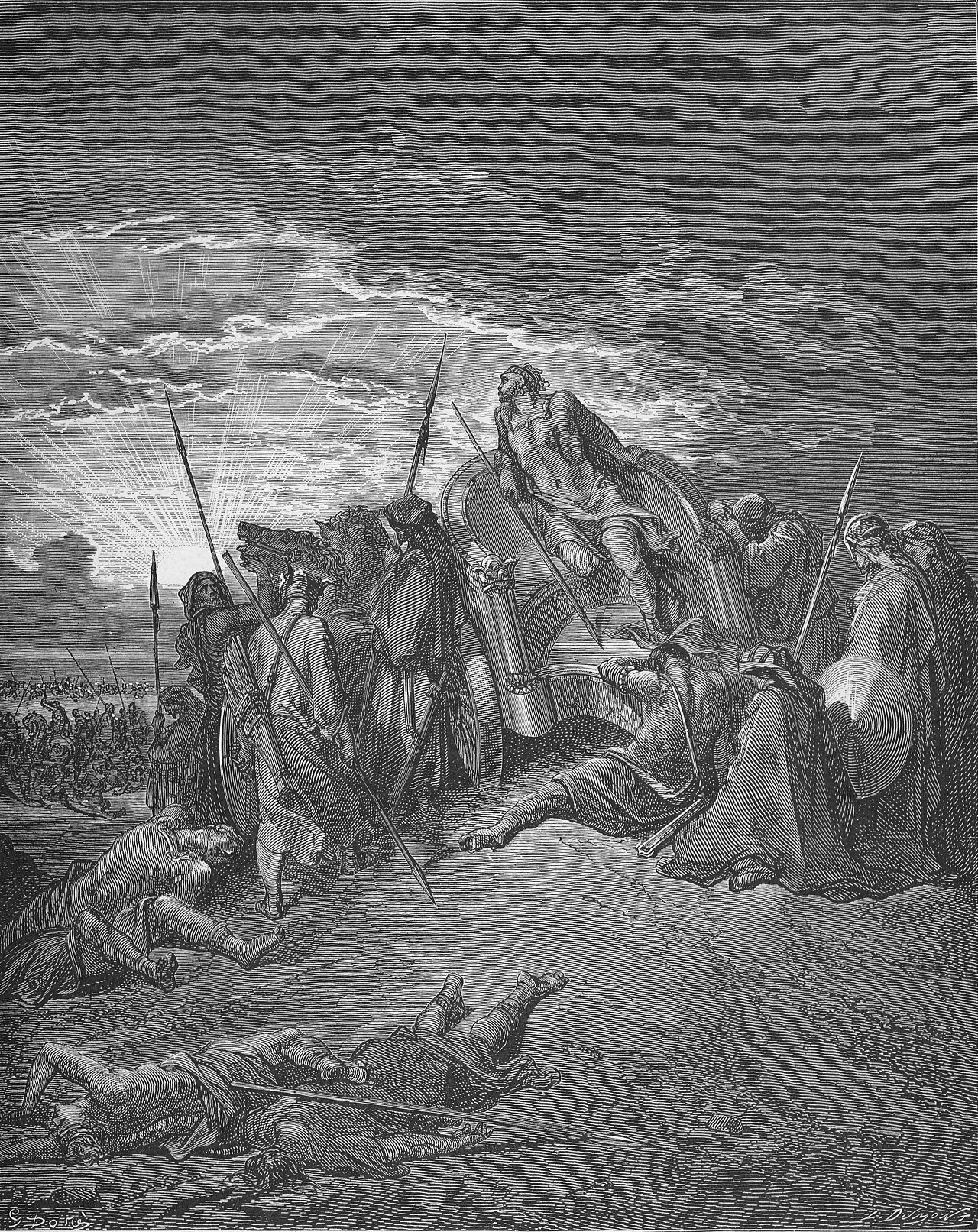
This page draws on Adam Clarke, Commentary on the Bible; Albert Barnes, Notes, Explanatory and Practical, on the Old and New Testaments (1832-1869); John Gill, Exposition of the Old Testament (1748-1763); Keil, The Books of the Kings and Matthew Henry, Commentary on the Whole Bible.