
1 Kings 22:5
in 1 Kings 22But Jehoshaphat also said to the king of Israel, “Please inquire first for the word of the LORD.”
BSB
The same verse in ASV and KJV ▾
ASV
And Jehoshaphat said unto the king of Israel, Inquire first, I pray thee, for the word of Jehovah.
KJV
And Jehoshaphat said unto the king of Israel, Enquire, I pray thee, at the word of the Lord to day.
⋯
This verse in 1 Kings 22
Commentary
5 notes on this verseThis site's exposition
Please inquire first for the word of the LORD
on 1 Kings 22:5-6
Jehoshaphat asks first for the word of the Lord. Ahab produces four hundred men who answer as one voice that “the Lord will deliver it into the hand of the king”. Their unanimity is the tell: court prophets salaried by a king tend to say what the king wants said.
The record, by era
The Puritans and the Awakening2 voices
And Jehoshaphat said unto the king of Israel, inquire, I pray thee, at the word of the Lord today. Being a pious and religious prince, he did not choose to go into a war at once, without consulting the Lord by his prophets, whether it was his will and pleasure they should engage in it, and should prosper; and he was desirous of having this done immediately, before they proceeded any further.
Whithersoever a good man goes he desires to take God along with him, and will acknowledge him in all his ways, ask leave of him, and look up to him for success. Whithersoever a good man goes he ought to take his religion along with him, and not be ashamed to own it, no, not when he is with those who have no kindness for it.
The Nineteenth Century2 voices
A commentator
Jamieson, Fausset & Brown1802–1910
Commentary Critical and Explanatory on the Whole Bible (1871)
proposed
Jos 21:38), on the site of the present Salt Lake, in the province of Belka. It lay within the territories of the Israelitish monarch, and was unjustly alienated; but whether it was one of the cities usurped by the first Ben-hadad, which his son had promised to restore, or was retained for some other reasons, the sacred historian has not mentioned.
quarantine:debris (2026-07-29) — unbalanced-parens
A commentator
Albert Barnes1798–1870
Notes, Explanatory and Practical, on the Old and New Testaments (1832-1869)
proposed
Jehoshaphat, with characteristic piety 1Ki 22:43 takes advantage of his position as Ahab’s friend and ally, to suggest inquiry of the Lord (Yahweh) before the expedition is undertaken. Lest Ahab should consent in word and put off the inquiry in act, he asks to have the prophets called in at once: “today.”
The words behind it
11 Hebrew wordsEvery Hebrew word of this verse in the order it stands, with what it means and the door to its own study. The last column counts the times a word stands in the whole Bible: the rarer the word, the more the places it appears belong together.
| Hebrew | Sound | Meaning | Word study | In the Bible |
|---|---|---|---|---|
| וַיֹּ֥אמֶר | vaiyomer | and he said | H559 → | 5305 times |
| יְהוֹשָׁפָ֖ט | yehoshafat | Jehoshaphat | H3092 → | 84 times |
| אֶל־ | ʾel- | to | H413 → | 5510 times |
| מֶ֣לֶךְ | melekh | [the] king of | H4428 → | 2525 times |
| יִשְׂרָאֵ֑ל | yisrael | Israel | H3478 → | 2507 times |
| דְּרָשׁ־ | derosh- | seek | H1875 → | 164 times |
| נָ֥א | na' | please | H4994 → | 404 times |
| כַיּ֖וֹם | khaiyom | as the day | H3117 → | 2304 times |
| אֶת־ | ʾet- | <obj.> | H853 → | 10935 times |
| דְּבַ֥ר | devar | [the] word of | H1697 → | 1440 times |
| יְהוָֽה׃ | yahweh | Yahweh | H3068 → | 6520 times |
וַיֹּ֥אמֶרand he said
vaiyomerH559 →5305 times
יְהוֹשָׁפָ֖טJehoshaphat
yehoshafatH3092 →84 times
אֶל־to
ʾel-H413 →5510 times
מֶ֣לֶךְ[the] king of
melekhH4428 →2525 times
יִשְׂרָאֵ֑לIsrael
yisraelH3478 →2507 times
דְּרָשׁ־seek
derosh-H1875 →164 times
נָ֥אplease
na'H4994 →404 times
כַיּ֖וֹםas the day
khaiyomH3117 →2304 times
אֶת־<obj.>
ʾet-H853 →10935 times
דְּבַ֥ר[the] word of
devarH1697 →1440 times
יְהוָֽה׃Yahweh
yahwehH3068 →6520 times
A shaded row is a word that stands 400 times or fewer in the Bible.
The walk
8 stopsEach card is a verse this one points to, and under it the verses that one points to in turn. Where several paths arrive at the same place, that place is listed first: the text keeps returning to it.
Through
2 Kings 3:11But Jehoshaphat asked, “Is there no prophet of the LORD here? Let us inquire of the LORD through him.” And one of the servants of the king of Israel answered, “Elisha son of Shaphat…
it leads to
- 1 Kings 22:7
But Jehoshaphat asked, “Is there not still a prophet of the LORD here of whom we can inquire?”
- 1 Kings 19:21
So Elisha turned back from him, took his pair of oxen, and slaughtered them. With the oxen’s equipment, he cooked the meat and gave it to the people, and they ate. Then he set…
- 2 Kings 3:3
Nevertheless, he clung to the sins that Jeroboam son of Nebat had caused Israel to commit; he did not turn away from them.
- 1 Kings 22:7
Through
Jeremiah 21:2“Please inquire of the LORD on our behalf, since Nebuchadnezzar king of Babylon is waging war against us. Perhaps the LORD will perform for us something like all His past wonders, so that Nebuchadnezzar…
it leads to
- Jeremiah 37:3
Yet King Zedekiah sent Jehucal son of Shelemiah and Zephaniah the priest, the son of Maaseiah, to Jeremiah the prophet with the message, “Please pray to the LORD our God for us!”
- Ezekiel 20:1–3
In the seventh year, on the tenth day of the fifth month, some of the elders of Israel came to inquire of the LORD, and they sat down before me.
- Jeremiah 37:7
“This is what the LORD, the God of Israel, says that you are to tell the king of Judah, who sent you to Me: Behold, Pharaoh’s army, which has marched out to help you,…
- Jeremiah 42:4–6
“I have heard you,” replied Jeremiah the prophet. “I will surely pray to the LORD your God as you request, and I will tell you everything that the LORD answers; I will not withhold…
- 1 Samuel 28:15
Then Samuel said to Saul, “Why have you disturbed me by bringing me up?” “I am deeply distressed,” replied Saul. “The Philistines are fighting against me, and God has turned away from me. He…
- Jeremiah 37:3
Where this verse is studied
About 1 Kings
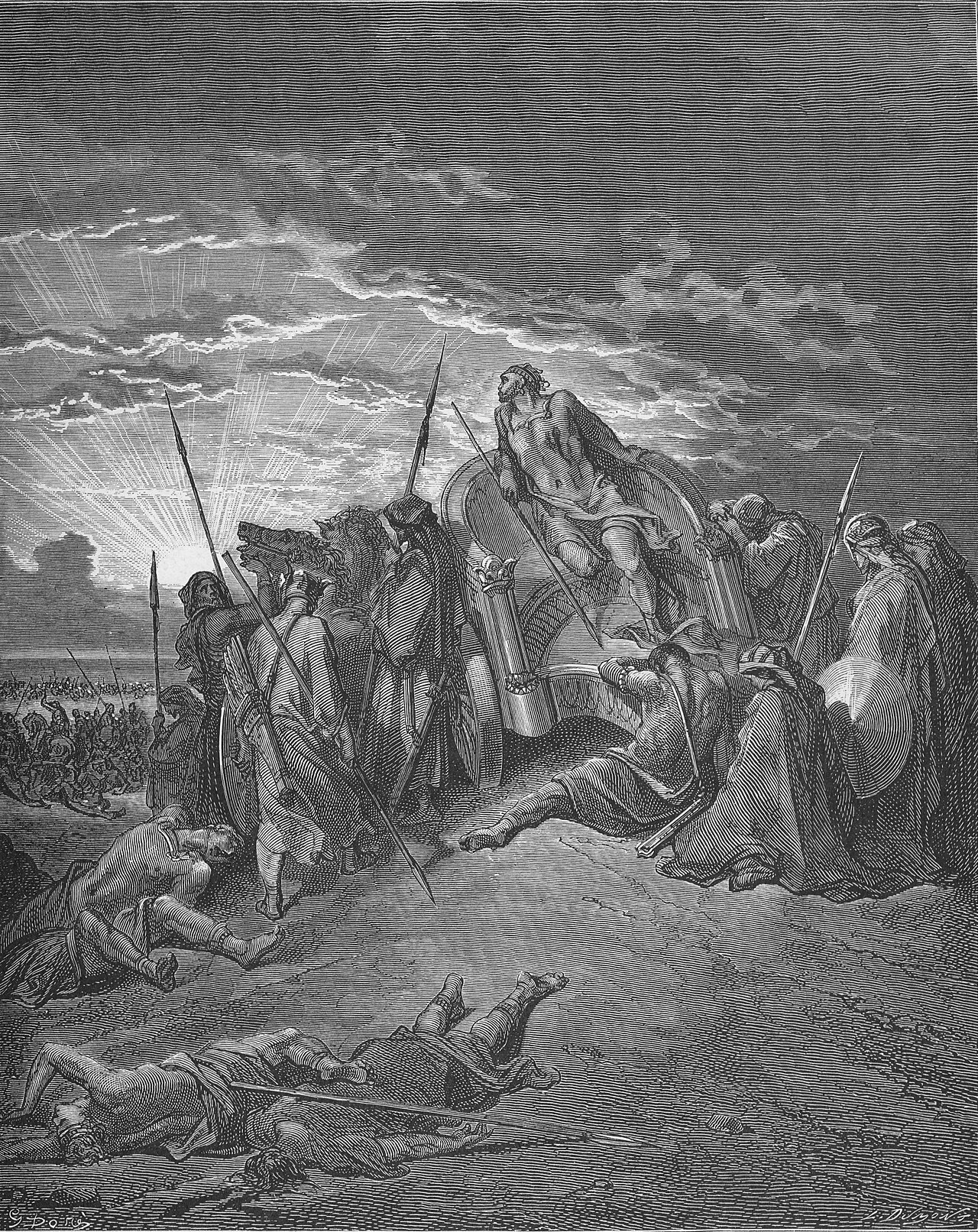
This page draws on Albert Barnes, Notes, Explanatory and Practical, on the Old and New Testaments (1832-1869); Jamieson, Fausset & Brown, Commentary Critical and Explanatory on the Whole Bible; John Gill, Exposition of the Old Testament; John Gill, Exposition of the Old Testament (1748-1763); Keil, The Books of the Kings and Matthew Henry, Commentary on the Whole Bible.