
1 Kings 1:30
in 1 Kings 1I will carry out this very day exactly what I swore to you by the LORD, the God of Israel: Surely your son Solomon will reign after me, and he will sit on my throne in my place.”
BSB
The same verse in ASV and KJV ▾
ASV
verily as I sware unto thee by Jehovah, the God of Israel, saying, Assuredly Solomon thy son shall reign after me, and he shall sit upon my throne in my stead; verily so will I do this day.
KJV
Even as I sware unto thee by the Lord God of Israel, saying, Assuredly Solomon thy son shall reign after me, and he shall sit upon my throne in my stead; even so will I certainly do this day.
⋯
This verse in 1 Kings 1
Commentary
5 notes on this verseIn the first place, he appoints Solomon as king, even though he had many sons, in order to confound the fools, who believed that nature is more valuable than a virtuous spirit before God. In the second place, he did this because he feared that …
This site's exposition
I will carry out this very day
on 1 Kings 1:30-31
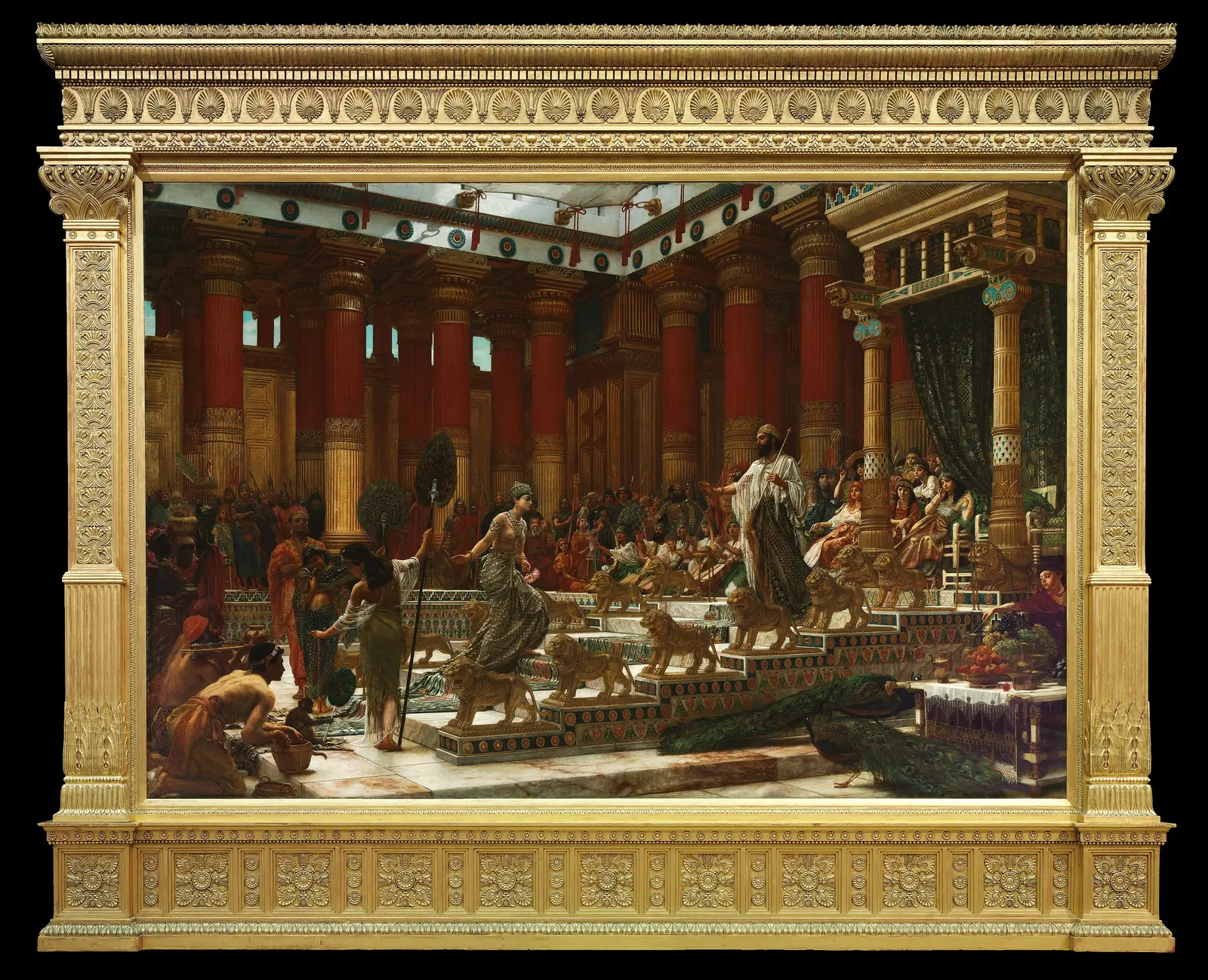
David repeats his earlier promise, that Solomon “will reign after me, and he will sit on my throne”. He vows to “carry out this very day” what he swore, and the private oath becomes a public act. Bathsheba answers with a subject's blessing, “May my lord King David live forever!”
The record, by era
The Puritans and the Awakening2 voices
Even as I sware unto thee by the Lord God of Israel,.... And so owns and confirms the truth of what Nathan had suggested to Bathsheba, and she had asserted, 1Ki 1:13; saying, assuredly Solomon thy son shall reign after me, and he shall sit upon my throne in my stead; this was the substance of the oath: even so will I certainly do this day; perform this oath, and set Solomon on the throne.
Though he is old, and his memory begins to fail him, yet he remembers this. Note, An oath is so sacred a thing that the obligations of it cannot be broken, and so solemn a thing that the impressions of it, one would think, cannot be forgotten.
The Nineteenth Century1 voice
A commentator
Jamieson, Fausset & Brown1802–1910
Commentary Critical and Explanatory on the Whole Bible (1871)
Then king David answered and said, Call me Bath-sheba--He renews to her the solemn pledge he had given, in terms of solemnity and impressiveness which show that the aged monarch had roused himself to the duty the emergency called for. SOLOMON, BY DAVID'S APPOINTMENT, IS ANOINTED KING.
The words behind it
23 Hebrew wordsEvery Hebrew word of this verse in the order it stands, with what it means and the door to its own study. The last column counts the times a word stands in the whole Bible: the rarer the word, the more the places it appears belong together.
| Hebrew | Sound | Meaning | Word study | In the Bible |
|---|---|---|---|---|
| כִּ֡י | ki | for | H3588 → | 4482 times |
| כַּאֲשֶׁר֩ | kaasher | just as | H834 → | 5497 times |
| נִשְׁבַּ֨עְתִּי | nishba'ti | I swore | H7650 → | 186 times |
| לָ֜ךְ | lakh | to you | ||
| בַּיהוָ֨ה | bayahweh | by Yahweh | H3068 → | 6520 times |
| אֱלֹהֵ֤י | ʾelohei | [the] God of | H430 → | 2601 times |
| יִשְׂרָאֵל֙ | yisrael | Israel | H3478 → | 2507 times |
| לֵאמֹ֔ר | lemor | <to> saying | H559 → | 5305 times |
| כִּֽי־ | ki- | that | H3588 → | 4482 times |
| שְׁלֹמֹ֤ה | shelomoh | Solomon | H8010 → | 291 times |
| בְנֵךְ֙ | venekh | son your | H1121 → | 4930 times |
| יִמְלֹ֣ךְ | yimlokh | he will reign | H4427 → | 348 times |
| אַחֲרַ֔י | ʾacharai | after me | H310 → | 715 times |
| וְה֛וּא | vehu' | and he | H1931 → | 1879 times |
| יֵשֵׁ֥ב | yeshev | he will sit | H3427 → | 1079 times |
| עַל־ | ʾal- | on | H5921 → | 5755 times |
| כִּסְאִ֖י | kisi | throne my | H3678 → | 135 times |
| תַּחְתָּ֑י | tachtai | in place of me | H8478 → | 505 times |
| כִּ֛י | ki | for | H3588 → | 4482 times |
| כֵּ֥ן | ken | so | H3651 → | 771 times |
| אֶעֱשֶׂ֖ה | ʾeeseh | I will do | H6213 → | 2628 times |
| הַיּ֥וֹם | haiyom | the day | H3117 → | 2304 times |
| הַזֶּֽה׃ | hazeh | <the> this | H2088 → | 1180 times |
כִּ֡יfor
kiH3588 →4482 times
כַּאֲשֶׁר֩just as
kaasherH834 →5497 times
נִשְׁבַּ֨עְתִּיI swore
nishba'tiH7650 →186 times
לָ֜ךְto you
lakh
בַּיהוָ֨הby Yahweh
bayahwehH3068 →6520 times
אֱלֹהֵ֤י[the] God of
ʾeloheiH430 →2601 times
יִשְׂרָאֵל֙Israel
yisraelH3478 →2507 times
לֵאמֹ֔ר<to> saying
lemorH559 →5305 times
כִּֽי־that
ki-H3588 →4482 times
שְׁלֹמֹ֤הSolomon
shelomohH8010 →291 times
בְנֵךְ֙son your
venekhH1121 →4930 times
יִמְלֹ֣ךְhe will reign
yimlokhH4427 →348 times
אַחֲרַ֔יafter me
ʾacharaiH310 →715 times
וְה֛וּאand he
vehu'H1931 →1879 times
יֵשֵׁ֥בhe will sit
yeshevH3427 →1079 times
עַל־on
ʾal-H5921 →5755 times
כִּסְאִ֖יthrone my
kisiH3678 →135 times
תַּחְתָּ֑יin place of me
tachtaiH8478 →505 times
כִּ֛יfor
kiH3588 →4482 times
כֵּ֥ןso
kenH3651 →771 times
אֶעֱשֶׂ֖הI will do
ʾeesehH6213 →2628 times
הַיּ֥וֹםthe day
haiyomH3117 →2304 times
הַזֶּֽה׃<the> this
hazehH2088 →1180 times
A shaded row is a word that stands 400 times or fewer in the Bible.
The walk
8 stopsEach card is a verse this one points to, and under it the verses that one points to in turn. Where several paths arrive at the same place, that place is listed first: the text keeps returning to it.
Through
1 Kings 1:13Go at once to King David and say, ‘My lord the king, did you not swear to your maidservant, “Surely your son Solomon will reign after me, and he will sit on my throne”?…
it leads to
- 1 Kings 1:17
“My lord,” she replied, “you yourself swore to your maidservant by the LORD your God: ‘Surely your son Solomon will reign after me, and he will sit on my throne.’
- Luke 1:32–33
He will be great and will be called the Son of the Most High. The Lord God will give Him the throne of His father David,
- 1 Kings 2:12
So Solomon sat on the throne of his father David, and his kingdom was firmly established.
- Psalms 132:11–12
The LORD swore an oath to David, a promise He will not revoke: “One of your descendants I will place on your throne.
- 1 Chronicles 22:6–13
Then David called for his son Solomon and instructed him to build a house for the LORD, the God of Israel.
- 1 Kings 1:17
Through
1 Kings 1:17“My lord,” she replied, “you yourself swore to your maidservant by the LORD your God: ‘Surely your son Solomon will reign after me, and he will sit on my throne.’
it leads to
- 1 Kings 1:13
Go at once to King David and say, ‘My lord the king, did you not swear to your maidservant, “Surely your son Solomon will reign after me, and he will sit on my throne”?…
- 1 Peter 3:6
just as Sarah obeyed Abraham and called him lord. And you are her children if you do what is right and refuse to give way to fear.
- Genesis 18:12
So she laughed to herself, saying, “After I am worn out and my master is old, will I now have this pleasure?”
- 1 Kings 1:13
Where this verse is studied
On this page
Studies4
On this verse
On this chapter
About 1 Kings
Who and where
1 name in this verse with a page on the site.
This page draws on Ishodad of Merv, BOOKS OF SESSIONS 1 KINGS 1:30; Jamieson, Fausset & Brown, Commentary Critical and Explanatory on the Whole Bible; John Gill, Exposition of the Old Testament (1748-1763); Keil, The Books of the Kings and Matthew Henry, Commentary on the Whole Bible.