
Also called: worry, fret, care, troubled heart, afraid for tomorrow, cast down
This subject covers the worry a person carries about what has not happened yet, and what Scripture tells him to do with it. Terror in the face of something present belongs to Fear. The years spent between a promise and its answer belong to Waiting.
What Anxiety covers, and where it stops
This subject covers the worry a person carries about what has not happened yet, and what Scripture tells him to do with it. Terror in the face of something present belongs to Fear. The years spent between a promise and its answer belong to Waiting.
On this page, 6 sections
The one drawing
Across the canon
Old Testament
New Testament
The other 56 books of the canon carry none.
12 passages
Where Scripture speaks
The passages this subject stands on, in canon order.
In great fear and distress, Jacob divided his people into two camps, as well as the flocks and herds and camels.In her bitter distress, Hannah prayed to the LORD and wept with many tears.Cast your burden upon the LORD and He will sustain you; He will never let the righteous be shaken.When anxiety overwhelms me, Your consolation delights my soul.Anxiety weighs down the heart of a man, but a good word cheers it up.Do not fear, for I am with you; do not be afraid, for I am your God. I will strengthen you; I will surely help you; I will uphold you with My right hand of righteousness.Therefore I tell you, do not worry about your life, what you will eat or drink; or about your body, what you will wear. Is not life more than food, and the body more than clothes?Therefore do not worry about tomorrow, for tomorrow will worry about itself. Today has enough trouble of its own.“Martha, Martha,” the Lord replied, “you are worried and upset about many things.“Do not let your hearts be troubled. You believe in God; believe in Me as well.Be anxious for nothing, but in everything, by prayer and petition, with thanksgiving, present your requests to God.Cast all your anxiety on Him, because He cares for you.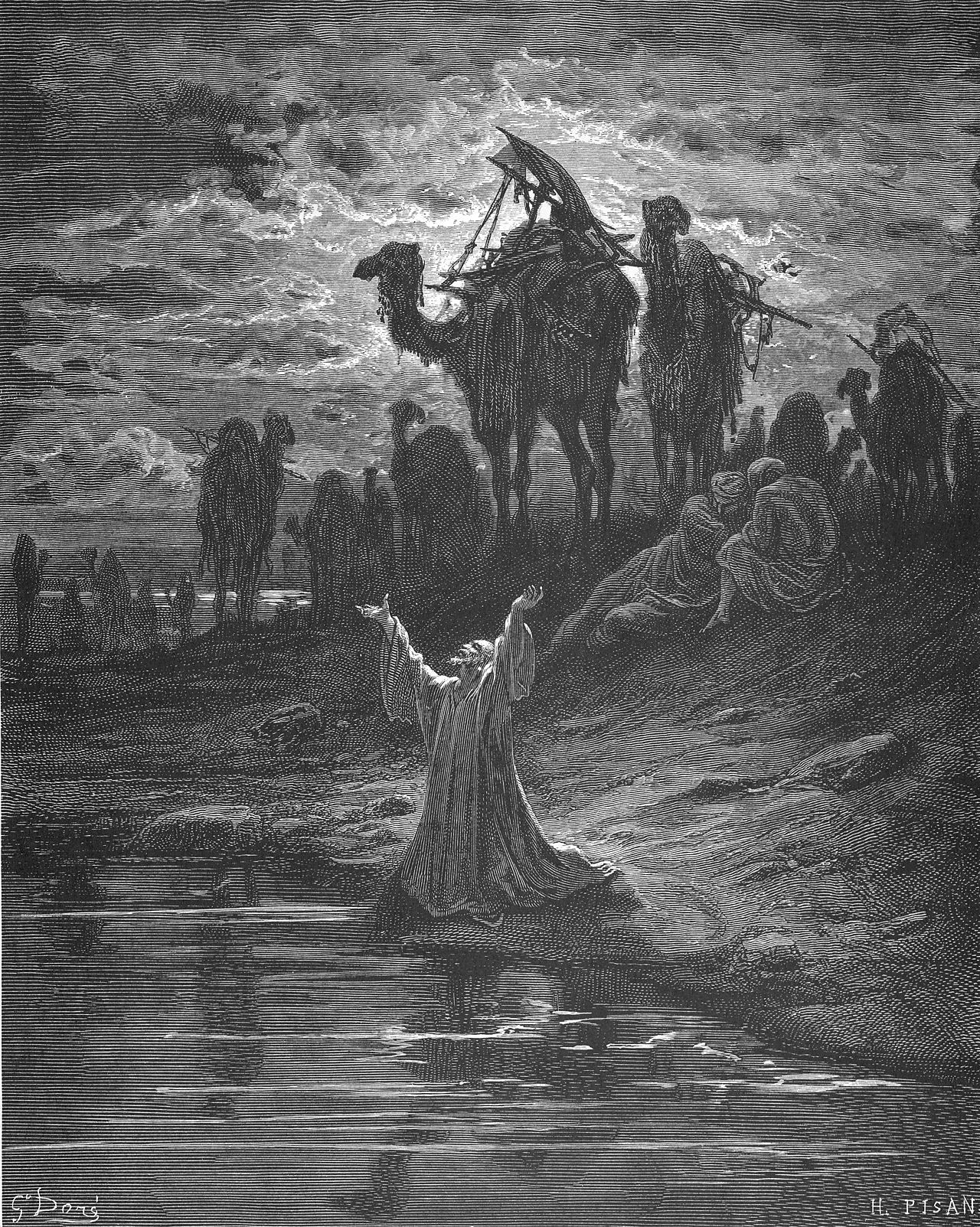
Anxiety in Scripture, in full
Anxiety isn't a modern invention. It's in the Bible from early on: the tight chest, the racing mind, the fear of what's coming. Scripture doesn't pretend it away. It meets it directly, again and again, with the same core answer: bring it to God.
Jacob is a good place to start. On his way home after years away, he learns his brother Esau (the brother he wronged), is coming to meet him with four hundred men. Genesis says Jacob "was greatly afraid and distressed" (Genesis 32:7). He doesn't pretend to be fine. He splits his camp into two so at least one might survive, and then he does something better: he prays, pouring out his fear honestly to God (Genesis 32:9-12). Anxiety, faced honestly, becomes a doorway to prayer instead of a dead end.
Hannah carries a different kind of anxiety: the ache of a longing that won't let go. Grieved year after year over her childlessness, she goes to the temple "in bitterness of soul," weeping and praying (1 Samuel 1:10). God doesn't scold her for feeling it. He hears her.
The Psalms are full of anxious minds turned toward God. "Cast thy burden upon the LORD, and he shall sustain thee" (Psalm 55:22). "In the multitude of my thoughts within me thy comforts delight my soul" (Psalm 94:19). The Bible doesn't ask people to stop having anxious thoughts on command. It offers something to do with them: hand them over.
Proverbs names the physical weight of it plainly: "Heaviness in the heart of man maketh it stoop: but a good word maketh it glad" (Proverbs 12:25). Anxiety is treated as something real enough to bend a person over, and a kind word is treated as strong enough to lift them back up.
God speaks straight into fear through Isaiah: "Fear thou not; for I am with thee: be not dismayed; for I am thy God: I will strengthen thee; yea, I will help thee" (Isaiah 41:10). The promise isn't that nothing bad will happen. It's that God will be present in it.
Jesus takes on anxiety directly in his most famous sermon. Looking at birds who don't stockpile food and flowers who don't spin thread, he asks why people who are loved by their Father would live as if they weren't (Matthew 6:25-30). His conclusion is blunt: "Take therefore no thought for the morrow: for the morrow shall take thought for the things of itself. Sufficient unto the day is the evil thereof" (Matthew 6:34).
Martha gives anxiety a face. While her sister Mary sits and listens to Jesus, Martha is "careful and troubled about many things" (Luke 10:41): busy, scattered, resentful. Jesus doesn't say her work doesn't matter. He says she's letting the wrong thing steal her peace.
Before his own arrest, Jesus tells his closest friends, "Let not your heart be troubled: ye believe in God, believe also in me" (John 14:1). He says this the night before the worst thing that will ever happen to him, and offers his peace to others anyway.
Paul, writing from prison, gives the clearest instruction in the whole Bible on this subject: "Be careful for nothing; but in every thing by prayer and supplication with thanksgiving let your requests be made known unto God" (Philippians 4:6). Not feel nothing. Pray about everything.
Peter sums it up in one short line: "Casting all your care upon him; for he careth for you" (1 Peter 5:7). That's the whole biblical pattern in a sentence: not the absence of care, but a Father strong enough to carry it.
4 voices
What teachers have said
Be not anxiously solicitous; do not give place to carking care, let what will occur; for anxiety cannot chance the state or condition of any thing from bad to good, but will infallibly injure your own souls.
Adam Clarke · Commentary on the Bible
Written before 1832.
so he giveth his beloved sleep--that is, His providential care gives sleep which no efforts of ours can otherwise procure, and this is a reason for trust as to other things
Jamieson, Fausset & Brown · Commentary Critical and Explanatory on the Whole Bible, 1871
If I do not worry about the one that strays and gets lost, even the one that is strong will think it is rather fun to stray and get lost. I do indeed desire outward gains, but I am more afraid of inner losses.
Augustine of Hippo · Sermon 46:15
Written before 430.
But because we must always be anxious, always attentive; and because the Word of God leaps forth like a young goat, or like a fawn, the soul must always be vigilant and strive for what it seeks and desires to hold.
Ambrose of Milan · On Isaac and the Soul, 5.38
Written before 397.
The words underneath
Each card is one Hebrew or Greek word behind anxiety. It gives the sense, the count across the canon, and the number in Strong's 1890 concordance.
amerimnos: untroubled
Greek · G275Strong's entry: not anxious
Paul's goal for a troubled heart
2 times in the New Testament · amerimnos, in full →
merimnao: to worry
Greek · G3309Strong's entry: to be anxious about
the word behind 'take no thought'
19 times in the New Testament · merimnao, in full →
daag: be anxious
Hebrew · H1672Strong's entry: be anxious
Saul's dread, David's worry over his son
7 times in the Old Testament · daag, in full →
charadah: trembling
Hebrew · H2731Strong's entry: fear, anxiety
the shudder before sudden danger
9 times in the Old Testament · charadah, in full →
Life questions