
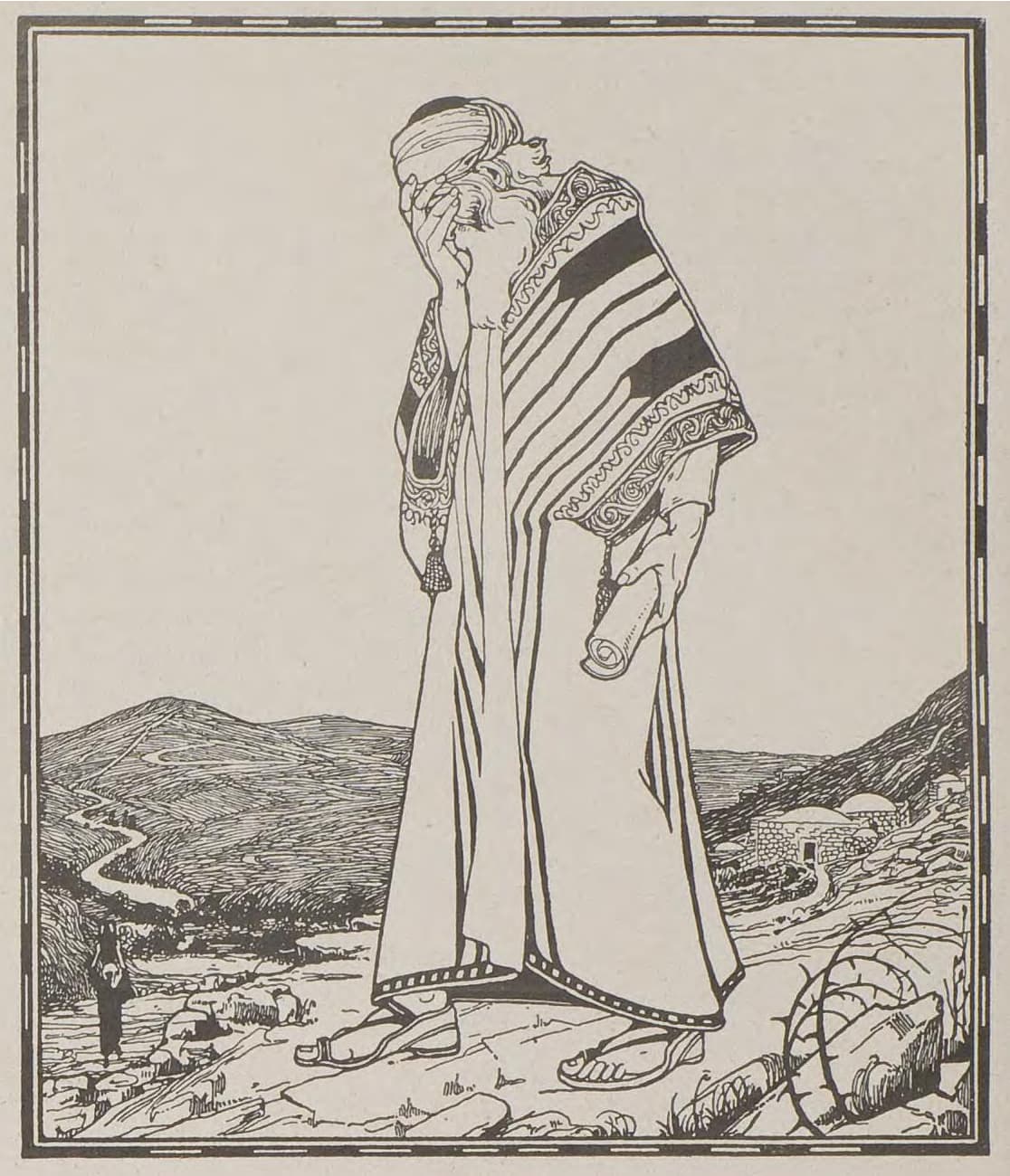
1 Peter 5:6 to 7 · Passage · Anxiety
Cast All Your Anxiety on Him
Peter wrote 1 Peter 5:7 to believers scattered through Pontus, Galatia, Cappadocia, Asia and Bithynia who were facing a fiery trial.
The verb Peter uses for God's caring is the verb of the disciples in the storm, when they woke Jesus and asked, “Teacher, don’t You care that we are perishing?” (Mark 4:38).
Cast all your anxiety on Him, because He cares for you.
- The passage
- 1 Peter 5:5 to 11, Psalm 55:12 to 23
- Books
- 1 Peter, Psalms
- Hold in memory
- 1 Peter 5:6
Summary
Peter's remedy for the anxiety of suffering believers rests on God's concern for them. Handing over care is part of bowing under God's hand, and Peter places it between humility toward one another and a call to resist the devil. He closes the charge with a promise of restoring from the God of all grace.
- The verb for casting is an aorist participle, epiripsantes, which the Berean Standard Bible renders as a command.
- Nineteenth-century commentators hear Psalm 55:22 behind 1 Peter 5:7, a line from a prayer against a companion who broke faith.
- The word for God's caring, melei, is impersonal and says that a thing matters to someone.
- Adam Clarke held that every care may be cast on God, and Charles Spurgeon held that some cares must first be given up.
Humility Under God's Mighty Hand
Cast All Your Anxiety on Him studies 1 Peter 5:6 to 7 with Psalm 55:22 beside it. It belongs to the trial of anxiety, whose anchor text it is, and it reads the casting of care inside the passage Peter wrote around it.
The question it answers is what Peter asks of anxious believers and why he gives the reason he gives. It sets the charge in 1 Peter 5:5 to 11 and lays Peter's line beside the psalm's. It gives the Greek and Hebrew words that carry the casting, the burden and God's care. It also sets out two readings of which cares a believer may cast on God.
Peter has just charged the elders to shepherd God's flock and to be examples to it (1 Peter 5:1 to 4).
He tells the young men to submit to their elders. He tells all his readers, “clothe yourselves with humility toward one another,” and gives the reason from Scripture, “God opposes the proud, but gives grace to the humble” (1 Peter 5:5).
Humble yourselves, therefore, under God’s mighty hand, so that in due time He may exalt you.The verse stands here because it moves the humility of 1 Peter 5:5 from one another to God, and it sets the lifting up in God's own time.
Psalm 55:22 and 1 Peter 5:7 Side by Side
Peter's line and the psalm's follow one order of act, load, Lord and reason.
| Part of the line | Psalm 55:22 | 1 Peter 5:7 |
|---|---|---|
| The act | “Cast”, hashlek, from shalak, to throw | “Cast”, epiripsantes, from epirripto, to throw upon |
| The load | “your burden”, yehab | “all your anxiety”, merimna |
| The One who takes it | “upon the LORD” | “on Him” |
| The reason given | “He will sustain you”, kul | “because He cares for you”, melei |
| What follows | Psalm 55:23, “But I will trust in You.” | 1 Peter 5:8, “Be sober-minded and alert.” |
One Command and Its Participle
Peter's Greek joins two verses that English prints as two commands.
In 1 Peter 5:6 the command is tapeinothete, an aorist passive imperative, be humbled. The casting of 1 Peter 5:7 takes its force from that command.
Marvin Vincent, in his Word Studies in the New Testament (1886), wrote, “The sixth and seventh verses should be taken together.” He added, “Pride is at the root of most of our anxiety.”
Vincent read the aorist tense as “an act once for all; throwing the whole life with its care on him.”
The verb epirripto, to throw upon, stands in one other verse. There the disciples “threw their cloaks over” the colt before Jesus rode it (Luke 19:35).
Strong's glosses melo, the verb of the reason, “to be of interest to, i.e. to concern”. Jamieson, Fausset and Brown, in their Commentary Critical and Explanatory (1871), noted that it is “not so strong a Greek word” as the word for the readers' anxiety.
Martha used the same verb in Luke 10:40. She asked, “Lord, do You not care that my sister has left me to serve alone?”
The Psalm of a Betrayed Companion
The psalm moves from terror and a wish to flee to the line of Psalm 55:22.
Psalm 55 is a prayer in distress, “My heart murmurs within me, and the terrors of death assail me” (Psalm 55:4). The psalmist longs for the wings of a dove and says, “I would fly away and find rest” (Psalm 55:6).
But it is you, a man like myself, my companion and close friend. We shared sweet fellowship together; we walked with the crowd into the house of God.The verses stand here because they give the occasion of the prayer that ends in the line of Psalm 55:22.
The companion's “speech is smooth as butter, but war is in his heart” (Psalm 55:21). Albert Barnes, in his Notes (1832 to 1869), judged that 1 Peter 5:7 was “probably taken” from the next line.
John Gill, in his Exposition of the Old Testament (1748 to 1763), read that line as words spoken to David or as David's words “to his own soul in distress”.
The Hebrew word for burden is yehab, which stands only in this verse. Strong's glosses it “properly, what is given (by Providence), i.e. a lot.” The verb for sustain is kul, glossed “properly, to keep in” and figuratively “to maintain”.
The Adversary and the God of All Grace
Peter's charge ends in watchfulness, resistance and a promise.
Be sober-minded and alert. Your adversary the devil prowls around like a roaring lion, seeking someone to devour.The verse names the enemy the readers must resist and gives Peter's picture of him.
“But in the mean time watch. There is a close connection between this, and the duly casting our care upon him. How deeply had St. Peter himself suffered for want of watching!”
John Wesley · Explanatory Notes upon the New Testament · on 1 Peter 5:8Evangelical
Peter tells his readers to resist the devil, “standing firm in your faith.” He reminds them that believers throughout the world are undergoing the same kinds of suffering (1 Peter 5:9).
And after you have suffered for a little while, the God of all grace, who has called you to His eternal glory in Christ, will Himself restore you, secure you, strengthen you, and establish you.The promise answers the sufferers' anxiety with four things God Himself will do after their little while of suffering.
How the Church Has Taught the Casting
Two voices of the early and the medieval church, each under the line it teaches.
died 160 · Shepherd of Hermas
Shepherd of Hermas, Vision 3
The quotation1 quotation
“For, like elderly men who have no hope of renewing their strength, and expect nothing but their last sleep, so you, weakened by worldly occupations, have given yourselves up to sloth, and have not cast your cares upon the Lord. Your spirit therefore was broken, and ye grew old in your sorrows.”
Shepherd of Hermas · Shepherd of Hermas, Vision 3 · on 1 Peter 5:7Patristic
died 1107 · Theophylact of Ohrid
Commentary on 1 Peter
The quotation1 quotation
“Then, in order to remove the fear that comes with humility, he says: do not be afraid, but cast all your care upon the Lord, for He cares, that is, He is concerned about all this.”
Theophylact of Ohrid · Commentary on 1 Peter · on 1 Peter 5:7Patristic
Which Cares Are Cast
Two readings of the word all, each with its holder and the objection to it.
Every care, great or smallAdam Clarke
Adam Clarke, in his Commentary on the Bible (1832), wrote on 1 Peter 5:7 that God concerns himself with whatever concerns a follower of God, “whether in themselves great or small”.
The objection: Peter puts the command to be humbled before the casting, and a care that grows from pride is humbled before it is handed over (1 Peter 5:5 to 6).
The cares God sendsCharles Spurgeon
Charles Spurgeon, in his sermon A Cure for Care (1862), held that a covetous care cannot be laid on God. He said of such a care, “it is none of His sending.”
The objection: Peter writes all your anxiety and names no kind of care that is left out.
The Hand That Humbles and Holds
Peter's readers are told to bow, to hand over their cares and to keep watch, and each command rests on what God is toward them. Prayer of this kind stands beside a physician's care for anxiety that has become an illness of body or mind, and never takes its place.
Sources
Scripture is the Berean Standard Bible.
- STEP Bible, Translators Amalgamated Greek New Testament and the tagged Hebrew Bible (Tyndale House, Cambridge), CC BY 4.0.
- STEP Bible brief lexicons of Extended Strongs for Greek and Hebrew (Tyndale House, Cambridge), CC BY 4.0, with the glosses of James Strong, Strong's Exhaustive Concordance of the Bible (1890)
- Marvin R. Vincent, Word Studies in the New Testament (1886), on 1 Peter 5:7.
- Robert Jamieson, A. R. Fausset and David Brown, Commentary Critical and Explanatory on the Whole Bible (1871), on 1 Peter 5:7.
- Albert Barnes, Notes, Explanatory and Practical, on the Old and New Testaments (1832 to 1869), on 1 Peter 5:7.
- Adam Clarke, Commentary on the Bible (1832), on 1 Peter 5:7.
- John Gill, Exposition of the Old Testament (1748 to 1763), on Psalm 55:22.
- Charles Spurgeon, A Cure for Care, The Metropolitan Tabernacle Pulpit, sermon 428 (1862), on 1 Peter 5:7.
- John Wesley, Explanatory Notes upon the New Testament (1755), on 1 Peter 5:8.
- The Shepherd of Hermas, Vision 3 (Ante-Nicene Fathers translation)
- Theophylact of Ohrid, Commentary on 1 Peter, on 1 Peter 5:7 (English translation, cited at fewer than fifty words)
Keep Studying
Studies5
People and groups12