
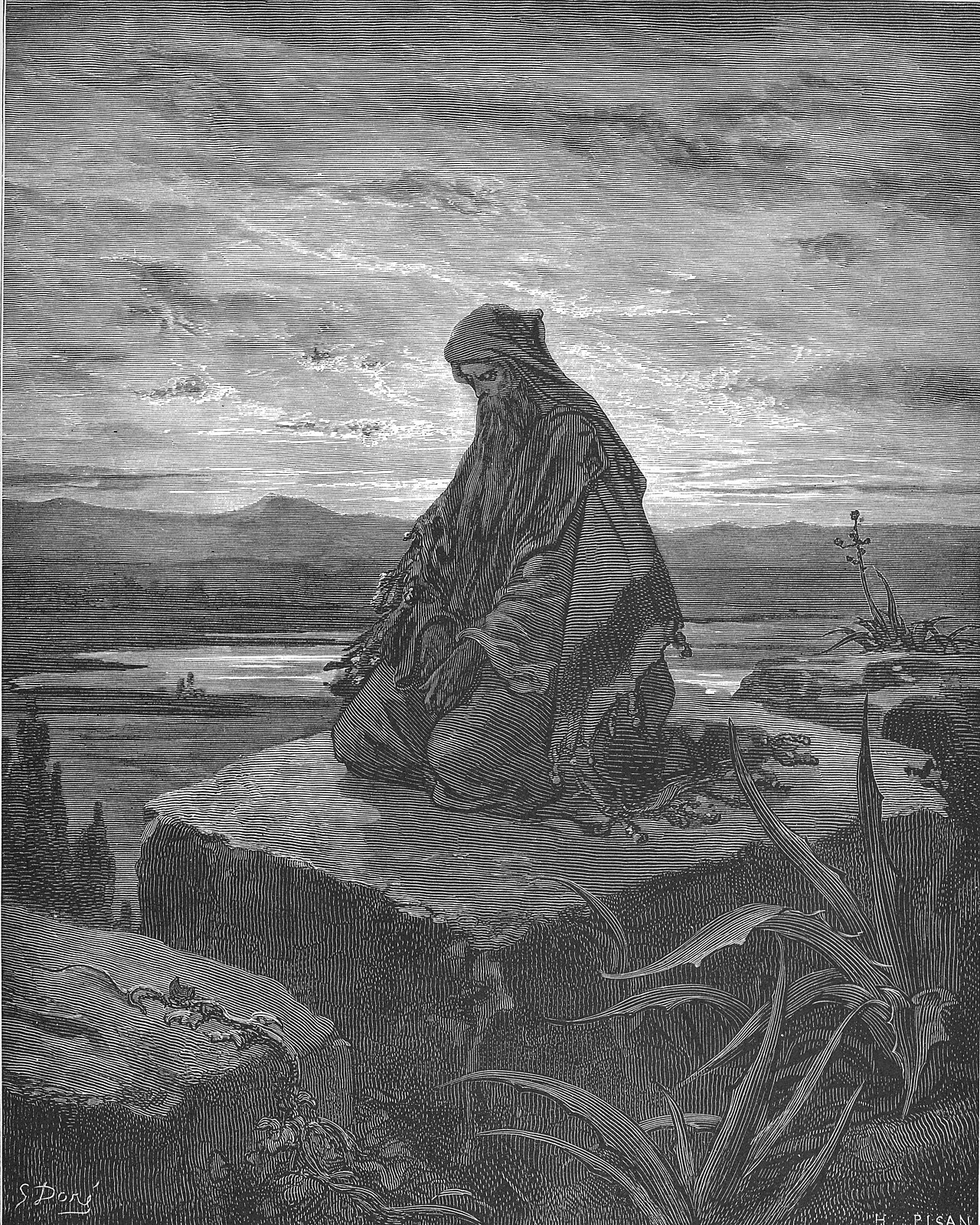
Isaiahchapter 1
31 verses · Isaiah · 8th century BC · The Prophets
“Come now, let us reason together,” says the LORD. “Though your sins are like scarlet, they will be as white as snow; though they are as red as crimson, they will become like wool.
Introduction
Isaiah, The Prophets, Isaiah Overview.
Isaiah son of Amoz gathered the word he received under four kings of Judah, and this chapter stands at the head of the whole book as its preface. It was spoken to a people who kept the feasts and filled the temple courts and could not believe God was displeased with them. It takes the shape of a court case, with witnesses called, charges read and terms offered. Listen for who brings the case and who is on trial, and for the moment the judge makes an offer. The rest of the book works out what this chapter sets on the table.
Context
- Who
- Judeans who were keeping the sacrifices faithfully and could not imagine God was angry
- What
- A prophetic lawsuit in which the LORD charges Judah with rebellion, rejects worship joined to injustice and offers cleansing to the willing.
- Where
- Jerusalem and the towns of Judah, with the countryside around the city laid waste by invaders.
- When
- The reigns of Uzziah, Jotham, Ahaz and Hezekiah, about 740 to 700 BC, and the ruined land fits the Assyrian invasion of 701 BC.
- Why
- To wake a religious people to the gap between their sacrifices and their treatment of the weak, and to call them to return.
Historical context
The chapter opens the way a treaty case opened. When one nation accused another of breaking a sworn agreement, the charge was read out with witnesses named at the top, usually the gods of both sides, and in the Bible, heaven and earth. So the first line, calling the heavens and the earth to listen, told a Judean at once that this was a lawsuit, not a sermon.
Show the rest of the historical context, 3 more paragraphs
The sacrifices described are the real machinery of the temple. Bulls, rams, lambs, and goats were brought to the altar; blood was thrown against its base; incense burned; new moons and set feasts filled the calendar. The courts on a feast day were packed, loud, and smoky. Nobody in Judah was skipping church. That is what makes the complaint startling.
The picture of the land is a picture of invasion. Fields eaten by strangers, towns burned, and only the daughter of Zion left, like a watchman's booth in a vineyard. That booth was a real thing: a shelter of poles and brush thrown up on a hillside so a man could guard the ripening grapes, and once the harvest was in it stood alone in an empty field, sagging. In 701 BC the Assyrians took forty-six walled Judean towns and left Jerusalem standing alone exactly like that.
The dye words are technical. Scarlet and crimson came from the kermes insect, crushed and fixed into wool, and the whole point of that dye was that it did not wash out. Saying a scarlet stain will come out white is saying something the laundry could not do.
Significance
The people believed the system worked like a transaction: bring the animal, receive the pardon. God says the smell of it makes him sick, not because he never asked for sacrifice, but because the same hands bringing it were the hands squeezing the orphan and the widow.
Show the rest of the significance, 1 more paragraph
Then comes the offer. Come and let us reason together. The lawsuit is real, the verdict is guilty, and the judge is the one proposing terms.
This chapter in Jewish lifeWhat this chapter is in Jewish life and reading.
What is done
This chapter is read aloud in the synagogue once a year. The site's table in src/lib/hebraic/readings.ts records Isaiah 1:1 to 1:27 as the Haftarah of Devarim, the first portion of Deuteronomy (Deuteronomy 1:1 to 3:22). The probe printed that reading for both the Ashkenazi and the Sephardi rite. A congregation hears Moses begin his last address from the Torah scroll and then hears Isaiah's charge against Jerusalem from the prophets.
The corpus shows one join between this Haftarah and Deuteronomy. Rashi's note on the second verse sets Isaiah's call to the heavens and the earth beside the opening words of Ha'azinu in Deuteronomy 32:1, and asks why Isaiah changed the wording (Rashi on Isaiah 1:2:1).
How it is read
Rashi is the main commentator on this chapter in the corpus, quoted here from The Judaica Press complete Tanach with Rashi, translated by A. J. Rosenberg, which Sefaria reports as CC-BY. Ibn Ezra is quoted from the Commentary of Ibn Ezra on Isaiah, translated by M. Friedlander in 1873, which Sefaria reports as Public Domain.
Rashi opens with the prophet's family. He reports Rabbi Levi's tradition that "Amoz and Amaziah, king of Judah, were brothers" (Rashi on Isaiah 1:1:1), which makes Isaiah a member of the royal house. At the ox and the donkey of the third verse he reads the animals as a rebuke of understanding. "Israel was not intelligent like the ox" (Rashi on Isaiah 1:3:1).
The offerings are read as rejected for the heart behind them. God asks who requested them to trample His courts, "since your heart is not whole with Me" (Rashi on Isaiah 1:12:1). Ibn Ezra reads the feasts of the fourteenth verse as a threat of exile, after which the festivals will cease (Ibn Ezra on Isaiah 1:14:1). Rashi hears the invitation of the eighteenth verse as an open door: "if you offended Me, I still give you hope to repent" (Rashi on Isaiah 1:18:1).
The remnant of the ninth verse is left "by His own volition and with His mercy, not because of our merits" (Rashi on Isaiah 1:9:1). The silver turned to dross is read literally, as copper coins plated with silver "in order to cheat with them" (Rashi on Isaiah 1:22:1).
What the rabbis say
The corpus carries 40 rabbinic locators on the verses of this chapter, 11 in the Talmud and 29 in the Midrash. It carries the text of none, so each is cited by ref here and never quoted or paraphrased. The verse numbers are the Hebrew ones the corpus prints.
On verse 1 it holds Aggadat Bereshit 14:1 and Bava Batra 15b:9. On verse 2 it holds Devarim Rabbah 10:4 and Kohelet Rabbah 1:4:5. On verse 3 it holds Berakhot 59a:15 and Ein Yaakov (Glick Edition), Makkot 3:3. On verse 4 it holds Bereshit Rabbah 98:20 and Ein Yaakov, Kiddushin 1:37. On verse 5 it holds Midrash Lekach Tov on Lamentations 1:22:1 and Otzar Midrashim, Midrashim of Rabbi Akiba, Aleph Bet of Rabbi Akiba (Version 1) 42.
On verse 6 it holds Midrash Sekhel Tov, Bereshit 34:30:6. On verse 7 it holds Eikhah Rabbah, Petichta 21. On verse 8 it holds Jerusalem Talmud Sukkah 1:1:1 and Midrash Tehillim 146:5. On verse 9 it holds Aggadat Bereshit 29:1 and Aggadat Bereshit 4:3. On verse 10 it holds Berakhot 19a:21 and Berakhot 60a:25.
On verse 11 it holds Berakhot 32b:3 and Chagigah 4b:7. On verse 12 it holds Chagigah 4b:1. On verse 13 it holds Midrash Tehillim 45:1. On verse 14 it holds Bamidbar Rabbah 21:25. On verse 15 it holds Berakhot 32b:4.
On verse 16 it holds Bamidbar Rabbah 14:2. On verse 17 it holds Bamidbar Rabbah 14:10. On verse 18 it holds Aggadat Bereshit 68:2. On verse 19 it holds Devarim Rabbah 4:2. On verse 20 it holds Ein Yaakov, Kiddushin 3:3.
On verse 21 it holds Bamidbar Rabbah 21:21. On verse 22 it holds Bava Batra 15b:10. On verse 23 it holds Midrash Aggadah, Deuteronomy 1:1:10. On verse 24 it holds Midrash Sekhel Tov, Bereshit 49:24:3. On verse 25 it holds Ein Yaakov (Glick Edition), Megillah 2:2.
On verse 26 it holds Midrash Tanchuma, Mishpatim 3:3. On verse 27 it holds Aggadat Bereshit 67:3. On verse 28 it holds Berakhot 8a:25. On verse 29 it holds Midrash Sekhel Tov, Bereshit 26:19:1. On verse 30 it holds Mekhilta DeRabbi Yishmael, Tractate Amalek 4:7.
On verse 31 it holds Aggadat Bereshit 20:4.
What each of them teaches is a saying of the rabbis, and is reported as theirs wherever this site quotes one. The quotations wait on a fetch that carries the text.
Sources: Rashi, Rashi on Isaiah 1:1:1 to 1:24:1, The Judaica Press complete Tanach with Rashi, translated by A. J. Rosenberg, reported CC-BY; Ibn Ezra, Ibn Ezra on Isaiah 1:14:1 to 1:19:1, Commentary of Ibn Ezra on Isaiah - trans. by M. Friedlander, 1873, reported Public Domain; The Sefaria corpus, scripts/data/sources/sefaria/isaiah/1.json, the 40 Talmud and Midrash locators on the verses of this chapter; The site's own files, src/lib/hebraic/readings.ts, probed for Isaiah 1: the Haftarah of Devarim, Isaiah 1:1 to 1:27, in both rites.
The heads below are this chapter's scenes. The numbered points under each are its verses.
A Sinful Nation and a Land Left Desolate
This is the vision concerning Judah: The four kings named here place the book across roughly half a century of the Assyrian crisis. John 12:38-40 quotes Isaiah 53:1 and 6:10 under the one name of Isaiah. Delitzsch and Barnes hold one prophet writing through the whole period, and later critical scholars hold two or three authors.
Isaiah 1:1
“The vision - The first verse evidently is a title, but whether to the whole book or only to a part of it has been questioned. As it stands here, however, it seems clearly intended to include the entire book, because it embraces all that was seen during the reigns of Uzziah, Jotham, Ahaz, and Hezekiah; that is, during the whole prophetic life of the prophet.”
2 more voices on this verseWhat preachers and commentators have said about this verse, in their own words.
Isaiah 1:1
“Vision - Or, the visions; the word being here collectively used: the sense is, this is the book of the visions or prophecies. As prophets were called Seers, 1 Sam. ix, 9, so prophecies are called visions, because they were as clearly and certainly represented to the prophets minds, as bodily objects are to mens eyes.”
John Wesley · Explanatory Notes upon the Old Testament (1765)evangelical
Isaiah 1:1
“The name of the prophet, Isaiah, or Jesahiahu (for so it is in the Hebrew), which, in the New Testament is read Esaias. His name signifies the salvation of the Lord --a proper name for a prophet by whom God gives knowledge of salvation to his people, especially for this prophet, who prophesies so much of Jesus the Saviour and of the great salvation wrought out by him.”
Matthew Henry · Commentary on the Whole Bible (1707-1721)puritan
Isaiah 1:2-3
Listen, O heavens, and give ear: Heaven and earth are summoned as witnesses the way a covenant lawsuit calls its witnesses, the form Moses used at Deuteronomy 32:1. The charge that follows is a father's complaint. The ox knows its owner and the donkey its master's manger, and Israel, with far greater knowledge, "does not know."
Isaiah 1:2
“Hear, O heavens “Hear, O ye heavens” - God is introduced as entering into a public action, or pleading, before the whole world, against his disobedient people. The prophet, as herald or officer to proclaim the summons to the court, calls upon all created beings, celestial and terrestrial, to attend and bear witness to the truth of his plea and the justice of his cause.”
Adam Clarke · Commentary on the Bible (1810-1826)evangelical
1 more voice on this verse
Isaiah 1:2
“The very words of Moses (De 32:1); this implies that the law was the charter and basis of all prophecy (Isa 8:20). Lord--Jehovah; in Hebrew, "the self-existing and promise-fulfilling, unchangeable One." The Jews never pronounced this holy name, but substituted Adonai.”
Jamieson, Fausset & Brown · Commentary Critical and Explanatory on the Whole Bible (1871)reformed
ConnectionsIsaiah 66:24
The ox knows its owner: The ox and the donkey know who feeds them, while Israel has lost sight of the God who raised it. The charge carries on the father's complaint of verse 2 about children who rebelled. Matthew Henry read the manger as God's providence.
Isaiah 1:3
“The ox knoweth his owner,.... Knows his voice, when he calls him, and follows him where he leads him, whether to plough in the field, or feed in the meadows; and the ass his masters crib, or "manger"; where he is fed, and to which he goes when he wants food, and at the usual times.”
1 more voice on this verse
Isaiah 1:3
“God regards His covenant-people in their designed unity. not know--namely, his Owner, as the parallelism requires; that is, not recognize Him as such (Ex 19:5, equivalent to "my people," Joh 1:10, 11). consider--attend to his Master (Isa 41:8), notwithstanding the spiritual food which He provides (answering to "crib" in the parallel clause).”
Jamieson, Fausset & Brown · Commentary Critical and Explanatory on the Whole Bible (1871)reformed
Isaiah 1:4-6
Alas, O sinful nation: Four charges come together, and they "have despised the Holy One of Israel," the title that runs through the book. This is its first appearance. The sickness "From the sole of your foot to the top of your head" pictures the whole nation, and the ritual cannot heal it.
Why do you want more beatings?: The beatings are the losses Judah had already suffered, and the question asks why the nation keeps inviting more. Theodoret took the head as the kings and leaders and the heart as the priests and teachers. Jerome read the blows as correction meant to heal.
From the sole of your foot to the top of your head: The sick head and heart of verse 5 become a whole body bruised from foot to head. The wounds lie open, with no one to clean, bind or soothe them. Ambrose saw the church holding the oil Judah lacked.
Isaiah 1:6
“They had nothing to pour. If they had had any oil, they would have poured it on their own wounds. Isaiah cries, "They cannot apply ointment or oil or bandage." But the church has oil, with which it tends the wounds of its children, that the wound may not harden and spread deep. [The church] has oil which it has received secretly.”
Ambrose of Milan · written before 397 · Letter 41 (Ex 1).19-20patristic
1 more voice on this verse
Isaiah 1:6
“They have not been closed, etc. “It hath not been pressed,” etc. - The pharmaceutical art in the East consists chiefly in external applications: accordingly the prophet’s images in this place are all taken from surgery. Sir John Chardin, in his note on Pro 3:8, “It shall be health to thy navel, and marrow to thy bones,” observes that “the comparison is taken from the plasters, ointments, oils, and frictions, which are made use of in the East upon the belly and stomach in most maladies.”
Adam Clarke · Commentary on the Bible (1810-1826)evangelical
Isaiah 1:7-9
Your land is desolate: The desolation is present, cities burned and foreigners devouring the fields while the people watch. Zion is left "like a shelter in a vineyard, like a shack in a cucumber field." Had the LORD of Hosts not left "a few survivors," Judah would share the fate of Sodom and Gomorrah.
Isaiah 1:7
“Your country is desolate - This is the literal statement of what he had just affirmed by a figure. In this there was much art. The figure Isa 1:6 was striking. The resemblance between a man severely beaten, and entirely livid and sore, and a land perfectly desolate, was so impressive as to arrest the attention. This had been threatened as one of the curses which should attend disobedience; Lev 26:33: And I will scatter you among the heathen, And will draw out a sword after you: And your land shall be desolate, And your cities waste.”
like a shelter in a vineyard: A shelter in a vineyard was a hut of boughs and straw for the watchman, left standing after the harvest. Jerusalem stands alone like that hut while the country around it is stripped. The Daughter of Zion is the city itself.
Isaiah 1:8
“Metropolis or "mother-city" is the corresponding term. The idea of youthful beauty is included in "daughter." left--as a remnant escaping the general destruction. cottage--a hut, made to give temporary shelter to the caretaker of the vineyard. lodge--not permanent. besieged--rather, as "left," and Isa 1:9 require, preserved, namely, from the desolation all round [MAURER].”
Jamieson, Fausset & Brown · Commentary Critical and Explanatory on the Whole Bible (1871)reformed
left us a few survivors: Sodom and Gomorrah were wiped out, and Judah would have gone the same way without the few the LORD kept. Paul quotes this verse at Romans 9:29 for the remnant of Israel. Augustine ascribed any remnant wholly to grace.
Cross references
Isaiah 1:9
- Quoted inRomans 9:29It is just as Isaiah foretold: “Unless the Lord of Hosts had left us descendants, we would have become like Sodom, we would have resembled Gomorrah.”
'Except the Lord... had left us a seed' ('as Esaias said before')
Your Appointed Feasts My Soul Hates
Isaiah 1:10-12
Hear the word of the LORD: The comparison with Sodom becomes direct address in verse 10, "you rulers of Sodom," a name no listener could take as praise. The question "who has required this of you" turns indictment into interrogation. A full round of sacrifice is named a burden God never laid on them.
Isaiah 1:10
“Ye rulers of Sodom “Ye princes of Sodom” - The incidental mention of Sodom and Gomorrah in the preceding verse suggested to the prophet this spirited address to the rulers and inhabitants of Jerusalem, under the character of princes of Sodom and people of Gomorrah. Two examples of a sort of elegant turn of the like kind may be observed in St. Paul’s Epistle to the Romans, Rom 15:4, Rom 15:5, Rom 15:12, Rom 15:13. See Locke on the place; and see Isa 1:29, Isa 1:30, of this chapter, which gives another example of the same.”
Adam Clarke · Commentary on the Bible (1810-1826)evangelical
The law of Moses commanded these sacrifices, so the complaint falls on offerings brought by the hands verse 15 calls covered with blood. Samuel told Saul the same at 1 Samuel 15:22. Wesley said God asked for hearts and lives with the offerings.
Isaiah 1:11
“By saying that he does not delight in the sacrifices of the people, God is saying this: I abound in my own [sacrifice], I do not seek yours, I do not desire whole burnt offerings of rams and the fat of lambs and the blood of bulls and of goats. And do not come so into my sight.”
Ambrose of Milan · written before 397 · Interrogation of Job and David 4.9.33patristic
2 more voices on this verse
Isaiah 1:11
“To me - Who am a spirit, and therefore cannot be satisfied with such carnal oblations, but expect to have your hearts and lives, as well as your bodies and sacrifices, presented unto me. Blood - He mentions the fat and blood, because these were in a peculiar manner reserved for God, to intimate that even the best of their sacrifices were rejected by him.”
John Wesley · Explanatory Notes upon the Old Testament (1765)evangelical
Isaiah 1:11
“To what purpose - לי למה lâmâh lı̂y. ‘What is it to me; or what profit or pleasure can I have in them?’ God here replies to an objection which might be urged by the Jews to the representation which had been made of their guilt. The objection would be, that they were strict in the duties of their religion, and that they even abounded in offering victims of sacrifice. God replies in this and the following verses, that all this would be of no use, and would meet with no acceptance, unless it were the offering of the heart.”
To appear before the LORD was the duty of every pilgrim at the three yearly feasts of Exodus 23:14 to 17. Here the crowd's coming is called a trampling of the courts. Wesley said God required the offering with a right heart.
Isaiah 1:12
When ye come to appear - Instead of לראות leraoth, to appear, one MS. has לראות liroth, to see. See De Rossi. The appearing before God here refers chiefly to the three solemn annual festivals. See Exo 23:14. Tread my courts (no more) - So the Septuagint divide the sentence, joining the end of this verse to the beginning of the next: Πατειν την αυλην μου, ου προσθησεσθε; “To tread my court ye shall not add - ye shall not be again accepted in worship.”
Adam Clarke · Commentary on the Bible (1810-1826)evangelical
Isaiah 1:13-15
Bring your worthless offerings no more: Verse 13 opens a list of rejected worship: incense called detestable, and New Moons, Sabbaths and convocations the LORD cannot endure alongside iniquity. The forms had been commanded through Moses. The fault is the injustice beside them, which verse 15 names in the words "Your hands are covered with blood."
Isaiah 1:13
“Bring no more vain oblations,.... As all such were, which were offered up without faith in Christ, in hypocrisy, and with dependence on them for pardon and atonement, and particularly when put an end to by the sacrifice of Christ; see Mat 15:9. The Targum renders it, "an oblation of robbery"; see Isa 60:8. incense is an abomination to me; instead of being of a sweet smell.”
I hate your New Moons and your appointed feasts: The New Moons opened each month, and the appointed feasts were the fixed yearly festivals of the law. God calls the feasts He ordained a burden He is weary of carrying. Isaiah 43:24 uses the same weariness of Israel's sins.
Isaiah 1:14
“Your new moons and your appointed feasts my soul hateth,.... The Targum is, "my Word abhorreth;'' the Messiah, the essential Word. These are the same as before. They are a trouble unto me; as they were kept and observed, either when they should not, or in a manner unbecoming: I am weary to bear them; because of the sins with which they made him to serve, Isa 43:24.”
1 more voice on this verse
Isaiah 1:14
“Your appointed feasts - That is, your assemblies convened on regular set times - מועד mô‛êd, from יעד yâ‛ad, to fix, to appoint. Hengstenberg (Chris. iii. p. 87) has shown that this word (מועדים mô‛ĕdı̂ym) is applied in the Scriptures only to the sabbath, passover, pentecost, day of atonement, and feast of tabernacles. Prof. Alexander, in loc. It is applied to those festivals, because they were fixed by law to certain periods of the year. This verse is a very impressive repetition of the former, as if the soul was full of the subject, and disposed to dwell upon it.”
Your hands are covered with blood: Spread hands were the posture of prayer. The same hands are covered with blood, so the prayers go unheard. The Hebrew is plural, bloods, which Jamieson, Fausset and Brown read as heinous sins of every kind.
Isaiah 1:15
“Ye spread forth your hands - This is an expression denoting the act of supplication. When we ask for help, we naturally stretch out our hands, as if to receive it. The expression therefore is equivalent to ‘when ye pray, or implore mercy.’ Compare Exo 9:29; Exo 17:11-12; 1Ki 8:22. I will hide mine eyes ... - That is, I will not attend to, or regard your supplications. The Chaldee Paraphrase is, ‘When your priests expand their hands to pray for you.’ Your hands ... - This is given as a reason why he would not hear.”
2 more voices on this verse
Isaiah 1:15
“Let those who do nothing right in life and think they are justified by the length of their prayer listen to these words. For the words of the prayer are not useful by themselves but only when they are offered up with earnest intent. Now the Pharisee also seemed to multiply his supplication. But what does the Scripture say? "The Pharisee stood and prayed thus to himself," not to God, for he turned back toward himself, since at all events he was in the sin of arrogance.”
Basil of Caesarea · written before 379 · Commentary on Isaiah 1:36patristic
Isaiah 1:15
“He hides his eyes from their prayers, as that which he has an aversion to and is angry at. All this is to show, [1.] That sin is very hateful to God, so hateful that it makes even men's prayers and their religious services hateful to him. [2.] That dissembled piety is double iniquity.”
Matthew Henry · Commentary on the Whole Bible (1707-1721)puritan
Come Now, Let Us Reason Together
Isaiah 1:16-17
Wash and cleanse yourselves: The call to "Wash and cleanse yourselves" answers the offerings with the washing the ritual could never supply. The commands to "Defend the fatherless and plead the case of the widow" aim it at people. These two have no advocate, and their care is the test the sacrifices had failed.
Isaiah 1:16
“God saith to the sinner, "Wash you," &c., that he, finding his inability to "make" himself "clean," may cry to God, Wash me, cleanse me (Ps 51:2, 7, 10). before mine eyes--not mere outward reformation before man's eyes, who cannot, as God, see into the heart (Jer 32:19).”
Jamieson, Fausset & Brown · Commentary Critical and Explanatory on the Whole Bible (1871)reformed
1 more voice on this verse
Isaiah 1:16
“Wash you - Referring to the preceding verse, “your hands are full of blood;” and alluding to the legal washing commanded on several occasions. See Lev 14:8, Lev 14:9, Lev 14:47.”
Adam Clarke · Commentary on the Bible (1810-1826)evangelical
The fatherless and the widow had no one to argue their case at the gate, so the law named God their defender at Deuteronomy 10:18. Verse 23 shows Jerusalem's rulers doing the opposite. Wesley called justice to men the way to show religion to God.
Isaiah 1:17
“Learn to do well - , To learn here is to become accustomed to, to practice it. To do well stands opposed to all kinds of evil. “Seek judgment.” The word “judgment” - משׁפט mishpâṭ - here means justice. The direction refers particularly to magistrates, and it is evident that the prophet had them particularly in his view in all this discourse. Execute justice between man and man with impartiality. The word “seek” - דרשׁוּ dı̂reshû - means to pursue, to search for, as an object to be gained; to regard, or care for it, as the main thing.”
1 more voice on this verse
Isaiah 1:17
God offers a brief summary through the prophet Isaiah of the honor that widows enjoy in the sight of God.… The Father defends these two types of people [widows and orphans] through divine mercy in proportion to their being destitute of human aid. Look how the widow's benefactor is put on a level with the widow herself, whose champion shall "reason with the Lord."
Tertullian · written before 220 · To His Wife 8patristic
Isaiah 1:18-20
The LORD invites the very people He has just indicted to argue the case with Him. Scarlet and crimson were fast dyes, set against snow and wool, a stain beyond any remedy promised removal. Verses 19 and 20 set the offer beside its opposite, the rebels "devoured by the sword."
Isaiah 1:18
“Come now, and let us reason, together, saith the Lord,.... These words stand not in connection either with the preceding or following, but are to be read in a parenthesis, and are thrown in for the sake of the small remnant God had left among this wicked people, in order to comfort them, being distressed with sin.”
1 more voice on this verse
Isaiah 1:18
“Though your sins be as scarlet - שני shani, “scarlet or crimson,” dibaphum, twice dipped, or double dyed; from שנה shanah, iterare, to double, or to do a thing twice. This derivation seems much more probable than that which Salmasius prefers from שנן shanan, acuere, to whet, from the sharpness and strength of the color, οξυφοινικον; תלע tela, the same; properly the worm, vermiculus, (from whence vermeil), for this color was produced from a worm or insect which grew in a coccus or excrescence of a shrub of the ilex kind, (see Plin. Nat. Hist.”
Adam Clarke · Commentary on the Bible (1810-1826)evangelical
ConnectionsRevelation 7:14
If you are willing and obedient: Verses 19 and 20 set two roads. The willing and obedient eat the best of the land, and those who resist and rebel are devoured by the sword. Chrysostom read willing as an earnest will.
Isaiah 1:19
"Be but willing and obedient, and you shall eat the good of the land, the land of promise; you shall have all the blessings of the new covenant, of the heavenly Canaan, all the good of the land." Those that go on in sin, though they may dwell in a good land, cannot with any comfort eat the good of it; guilt embitters all; but, if sin be pardoned, creature-comforts become comforts indeed.
Matthew Henry · Commentary on the Whole Bible (1707-1721)puritan
For the mouth of the LORD has spoken: The Hebrew uses one verb for both roads: the obedient will eat, and the sword will eat the rebel. The closing formula seals the offer with God's own authority. Spurgeon cited it to show that Isaiah's words were the Lord's.
Isaiah 1:20
“But if ye refuse and rebel,.... The Targum is, "and do not receive my Word"; the Messiah, when come, neither his person, nor his doctrines and ordinances: ye shall be devoured with the sword; of the Roman armies, as they were under Titus Vespasian; see Mat 22:7. for the mouth of the Lord hath spoken it; now, by Isaiah, as well as in former times, Lev 26:25.”
2 more voices on this verse
Isaiah 1:20
“And that expression, "The sword shall devour you," does not mean that the disobedient shall be slain by the sword, but the sword of God is fire, of which they who choose to do wickedly become the fuel. Wherefore He says, "The sword shall devour you: for the mouth of the Lord hath spoken it." And if He had spoken concerning a sword that cuts and at once despatches, He would not have said, shall devour.”
Justin Martyr · written before 165 · The First Apology, Chapter XLIVpatristic
Isaiah 1:20
“Ye shall be devoured with the sword “Ye shall be food for the sword” - The Septuagint and Vulgate read תאכלכם tochalchem, “the sword shall devour you;” which is of much more easy construction than the present reading of the text. The Chaldee seems to read בחרב אויב תאכלו bechereb oyeb teachelu, “ye shall be consumed by the sword of the enemy.” The Syriac also reads בחרב beehereb and renders the verb passively. And the rhythmus seems to require this addition. - Dr. Jubb.”
Adam Clarke · Commentary on the Bible (1810-1826)evangelical
The Faithful City Become a Harlot
Isaiah 1:21-23
See how the faithful city: Verse 21 opens in the meter of a funeral lament, sung over a city still standing. A city once "full of justice" is measured against what it has become. The corruption of verse 23 is judicial, bribes loved and rewards chased while the fatherless and the widow get no hearing.
Isaiah 1:21
“The woeful degeneracy of Judah and Jerusalem is sadly lamented. What the royal city had been, a faithful city, faithful to God and the interests of his kingdom among men, faithful to the nation and its public interests. It was full of judgment; justice was duly administered upon the thrones of judgment which were set there, the thrones of the house of David, Ps. cxxii.”
Matthew Henry · Commentary on the Whole Bible (1707-1721)puritan
1 more voice on this verse
Isaiah 1:21
“How is - This is an expression of deploring, or lamenting. It indicates that that had occurred which was matter of grief. The prophet had stated the principles of the divine government; had urged the people to reason with God; and had affirmed his willingness to pardon. But it was seen that they would not repent. They were so wicked and perverse, that there was no hope of their reformation. His mind is full of this subject; he repeats the charge of their wickedness Isa 1:21-23, and states what must be the consequences. The faithful city - Jerusalem.”
Your silver has become dross: Silver turned to dross and wine thinned with water picture a people debased in worth, and verse 25 answers with the smelter's fire. Jerome and Gregory of Nazianzus read the silver and wine as sound teaching diluted. Matthew Henry read them as the rulers.
Isaiah 1:22
“Wine mixed with water - An image used for the adulteration of wines, with more propriety than may at first appear, if what Thevenot says of the people of the Levant of late times were true of them formerly.”
Adam Clarke · Commentary on the Bible (1810-1826)evangelical
1 more voice on this verse
Isaiah 1:22
“Thy princes and people are degenerate in "solid worth," equivalent to "silver" (Jer 6:28, 30; Eze 22:18, 19), and in their use of the living Word, equivalent to "wine" (So 7:9). mixed--literally, "circumcised." So the Arabic, "to murder" wine, equivalent to dilute it.”
Jamieson, Fausset & Brown · Commentary Critical and Explanatory on the Whole Bible (1871)reformed
They all love bribes: Rulers who take bribes turn the court into a market, and the fatherless and the widow of verse 17 are the first to lose. The law forbade the bribe at Exodus 23:8. Matthew Henry said gifts blind a judge's eyes.
Isaiah 1:23
“Presents and gratuities will blind their eyes at any time, and make them pervert judgment. These they love and are eager in the pursuit of, Hos. ix. 18 . [2.] The duty of their places is none of their care.”
Matthew Henry · Commentary on the Whole Bible (1707-1721)puritan
Isaiah 1:24-26
Therefore the Lord GOD of Hosts: Verse 24 stacks divine titles the way verse 4 stacked charges. The purging is smelting language, the refiner's fire the prophets return to when a nation's corruption runs to its very metal. Verse 26 answers verse 21 directly, the lost title returned: "the City of Righteousness, the Faithful City."
Isaiah 1:24
“I will ease me of my adversaries. Wicked people, especially wicked rulers that are cruel and oppressive, are God's enemies, his adversaries, and shall so be accounted and so dealt with. If the holy seed corrupt themselves, they are the foes of his own house.”
Matthew Henry · Commentary on the Whole Bible (1707-1721)puritan
I will thoroughly purge your dross: The hand turned against the city is a refiner's hand, and it answers the silver become dross of verse 22. The fire removes the impurities so the metal is kept. Wesley read it as the removal of the incurable and the cleansing of the rest by affliction.
Isaiah 1:25
“And I will turn my hand upon thee - This expression is capable of two significations. The hand may be stretched out for two purposes, either to inflict punishment, or to afford help and protection. The phrase here refers evidently to the latter, to the act of redeeming and restoring his people, Isa 1:26-27. The idea may be thus expressed: ‘I will stretch out my hand to punish my enemies Isa 1:24, and will turn my hand upon thee for protection, and recovery.’ Purge away - This refers to the process of smelting, or purifying metals in the fire.”
I will restore your judges as at first: The restored judges answer the bribe-loving rulers of verse 23. The city regains the name Faithful City, lost in the lament of verse 21. Jamieson, Fausset and Brown saw a first fulfilment after the return from Babylon and a full one under the Messiah.
Isaiah 1:26
As the degeneracy had shown itself most in the magistrates (Isa 1:17-23), so, at the "restoration," these shall be such as the theocracy "at the first" had contemplated, namely, after the Babylonish restoration in part and typically, but fully and antitypically under Messiah (Isa 32:1; Mt 19:28). faithful--no longer "an harlot."
Jamieson, Fausset & Brown · Commentary Critical and Explanatory on the Whole Bible (1871)reformed
1 more voice on this verse
Isaiah 1:26
“I will restore - “This,” says Kimchi, “shall be in the days of the Messiah, in which all the wicked shall cease, and the remnant of Israel shall neither do iniquity, nor speak lies.” What a change must this be among Jews! Afterward “And after this” - The Septuagint, Syriac, Chaldee, and eighteen MSS., and one of my own, very ancient, add the conjunction ו vau, And.”
Adam Clarke · Commentary on the Bible (1810-1826)evangelical
Isaiah 1:27-31
Zion will be redeemed with justice: Verse 27 makes justice the means of Zion's redemption. The oaks and gardens point to groves of Canaanite worship, and the shame is in trusting trees that wither. The last image makes the guilty their own fuel: "The strong man will become tinder and his work will be a spark."
Isaiah 1:27
“Zion - See the note at Isa 1:8. The word Zion here is used to designate the whole Jewish people to whom the prophet had reference; that is, the inhabitants of Judah and Jerusalem, Isa 1:1. Shall be redeemed - The word used here - פדה pâdâh - is employed in two senses in the Scriptures. It implies always the idea of deliverance, as from captivity, danger, punishment, slavery, sin.”
1 more voice on this verse
Isaiah 1:27
“The judgment and righteousness are God's first (Isa 42:21; Ro 3:26); so they become man's when "converted" (Ro 8:3, 4); typified in the display of God's "justice," then exhibited in delivering His covenant-people, whereby justice or "righteousness" was produced in them. converts--so MAURER.”
Jamieson, Fausset & Brown · Commentary Critical and Explanatory on the Whole Bible (1871)reformed
those who forsake the LORD will perish: Zion is redeemed with justice in verse 27, and the same judgment shatters the rebels and sinners. Those who forsake the LORD are the people of verse 4, who turned their backs on Him. Barnes gives the Hebrew as sheber, a breaking.
Isaiah 1:28
“And the destruction - Hebrew שׁבר sheber - the breaking, or crushing, that is, the punishment which was about to come upon them; compare Lam 2:11; Lam 3:47; Pro 16:18. Of the transgressors - “Revolters,” or those that rebel against God. And of the sinners - Of all the sinners in the nation, of all kinds and degrees. Together - At the same time with the redemption of Zion. Shall be consumed - יכלוּ yı̂kelû, from כלה kâlâh, to be completed, or finished; to be consumed, wasted away; to vanish, or disappear.”
1 more voice on this verse
Isaiah 1:28
“Moreover, who can agree with the thesis that you [the Pelagians] set down as your next heading: "In the day of judgment, no leniency shall be shown to the ungodly and to sinners, but they shall be consumed in eternal fires," for you prevent God from showing mercy, and you pass judgment on the sentence of the judge before judgment day, so that if he wanted to spare the unjust and the sinner, he could not, in view of your prescription?”
Jerome · written before 420 · Against the Pelagians 1.28patristic
the sacred oaks in which you have delighted: Sacred oaks and gardens were places of idol worship, as Hosea 4:13 also records. The shame comes when the idols fail the people who chose them, as Albert Barnes explains. Some render the tree terebinth.
Isaiah 1:29
“For they shall be ashamed - That is, when they see the punishment that their idolatry has brought upon them, they shall be ashamed of the folly and degradation of their worship. Moreover, the gods in which they trusted shall yield them no protection, and shall leave them to the disgrace and confusion of being forsaken and abandoned. Of the oaks - Groves, in ancient times, were the favorite places of idolatrous worship. In the city of Rome, there were thirty-two groves consecrated to the gods.”
like an oak whose leaves are withered: The people who loved the oaks will become like a dying oak, and the garden they chose will lie without water. Jamieson, Fausset and Brown cite Psalm 135:18, where worshippers become like their idols. Barnes saw the figure grow from the tree of verse 29.
Isaiah 1:30
“Whose leaf “Whose leaves” - Twenty-six of Kennicott’s, twenty-four of De Rossi’s, one ancient, of my own, and seven editions, read אליה aleyha, in its full and regular form. This is worth remarking, as it accounts for a great number of anomalies of the like kind, which want only the same authority to rectify them.”
Adam Clarke · Commentary on the Bible (1810-1826)evangelical
The strong man will become tinder: Tinder is the loose fibre of flax that catches at once. Jamieson, Fausset and Brown took the strong man as a powerful ruler, at once the fuel and the first spark of his own burning. Wesley took the strong to be the idols themselves.
Isaiah 1:31
“And the strong - Those who have been thought to be strong, on whom the people relied for protection and defense - their rulers, princes, and the commanders of their armies. As tow - The coarse or broken part of flax, or hemp. It means here that which shall be easily and quickly kindled and rapidly consumed. As tow burns and is destroyed at the touch of fire, so shall the rulers of the people be consumed by the approaching calamities. And the maker of it - This is an unhappy translation.”
Keep studying
Studies11
Words12
Subjects3
Sources for this chapter
The summary
Jamieson, Fausset & Brown, Commentary Critical and Explanatory; John Calvin, Commentaries; John Wesley, Notes on the Old Testament and Matthew Henry, Complete Commentary.
The exposition
Adam Clarke, Commentary on the Bible; Albert Barnes; Ambrose of Milan, LETTER 41 (EX 1).19-20; Augustine of Hippo, SERMON 100.4; Charles Spurgeon, The Metropolitan Tabernacle Pulpit, Sermon No. 2013: “The Infallibility of Scripture” (lightly modernized text, CCEL edition); Clement of Alexandria, The Instructor Book 1; Franz Delitzsch, Biblical Commentary on the Prophecies of Isaiah; George Adam Smith, The Book of Isaiah, Expositor's Bible; Gregory of Nazianzus, IN DEFENSE OF HIS FLIGHT, ORATION 2:46; Jamieson, Fausset & Brown, Commentary Critical and Explanatory on the Whole Bible; Jamieson, Fausset and Brown, Commentary Critical and Explanatory on the Whole Bible; Jerome, Commentary on Isaiah; John Calvin, Commentary on the Book of the Prophet Isaiah; John Chrysostom; John Gill; John Wesley, Explanatory Notes upon the Old Testament; Joseph Addison Alexander, Commentary on the Prophecies of Isaiah; Matthew Henry, Commentary on the Whole Bible and Theodoret of Cyrus, COMMENTARY ON ISAIAH 1:5.