
Isaiah 1:31
in Isaiah 1The strong man will become tinder and his work will be a spark; both will burn together, with no one to quench the flames.
BSB
The same verse in ASV and KJV ▾
ASV
And the strong shall be as tow, and his work as a spark; and they shall both burn together, and none shall quench them.
KJV
And the strong shall be as tow, and the maker of it as a spark, and they shall both burn together, and none shall quench them.
⋯
This verse in Isaiah 1
Commentary
7 notes on this verse(Verse 31.) And your strength will be like the ash of the broom. For ash, ἀποτίναγμα is interpreted by Symmachus: when the broom is beaten, and whatever dirt it has is thrown away. So all the strength and pride of the sinners and evildoers of Israel, who have forsaken the Lord, and therefore have been consumed: and they have sacrificed to idols, and are ashamed in the gardens, which they have chosen; they will be reduced to the refuse of the broom, which is consumed by a light fire.
This site's exposition
Zion shall be redeemed with judgment
on Isaiah 1:27-31
Zion shall be redeemed with judgment pairs two words the chapter has kept apart until now, judgment as the very means of the redemption rather than its opposite, her converts turning back by way of the same righteousness that condemned them. The oaks and gardens named in verse twenty nine point at the groves used in Canaanite worship, planted for the shade and for the god believed to live in it, and the shame promised is the shame of trusting a tree that itself is dying, a leaf fading, a garden without water. The chapter's last image turns the guilty into their own fuel, the strong as tow and the maker of it as a spark, both burning together with nothing to quench them, judgment that needs no outside fire because the sin has already supplied it.
The record, by era
The Medieval Church1 voice
66. And your strength shall be. Here he takes away from them the hope of escape; and he sets out three things. First, he takes away the support of their own strength; hence he says, your strength shall be as the ashes of tow, which …
The Puritans and the Awakening2 voices
The strong - Your idols, which you think to be strong and able to defend you. As tow - Shall be as suddenly and easily, consumed by my judgments, as tow is by fire.
And the strong shall be as tow,.... החסון, "that strong one", who is eminently so; the little horn, whose look is more stout than his fellows, Dan 7:20 the beast who had great power and authority given by the dragon, Rev 13:2 who shall be cast alive into the lake of fire; when he will be like tow in those devouring flames, easily, quickly, and irrecoverably consumed, Dan 7:11, Rev 19:20. and the maker of it as a spark, or "his work"; so the Targum, "and the work of their hands shall be as a spark of fire;'' or like the embers and ashes of a coal, which are blown away and lost at once: so antichrist, and all his evil works, as well as all his evil workers under him, will be entirely consumed: or, as it may be rendered, "he that wrought him": that is, Satan, for his coming is after the working of Satan; he has his seat, power, and authority, from the dragon, the old serpent, and the devil, and may be truly called a creature of his, 2Th 2:9. and they shall both burn together; both the pope and the devil in the lake of fire and brimstone, into which they will both be cast, Rev 20:10. and none shall quench them; that fire will be unquenchable and everlasting; they will be tormented for ever and ever, and so will all the worshippers of the beast, Mat 25:41. The Chaldee paraphrase is, "so the wicked shall be consumed, and their evil works, and there shall be no mercy upon them.''
The Nineteenth Century2 voices
A commentator
Albert Barnes1798–1870
Notes, Explanatory and Practical, on the Old and New Testaments (1832-1869)
And the strong - Those who have been thought to be strong, on whom the people relied for protection and defense - their rulers, princes, and the commanders of their armies. As tow - The coarse or broken part of flax, or hemp. It means here that which shall be easily and quickly kindled and rapidly consumed. As tow burns and is destroyed at the touch of fire, so shall the rulers of the people be consumed by the approaching calamities. And the maker of it - This is an unhappy translation.
A commentator
Jamieson, Fausset & Brown1802–1910
Commentary Critical and Explanatory on the Whole Bible (1871)
proposed
strong--powerful rulers (Am 2:9). maker of it--rather, his work. He shall be at once the fuel, "tow," and the cause of the fire, by kindling the first "spark." both--the wicked ruler, and "his work," which "is as a spark."
quarantine:debris (2026-07-29) — starts-lowercase
The words behind it
10 Hebrew wordsEvery Hebrew word of this verse in the order it stands, with what it means and the door to its own study. The last column counts the times a word stands in the whole Bible: the rarer the word, the more the places it appears belong together.
| Hebrew | Sound | Meaning | Word study | In the Bible |
|---|---|---|---|---|
| וְהָיָ֤ה | vehayah | and he will become | H1961 → | 3559 times |
| הֶחָסֹן֙ | hechason | the strong [person] | H2634 → | |
| לִנְעֹ֔רֶת | linoret | <into> tow | H5296 → | |
| וּפֹעֲל֖וֹ | ufoalo | and work his | H6467 → | 37 times |
| לְנִיצ֑וֹץ | lenitzotz | <into> a spark | H5213 → | |
| וּבָעֲר֧וּ | uvaaru | and they will burn | H1197 → | 94 times |
| שְׁנֵיהֶ֛ם | sheneihem | both of them | H8147 → | 768 times |
| יַחְדָּ֖ו | yachdav | together | H3162 → | 141 times |
| וְאֵ֥ין | veein | and there not | H369 → | 789 times |
| מְכַבֶּֽה׃ ס | mekhabeh | [will be one who] extinguishes | H3518 → | 24 times |
וְהָיָ֤הand he will become
vehayahH1961 →3559 times
הֶחָסֹן֙the strong [person]
hechasonH2634 →
לִנְעֹ֔רֶת<into> tow
linoretH5296 →
וּפֹעֲל֖וֹand work his
ufoaloH6467 →37 times
לְנִיצ֑וֹץ<into> a spark
lenitzotzH5213 →
וּבָעֲר֧וּand they will burn
uvaaruH1197 →94 times
שְׁנֵיהֶ֛םboth of them
sheneihemH8147 →768 times
יַחְדָּ֖וtogether
yachdavH3162 →141 times
וְאֵ֥יןand there not
veeinH369 →789 times
מְכַבֶּֽה׃ ס[will be one who] extinguishes
mekhabehH3518 →24 times
A shaded row is a word that stands 400 times or fewer in the Bible.
The walk
8 stopsEach card is a verse this one points to, and under it the verses that one points to in turn. Where several paths arrive at the same place, that place is listed first: the text keeps returning to it.
Through
Matthew 3:10The axe lies ready at the root of the trees, and every tree that does not produce good fruit will be cut down and thrown into the fire.
it leads to
- John 15:6
If anyone does not remain in Me, he is like a branch that is thrown away and withers. Such branches are gathered up, thrown into the fire, and burned.
- Luke 3:9
The axe lies ready at the root of the trees, and every tree that does not produce good fruit will be cut down and thrown into the fire.”
- Matthew 7:19
Every tree that does not bear good fruit is cut down and thrown into the fire.
- John 15:2
He cuts off every branch in Me that bears no fruit, and every branch that does bear fruit, He prunes to make it even more fruitful.
- John 15:6
Through
Malachi 4:1“For behold, the day is coming, burning like a furnace, when all the arrogant and every evildoer will be stubble; the day is coming when I will set them ablaze,” says the LORD of…
it leads to
- Isaiah 47:14
Surely they are like stubble; the fire will burn them up. They cannot deliver themselves from the power of the flame. There will be no coals to warm them or fire to sit beside.
Reached by 2 separate paths from here.
- 2 Thessalonians 1:8
in blazing fire, inflicting vengeance on those who do not know God and do not obey the gospel of our Lord Jesus.
- 2 Peter 3:7
And by that same word, the present heavens and earth are reserved for fire, being kept for the day of judgment and destruction of ungodly men.
- Malachi 3:2
But who can endure the day of His coming? And who can stand when He appears? For He will be like a refiner’s fire, like a launderer’s soap.
- Isaiah 47:14
Where this verse is studied
About Isaiah
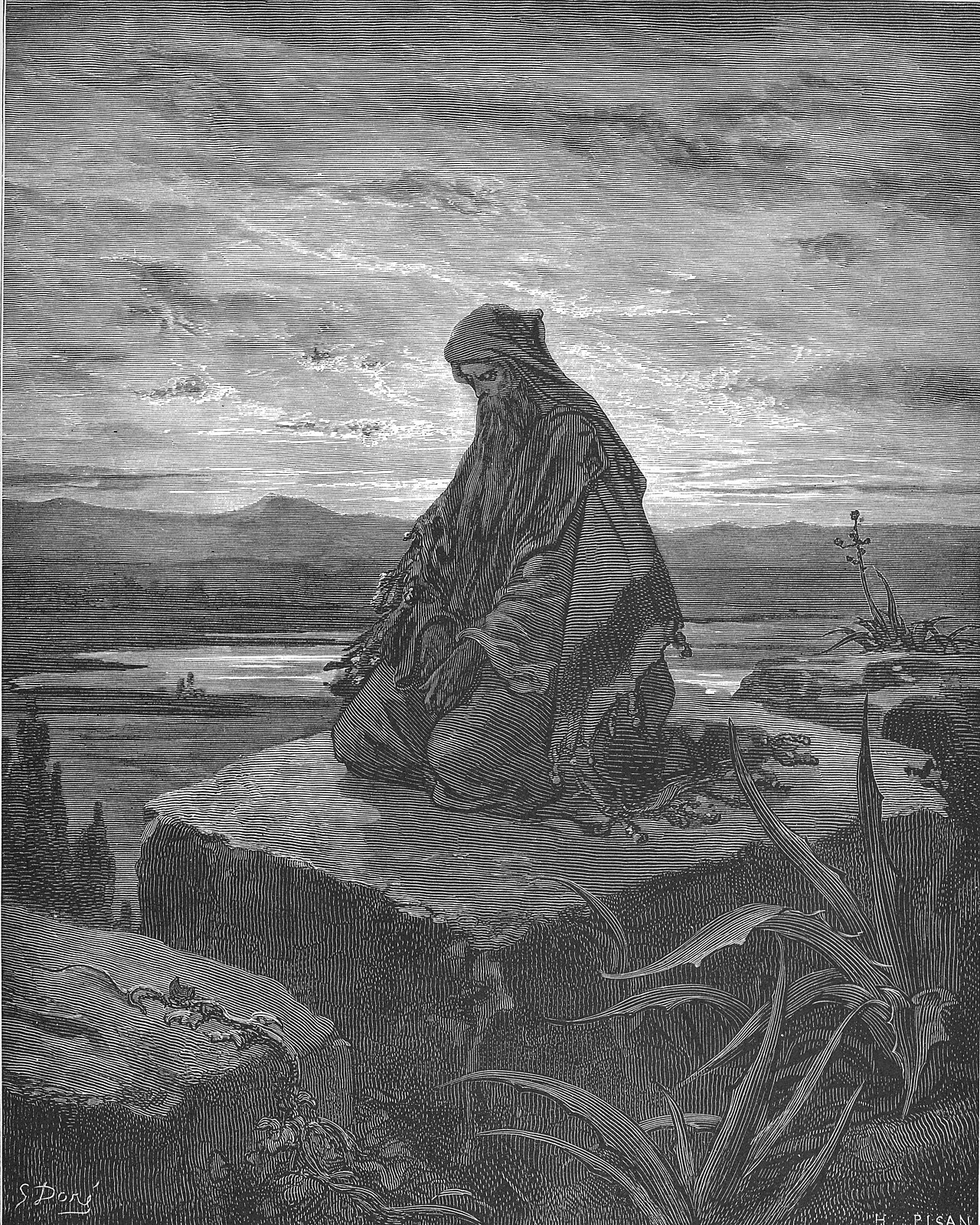
This page draws on Albert Barnes, Notes, Explanatory and Practical, on the Old and New Testaments (1832-1869); George Adam Smith, The Book of Isaiah, Expositor's Bible; Jamieson, Fausset & Brown, Commentary Critical and Explanatory on the Whole Bible; Jerome, Commentary on Isaiah; John Gill, Exposition of the Old Testament (1748-1763); John Wesley, Explanatory Notes upon the Old Testament; Matthew Henry, Commentary on the Whole Bible and Thomas Aquinas, Commentary on Isaiah.