
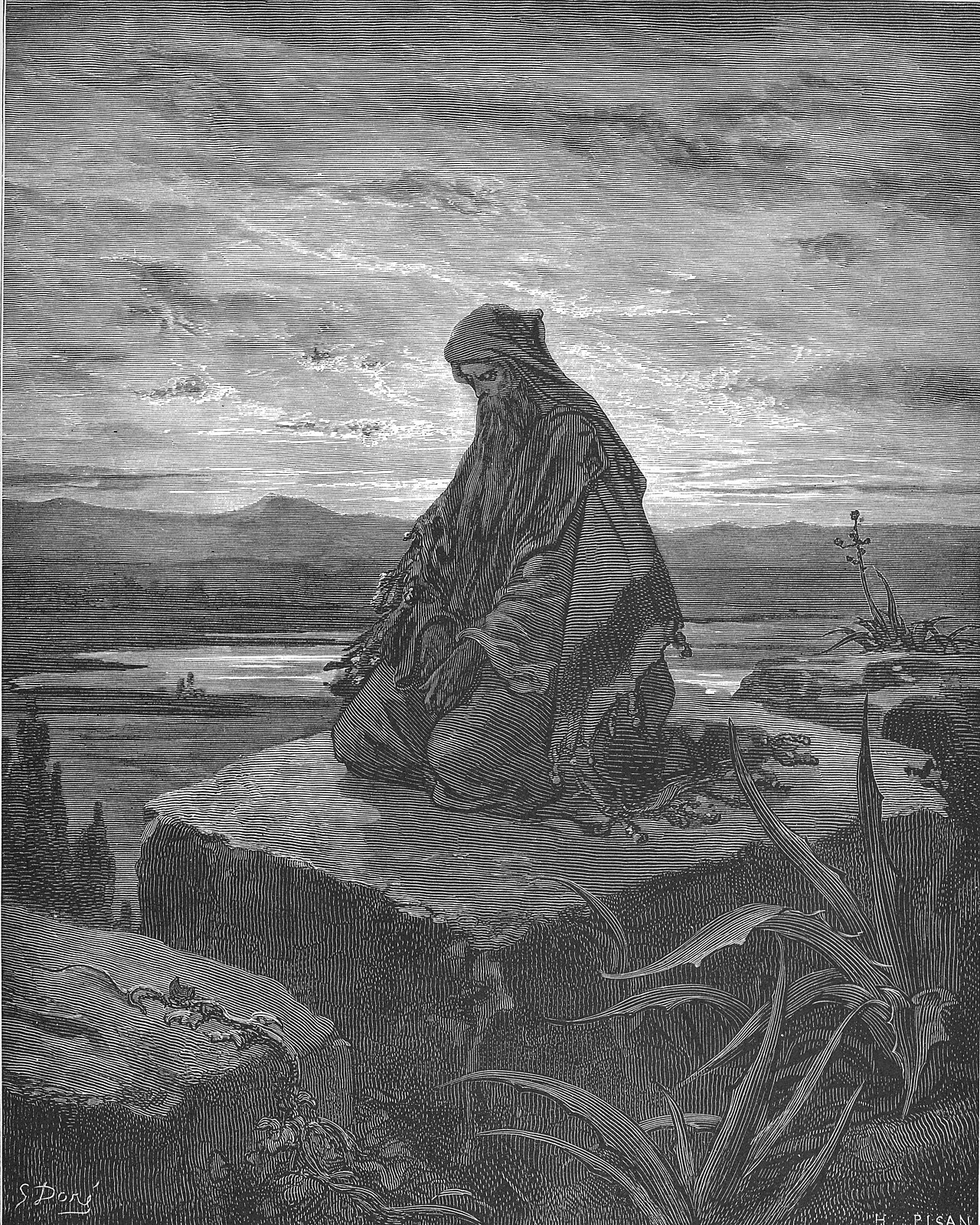
Isaiahchapter 10
34 verses · Isaiah · 8th century BC · The Prophets
A remnant will return—a remnant of Jacob—to the Mighty God.
Introduction
Isaiah, The Prophets, Isaiah Overview.
Isaiah spoke this chapter while Assyria stood at the height of its power and the cities of the region fell one after another. Its first hearers could name every town on the road the invaders would take toward Jerusalem. It speaks first against unjust rulers at home, then against the empire that God uses and then judges. Listen for the boast of the Assyrian king and the question God asks about it. Notice the promise of a remnant that returns. Mark the list of towns near the end and the image of a forest cut down. The chapter shows that God rules the powers He uses.
Context
- Who
- Judeans who could name every town on the invasion route
- What
- A woe on unjust lawmakers, a judgment on Assyria for its pride though God used it as His rod, and a promise that a remnant will return.
- Where
- The kingdoms from Carchemish to Samaria, Assyria itself, and the ridge road north of Jerusalem through Aiath, Migron and Michmash.
- When
- The years of Assyrian expansion, about 720 to 701 BC.
- Why
- To warn the rulers of Judah and to assure the remnant that Assyria's boasting would end and its yoke would be lifted.
Historical context
The roll call of conquered cities in the Assyrian king's boast is accurate and in order. Carchemish fell in 717 BC, Calno around 738, Arpad in 740, Hamath in 720, Damascus in 732, Samaria in 722. An Assyrian monarch really did talk like this: his inscriptions list cities the way a hunter lists trophies, and he credited his god with handing them over. Isaiah quotes the style exactly and then punctures it, does an axe brag against the man swinging it?
Show the rest of the historical context, 3 more paragraphs
Assyria's method was deportation. Whole populations were marched out and replaced with settlers from elsewhere, which broke a people's memory of itself within a generation. That is what had just happened to the northern kingdom, and it is why the promise of a returning remnant carries such weight in this chapter.
The march route in the closing verses is a map anyone in Jerusalem could follow. Aiath, Migron, Michmash, where the baggage train is parked, then the pass, Geba for the night camp, and panic running through Ramah, Gibeah, Gallim, Anathoth, and Nob. From Nob, the last stop, an invader stands within sight of Jerusalem and shakes his fist at the hill. These are villages a few miles apart on the ridge north of the city.
The felling image at the end works on the same forest as the boast. Assyria had bragged about cutting down the tall cedars; now the LORD of hosts lops the boughs, and the high ones are hewn down, and Lebanon falls by a mighty one.
Significance
This chapter answered the question every Judean was asking: if Assyria is unstoppable, where is God? The answer is that Assyria is the rod in his hand, sent against a godless nation, and held responsible for the cruelty it enjoys along the way.
Show the rest of the significance, 1 more paragraph
For the remnant, the practical word was a promise with a deadline. Do not be afraid of the Assyrian, because in a very little while the anger will be finished, and the yoke will come off the neck the way a fattened neck bursts a collar.
This chapter in Jewish lifeWhat this chapter is in Jewish life and reading.
What is done
No part of this chapter is read in the synagogue. Probed for this lane, the site's own table in src/lib/hebraic/readings.ts printed parashot 0 and haftarah uses 0 for Isaiah 10, and no festival reading for the book. Across chapters 1 to 22 of Isaiah the same probe found a Haftarah only in chapters 1, 6, 7 and 9.
How it is read
Every English note the corpus keeps on this chapter is Rashi's, quoted here from The Judaica Press complete Tanach with Rashi, translated by A. J. Rosenberg, which Sefaria reports as CC-BY.
Rashi reads Assyria as the rod in God's hand and Sennacherib as the man who forgot it. God made Assyria "the rod of My wrath with which to chastise My people" (Rashi on Isaiah 10:5:1). The one who "says" in the eighth verse is Sennacherib (Rashi on Isaiah 10:7:1). His boast in the thirteenth verse is read as "None of my might is from the Holy One, blessed be He" (Rashi on Isaiah 10:13:1). The answer comes in the axe of the fifteenth: "you are merely like My axe, and I am hewing with you" (Rashi on Isaiah 10:15:1).
The light of Israel that becomes a fire is read as "The Torah in which Hezekiah engages" (Rashi on Isaiah 10:17:1). The forest that burns is Sennacherib's armies (Rashi on Isaiah 10:18:1).
The remnant that returns is read of repentance. "The remnant of them shall return to the Holy One, blessed be He" (Rashi on Isaiah 10:21:1). Rashi has the prophet tell Hezekiah that the remnant who return to do good will wash away the destruction decreed on the people (Rashi on Isaiah 10:22:1).
What the rabbis say
The corpus carries 40 rabbinic locators on the verses of this chapter, 6 in the Talmud and 34 in the Midrash. It carries the text of none, so each is cited by ref here and never quoted or paraphrased. The verse numbers are the Hebrew ones the corpus prints.
On verse 1 it holds Vayikra Rabbah 35:5 and Yalkut Shimoni on Torah 670:3. On verse 2 it holds Tanna DeBei Eliyahu Rabbah 10:1. On verse 3 it holds Eikhah Rabbah, Petichta 24, Otzar Midrashim, Pesikta, Pesikta Chadata 49 and Pirkei DeRabbi Eliezer 34:10. On verse 5 it holds Midrash Lekach Tov on Lamentations 3:1:1 and Midrash Tehillim 17:9. On verse 10 it holds Bamidbar Rabbah 15:14 and Midrash Lekach Tov, Deuteronomy 32:17:1.
On verse 12 it holds Yalkut Shimoni on Torah 170:2. On verse 13 it holds Berakhot 28a:6 and Berakhot 4b:25. On verse 14 it holds Avot DeRabbi Natan, Recension B 46:4 and Bamidbar Rabbah 13:14. On verse 15 it holds Ein Yaakov (Glick Edition), Sanhedrin 11:25. On verse 16 it holds Ein Yaakov (Glick Edition), Sanhedrin 11:26 and Ein Yaakov (Glick Edition), Shabbat 15:3.
On verse 17 it holds Devarim Rabbah 1:12 and Midrash Tehillim 22:2. On verse 18 it holds Midrash Tehillim 79:3. On verse 19 it holds Eikhah Rabbah 4:15 and Eikhah Rabbah, Petichta 30. On verse 21 it holds Midrash Shmuel 19:5. On verse 23 it holds Jerusalem Talmud Berakhot 2:8:11 and Midrash Sekhel Tov, Shemot 11:7:1.
On verse 25 it holds Midrash Lekach Tov, Leviticus 20:11:1. On verse 27 it holds Ein Yaakov (Glick Edition), Sanhedrin 11:29 and Ein Yaakov, Sanhedrin 11:27. On verse 28 it holds Ein Yaakov (Glick Edition), Sanhedrin 11:30 and Ein Yaakov, Sanhedrin 11:28. On verse 30 it holds Eikhah Rabbah 1:1 and Eikhah Rabbah, Petichta 1. On verse 31 it holds Midrash Sekhel Tov, Shemot 9:19:1.
On verse 32 it holds Megillah 31a:6 and Mekhilta DeRabbi Yishmael, Tractate Shirah 2:15. On verse 33 it holds Ein Yaakov (Glick Edition), Sotah 1:10 and Ein Yaakov, Sotah 1:12. On verse 34 it holds Aggadat Bereshit 68:1 and Avot DeRabbi Natan 4:5.
What each of them teaches is a saying of the rabbis, and is reported as theirs wherever this site quotes one. The quotations wait on a fetch that carries the text.
Sources: Rashi, Rashi on Isaiah 10:1:1 to 10:24:1, The Judaica Press complete Tanach with Rashi, translated by A. J. Rosenberg, reported CC-BY; The Sefaria corpus, scripts/data/sources/sefaria/isaiah/10.json, the 40 Talmud and Midrash locators on the verses of this chapter; The site's own files, src/lib/hebraic/readings.ts, probed for Isaiah 10: parashot 0, haftarah uses 0, and no festival reading for the book.
The heads below are this chapter's scenes. The numbered points under each are its verses.
Woe to Those Who Frame Unrighteous Decrees
Isaiah 10:1-4
Woe to those who enact: The woe turns to Judah's courts, those who "enact unjust statutes," making "widows their prey and orphans their plunder" under color of law. The judges are asked what they will do "on the day of reckoning when devastation comes from afar," a courtroom question turned on themselves.
Isaiah 10:1
“Wo unto them that decree unrighteous decrees - To those who frame statutes that are oppressive and iniquitous. The prophet here refers, doubtless, to the rulers and judges of the land of Judea. A similar description he had before given; Isa 1:10, Isa 1:23, ... And that write ... - Hebrew, ‘And to the writers who write violence.’ The word translated “grievousness,” עמל ‛âmâl, denotes properly “wearisome labor, trouble, oppression, injustice.” Here, it evidently refers to the judges who declared oppressive and unjust sentences, and caused them to be recorded.”
to make widows their prey: The unjust decrees of verse 1 are written law, so the robbery here is done through the courts. Barnes compared 29:21, which names the same abuse at the city gate. Widows and orphans become the judges' plunder.
Isaiah 10:2
“My people - Instead of עמי ammi, my people, many MSS., and one of my own, ancient, read עמו ammo, his people. But this is manifestly a corruption.”
Adam Clarke · Commentary on the Bible (1810-1826)evangelical
the day of reckoning: Jerome rendered the day of reckoning as a visitation. Barnes identified the devastation from afar as the Assyrian invasion that answers the crimes of verses 1 and 2. The three questions leave the rulers nowhere to store the wealth they took from the poor.
Isaiah 10:3
“And what will ye do - The prophet here proceeds to denounce the judgment, or punishment, that would follow the crimes specified in the previous verses. That punishment was the invasion of the land by a foreign force. ‘What will ye do? To whom will you fly? What refuge will them be?’ Implying that the calamity would be so great that there would be no refuge, or escape.”
crouch among the captives: The first Hebrew word, bilti, is hard, and Barnes listed a great variety of readings. Clarke, following Kimchi, read it as the LORD saying the people fall among the captives and the slain with no help from Him. The refrain of His upraised hand closes its fourth stanza.
Isaiah 10:4
“Without me - That is, without my aid: they shall be taken captive even by the captives, and shall be subdued even by the vanquished. “The י yod in בלתי bilti is a pronoun, as in Hos 13:4.” - Kimchi on the place. One MS. has לבלתי lebilti. As the people had hitherto lived without God in worship and obedience; so they should now be without his help, and should perish in their transgressions.”
Adam Clarke · Commentary on the Bible (1810-1826)evangelical
1 more voice on this verse
Isaiah 10:4
“Isa 10:9, 11 show that Samaria was destroyed before this prophecy. It was written when Assyria proposed (a design which it soon after tried to carry out under Sennacherib) to destroy Judah and Jerusalem, as it had destroyed Samaria. This is the first part of Isaiah's prophecies under Hezekiah.”
Jamieson, Fausset & Brown · Commentary Critical and Explanatory on the Whole Bible (1871)reformed
Assyria, the Rod of My Anger, Boasts Against the Hand
Isaiah 10:5-7
Woe to Assyria, the rod: Assyria is "the rod of My anger," sent "against a godless nation." The text separates commission from intention, "But this is not his intention; this is not his plan," since Assyria means to destroy many nations. God sends the nation, and the nation pursues its ambition.
Isaiah 10:5
“O Assyrian, the rod of mine anger,..... Either as calling him to come against the land of Israel to spoil it, so Kimchi; or as grieving that he was obliged to make use of him in such a manner against his people; or as threatening him with ruin. So the Targum, Septuagint, and all the Oriental versions render it, "woe to the Assyrian"; wherefore this, and what follows, serve to comfort the people of God; that though they should be carried captive by the Assyrians, yet they should be utterly destroyed, and a remnant of the Jews should be saved.”
1 more voice on this verse
Isaiah 10:5
“O Assyrian - The word הוי hôy, is commonly used to denounce wrath, or to indicate approaching calamity; as an interjection of threatening; Isa 1:4. ‘Wo sinful nation;’ Isa 10:8, Isa 10:11, Isa 10:18, Isa 10:20-21; Jer 48:1; Eze 13:2. The Vulgate so understands it here: Vae Assur; and the Septuagint, Οὐαι Ἀσσυρίοις Ouai Assuriois - ‘Woe to the Assyrians.’ So the Chaldee and the Syriac. It is not then a simple address to the Assyrian; but a form denouncing wrath on the invader.”
against a godless nation: The nation is Israel and Judah, and the one sent is the Assyrian king of verse 5. Barnes took the verb send as proof that conquerors stay in God's hand, citing Proverbs 21:1. The trampling recalls the vineyard of 5:5.
Isaiah 10:6
“I will send him - Implying that he was entirely in the hand of God, and subject to his direction; and showing that God has control over kings and conqueror’s; Pro 21:1. Against an hypocritical nation - Whether the prophet here refers to Ephraim, or to Judah, or to the Jewish people in general, has been an object of inquiry among interpreters. As the designs of Sennacherib were mainly against Judah. it is probable that that part of the nation was intended.”
it is in his heart to destroy: The LORD means to correct His people, and the king of Assyria means to cut off nations. Matthew Henry named the king Sennacherib and said that God's plan was the furthest thing from his heart. That gap is why verse 12 punishes Assyria.
Isaiah 10:7
“God designs to correct his people for, and so to cure them of, their hypocrisy, and bring them nearer to himself; but was that Sennacherib's design? No, it was the furthest thing from his thoughts-- he means not so. Note, (1.) The wise God often makes even the sinful passions and projects of men subservient to his own great and holy purposes.”
Matthew Henry · Commentary on the Whole Bible (1707-1721)puritan
Isaiah 10:8-11
The Assyrian boasts that Calno, Hamath and Samaria are no different from Carchemish, Arpad and Damascus. He reasons from the idols of Samaria to Jerusalem's, as though the Lord were one more conquered god. Gill notes that the cities trace the line of Assyrian conquest, each already fallen.
Isaiah 10:8
“For he saith - This verse, and the subsequent verses to Isa 10:11, contain the vaunting of the king of Assyria, and the descriptions of his own confidence of success. Are not my princes altogether kings? - This is a confident boast of his “own” might and power. His own dominion was so great that even his princes were endowed with the ordinary power and “regalia” of kings.”
1 more voice on this verse
Isaiah 10:8
“For he saith, are not my princes altogether kings?”
Is not Samaria like Damascus?: Each pair names a city taken by Assyria, moving south toward Judah, from Carchemish on the Euphrates through Hamath and Arpad to Damascus and Samaria. Matthew Henry noted that Samaria fell to a predecessor, so the boast is borrowed. Jerusalem is the next name on the list.
Isaiah 10:9
“Is not Calno as Carchemish? - The meaning of this confident boasting is, that none of the cities and nations against which be had directed his arms, had been able to resist him. All had fallen before him; and all were alike prostrate at his feet. Carchemish had been unable to resist him, and Calno had shared the same fate. Arpad had fallen before him, and Hamath in like manner had been subdued.”
whose images surpassed those of Jerusalem and Samaria: The king treats the LORD as one more city god, weaker in images than the gods he has already beaten. Barnes summed up the argument of these two verses. Matthew Henry answered that the king judged by the sight of the eye.
Isaiah 10:10
“The argument in these two verses is this: ‘The nations which I have subdued were professedly under the protection of idol gods. Yet those idols were not able to defend them - though stronger than the gods worshipped by Jerusalem and Samaria. And is there any probability, therefore, that the protection on which you who are Jews are leaning, will be able to deliver you?’ Jerusalem he regarded as an idolatrous city, like others; and as all others had hitherto been unable to retard his movements, he inferred that it would be so with Jerusalem.”
1 more voice on this verse
Isaiah 10:10
“The kingdoms - Which worshipped their own idols, and vainly imagined that they could protect them from my power. He calls the gods of the nations, not excepting Jerusalem, idols, by way of contempt, because none of them could deliver their people out of his hands, and because he judged them to be but petty gods, far inferior to the sun, which was the God of the Assyrians.”
John Wesley · Explanatory Notes upon the Old Testament (1765)evangelical
The same boast returns in the mouth of the Rabshakeh at 36:18-20 and in the king's letter at 37:10-13. Aquinas observed that the argument runs from the nations to Samaria and from Samaria to Jerusalem. Hezekiah's prayer in 37:18-20 answers it.
Isaiah 10:12-14
So when the Lord has completed: He will punish Assyria "for the fruit of his arrogant heart" once He has finished His work against Mount Zion. The king credits nothing to heaven, claiming as skill a commission he never knew he carried. He gathered the earth's wealth "Like one gathering abandoned eggs," conquest as effortless plunder.
Isaiah 10:12
“The Lord “Jehovah” - For אדני Adonai, fourteen MSS. and three editions read יהוה Yehovah. The fruit “The effect” - “פרי peri, f. צבי tsebi, vid. Isa 13:19, sed confer, Pro 1:31; Pro 31:16, Pro 31:31.” - Secker. The Chaldee renders the word פרי peri by עיבדי obadey, works; which seems to be the true sense; and I have followed it. - L.”
Adam Clarke · Commentary on the Bible (1810-1826)evangelical
I have removed the boundaries of nations: Matthew Henry, following White, read the moved boundaries as the Assyrian practice of moving whole peoples from land to land. 2 Kings 17:6 and 17:24 record it for Samaria. The king credits his own hand and wisdom, and verse 15 answers him.
Isaiah 10:13
“By his removing the border of the people Mr. White understands his arbitrarily transplanting colonies from place to place, which was the constant practice of the Assyrians in all their conquests; and this is a probable interpretation. [5.] He had enriched himself with their wealth, and brought it into his own exchequer: I have robbed their treasures.”
Matthew Henry · Commentary on the Whole Bible (1707-1721)puritan
Like one gathering abandoned eggs: The picture is of a man taking eggs from a nest the mother bird has left, with nothing to resist him. Matthew Henry read the silence as weakness in the nations and tyranny in the king. Verse 15 answers with the axe and its wielder.
Isaiah 10:14
“And so God, the Creator and Healer of all, knowing that pride is the cause and fountain head of evils, has been careful to heal opposites with opposites, that those things which were ruined by pride might be restored by humility. For the one says, "I will ascend into heaven," and the other, "My soul was brought low even to the ground."”
John Cassian · written before 435 · INSTITUTES 12:8patristic
2 more voices on this verse
Isaiah 10:14
“And my hand hath found, as a nest - By a beautiful and striking figure here, the Assyrian monarch is represented as describing the ease with which he had subdued kingdoms, and rifled them of their treasures. No resistance had been offered. He had taken them with as little opposition as a rustic takes possession of a nest, with its eggs or young, when the parent bird is away.”
Isaiah 10:14
“They were so weak that they knew it was to no purpose to resist, and he was so arbitrary that they knew it was to no purpose to complain. Strange that ever men who were made to do good should take a pride and a pleasure in doing wrong, and doing mischief to all about them without control, and should reckon that their glory which is their shame!”
Matthew Henry · Commentary on the Whole Bible (1707-1721)puritan
Isaiah 10:15-16
Does an axe raise itself: The central image asks whether an axe can raise itself above the one who swings it, turning the boast back on the boaster. The rod and staff of verse 5 return as tools mistaking themselves for the hand. An axe has no glory of its own, whatever cutting it does.
Isaiah 10:15
“Through free in a sense, and carrying out his own plans, the Assyrian was unconsciously carrying out God's purposes. shaketh it--moves it back and forward. staff . . . lift . . . itself . . . no wood--rather, "as if the staff (man, the instrument of God's judgments on his fellow man) should set aside (Him who is) not wood" (not a mere instrument, as man).”
Jamieson, Fausset & Brown · Commentary Critical and Explanatory on the Whole Bible (1871)reformed
2 more voices on this verse
Isaiah 10:15
“The tool striving with the workman is no less absurd than the clay striving with the potter; and as it is a thing not to be justified that men should fight against God with the wit, and wealth, and power, which he gives them, so it is a thing not to be suffered.”
Matthew Henry · Commentary on the Whole Bible (1707-1721)puritan
Isaiah 10:15
“Shall the axe ... - In this verse God reproves the pride and arrogance of the Assyrian monarch. He does it by reminding him that he was the mere instrument in his hand, to accomplish his purposes; and that it was just as absurd for him to boast of what he had done, as it would be for the axe to boast when it had been welded with effect. In the axe there is no wisdom, no skill, no power; and though it may lay the forest low, yet it is not by any skill or power which it possesses.”
will send a wasting disease: The fulfilment is told at 37:36, where the angel of the LORD struck down the Assyrian camp. Wesley read the fire as the ruin of the army and of the glory of its princes. The stout warriors waste away from within.
Isaiah 10:16
“The Lord “Jehovah” - For אדני Adonai, fifty-two MSS., eleven editions, and two of my own, ancient, read יהוה, Yehovah, as in other cases. And under his glory - That is, all that he could boast of as great and strong in his army, (Sal. ben Melec in loc.), expressed afterwards, Isa 10:18, by the glory of his forest, and of his fruitful field.”
Adam Clarke · Commentary on the Bible (1810-1826)evangelical
1 more voice on this verse
Isaiah 10:16
“The robust and choice soldiers of Assyria (Ps 78:31, where "fattest" answers in the parallelism to "chosen," or "young men," Margin). leanness--carrying out the image on "fat ones." Destruction (Ps 106:15). Fulfilled (Isa 37:36). his glory--Assyria's nobles.”
Jamieson, Fausset & Brown · Commentary Critical and Explanatory on the Whole Bible (1871)reformed
Isaiah 10:17-19
And the Light of Israel: The Light of Israel becomes "a fire, and its Holy One a flame," the title turned against the invader. Assyria's host, pictured as forest, is consumed until a child could count the trees. The imagery prepares the next chapter, a stump left behind, out of which the Branch will grow.
Isaiah 10:17
“And Isaiah shows that the Holy Spirit is not only light but also fire, saying, "And the light of Israel shall be for a fire." So the prophets called him a burning fire, because in those three points we see more intensely the majesty of the Godhead; since to sanctify is of the Godhead, to illuminate is the property of fire and light, and the Godhead is customarily pointed out or seen in the appearance of fire: "For our God is a consuming fire," as Moses said.”
Ambrose of Milan · written before 397 · On the Holy Spirit 1.14patristic
2 more voices on this verse
Isaiah 10:17
“And the light of Israel - That is, Yahweh. The word “light” here, אור 'ôr, is used also to denote a “fire,” or that which causes light and heat; see Eze 5:2; Isa 44:16; Isa 47:14. Here it is used in the same sense, denoting that Yahweh would be “the fire” אור 'ôr that would cause the “flame” (אשׁ 'êsh) which would consume the Assyrian. Jehovah is often compared to a burning flame, or fire; Deu 4:24; Deu 9:3; Heb 12:29. Shall be for a fire - By his power and his judgment he shall destroy them.”
Isaiah 10:17
“The same God that is a rejoicing light to those that serve him faithfully will be a consuming fire to those that trifle with him or rebel against him. The light of Israel shall be for a fire to the Assyrians, as the same pillar of cloud was a light to the Israelites and a terror to the Egyptians in the Red Sea.”
Matthew Henry · Commentary on the Whole Bible (1707-1721)puritan
both soul and body: Barnes read the forest and orchard as the army of Sennacherib, set as thick as trees in a grove. Wesley added that the soldiers stood as thick as ears of grain in a field. Soul and body means the whole of it.
Isaiah 10:18
“The glory of his forest - In these expressions, the army of Sennacherib is compared with a beautiful grove thick set with trees; and as all the beauty of a grove which the fire overruns is destroyed, so, says the prophet, it will be with the army of the Assyrian under the judgments of God. If the ‘briers and thorns’ Isa 10:17 refer to the common soldiers of his army, then the glory of the forest - the tall, majestic trees - refer to the princes and nobles. But this mode of interpretation should not be pressed too far.”
1 more voice on this verse
Isaiah 10:18
“Secondly, That those few who remained should be quite dispirited: They shall be as when a standard-bearer fainteth. When he either falls or flees, and his colours are taken by the enemy, this discourages the whole army, and puts them all into confusion. Upon the whole matter we must say, Who is able to stand before this great and holy Lord God?”
Matthew Henry · Commentary on the Whole Bible (1707-1721)puritan
a child could count them: The image of the forest carries on from verse 18, and Barnes read the remaining trees as the few survivors of the Assyrian army. The king who boasted of gathering the earth is left with a number a child can reckon. Sennacherib went home to Nineveh, as 37:37 records.
Isaiah 10:19
“And the rest of the trees ... - Keeping up still the image of a large and once dense forest, to which he had likened the Assyrian army. ‘The rest’ here means that which shall be left after the threatened judgment shall come upon them. That a child may write them - That a child shall be able to number them, or write their names; that is, they shall be very few.”
1 more voice on this verse
Isaiah 10:19
“As to their small number, and they that remain of the trees, for Sennacherib literally fled with few, namely, with ten: you shall remain few in number, who before were as the stars of heaven for multitude (Deut 28:62).”
Thomas Aquinas · written before 1274 · Commentary on Isaiahpatristic
A Remnant Shall Return and Lean on the Holy One
Isaiah 10:20-21
On that day the remnant: The remnant of Israel will "truly rely on the LORD," no longer on the one who struck them. This is the name of Shear-jashub made prophecy, whose name means a remnant will return. Verse 21 repeats the name inside one line: "A remnant will return" to "the Mighty God."
Isaiah 10:20
“And it shall come to pass - The prophet proceeds to state the effect on the Jews, of the judgment that would overtake the army of the Assyrian. One of those effects, as stated in this verse, would be, that they would be led to see that it was in vain to look to the Assyrians any more for aid, or to form any further alliance with them, but that they should trust in the Lord alone. The remnant of Israel - Those that would be left after the Assyrian had invaded and desolated the land.”
Clarke read Mighty God, El gibbor, as the same title given to the child in 9:6. Paul quotes the next two verses at Romans 9:27-28 of the remnant of Israel who believed. Isaiah's son Shear-jashub in 7:3 bears the name Remnant Will Return.
Isaiah 10:21
“This promise of the conversion and salvation of a remnant of Israel is applied by the apostle ( Rom. ix. 27 ) to the remnant of the Jews which at the first preaching of the gospel received and entertained it, and sufficiently proves that it was no new thing for God to abandon to ruin a great many of the seed of Abraham in full force and virtue; for so it was now.”
Matthew Henry · Commentary on the Whole Bible (1707-1721)puritan
ConnectionsIsaiah 9:6
Isaiah 10:22-23
Though your people, O Israel: Paul quotes this verse at Romans 9:27, and "only a remnant will return" is both a promise and a warning that only a remnant survives. The Lord GOD of Hosts will carry out "the destruction decreed upon the whole land," judgment on the nation running alongside faithfulness to a remnant.
Isaiah 10:22
“For though thy people Israel - I have endeavored to keep to the letter of the text as nearly as I can in this obscure passage; but it is remarkable that neither the Septuagint, nor St. Paul, Rom 9:28, who, except in a few words of no great importance, follows them nearly in this place, nor any one of the ancient Versions, take any notice of the word שטף shoteph, overflowing; which seems to give an idea not easily reconcilable with those with which it is here joined. 1. S. Maerlius (Schol. Philolog. ad Selecta S.”
Adam Clarke · Commentary on the Bible (1810-1826)evangelical
1 more voice on this verse
Isaiah 10:22
“The reason is added, Because "the consumption (fully completed destruction) is decreed (literally, decided on, brought to an issue), it overfloweth (Isa 30:28; 8:8) with justice"; that is, the infliction of just punishment (Isa 5:16) [MAURER].”
Jamieson, Fausset & Brown · Commentary Critical and Explanatory on the Whole Bible (1871)reformed
Cross references
Isaiah 10:22
- Quoted inRomans 9:27“Isaiah cries out concerning Israel: “Though the number of the Israelites is like the sand of the sea, only the remnant will be saved.”
'a remnant shall be saved' ('Esaias also crieth concerning Israel')
the destruction decreed upon the whole land: Barnes rendered the Hebrew as a destruction completed and decreed, fixed by the Lord GOD of Hosts before it falls. Paul cites this verse with verse 22 at Romans 9:28. The destruction on the whole land has a set measure, and a remnant survives it.
Isaiah 10:23
“For the Lord God of hosts - Note, Isa 1:9. Shall make a consumption - The Hebrew of this verse might be rendered, ‘for its destruction is completed, and is determined on; the Lord Yahweh of hosts will execute it in the midst of the land.’ Our translation, however, expresses the force of the original. It means that the destruction was fixed in the mind or purpose of God, and would be certainly executed.”
Isaiah 10:24-27
The Lord tells His people "do not fear Assyria," for "in just a little while" His fury will subside. He recalls Midian struck "at the rock of Oreb." The yoke "will be broken because your neck will be too large," where the King James renders the Hebrew word as anointing.
Isaiah 10:24
“After the manner of Egypt “In the way of Egypt” - I think there is a designed ambiguity in these words. Sennacherib, soon after his return from his Egyptian expedition, which, I imagine, took him up three years, invested Jerusalem. He is represented by the prophet as lifting up his rod in his march from Egypt, and threatening the people of God, as Pharaoh and the Egyptians had done when they pursued them to the Red Sea.”
Adam Clarke · Commentary on the Bible (1810-1826)evangelical
1 more voice on this verse
Isaiah 10:24
“Therefore--Return to the main proposition, Assyria's ultimate punishment, though employed as God's "rod" to chastise Judea for a time. O my people--God's tenderness towards His elect nation. after the manner of Egypt--as Egypt and Pharaoh oppressed thee. Implying, too, as Israel was nevertheless delivered from them, so now it would be from the Assyrian Sennacherib.”
Jamieson, Fausset & Brown · Commentary Critical and Explanatory on the Whole Bible (1871)reformed
in just a little while: Barnes took this as comfort to Zion, for the invasion was short and ended by the pestilence that struck the Assyrian army. The anger of verse 5, first aimed at Israel, turns here to the destruction of Assyria. Aquinas read the little while in relation to eternity.
Isaiah 10:25
“For yet a very little while - This is designed to console them with the hope of deliverance. The threatened invasion was brief and was soon ended by the pestilence that swept off the greater part of the army of the Assyrian. The indignation shall cease - The anger of God against his offending people shall come to an end; his purposes of chastisement shall be completed; and the land shall be delivered. In their destruction - על־תבליתם ‛al-tabelı̂ytām from בלה bâlâh, to wear out; to consume; to be annihilated.”
at the rock of Oreb: Oreb was a Midianite prince killed at a rock that took his name, in Judges 7:25. The staff over the sea recalls Exodus 14. Matthew Henry saw both deliverances as patterns for the fall of Assyria.
Isaiah 10:26
“Third, the ease of punishing, my < . . . > (Judg 7:25); and over the sea, the Red Sea: and he shall lift it up (Exod 14:21–29), against you, first, in the way of Egypt, because you trusted in the Egyptians.”
Thomas Aquinas · written before 1274 · Commentary on Isaiahpatristic
1 more voice on this verse
Isaiah 10:26
“And as his rod was upon the sea “And like his rod which he lifted up over the sea” - The Jewish interpreters suppose here an ellipsis of כ ke, the particle of similitude, before מטהו mattehu, to be supplied from the line above; so that here are two similitudes, one comparing the destruction of the Assyrians to the slaughter of the Midianites at the rock of Oreb; the other to that of the Egyptians at the Red Sea. Aben Ezra, Kimchi, Sal. ben Melec.”
Adam Clarke · Commentary on the Bible (1810-1826)evangelical
because your neck will be too large: The last clause reads, in Hebrew, because of oil. Gregory the Dialogist followed the Latin, the yoke rotting before the oil, and read it of the anointing of the Holy Spirit. The Berean pictures the neck of Israel grown too large for the yoke and the burden.
Isaiah 10:27
“It may be that by the designation of oil the actual anointing of the Holy Spirit is denoted, whereof it is said by the Prophet: "And the yoke shall rot at the presence of the oil." For the yoke doth rot at the presence of the oil, because whilst we are anointed with the grace of the Holy Spirit, we are set free from the bondage of our captivity; and whereas the proud dominion of the evil spirit is thrown off, the yoke is broken in pieces, wherewith the necks of our liberty were borne down.”
Gregory the Dialogist · written before 604 · Morals on the Book of Job, Book 19, Section 24patristic
3 more voices on this verse
Isaiah 10:27
“His burden shall be taken away - The oppressions and exactions of the Assyrian. From off thy shoulder - We bear a burden on the shoulder; and hence, any grievous exaction or oppression is represented as borne upon the shoulder. And his yoke ... - Another image denoting deliverance from oppression and calamity. And the yoke shall be destroyed because of the anointing - In the interpretation of these words, expositors have greatly differed. The Hebrew is literally, ‘From the face of oil,’ מפני-שׁמן mı̂peney-shāmen. The Vulgate renders it, literally, a facie olei.”
Isaiah 10:27
“But the Messiah is principally intended, of whom David was but a type; and who was in a particular manner anointed above his fellows, as is said, Psalm xlv, 7. For he is the foundation of all the promises, 2Cor i, 20, and of all the deliverances and mercies granted to God's people in all ages.”
John Wesley · Explanatory Notes upon the Old Testament (1765)evangelical
Isaiah 10:27
“Judah was still tributary to Assyria; Hezekiah had not yet revolted, as he did in the beginning of Sennacherib's reign. because of-- (Ho 10:15). the anointing--namely, "Messiah" (Da 9:24). Just as in Isa 9:4-6, the "breaking of the yoke of" the enemies' "burden and staff" is attributed to Messiah, "For unto us a child is born," &c., so it is here.”
Jamieson, Fausset & Brown · Commentary Critical and Explanatory on the Whole Bible (1871)reformed
The Marching Route, and the Forest Felled by Iron
Isaiah 10:28-32
Assyria has entered Aiath: The march traces a real road north of Jerusalem town by town, Aiath, Migron, Michmash and Geba. Each village's fear is named in turn, a line of approach the commentators fix within a single day's march. The catalogue carries no theology, only an army closing the last miles to Nob.
Gibeah of Saul flees: Verses 28 to 32 trace the Assyrian army marching on Jerusalem from the north, one town at a time. Clarke placed the ford at the pass of Michmash, the gorge of 1 Samuel 14:4-5. Geba, Ramah and Gibeah lie on the same road.
Isaiah 10:29
“They are gone over the passage - The word “passage” (מעברה ma‛ebı̂râh) may refer to any passage or ford of a stream, a shallow part of a river where crossing was practicable; or it may refer to any narrow pass, or place of passing in mountains. The Chaldee Paraphrase renders this, ‘They have passed the Jordan;’ but this cannot be the meaning, as all the transactions referred to here occurred in the vicinity of Jerusalem, and long after they had crossed the Jordan.”
O wretched Anathoth!: Clarke noted that the prophet plays on the names of Gallim, Laishah and Anathoth. Anathoth, the priests' town of Jeremiah 1:1, lies close to Jerusalem. Barnes observed that here the march pauses while the villages cry aloud in terror.
Isaiah 10:30
"Cry aloud in consternation." Laish--not the town in Dan (Jud 18:7), but one of the same name near Jerusalem (1 Maccabees 9:9). Anathoth--three miles from Jerusalem in Benjamin; the birthplace of Jeremiah. "Poor" is applied to it in pity, on account of the impending calamity.
Jamieson, Fausset & Brown · Commentary Critical and Explanatory on the Whole Bible (1871)reformed
2 more voices on this verse
Isaiah 10:30
“Lift up that voice, O daughter of Gallim,.... In a mournful and lamentable manner, and yet with such a clear loud voice, as to be heard afar off: the word is sometimes used for making a joyful sound, and of the neighing of horses. The inhabitants of Gallim are meant by its daughter; of this place was Phalti, who married Michal, Saul's daughter; very probably it was in the tribe of Benjamin. Jerom (f) makes mention of Accaron, a village, which was called Gallim.”
Isaiah 10:30
“Cause it to be heard unto Laish, O poor Anothoth “Hearken unto her, O Laish; answer her, O Anathoth!” - I follow in this the Syriac Version. The prophet plainly alludes to the name of the place, and with a peculiar propriety, if it had its name frown its remarkable echo. “ענתות anathoth, responsiones: eadem ratio nominis, quae in בית ענת beith anath, locus echus; nam hodienum ejus rudera ostenduntur in valle, scil. in medio montium, ut referent Robertus in Itiner. p. 70, et Monconnysius, p. 301.” Simonis Onomasticon Vet. Test. - L.”
Adam Clarke · Commentary on the Bible (1810-1826)evangelical
Madmenah flees: Madmenah and Gebim appear only here. Barnes placed the Madmannah of Joshua 15:31 far south toward Gaza, so this is another town on the road to Jerusalem. Matthew Henry read the list as the news of the march reaching each village, whose people flee to take refuge.
Isaiah 10:31
“Madmenah - This city is mentioned nowhere else. The city of Madmanna, or Medemene, mentioned in Jos 15:31, was in the bounds of the tribe of Simeon, and was far south, toward Gaza. It cannot be the place intended here. Is removed - Or, the inhabitants have fled from fear; see Isa 10:29. Gebim - This place is unknown. It is nowhere else mentioned. Gather themselves to flee - A description of the alarm prevailing at the approach of Sennacherib.”
shaking a fist at the mount of Daughter Zion: Nob, the town of priests in 1 Samuel 22, stood within sight of Jerusalem. Barnes read the halt there as a single day. Matthew Henry set beside it 37:22, where the daughter of Jerusalem shakes her head at the Assyrian in return.
Isaiah 10:32
“The daughter of Jerusalem, to be even with him, shall shake her head at him, ch. xxxvii. How fatal it would prove, in the issue, to himself. When he shakes his hand at Jerusalem, and is about to lay hands on it, then is God's time to appear against him; for Zion is the place of which God has said, This is my rest for ever; therefore those who threaten it affront God himself.”
Matthew Henry · Commentary on the Whole Bible (1707-1721)puritan
1 more voice on this verse
Isaiah 10:32
“As yet shall he remain - This is still a description of his advancing toward Jerusalem. He would make a station at Nob and remain there a day, meaning, perhaps, “only” one day, such would be his impatience to attack and destroy Jerusalem. At Nob - Nob was a city of Benjamin, inhabited by priests; Neh 11:32. When David was driven away by Saul, he came to this city, and received supplies from Ahimelech the priest; 1Sa 21:1-6. Nob must have been situated somewhere upon the ridge of the mount of Olives, to the northeast of the city.”
Isaiah 10:33-34
Behold, the Lord GOD of Hosts: The forest imagery of verses 18 and 19 returns as the chapter's last word. Assyria, stopped at the gate it reached, falls as Lebanon falls before the Mighty One. The next chapter answers with a shoot from the stump of Jesse, growing where the axe has done its worst.
Isaiah 10:33
“Behold, the Lord, the Lord of hosts, shall lop the bough with terror,.... Cut off the king of Assyria and his army, in a most terrible manner; "the glory" of it, as in Isa 10:18 the word signifies that which is the ornament, the beauty and glory, of the tree.”
Lebanon will fall before the Mighty One: Clarke, with Kimchi and Vitringa, read the Mighty One as the angel of the LORD who struck the Assyrians in 37:36. The thickets are the army of verses 18 and 19. The fallen forest sets up 11:1, a shoot from the stump of Jesse.
Isaiah 10:34
“Lebanon shall fall by a mighty one - באדיר beaddir, the angel of the Lord, who smote them, Kimchi. And so Vitringa understands it. Others translate, “The high cedars of Lebanon shall fall:” but the king of Assyria is the person who shall be overthrown.”
Adam Clarke · Commentary on the Bible (1810-1826)evangelical
Keep studying
Sources for this chapter
The summary
Jamieson, Fausset & Brown, Commentary Critical and Explanatory; John Calvin, Commentaries; John Wesley, Notes on the Old Testament and Matthew Henry, Complete Commentary.
The exposition
Adam Clarke, Commentary on the Bible; Albert Barnes; Franz Delitzsch, Biblical Commentary on the Prophecies of Isaiah; Gregory the Dialogist, Morals on the Book of Job, Book 19, Section 24; Jerome, Commentary on Isaiah; John Gill, Exposition of the Old Testament; John Wesley, Explanatory Notes upon the Old Testament; Matthew Henry, Commentary on the Whole Bible and Thomas Aquinas, Commentary on Isaiah.