
Isaiah 10:26
in Isaiah 10And the LORD of Hosts will brandish a whip against them, as when He struck Midian at the rock of Oreb. He will raise His staff over the sea, as He did in Egypt.
BSB
The same verse in ASV and KJV ▾
ASV
And Jehovah of hosts will stir up against him a scourge, as in the slaughter of Midian at the rock of Oreb: and his rod will be over the sea, and he will lift it up after the manner of Egypt.
KJV
And the Lord of hosts shall stir up a scourge for him according to the slaughter of Midian at the rock of Oreb: and as his rod was upon the sea, so shall he lift it up after the manner of Egypt.
⋯
This verse in Isaiah 10
Commentary
10 notes on this verseThird, the ease of punishing, my < . . . > (Judg 7:25); and over the sea, the Red Sea: and he shall lift it up (Exod 14:21–29), against you, first, in the way of Egypt, because you trusted in the Egyptians.
This site's exposition
be not afraid of the Assyrian
on Isaiah 10:24-27
O my people that dwellest in Zion, be not afraid of the Assyrian, the Lord God of hosts commands, promising that the indignation shall cease and his anger turn to their destruction after only a very little while. Two precedents anchor the promise, the slaughter of Midian at the rock of Oreb and the rod lifted over the sea after the manner of Egypt, deliverances Judah already had in its own history to remember. His burden shall be taken away from off thy shoulder, and his yoke from off thy neck, and the yoke shall be destroyed because of the anointing, a phrase the older writers read as pointing past the immediate Assyrian threat toward a fuller deliverance.
The record, by era
The Church Fathers1 voice
(v. 24 seqq.) Therefore thus says the Lord God of hosts: Do not fear, my people who dwell in Zion, from Assyria, who shall strike you with a rod and lift up his staff against you, as the Egyptians did. For yet a little while and my indignation will be fulfilled and my anger will be directed towards their wickedness. And the Lord of hosts will raise a whip against them, as he did against Midian at the rock of Oreb, and his staff against the sea, and he will lift it up in the manner of the Egyptians.
The Puritans and the Awakening4 voices
(2.) As his rod was upon the sea, the Red Sea, as Moses' rod was upon that, to divide it first for the escape of Israel and then to close it again for the destruction of their pursuers, so shall his rod now be lifted up, after the manner of Egypt, for the deliverance of Jerusalem and the destruction of the Assyrian.
Whether they were the princes and judges of Israel of Judah, or both, that the prophet denounced this woe against, is not certain: if those of Israel, these verses are to be joined with the close of the foregoing chapter, which is probable enough, because the burden of that prophecy ( for all this his anger is not turned away ) is repeated here (
quarantine:debris (2026-07-29) — unbalanced-parens
Stir up - Shall send a destroying angel. Midian - Whom God slew suddenly and unexpectedly, in the night. Oreb - Upon which one of their chief princes was slain, and nigh unto which the Midianites were destroyed.
And the Lord of hosts shall stir up a scourge for him,....
3 more voices on this verse
The Nineteenth Century3 voices
And as his rod was upon the sea “And like his rod which he lifted up over the sea” - The Jewish interpreters suppose here an ellipsis of כ ke, the particle of similitude, before מטהו mattehu, to be supplied from the line above; so that here are two similitudes, one comparing the destruction of the Assyrians to the slaughter of the Midianites at the rock of Oreb; the other to that of the Egyptians at the Red Sea. Aben Ezra, Kimchi, Sal. ben Melec.
A commentator
Jamieson, Fausset & Brown1802–1910
Commentary Critical and Explanatory on the Whole Bible (1871)
proposed
slaughter of--"stroke upon." Midian-- (Isa 9:4; Jud 7:25). as his rod was upon the sea--rather, understanding "stroke" from the previous clause, "according to the stroke of His rod upon the Red Sea" (Ex 14:16, 26).
quarantine:debris (2026-07-29) — starts-lowercase
A commentator
Albert Barnes1798–1870
Notes, Explanatory and Practical, on the Old and New Testaments (1832-1869)
proposed
And the Lord of hosts shall stir up - Or shall raise up that which shall rove as a scourge to him. A scourge for him - That is, that which shall punish him. The scourge, or rod, is used to denote severe punishment of any kind. The nature of this punishment is immediately specified. According to the slaughter of Midian - That is, as the Midianites were discomfitcd and punished. There is reference here, doubtless, to the discomfiture and slaughter of the Midianites by Gideon, as recorded in Jdg 7:24-25. That was signal and entire; and the prophet means to say, that the destruction of the Assyrian would be also signal and total. The country of Midian, or Madian, was on the east side of the Elanitic branch of the Red Sea; but it extended also north along the desert of mount Seir to the country of the Moabites; see the note at Isa 60:6. At the rock of Oreb - At this rock, Gideon killed the two princes of the Midianites, Oreb and Zeeb Jdg 7:25; and from this circumstance, probably, the name was given to the rock: Lev 11:15; Deu 14:14. It was on the east side of the Jordan. And as his rod ... - That is, as God punished the Egyptians in the Red Sea. So shall he lift it up after the manner of Egypt - As God overthrew the Egyptians in the Red Sea, so shall he overthrow and destroy the Assyrian. By these two comparisons, therefore, the prophet represents the complete destruction of the Assyrian army. In both of these cases, the enemies of the Jews had been completely overthrown, and so it would be in regard to the hosts of the Assyrian.
The words behind it
15 Hebrew wordsEvery Hebrew word of this verse in the order it stands, with what it means and the door to its own study. The last column counts the times a word stands in the whole Bible: the rarer the word, the more the places it appears belong together.
| Hebrew | Sound | Meaning | Word study | In the Bible |
|---|---|---|---|---|
| וְעוֹרֵ֨ר | veorer | and he will wield | H5782 → | 80 times |
| עָלָ֜יו | ʾalav | on it | H5921 → | 5755 times |
| יְהוָ֤ה | yahweh | Yahweh | H3068 → | 6520 times |
| צְבָאוֹת֙ | tzevaot | of hosts | H6635 → | 485 times |
| שׁ֔וֹט | shot | a whip | H7752 → | 11 times |
| כְּמַכַּ֥ת | kemakat | like [the] defeat of | H4347 → | 48 times |
| מִדְיָ֖ן | midyan | Midian | H4080 → | 59 times |
| בְּצ֣וּר | betzur | at [the] rock of | H6697 → | 78 times |
| עוֹרֵ֑ב | orev | Oreb | H6159 → | |
| וּמַטֵּ֙הוּ֙ | umatehu | and staff his | H4294 → | 252 times |
| עַל־ | ʾal- | [will be] over | H5921 → | 5755 times |
| הַיָּ֔ם | haiyam | the sea | H3220 → | 396 times |
| וּנְשָׂא֖וֹ | unesao | and he will raise it | H5375 → | 656 times |
| בְּדֶ֥רֶךְ | bederekh | in [the] manner of | H1870 → | 707 times |
| מִצְרָֽיִם׃ | mitzrayim | Egypt | H4714 → | 641 times |
וְעוֹרֵ֨רand he will wield
veorerH5782 →80 times
עָלָ֜יוon it
ʾalavH5921 →5755 times
יְהוָ֤הYahweh
yahwehH3068 →6520 times
צְבָאוֹת֙of hosts
tzevaotH6635 →485 times
שׁ֔וֹטa whip
shotH7752 →11 times
כְּמַכַּ֥תlike [the] defeat of
kemakatH4347 →48 times
מִדְיָ֖ןMidian
midyanH4080 →59 times
בְּצ֣וּרat [the] rock of
betzurH6697 →78 times
עוֹרֵ֑בOreb
orevH6159 →
וּמַטֵּ֙הוּ֙and staff his
umatehuH4294 →252 times
עַל־[will be] over
ʾal-H5921 →5755 times
הַיָּ֔םthe sea
haiyamH3220 →396 times
וּנְשָׂא֖וֹand he will raise it
unesaoH5375 →656 times
בְּדֶ֥רֶךְin [the] manner of
bederekhH1870 →707 times
מִצְרָֽיִם׃Egypt
mitzrayimH4714 →641 times
A shaded row is a word that stands 400 times or fewer in the Bible.
The walk
8 stopsEach card is a verse this one points to, and under it the verses that one points to in turn. Where several paths arrive at the same place, that place is listed first: the text keeps returning to it.
Through
2 Kings 19:35And that very night the angel of the LORD went out and struck down 185,000 men in the camp of the Assyrians. When the people got up the next morning, there were all the…
it leads to
- 2 Chronicles 32:21–22
and the LORD sent an angel who annihilated every mighty man of valor and every leader and commander in the camp of the king of Assyria. So he withdrew to his own land in…
- 2 Samuel 24:16
But when the angel stretched out his hand to destroy Jerusalem, the LORD relented from the calamity and said to the angel who was destroying the people, “Enough! Withdraw your hand now!” At that…
- 2 Chronicles 32:21–22
Through
Isaiah 9:4For as in the day of Midian You have shattered the yoke of their burden, the bar across their shoulders, and the rod of their oppressor.
it leads to
- Jeremiah 30:8
On that day, declares the LORD of Hosts, I will break the yoke off their necks and tear off their bonds, and no longer will strangers enslave them.
- Isaiah 14:25
I will break Assyria in My land; I will trample him on My mountain. His yoke will be taken off My people, and his burden removed from their shoulders.”
- Isaiah 10:26–27
And the LORD of Hosts will brandish a whip against them, as when He struck Midian at the rock of Oreb. He will raise His staff over the sea, as He did in Egypt.
- Nahum 1:13
For I will now break their yoke from your neck and tear away your shackles.”
- Isaiah 54:14
In righteousness you will be established, far from oppression, for you will have no fear. Terror will be far removed, for it will not come near you.
- Jeremiah 30:8
Through
Judges 7:25They also captured Oreb and Zeeb, the two princes of Midian; and they killed Oreb at the rock of Oreb and Zeeb at the winepress of Zeeb. So they pursued the Midianites and brought…
it leads to
- Judges 8:3–4
God has delivered Oreb and Zeeb, the two princes of Midian, into your hand. What was I able to do compared to you?” When he had said this, their anger against him subsided.
- Judges 8:3–4
Where this verse is studied
On this page
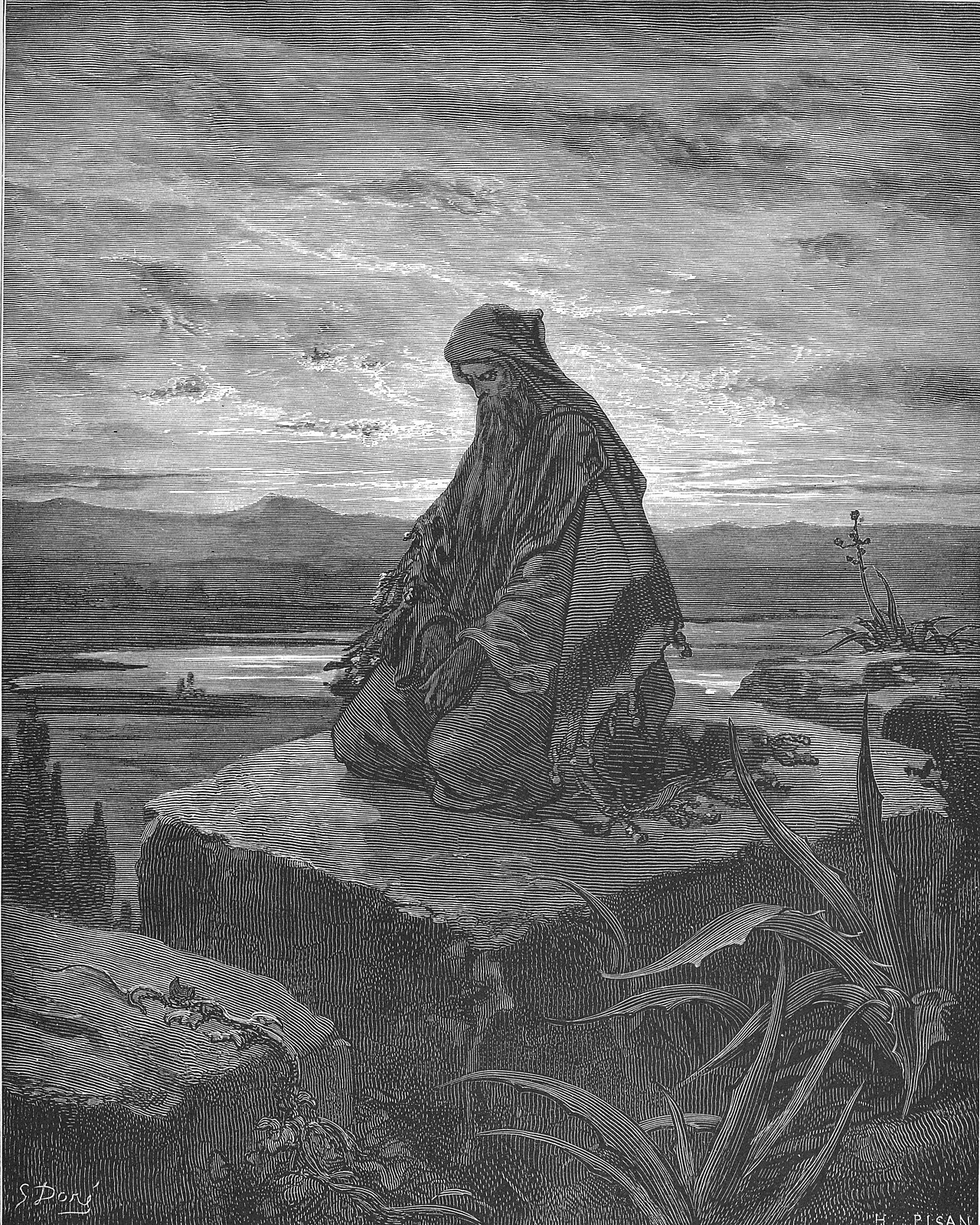
About Isaiah
Who and where
1 name in this verse with a page on the site.
This page draws on 9 works. Open the list of works
This page draws on Adam Clarke, Commentary on the Bible; Albert Barnes, Notes, Explanatory and Practical, on the Old and New Testaments (1832-1869); Jamieson, Fausset & Brown, Commentary Critical and Explanatory on the Whole Bible; Jerome, Commentary on Isaiah; John Gill, Exposition of the Old Testament; John Gill, Exposition of the Old Testament (1748-1763); John Wesley, Explanatory Notes upon the Old Testament; Matthew Henry, Commentary on the Whole Bible and Thomas Aquinas, Commentary on Isaiah.