
Isaiah 10:9
in Isaiah 10“Is not Calno like Carchemish? Is not Hamath like Arpad? Is not Samaria like Damascus?
BSB
The same verse in ASV and KJV ▾
ASV
Is not Calno as Carchemish? is not Hamath as Arpad? is not Samaria as Damascus?
KJV
Is not Calno as Carchemish? is not Hamath as Arpad? is not Samaria as Damascus?
⋯
This verse in Isaiah 10
Commentary
9 notes on this verseA commentator
Albert Barnes1798–1870
Notes, Explanatory and Practical, on the Old and New Testaments (1832-1869)
Is not Calno as Carchemish? - The meaning of this confident boasting is, that none of the cities and nations against which be had directed his arms, had been able to resist him. All had fallen before him; and all were alike prostrate at his feet. Carchemish had been unable to resist him, and Calno had shared the same fate. Arpad had fallen before him, and Hamath in like manner had been subdued.
This site's exposition
Are not my princes altogether kings?
on Isaiah 10:8-11
Assyria's own words expose the blasphemy under the boast: are not my princes altogether kings, is not Calno as Carchemish, cities the empire has already swallowed and now treats as interchangeable trophies. The king reasons from the idols of Samaria and the surrounding kingdoms to Jerusalem itself, as though the Lord were simply one more conquered god among the graven images, a category error the chapter lets Assyria commit before it is answered. Gill notes the list of cities traces the actual line of Assyrian conquest, Carchemish, Hamath, Damascus, Samaria, each already fallen by the time Sennacherib's threat reaches Jerusalem's gate.
The record, by era
The Church Fathers1 voice
(Verse 5 and following) Woe to Assyria, the rod of my anger, and the staff in their hands is my fury. I will send him against a deceitful nation, and I will command him against the people of my wrath, to take the spoil and seize the prey, and to tread them down like the mire of the streets. But he does not understand this, and his heart does not take it to heart, but his purpose is to destroy and cut off nations. For my princes are not also kings? Is not Charcamis like Chalanno, and Arphad like Emath?
The Medieval Church1 voice
Second, the subjugation of cities: is not Calano as Charcamis, below: for of a truth, O Lord, the kings of the Assyrians have laid waste lands, and their countries (Isa 37:18).
The Puritans and the Awakening3 voices
To support his boasts he is obliged to bring the victories of his predecessor into the account; for it was he that conquered Samaria, not Sennacherib. [3.] He had been too hard for their idols, their tutelar gods, had found out the kingdoms of the idols and found out ways to make them his own,
Is not - Have not I conquered one place as well as another, the stronger as well as the weaker? Samaria - Or, shall not Samaria be as Damascus? Shall I not take that, as I have done this city?
Is not Calno as Carchemish?....
2 more voices on this verse
The Nineteenth Century2 voices
A commentator
Jamieson, Fausset & Brown1802–1910
Commentary Critical and Explanatory on the Whole Bible (1871)
Is not . . . as--Was there any one of these cities able to withstand me? So Rab-shakeh vaunts (Isa 36:19). Calno--Calneh, built by Nimrod (Ge 10:10), once his capital, on the Tigris.
A commentator
Jamieson, Fausset & Brown1802–1910
Commentary Critical and Explanatory on the Whole Bible (1871)
proposed
Vauntings of the Assyrians. Illustrated by the self-laudatory inscriptions of Assyria deciphered by HINCKS. princes . . . kings--Eastern satraps and governors of provinces often had the title and diadem of kings. Hence the title, "King of kings," implying the greatness of Him who was over them (Eze 26:7;
quarantine:debris (2026-07-29) — unbalanced-parens
The words behind it
11 Hebrew wordsEvery Hebrew word of this verse in the order it stands, with what it means and the door to its own study. The last column counts the times a word stands in the whole Bible: the rarer the word, the more the places it appears belong together.
| Hebrew | Sound | Meaning | Word study | In the Bible |
|---|---|---|---|---|
| הֲלֹ֥א | halo' | ¿ not | H3808 → | 5168 times |
| כְּכַרְכְּמִ֖ישׁ | kekharkemish | like Carchemish | H3751 → | |
| כַּלְנ֑וֹ | kalno | [is] Calneh | H3641 → | |
| אִם־ | ʾim- | or? | H518 → | 1069 times |
| לֹ֤א | lo' | not | H3808 → | 5168 times |
| כְאַרְפַּד֙ | khearpad | like Arpad | H774 → | 6 times |
| חֲמָ֔ת | chamat | [is] Hamath | H2574 → | 35 times |
| אִם־ | ʾim- | or? | H518 → | 1069 times |
| לֹ֥א | lo' | not | H3808 → | 5168 times |
| כְדַמֶּ֖שֶׂק | khedamesek | like Damascus | H1834 → | 45 times |
| שֹׁמְרֽוֹן׃ | shomeron | [is] Samaria | H8111 → | 109 times |
הֲלֹ֥א¿ not
halo'H3808 →5168 times
כְּכַרְכְּמִ֖ישׁlike Carchemish
kekharkemishH3751 →
כַּלְנ֑וֹ[is] Calneh
kalnoH3641 →
אִם־or?
ʾim-H518 →1069 times
לֹ֤אnot
lo'H3808 →5168 times
כְאַרְפַּד֙like Arpad
khearpadH774 →6 times
חֲמָ֔ת[is] Hamath
chamatH2574 →35 times
אִם־or?
ʾim-H518 →1069 times
לֹ֥אnot
lo'H3808 →5168 times
כְדַמֶּ֖שֶׂקlike Damascus
khedamesekH1834 →45 times
שֹׁמְרֽוֹן׃[is] Samaria
shomeronH8111 →109 times
A shaded row is a word that stands 400 times or fewer in the Bible.
The walk
8 stopsEach card is a verse this one points to, and under it the verses that one points to in turn. Where several paths arrive at the same place, that place is listed first: the text keeps returning to it.
Through
Genesis 10:10His kingdom began in Babylon, Erech, Accad, and Calneh, in the land of Shinar.
it leads to
- Genesis 11:9
That is why it is called Babel, for there the LORD confused the language of the whole world, and from that place the LORD scattered them over the face of all the earth.
- Genesis 11:2
And as people journeyed eastward, they found a plain in the land of Shinar and settled there.
- Genesis 11:9
Through
Jeremiah 46:2concerning Egypt and the army of Pharaoh Neco king of Egypt, which was defeated at Carchemish on the Euphrates River by Nebuchadnezzar king of Babylon in the fourth year of Jehoiakim the son of…
it leads to
- 2 Kings 23:29
At the end of Josiah’s reign, Pharaoh Neco king of Egypt marched up to help the king of Assyria at the Euphrates River. King Josiah went out to confront him, but Neco faced him…
- Jeremiah 45:1
This is the word that Jeremiah the prophet spoke to Baruch son of Neriah when he wrote these words on a scroll at the dictation of Jeremiah in the fourth year of Jehoiakim son…
- Ezekiel 29:1–21
In the tenth year, on the twelfth day of the tenth month, the word of the LORD came to me, saying,
- 2 Kings 23:29
Through
2 Kings 16:9So the king of Assyria responded to him, marched up to Damascus, and captured it. He took its people to Kir as captives and put Rezin to death.
it leads to
- Isaiah 22:6
Elam takes up a quiver, with chariots and horsemen, and Kir uncovers the shield.
- Amos 9:7
“Are you not like the Cushites to Me, O children of Israel?” declares the LORD. “Did I not bring Israel up from the land of Egypt, the Philistines from Caphtor, and the Arameans from…
- Isaiah 22:6
Through
Jeremiah 49:23Concerning Damascus: “Hamath and Arpad are put to shame, for they have heard a bad report; they are agitated like the sea; their anxiety cannot be calmed.
it leads to
- 2 Kings 18:34
Where are the gods of Hamath and Arpad? Where are the gods of Sepharvaim, Hena, and Ivvah? Have they delivered Samaria from my hand?
- 2 Kings 18:34
Where this verse is studied
On this page
About Isaiah
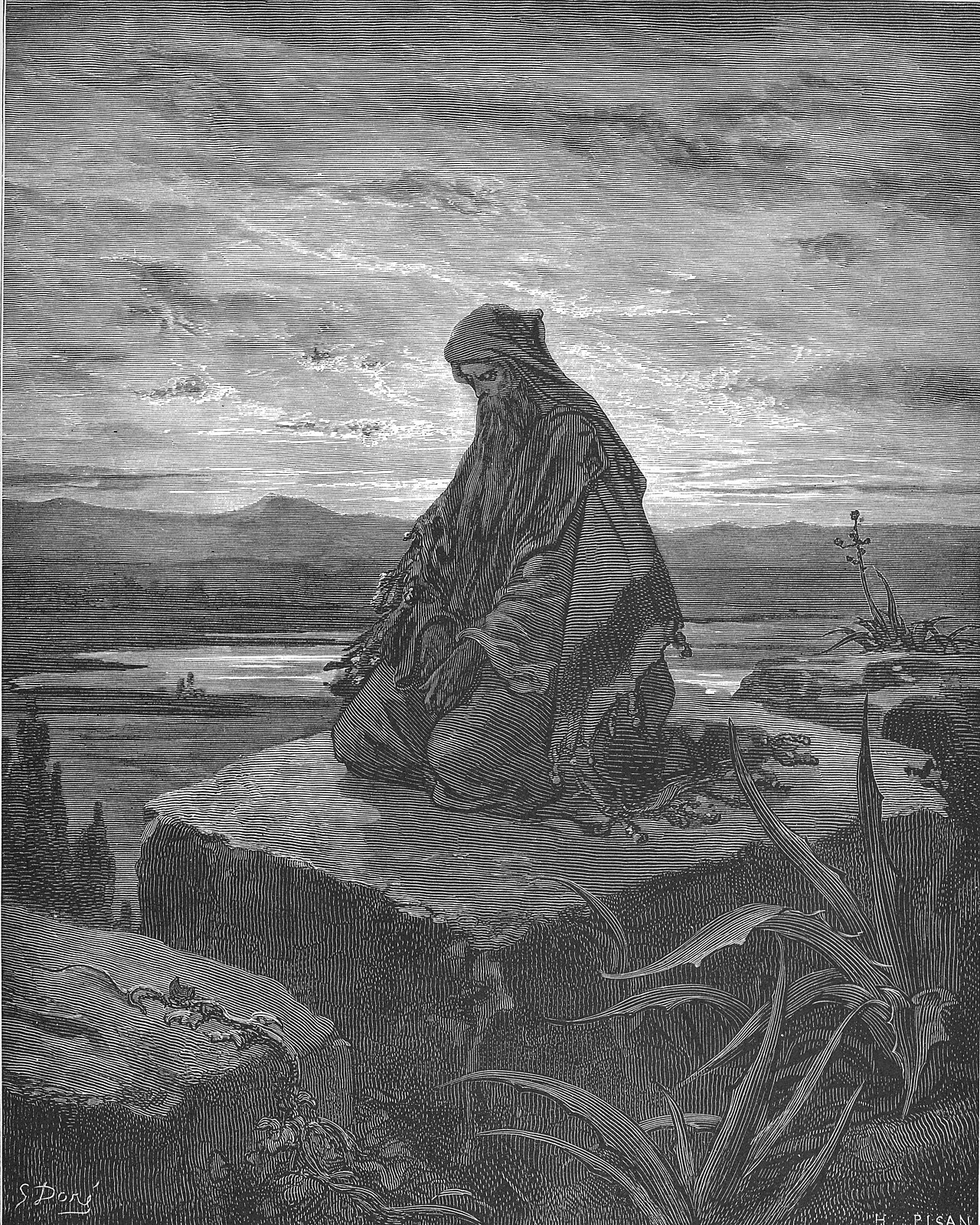
Who and where
2 names in this verse with a page on the site.
- PlaceThe northern hill countrySamariaThe hill Omri bought and built his capital on, where Ahab raised a temple to Baal, where the four lepers found the Aramean camp em…
- PlaceSyriaDamascusThe Syrian city Saul was travelling to with letters of arrest when the light stopped him on the road; he entered it blind and left…
This page draws on 9 works. Open the list of works
This page draws on Albert Barnes, Notes, Explanatory and Practical, on the Old and New Testaments (1832-1869); Albert Barnes, Notes on the Book of Isaiah; Jamieson, Fausset & Brown, Commentary Critical and Explanatory on the Whole Bible; Jerome, Commentary on Isaiah; John Gill, Exposition of the Old Testament; John Gill, Exposition of the Old Testament (1748-1763); John Wesley, Explanatory Notes upon the Old Testament; Matthew Henry, Commentary on the Whole Bible and Thomas Aquinas, Commentary on Isaiah.