
Isaiah 10:31
in Isaiah 10Madmenah flees; the people of Gebim take refuge.
BSB
The same verse in ASV and KJV ▾
ASV
Madmenah is a fugitive; the inhabitants of Gebim flee for safety.
KJV
Madmenah is removed; the inhabitants of Gebim gather themselves to flee.
⋯
This verse in Isaiah 10
Commentary
7 notes on this verse(Verse 28 and following) He will come to Aiath, he will pass through Migron: at Machmas he will deposit his baggage. They went with haste to Geba, our city (or as we find elsewhere written: they stayed at the lodging place); Ramah was astonished, Gibeah of Saul fled. Cry out with your voice, daughter of Gallim; listen, Laishah, poor Anathoth: Medemena has taken flight; the inhabitants of Gebim, gather yourselves together. There is still a day, to stand at Nob: he will shake his hand against the mount of the daughter of Zion, the hill of Jerusalem.
This site's exposition
He is come to Aiath, he is passed to Migron
on Isaiah 10:28-32
The march that follows traces a real road north of Jerusalem, town by town, Aiath, Migron, Michmash where the carriages are laid up, the passage crossed, lodging taken at Geba, until Ramah is afraid and Gibeah of Saul has already fled. Each village's fear is named in turn, Gallim's voice lifted up, poor Anathoth, Madmenah removed, Gebim gathering to flee, a geography close enough to Jerusalem that the older commentators use it to fix the invader's line of approach within a single day's march. The catalogue is restrained on purpose, no theology attached to the town names, only the plain fact of an army closing the last few miles on the city.
The record, by era
The Medieval Church1 voice
Medemena is removed; it fled, and similarly, the inhabitants of Gabim.
The Puritans and the Awakening3 voices
Madmenah is removed,.... That is, the inhabitants of it, who removed from thence upon hearing that the Assyrian army had invaded the land, and was coming up to Jerusalem. There was a place called Madmannah, which lay in the southern part of the tribe of Judah, Jos 15:31 which, Jerom (i) says, was then called Memris, and was near the city of Gaza; but whether the same with this is not certain. The inhabitants of Gebim gather themselves to flee; of this place we have no account any where.
Whether they were the princes and judges of Israel of Judah, or both, that the prophet denounced this woe against, is not certain: if those of Israel, these verses are to be joined with the close of the foregoing chapter, which is probable enough, because the burden of that prophecy ( for all this his anger is not turned away ) is repeated here (
quarantine:debris (2026-07-29) — unbalanced-parens
This is designed either, (1.) To show how fast the news of the enemy's progress flew through the kingdom: He has come to Aiath, says one; nay, says another, He has passed to Migron, &c. And yet, perhaps, it was not altogether so bad as common fame represented it.
The Nineteenth Century1 voice
A commentator
Albert Barnes1798–1870
Notes, Explanatory and Practical, on the Old and New Testaments (1832-1869)
Madmenah - This city is mentioned nowhere else. The city of Madmanna, or Medemene, mentioned in Jos 15:31, was in the bounds of the tribe of Simeon, and was far south, toward Gaza. It cannot be the place intended here. Is removed - Or, the inhabitants have fled from fear; see Isa 10:29. Gebim - This place is unknown. It is nowhere else mentioned. Gather themselves to flee - A description of the alarm prevailing at the approach of Sennacherib.
The words behind it
5 Hebrew wordsEvery Hebrew word of this verse in the order it stands, with what it means and the door to its own study. The last column counts the times a word stands in the whole Bible: the rarer the word, the more the places it appears belong together.
| Hebrew | Sound | Meaning | Word study | In the Bible |
|---|---|---|---|---|
| נָדְדָ֖ה | nadedah | it has fled | H5074 → | 28 times |
| מַדְמֵנָ֑ה | madmenah | Madmenah | H4088 → | |
| יֹשְׁבֵ֥י | yoshevei | [the] inhabitants of | H3427 → | 1079 times |
| הַגֵּבִ֖ים | hagevim | <the> Gebim | H1374 → | |
| הֵעִֽיזוּ׃ | heizu | they have taken refuge | H5756 → |
נָדְדָ֖הit has fled
nadedahH5074 →28 times
מַדְמֵנָ֑הMadmenah
madmenahH4088 →
יֹשְׁבֵ֥י[the] inhabitants of
yosheveiH3427 →1079 times
הַגֵּבִ֖ים<the> Gebim
hagevimH1374 →
הֵעִֽיזוּ׃they have taken refuge
heizuH5756 →
A shaded row is a word that stands 400 times or fewer in the Bible.
The walk
4 stopsEach card is a verse this one points to, and under it the verses that one points to in turn. Where several paths arrive at the same place, that place is listed first: the text keeps returning to it.
Through
Joshua 15:31Ziklag, Madmannah, Sansannah,
it leads to
- 1 Samuel 27:6
That day Achish gave him Ziklag, and to this day it still belongs to the kings of Judah.
- 1 Samuel 30:1
On the third day David and his men arrived in Ziklag, and the Amalekites had raided the Negev, attacked Ziklag, and burned it down.
- Joshua 19:5
Ziklag, Beth-marcaboth, Hazar-susah,
- 1 Chronicles 12:1
Now these were the men who came to David at Ziklag, while he was still banished from the presence of Saul son of Kish (they were among the mighty men who helped him in…
- 1 Samuel 27:6
Where this verse is studied
On this page
About Isaiah
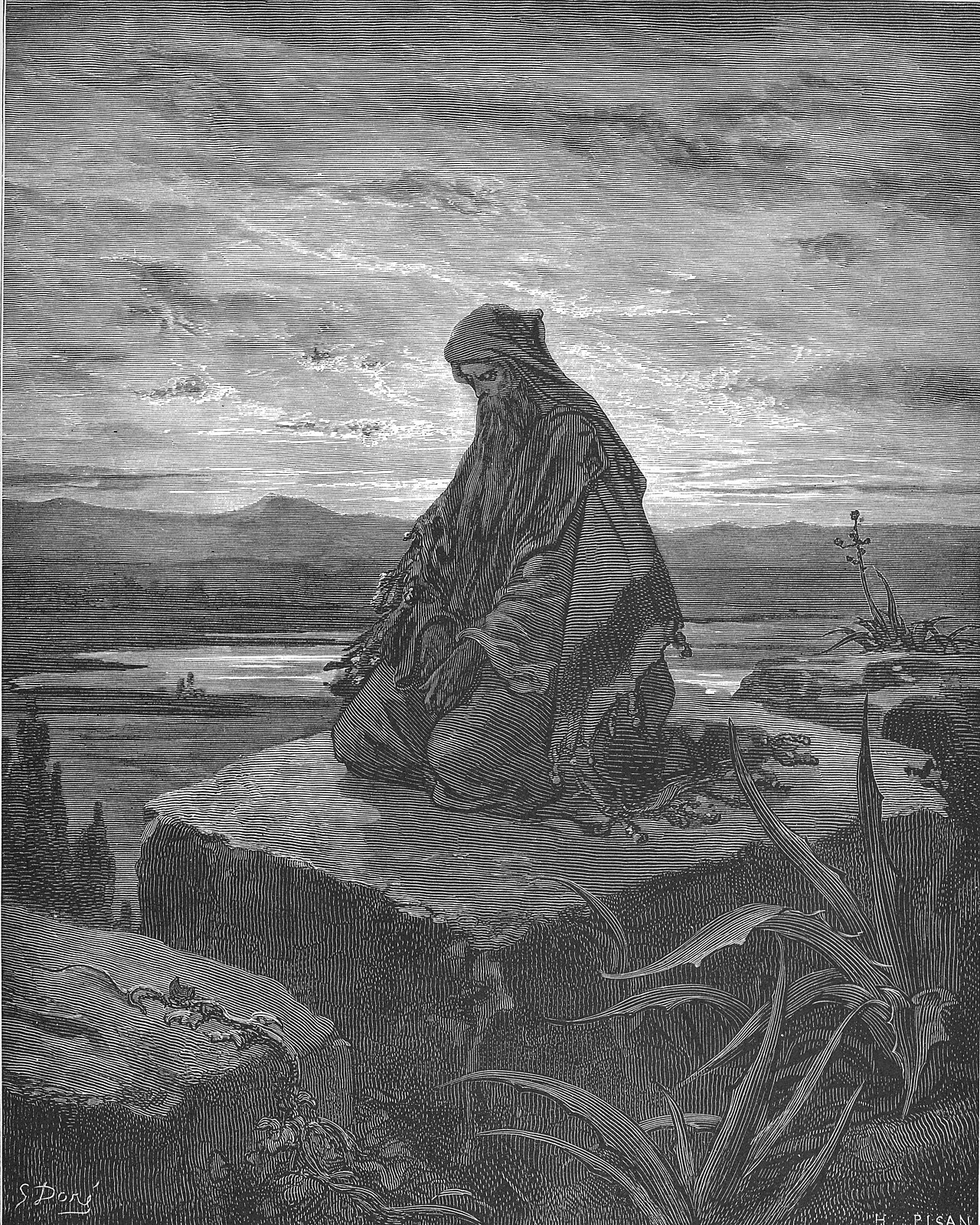
This page draws on Albert Barnes, Notes on the Book of Isaiah; Albert Barnes, Notes, Explanatory and Practical, on the Old and New Testaments (1832-1869); Franz Delitzsch, Biblical Commentary on the Prophecies of Isaiah; Jerome, Commentary on Isaiah; John Gill, Exposition of the Old Testament (1748-1763); Matthew Henry, Commentary on the Whole Bible and Thomas Aquinas, Commentary on Isaiah.