
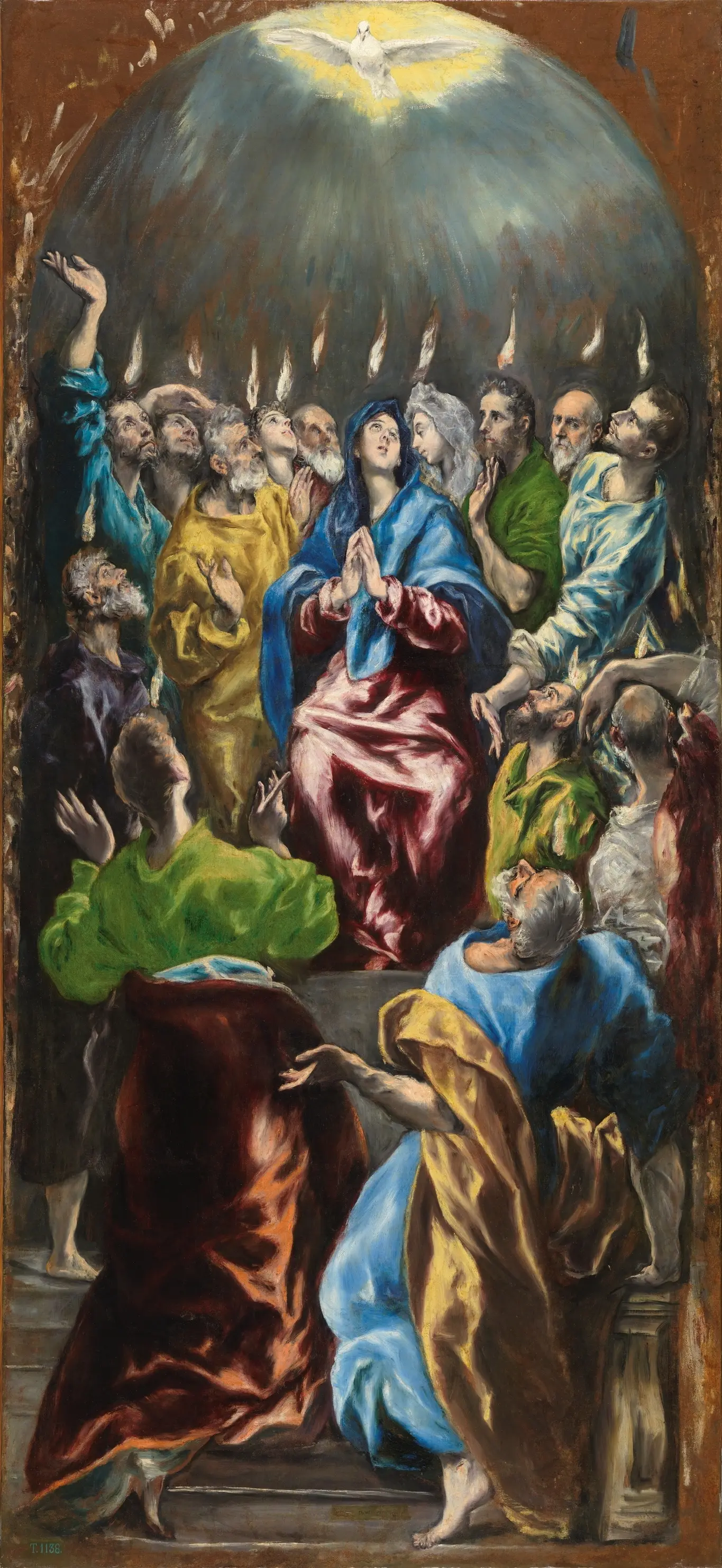
Actschapter 19
41 verses · Luke · about AD 62 · Acts
While Apollos was at Corinth, Paul passed through the interior and came to Ephesus. There he found some disciples
Introduction
Luke, Acts, Acts Overview.
Luke wrote this chapter about the city where Paul stayed longest on his travels, the capital of a rich province and the home of a famous temple. His readers lived in a world full of charms, shrines and local gods, and he wanted them to see what the gospel did to such a world. The chapter opens with a question about the Holy Spirit and ends in a theatre full of shouting. Listen for the name of the Lord Jesus and for who has the right to use it. Listen also for how money and religion join against the faith. Read it as the height of Paul's free ministry.
Context
- Who
- Theophilus and Gentile readers tracing how the gospel reached the empire's great cities and what it cost the local economy.
- What
- Paul's ministry of more than two years at Ephesus, from the twelve disciples of John to the riot of the silversmiths in the theatre.
- Where
- Ephesus, the chief city of the province of Asia, with its synagogue, the lecture hall of Tyrannus, the temple of Artemis and the great theatre.
- When
- About AD 52 to 55 on the usual reckoning, the three years Paul names at 20:31.
- Why
- To show the word of the Lord growing and prevailing in a city of magic and idolatry, and to set Paul's purpose toward Jerusalem and Rome.
Historical context
The temple of Artemis at Ephesus was one of the seven wonders of the ancient world, four times the size of the Parthenon, and it made the city rich. Pilgrims came from across Asia, and the temple also functioned as a bank. Silversmiths sold miniature shrines and images as souvenirs and votive offerings, a whole industry built on devotion.
Show the rest of the historical context, 3 more paragraphs
Paul taught daily in the lecture hall of Tyrannus, and an early manuscript adds that he used it from the fifth hour to the tenth, roughly eleven to four, the long midday break when the city stopped work and the hall stood empty. He was preaching on his lunch hour after a morning at the bench.
Ephesus was famous for magic; written spells were so associated with the city that they were called "Ephesian letters." When converts burned their scrolls, Luke prices the bonfire at fifty thousand pieces of silver, if these were drachmas, roughly fifty thousand days' wages for a labourer. Real money went up in smoke.
The theatre cut into the hillside held around twenty-five thousand people. An unsanctioned mass gathering there was legally perilous: Rome punished cities for riot, and the town clerk, the city's chief executive officer, personally answerable to the Roman authorities, says exactly that when he warns they could be charged over the day's uproar. His advice to use the courts and the regular assembly is sound Roman procedure.
Significance
For the first readers this chapter showed the gospel changing a city's economy, not just its private beliefs. Demetrius says the quiet part out loud: our trade is in danger, and so is the goddess. Conversion emptied the shrine market.
Show the rest of the significance, 1 more paragraph
It also drew a hard line between the power of Jesus and the magic trade. The sons of Sceva try to use the name as a spell and are beaten for it. The name is not a technique; it belongs to a person, and using it without knowing him goes badly.
The heads below are this chapter's scenes. The numbered points under each are its verses.
Ephesus: Disciples Who Had Not Heard of the Holy Spirit
Acts 19:1-2
came to Ephesus: The Ephesian disciples had not even heard that there is a Holy Spirit. This may mean they had not heard of a distinct gift of the Spirit, or that the Spirit had been given. John 1:33 shows John himself taught of the Spirit.
Acts 19:1
“Paul having passed through the upper coasts--"parts," the interior of Asia Minor, which, with reference to the seacoast, was elevated. came to Ephesus--thus fulfilling his promise (Ac 18:21). finding certain disciples--in the same stage of Christian knowledge as Apollos at first, newly arrived, probably, and having had no communication as yet with the church at Ephesus.”
Jamieson, Fausset & Brown · Commentary Critical and Explanatory on the Whole Bible (1871)reformed
2 more voices on this verseWhat preachers and commentators have said about this verse, in their own words.
Acts 19:1
“At his first coming, he met with some disciples there, who professed faith in Christ as the true Messiah, but were as yet in the first and lowest form in the school of Christ, under his usher John the Baptist.”
Matthew Henry · Commentary on the Whole Bible (1707-1721)puritan
Acts 19:1
“Accordingly, in the Acts of the Apostles, we find that men who had "John's baptism" had not received the Holy Spirit, whom they knew not even by hearing. That, then, was no celestial thing which furnished no celestial (endowments): whereas the very thing which was celestial in John-the Spirit of prophecy-so completely failed, after the transfer of the whole Spirit to the Lord, that he presently sent to inquire whether He whom he had himself preached, whom he had pointed out when coming to him, were "HE.”
Tertullian · written before 220 · On Baptismpatristic
Paul's Greek sets receiving and believing in the same tense, and the Berean renders it when you became believers. The King James wording since ye believed was long read as a gift that came at some later time. Paul asks what happened when they first believed.
Acts 19:2
“And he said to them: Did you receive the Holy Spirit upon believing? This means, Did you receive the laying on of hands, by which the Holy Spirit is usually given, after baptism?”
Bede · written before 735 · Commentary on Actspatristic
4 more voices on this verse
Acts 19:2
“Have ye received the Holy Ghost - It is likely that these were Asiatic Jews, who, having been at Jerusalem about twenty-six years before this, had heard the preaching of John, and received his baptism, believing in the coming Christ, whom John had proclaimed; but it appears that till this time they had got no farther instruction in the Christian religion. Paul, perceiving this, asked them if they had received the Holy Ghost since they believed?”
Adam Clarke · Commentary on the Bible (1810-1826)evangelical
Acts 19:2
“Have ye received the Holy Ghost? - The extraordinary gifts of the Spirit, as well as his sanctifying graces? We have not so much as heard - Whether there be any such gifts.”
John Wesley · Explanatory Notes upon the New Testament (1755)evangelical
Acts 19:2
“We have not so much as heard whether there be any Holy Ghost--This cannot be the meaning, since the personality and office of the Holy Ghost, in connection with Christ, formed an especial subject of the Baptist's teaching. Literally, the words are, "We did not even hear whether the Holy Ghost was (given)"; meaning, at the time of their baptism.”
Jamieson, Fausset & Brown · Commentary Critical and Explanatory on the Whole Bible (1871)reformed
Acts 19:2
IT may be well to notice what question the Apostle did not put to these Ephesian disciples of John. He did not say to them, "Have you believed?" This would have been a very important question and it ought to be settled once and for all. Our faith must either be boldly affirmed or sorrowfully denied—it should not remain the subject of question. It is a great pity that so many Christians are always saying, "Have I believed?"
Acts 19:3-4
Asked into what they were baptized, they named the baptism of John. Paul explained that it was a baptism of repentance, and that John told the people to believe in the One coming after him, Jesus. John's baptism pointed forward, and Paul supplied what these sincere men lacked.
Acts 19:3
“Unto what - Unto what faith or doctrine. What did you profess to believe when you were baptized? Unto John’s baptism - See the notes on Act 18:25.”
Paul's summary matches his sermon at Pisidian Antioch, where 13:24 to 25 names John's baptism of repentance and the One coming after him. These disciples had the call to repent. They lacked its object.
Acts 19:4
“That they should believe on him which should come after - John baptized them with the baptism of repentance; this was common to all the baptisms administered by the Jews to proselytes; but telling them that they should believe on him who was coming, was peculiar to John’s baptism.”
Adam Clarke · Commentary on the Bible (1810-1826)evangelical
3 more voices on this verse
Acts 19:4
“John's baptism had already raised the question, which our Lord himself posed for the Pharisees, whether it was something heavenly or just from earth. They, clearly not understanding because of their unbelief, could not come to a definite answer. We, however, having only a slight understanding that accords with our slight faith, can still judge that John's baptism was, on the one hand, divine in that God commanded it, but on the other, it was not divine in its power.”
Tertullian · written before 220 · On Baptism 10.1-5patristic
Acts 19:4
“John baptized - That is, the whole baptism and preaching of John pointed at Christ. After this John is mentioned no more in the New Testament. Here he gives way to Christ altogether.”
John Wesley · Explanatory Notes upon the New Testament (1755)evangelical
Acts 19:4
“The point of contrast is not between John and Christ personally, but between the water baptism of John unto repentance, and the promised baptism of the Spirit from the hands of his coming Master unto new life.”
Jamieson, Fausset & Brown · Commentary Critical and Explanatory on the Whole Bible (1871)reformed
Acts 19:5-7
the name of the Lord Jesus: When Paul laid his hands on the men baptized into the name of the Lord Jesus, the Holy Spirit came upon them. It was the third such outpouring, after Jerusalem and Caesarea, and they spoke in tongues and prophesied.
Acts 19:5
“When they heard this - When they heard what Paul had said respecting the nature of John’s baptism. They were baptized ... - As there is no other instance in the New Testament of any persons having been rebaptized, it has been made a question by some critics whether it was done here; and they have supposed that all this is the narrative of Luke respecting what took place under the ministry of John: to wit, that he told them to believe on Christ Jesus, and then baptized them in his name.”
1 more voice on this verse
Acts 19:5
“Paul only laid his hands upon them. They were baptized - They were baptized twice; but not with the same baptism. John did not administer that baptism which Christ afterward commanded, that is, in the name of the Father, Son, and Holy Ghost.”
John Wesley · Explanatory Notes upon the New Testament (1755)evangelical
when Paul laid his hands on them: Peter and John laid their hands on the believers at Samaria in 8:17, and the Holy Spirit came then as well. Luke sets Paul's acts beside Peter's throughout the book. Calvin reads the Spirit here as the gifts of tongues and prophecy.
Acts 19:6
“This passage reinforces the idea that speaking in tongues is a persistent sign of the Holy Spirit's baptism, occurring consistently across different times and cultural contexts. It underscores the continuity of this experience within the early church.”
2 more voices on this verse
Acts 19:6
“They spake with tongues, and prophesied - They received the miraculous gift of different languages; and in those languages they taught to the people the great doctrines of the Christian religion; for this appears to be the meaning of the word προεφητευον, prophesied, as it is used above.”
Adam Clarke · Commentary on the Bible (1810-1826)evangelical
Acts 19:6
“This was intended to introduce the gospel at Ephesus, and to awaken in the minds of men an expectation of some great things from it; and some think that it was further designed to qualify these twelve men for the work of the ministry, and that these twelve were the elders of Ephesus, to whom Paul committed the care and government of that church.”
Matthew Henry · Commentary on the Whole Bible (1707-1721)puritan
about twelve men in all: Luke gives the number with the word about, as he gives the hundred and twenty of 1:15 and the three thousand of 2:41. Some readers hear the twelve tribes or the twelve apostles in the figure. Luke leaves the number without comment.
Acts 19:7
“And all the men were about twelve. The Syriac, Arabic, and Ethiopic versions, have not the word "about"; but affirm, that the men were twelve; and indeed the number being so small, the historian might be at a certainty about it: these seem to be the first materials of a Gospel church at Ephesus, which afterwards was very large and flourishing, and very likely were some of the elders of it.”
Two Years in the School of Tyrannus
Acts 19:8-10
spoke boldly there for three months: After three months in the synagogue, Paul moved his disciples to the lecture hall of Tyrannus. His two years there carried the word to the whole province of Asia, the province of the seven churches of Revelation 2 and 3.
Acts 19:8
“Spake boldly - three months - We have often remarked that St. Paul, in every place, made his first offers of salvation to the Jews; and it was only when they rejected it, that he turned to the Gentiles; see Act 18:6. And the same line of conduct he pursues here: he goes to the school of Tyrannus, at least a public place, to which all might resort, when they obstinately rejected the Gospel in the synagogue.”
Adam Clarke · Commentary on the Bible (1810-1826)evangelical
2 more voices on this verse
Acts 19:8
“What does "boldly" mean? He exposed himself to dangers or began to speak even more clearly, without obscuring his teaching. Look: everywhere Paul enters the synagogues and always comes out the same way, since everywhere he wished to take advantage of the opportunity.”
Theophylact of Ohrid · written before 1107 · Commentary on Actspatristic
Acts 19:8
“He showed them their obligations to God and interest in him, as the Creator, by which the kingdom of God was set up,--the violation of those obligations, and the forfeiture of that interest, by sin, by which the kingdom of God was pulled down,--and the renewing of those obligations and the restoration of man to that interest again, by the Redeemer, whereby the kingdom of God was again set up.”
Matthew Henry · Commentary on the Whole Bible (1707-1721)puritan
the lecture hall of Tyrannus: Codex Bezae adds that Paul taught from the fifth hour to the tenth, about eleven in the morning to four in the afternoon. Those were the hours of the midday rest in the cities of Asia, when a lecture hall stood empty. Ramsay took the line as a true memory.
Acts 19:9
“The way - The Christian way of worshipping God. He departed - Leaving them their synagogue to themselves. Discoursing daily - Not on the Sabbath only, in the school of one Tyrannus - Which we do not find was any otherwise consecrated, than by preaching the Gospel there.”
John Wesley · Explanatory Notes upon the New Testament (1755)evangelical
This continued for two years: Three months in the synagogue and two years in the hall make up most of the three years Paul names at 20:31. Verse 22 adds a further stay in the province of Asia. The ancient habit of counting part of a year as a year closes the gap.
Acts 19:10
“By the space of two years - The schoolhouse of Tyrannus was his regular chapel; and it is likely that in it he taught Christianity, as Tyrannus taught languages or sciences. All they - in Asia heard the word - Meaning, probably, the Proconsular Asia, for the extent of which see the note on Act 16:6. Jews and Greeks - For, although he ceased preaching in the synagogues of the Jews, yet they continued to hear him in the school of Tyrannus.”
Adam Clarke · Commentary on the Bible (1810-1826)evangelical
2 more voices on this verse
Acts 19:10
“All who desired it among the inhabitants of the proconsular Asia, now heard the word: St. Paul had been forbidden to preach it in Asia before, chap. xvi, 6. But now the time was come.”
John Wesley · Explanatory Notes upon the New Testament (1755)evangelical
Acts 19:10
“There was great resort to Ephesus from all parts of the country, for law, traffic, religion, and education, which gave Paul an opportunity of sending the report of the gospel to all the towns and villages of that country. They all heard the word of the Lord Jesus. The gospel is Christ's word, it is a word concerning Christ.”
Matthew Henry · Commentary on the Whole Bible (1707-1721)puritan
Acts 19:11-12
God did extraordinary miracles: Handkerchiefs and aprons that had touched Paul were taken to the sick, a healing at a distance set beside Peter's shadow at 5:15. Luke's word for extraordinary means miracles of an unusual kind. Ephesus was full of magical amulets and objects.
Acts 19:11
“And God wrought special miracles by the hands of Paul. For the confirmation of the doctrine which he preached, and of his mission, as an apostle; and these were not any sort of miracles, common and vulgar ones, and much less things of chance, and what were merely accidental, as the word may signify; but they were rare and uncommon ones, and in which there was a visible display of the power of God; to whom as the efficient cause they are ascribed, the apostle being only an instrument God made use of.”
3 more voices on this verse
Acts 19:11
“Special miracles - Miracles that were remarkable; that were not common, or that were very unusual (οὐ τὰς τυχών ou tas tuchōn). This expression is Classical Greek. Thus, Longinus says of Moses that he was no common man - οὐχ ̓ ὁ τύχων ἀνήρ ouch ho tuchōn anēr.”
Acts 19:11
“Or, if he did, why are they not recorded? Was the success of the gospel, without miracles in the kingdom of nature, itself such a miracle in the kingdom of grace, and the divine power which went along with it such a proof of its divine original, that there needed no other?”
Matthew Henry · Commentary on the Whole Bible (1707-1721)puritan
Acts 19:11
“The Lord is healing many people today by means of handkerchiefs as you read that He healed people in the days of Paul.”
even handkerchiefs and aprons that had touched him: Both words are Latin loanwords in Luke's Greek. The first is a sweat cloth for the face and the second a worker's apron, the gear of Paul's trade in the workshop. Luke gives the power behind the healing to God in verse 11.
Acts 19:12
“Handkerchiefs or aprons - Σουδαρια η σιμικινθια, Probably the sudaria were a sort of handkerchiefs, which, in travelling, were always carried in the hand, for the convenience of wiping the face; and the simikinthia were either the sashes or girdles that went about the loins. These, borrowed from the apostle, and applied to the bodies of the diseased, became the means, in the hand of God, of their restoration to health.”
Adam Clarke · Commentary on the Bible (1810-1826)evangelical
The Sons of Sceva and the Burning of the Books
Acts 19:13-14
some itinerant Jewish exorcists: Itinerant Jewish exorcists tried to use the name Paul proclaimed, the Lord Jesus, as a formula over evil spirits. Seven sons of Sceva, a Jewish chief priest, were doing this, though no such man appears in the lists of high priests. Seven against one sets up the defeat that follows.
Acts 19:13
“That such a power did exist, for some time at least, seems implied in Mt 12:27. But no doubt this would breed imposture; and the present case is very different from that referred to in Lu 9:49, 50. We adjure you by Jesus whom Paul preacheth--a striking testimony to the power of Christ's name in Paul's mouth.”
Jamieson, Fausset & Brown · Commentary Critical and Explanatory on the Whole Bible (1871)reformed
2 more voices on this verse
Acts 19:13
“Satan laughs at all those who attempt to expel him either out of the bodies or the souls of men but by Divine faith. All the light of reason is nothing to the craft or strength of that subtle spirit. His craft cannot be known but by the Spirit of God nor can his strength be conquered but by the power of faith.”
John Wesley · Explanatory Notes upon the New Testament (1755)evangelical
Acts 19:13
“The vagabond Jews - Greek: Jews going about - περιερχομένων perierchomenōn. The word “vagabond” with us is now commonly used in a bad sense, to denote “a vagrant; a man who has no home; an idle, worthless fellow.” The word, however, properly means “one wandering from place to place, without any settled habitation, from whatever cause it may be.” Here it denotes “those Jews who wandered from place to place, practicing exorcism.” Exorcists - ἐξορκιστῶν exorkistōn.”
Seven sons of Sceva, a Jewish chief priest: Gill and Barnes take chief priest to mean a member of a high priestly family or the head of a priestly course. The Jewish names of God carried weight in the magic of the day, and a priest's sons could sell that weight as a trade.
Acts 19:14
“Seven sons of one Sceva, a Jew, and chief of the priests - The original Ιουδαιου αρχιερεως, dignifies a Jewish high priest; but it is not probable that any sons, much less seven sons of a Jewish high priest, should be strolling exorcists: it is therefore likely that υἱοι Σκευα τινος ἱερεως, the sons of Skeva, a certain priest, as it stands in the Codex Bezae, is the true reading.”
Adam Clarke · Commentary on the Bible (1810-1826)evangelical
2 more voices on this verse
Acts 19:14
“Neither is every one that prophesies holy, nor every one that casts out devils religious: for even Balaam the son of Beor the prophet did prophesy, though he was himself ungodly; as also did Caiaphas, the falsely-named high priest. Nay, the devil foretells many things, and the demons, about Him; and yet for all that, there is not a spark of piety in them: for they are oppressed with ignorance, by reason of their voluntary wickedness.”
Apostolic Constitutions · written before 380 · Constitutions of the Holy Apostles Book 8patristic
Acts 19:14
“The confusion they were put to in their impious operations. Let them not be deceived, God is not mocked, nor shall the glorious name of Jesus be prostituted to such a vile purpose as this; what communion hath Christ with Belial?”
Matthew Henry · Commentary on the Whole Bible (1707-1721)puritan
Acts 19:15-16
The evil spirit knew Jesus and knew about Paul, but asked the sons of Sceva who they were. The spirit named the authority Paul had from Jesus and the sons of Sceva lacked. The man overpowered them all, and they fled naked and wounded.
Acts 19:15
Jesus I know - His power to cast out devils I know. Compare Mat 8:29. Paul I know - Paul’s power to cast out devils, Acts . Act 19:12. But who are ye? - What power have you over evil spirits? By what right do you attempt to expel them? The meaning is, “You belong neither to Jesus nor Paul, and you have no right or authority to at tempt to work miracles in the name of either.”
1 more voice on this verse
Acts 19:15
“Jesus I know, and Paul I recognize. About this verse, Arator says, Know your madness, enemy race, the demon admits to reigning, Whom you deny has come, and you are convicted by this very fact, By the one who drives you to ruin.”
Bede · written before 735 · Commentary on Actspatristic
ran out of the house naked and wounded: The oldest manuscripts read both of them where the Berean has them all. The Greek word can mean all in later usage, and it may also mean that two of the seven sons were present that day. The Berean follows the wider sense.
Acts 19:16
“And the man in whom the evil spirit was, etc. - Thus we find that one man was more powerful than these seven brothers; so that he stripped them of their upper garments, and beat and wounded the whole! Was not this a proof that he derived his strength from the evil spirit that dwelt in him?”
Adam Clarke · Commentary on the Bible (1810-1826)evangelical
Acts 19:17-19
fear came over all of them: Many who had believed now came forward, confessing their deeds. Those who had practiced magic arts, for which Ephesus was famous, burned their books in front of everyone. The total came to fifty thousand drachmas, about fifty thousand days' wages for a laborer.
Acts 19:17
“The name of the Lord Jesus was magnified - Acquired increasing honor. The transaction showed that the miracles performed in the name of the Lord Jesus by Paul were real, and were performed in attestation of the truth of the doctrine which he taught. Impostors could not work such miracles; and they who pretended to be able to do it only exposed themselves to the rage of evil spirits. It was thus shown that there was a real, vital difference between Paul and these impostors, and their failure only served to extend his reputation and the power of the gospel.”
1 more voice on this verse
Acts 19:17
“It was the common talk of the town; and the effect of it was, (1.) That men were terrified: fear fell on them all. In this instance they saw the malice of the devil whom they served, and the power of Christ whom they opposed; and both were awful considerations. They saw that the name of Christ was not to be trifled with, nor his religion compounded with pagan superstitions.”
Matthew Henry · Commentary on the Whole Bible (1707-1721)puritan
confessing and disclosing their deeds: Adolf Deissmann found the Greek word for deeds used in the magical papyri for spells. The believers were disclosing the charms they had kept after they believed. A spell made public was held to lose its force.
Acts 19:18
“And many that believed,.... In Jesus Christ, whose name was spoken of with great respect, and which spread fear in every person: came; to the apostle: and confessed; their sins; and acknowledged what a wicked life they had led: and showed their deeds; their former evil deeds, which they had been guilty of; one copy reads, "their sins"; see Mat 3:6.”
2 more voices on this verse
Acts 19:18
Their deeds - Their actions; their evil course of life. The direct reference here is to the magical arts which had been used, but the word may also be designed to denote “iniquity” in general. They who make a profession of religion will be willing to confess their transgressions, and no man can have evidence that he is truly renewed who is not willing to confess as well as to forsake his sins, Rom 10:10; Pro 28:13, “He that covereth his sins shall not prosper; but whoso confesseth and forsaketh them shall find mercy.”
Acts 19:18
“These confessions were not extorted from them, but were voluntary, for the ease of their consciences, upon which the late miracles had struck a terror. Note, Where there is true contrition for sin there will be an ingenuous confession of sin to God in every prayer, and to man whom we have offended when the case requires it.”
Matthew Henry · Commentary on the Whole Bible (1707-1721)puritan
brought their books and burned them: The owners could have sold the books and kept the money, and they burned them in front of everyone instead. Moses commanded Israel to burn up the images of the nations at Deuteronomy 7:25 and to covet none of their silver. The fire ended their trade in the city.
Acts 19:19
“Curious arts - Arts or practices requiring skill, address, cunning. The word used here (περίεργα perierga) denotes properly “those things that require care or skill,” and was thus applied to the arts of “magic, jugglery, and sleight of hand” that were practiced so extensively in Eastern countries. That such arts were practiced at Ephesus is well known. The Ephesian letters, by which incantations and charms were supposed to be produced, were much celebrated.”
2 more voices on this verse
Acts 19:19
“Curious arts - Magical arts, to which that soft appellation was given by those who practiced them. Ephesus was peculiarly famous for these. And as these practices were of so much reputation there, it is no wonder the books which taught them should bear a great price.”
John Wesley · Explanatory Notes upon the New Testament (1755)evangelical
Acts 19:19
“From their nature they would be costly, and books then bore a value above any standard we are familiar with. The scene must have been long remembered at Ephesus, as a strong proof of honest conviction on the part of the sorcerers and a striking triumph of Jesus Christ over the powers of darkness.”
Jamieson, Fausset & Brown · Commentary Critical and Explanatory on the Whole Bible (1871)reformed
powerfully continued to spread: This is the fifth growth notice of the book, closing a section as 6:7, 9:31, 12:24 and 16:5 closed earlier ones. The verb prevail is used elsewhere of victory in conflict, and here it follows the defeat of the exorcists.
Acts 19:20
“So mightily grew the word of God, and prevailed - The Codex Bezae reads this verse thus: “So mightily grew the word of the Lord, and prevailed; and the faith of God increased and multiplied.” It is probable that it was about this time that St. Paul had that conflict which he mentions, 1Co 15:32: If I after the manner of men, have fought with wild beasts at Ephesus, etc. See the note there.”
Adam Clarke · Commentary on the Bible (1810-1826)evangelical
2 more voices on this verse
Acts 19:20
“So mightily grew the word of God, and prevailed. Over conjuring books, conjurers themselves, yea, even the devils; the power of God going along with it, many were converted; which is meant by the increase of it, and were delivered from the power of darkness, out of the hands of Satan, and translated into the kingdom of Christ. Beza's ancient copy reads, the "faith" of God; and the Syriac version, "faith in God".”
Acts 19:20
“To see it prevail extensively, by the advancement in knowledge and grace of those that are added to the church; when strong corruptions are mortified, vicious habits changed, evil customs of long standing broken off, and pleasant, gainful, fashionable sins are abandoned, then it prevails mightily; and Christ in it goes on conquering and to conquer.”
Matthew Henry · Commentary on the Whole Bible (1707-1721)puritan
Silversmiths Riot for Diana of the Ephesians
Acts 19:21-23
Paul resolved in the Spirit: to go to Jerusalem and then to see Rome, a plan fulfilled only in the last chapters, as a prisoner. The plan of Jerusalem and then Rome gives Acts its shape to its final verse.
Acts 19:21
“After these things were ended - After the gospel was firmly established at Ephesus, so that his presence there was no longer necessary. Purposed in the spirit - Resolved in his mind. When he had passed through Macedonia and Achaia - In these places he had founded flourishing churches. It is probable that his main object in this visit was to take up a collection for the poor saints at Jerusalem. See the notes on Rom 15:25-26. To go to Jerusalem - To bear the contribution of the Gentile churches to the poor and oppressed Christians in Judea.”
2 more voices on this verse
Acts 19:21
“He has his eye upon Jerusalem, then upon Rome; afterward on Spain, Rom. xv, 28. No Caesar, no Alexander the Great, no other hero, comes up to the magnanimity of this little Benjamite. Faith and love to God and man had enlarged his heart, even as the sand of the sea.”
John Wesley · Explanatory Notes upon the New Testament (1755)evangelical
Acts 19:21
“There he had planted churches, and now is concerned to visit them. He purposed in the spirit, either in his own spirit, not communicating his purpose as yet, but keeping it to himself; or by the direction of the Holy Spirit, who was his guide in all his motions, and by whom he was led.”
Matthew Henry · Commentary on the Whole Bible (1707-1721)puritan
Timothy and Erastus: An Erastus is the city treasurer of Corinth at Romans 16:23, and an Erastus remains at Corinth at 2 Timothy 4:20. Gill and Barnes take the helper sent here as the same man. Timothy went on to Corinth, as 1 Corinthians 4:17 records.
Acts 19:22
“So he sent into Macedonia - He desired Timothy to go as far as Corinth, 1Co 4:18, and after that to return to him at Ephesus, 1Co 16:11; but he himself continued in Asia some time longer; probably to make collections for the poor saints in Jerusalem. Erastus, mentioned here for the first time, appears to have been the chamberlain, οικονομος, either of Ephesus or Corinth; see Rom 16:23. He was one of St. Paul’s companions, and is mentioned as being left by the apostle at Corinth, 2Ti 4:20.”
Adam Clarke · Commentary on the Bible (1810-1826)evangelical
1 more voice on this verse
Acts 19:22
“Sending two of his ministers to Macedonia, etc. He sent disciples ahead to prepare alms, which he was to bring to Jerusalem, so that collections would not be made when he came himself.”
Bede · written before 735 · Commentary on Actspatristic
a great disturbance about the Way: The Way is Luke's name for the faith at 9:2, 19:9, 22:4 and 24:14. Paul uses it himself before Felix. The riot that follows turns on the faith as a whole, and Paul himself is kept out of it.
Acts 19:23
“And the same time there arose no small stir about that way. The Syriac version reads, "the way of God"; and the Vulgate Latin version, "the way of the Lord": that is, the Christian religion, and the doctrines and ordinances of the Gospel, which the saints were directed to walk in; and the Ethiopic version renders it, "about this doctrine"; which mightily grew and prevailed, and which such numbers embraced; and how great the stir was about it, and from whence it arose, who began it, and what were the consequences of it, are hereafter related.”
2 more voices on this verse
Acts 19:23
“No small stir - No little excitement, disturbance, or tumult τάραχος tarachos. Compare Act 17:4-5. “About that way.” Respecting the doctrines of Christianity which Paul preached. See the notes on Act 9:2; Act 18:26; Act 19:9.”
Acts 19:23
“Some historians say that the famous impostor Apollonius Tyanæus, who set up for a rival with Christ, and gave out himself, as Simon Magus, to be some great one, was at Ephesus about this time that Paul was there. But it seems the opposition he gave to the gospel was so insignificant that St. Luke did not think it worth taking notice of.”
Matthew Henry · Commentary on the Whole Bible (1707-1721)puritan
Acts 19:24-25
made silver shrines of Artemis: The silversmith Demetrius made silver shrines of Artemis, the goddess the King James calls Diana. Miniature shrines and votive objects of this kind have been found at Ephesus. Demetrius named the craftsmen's income before the goddess.
Acts 19:24
“Silver shrines for Diana - It is generally known that the temple of Diana at Ephesus was deemed one of the seven wonders of the world, and was a most superb building. It appears that the silver shrines mentioned here were small portable representations of this temple, which were bought by strangers as matters of curiosity, and probably of devotion.”
Adam Clarke · Commentary on the Bible (1810-1826)evangelical
this business is our source of prosperity: The two attacks in Acts that Gentiles start on their own both begin with lost income. At Philippi in 16:19 the owners of the slave girl saw their hope of making money gone. At Ephesus the craftsmen fear for their trade.
Acts 19:25
“With the workmen of like occupation - Those who were in his employ, and all others engaged in the same business. As they would be all affected in the same way, it was easy to produce an excitement among them all. Sirs - Greek: Men. By this craft - By this business or occupation. This is our trade. Our wealth - Greek: our acquisition; our property. We are dependent on it for a living. It does not mean that they were rich, but that they relied on this for a subsistence.”
1 more voice on this verse
Acts 19:25
“Whom he called together with the workmen of like occupation--rather, "with the workmen (or fabricators) of such articles," meaning the artisans employed by the master-artificers, all who manufactured any kind of memorial of the temple and its worship for sale.”
Jamieson, Fausset & Brown · Commentary Critical and Explanatory on the Whole Bible (1871)reformed
Acts 19:26-27
persuaded a great number of people: Demetrius complained that Paul had turned people away across nearly the whole province of Asia, teaching that man-made gods are no gods. The reach of his complaint shows how far the two years in the hall of Tyrannus had carried the word.
Acts 19:26
“This Paul hath persuaded and turned away much people - From the mouth of this heathen we have, in one sentence, a most pleasing account of the success with which God had blessed the labors of the apostles: not only at Ephesus, but almost throughout all Asia, they had persuaded and converted much people; for they had insisted that they could be no gods which are made with hands; and this the common sense of the people must at once perceive.”
Adam Clarke · Commentary on the Bible (1810-1826)evangelical
1 more voice on this verse
Acts 19:26
“Saying, that they are not gods which are made with hands - This manifestly shows, that the contrary opinion did then generally prevail, namely, that there was a real Divinity in their sacred images.”
John Wesley · Explanatory Notes upon the New Testament (1755)evangelical
the temple of the great goddess Artemis: The claim of worship across the whole world stood close to the facts. Pausanias wrote in the next century that all cities worship the Ephesian Artemis, in his Description of Greece 4.31.8. Demetrius spoke for a cult known across the empire.
Acts 19:27
“The great goddess was one of the standing titles of Diana. Her majesty destroyed - Miserable majesty, which was capable of being thus destroyed! Whom all Asia and the world - That is, the Roman empire, worshippeth - Although under a great variety of titles and characters.”
John Wesley · Explanatory Notes upon the New Testament (1755)evangelical
2 more voices on this verse
Acts 19:27
“So that not only ... - The grounds of the charge which Demetrius made against Paul were two: first, that the business of the craftsmen would be destroyed usually the first thing that strikes the mind of a sinner who is influenced By self-interest alone; and, second, that the worship of Diana would cease if Paul and his fellow-laborers were suffered to continue their efforts. This our craft - This business in which we are engaged, and on which we are dependent. Greek: this part τὸ μέρος to meros which pertains to us.”
Acts 19:27
“Its very site is now a matter of uncertainty. The little wooden image of Diana was as primitive and rude as its shrine was sumptuous; not like the Greek Diana, in the form of an imposing huntress, but quite Asiatic, in the form of a many-breasted female (emblematic of the manifold ministrations of Nature to man), terminating in a shapeless block.”
Jamieson, Fausset & Brown · Commentary Critical and Explanatory on the Whole Bible (1871)reformed
Acts 19:28-29
they were enraged and began shouting: The craftsmen began shouting the city's cry, Great is Artemis of the Ephesians, which the crowd repeats for two hours at verse 34. The whole city rushed into the theatre, dragging Gaius and Aristarchus with them. The excavated theatre seated about twenty-five thousand people.
Acts 19:28
“Were full of wrath - Were greatly enraged - probably at the prospect of losing their gains. Great is Diana ... - The term “great” was often applied by the Greeks to Diana. Thus, in Xenophon (Ephes. i.), he says, “I adjure you by your own goddess, the great (τὴν μεγάλην tēn megalēn) Diana of the Ephesians.” The design of this clamor was doubtless to produce a persecution against Paul, and thus to secure a continuance of their employment.”
They rushed together into the theatre: Aristarchus of Thessalonica sails with Paul to Rome at 27:2, and Paul calls him his fellow prisoner at Colossians 4:10. This Gaius is from Macedonia, and 20:4 names a different Gaius from Derbe. The theatre was the city's usual place of assembly.
Acts 19:29
“Confusion - Tumult; disorder. Gaius - He had lived at Corinth, and had kinky entertained Paul at his house, 1Co 1:14; Rom 16:23. Aristarchus - He attended Paul to Rome, and was there a prisoner with him, Col 4:10. With one accord - Tumultuously; or with one mind or purpose. Into the theatre - The theaters of the Greeks were not only places for public exhibitions, but also for holding assemblies, and often for courts, elections, etc. The people, therefore, naturally rushed there, as being a suitable place to decide this matter.”
Acts 19:30-31
the disciples would not allow him: The disciples would not allow Paul to go before the assembly. Some of his friends who were officials of the province of Asia begged him not to venture into the theatre. These Asiarchs were men of wealth who oversaw the province's religious festivals.
Acts 19:30
“The disciples did not allow Paul to rush into the agitated crowd — so much did all the believers love him. And Paul listens to them, since he was not ambitious.”
Theophylact of Ohrid · written before 1107 · Commentary on Actspatristic
1 more voice on this verse
Acts 19:30
“When Paul would have gone in to the people - Being above all fear, to plead the cause of his companions, and prove they are not gods which are made with hands.”
John Wesley · Explanatory Notes upon the New Testament (1755)evangelical
officials of the province of Asia: Luke's Greek calls these men Asiarchs, a title found on inscriptions of the province and in Strabo's Geography 14.1.42. Ramsay counted the word among Luke's exact local terms. Luke also calls them Paul's friends.
Acts 19:31
It was an office of the highest honor and greatly coveted. Certain of these, it seems, were favorably inclined to the Gospel, at least were Paul's "friends," and knowing the passions of a mob, excited during the festivals, "sent (a message) to him desiring him not to adventure himself into the theater."
Jamieson, Fausset & Brown · Commentary Critical and Explanatory on the Whole Bible (1871)reformed
1 more voice on this verse
Acts 19:31
“Certain of the chief of Asia - τῶν Ἀσιαρχῶν tōn Asiarchōn. Of the Asiarchs. These were persons who presided over sacred things and over the public games.”
Acts 19:32-34
the assembly was in turmoil: , and most did not even know why they were there. Luke's word for this gathering, ekklesia, is the word the church uses of itself, and in ordinary Greek it meant a called assembly.
Acts 19:32
“Some - cried one thing, and some another - This is an admirable description of a tumultuous mob, gathered together without law or reason; getting their passions inflamed, and looking for an opportunity to commit outrages, without why or wherefore - principle or object. For the assembly was confused - Ἡ εκκλησια; The same word which we translate church; and thus we find that it signifies any assembly, good or bad, lawful, or unlawful; and that only the circumstances of the case can determine the precise nature of the assembly to which this word is applied.”
Adam Clarke · Commentary on the Bible (1810-1826)evangelical
1 more voice on this verse
Acts 19:32
"Most of those who had gathered did not know why they had gathered." Such is the nature of a crowd: it rushes here or there without reason, like fire thrown into a forest.
Theophylact of Ohrid · written before 1107 · Commentary on Actspatristic
The Jews in the crowd pushed Alexander forward: An Alexander the coppersmith did Paul great harm, as 2 Timothy 4:14 records, and a metalworker had cause to stand in this crowd. Some take the two as one man, and others count the name too common to decide. He motioned for silence as Paul does at 13:16.
Acts 19:33
“And they thrust forward - Namely, the artificers and workmen, Alexander - Probably some well-known Christian whom they saw in the crowd: the Jews pushing him on - To expose him to the more danger.”
John Wesley · Explanatory Notes upon the New Testament (1755)evangelical
1 more voice on this verse
Acts 19:33
“And they drew Alexander - Who this Alexander was is not known. Grotius supposes that it was “Alexander the coppersmith, who had in some way done Paul much harm 2Ti 4:14; and whom, with Philetus, Paul had excommunicated. He supposes that it was a device of the Jews to put forward one who had been of the Christian party, in order to accuse Paul, and to attempt to cast the odium of the tumult on him. But it is not clear that the Alexander whom Paul had excommunicated was the person concerned in this transaction.”
shouted in unison for about two hours: The cry was a set acclamation of the city's cult, and Codex Bezae gives it as a direct address, Great Artemis. Ramsay heard in the two hours the manner of a festival crowd at worship. A Jew was known to refuse the goddess.
Acts 19:34
“But when they knew that he was a Jew,.... And so equally an enemy to their idolatry, as Paul and his companions were, whether he was a Christian or not. All with one voice about the space of two hours cried out; all that were in the theatre lift up their voices at once to prevent Alexander's apology, or at least its being heard; and which they continued about two hours, which was a long time to keep hallooing out, great is Diana of the Ephesians; See Gill on Act 19:28.”
Acts 19:35-37
the city clerk quieted the crowd: The city clerk, the city's senior official, quieted the crowd by granting what no one disputed, that Ephesus is guardian of the temple of Artemis. He added that the men brought before him had robbed no temple and blasphemed no goddess.
Acts 19:35
“The register - Probably the chief governor of the public games. The image which fell down from Jupiter - They believed that very image of Diana, which stood in her temple, fell down from Jupiter in heaven. Perhaps he designed to insinuate, as if falling down from Jupiter, it was not made with hands, and so was not that sort of idols which Paul had said were no gods.”
John Wesley · Explanatory Notes upon the New Testament (1755)evangelical
1 more voice on this verse
Acts 19:35
“And when the town-clerk - ὁ γραμματέυς ho grammateus. The scribe; the secretary. This word is often used in the Bible, and is commonly translated “scribe,” and is applied to “public notaries in the synagogues; to clerks; to those who transcribed books, and hence, to men skilled in the law or in any kind of learning.” Compare 2Sa 8:17; 2Ki 12:11; Ezr 7:6, Ezr 7:11-12; Mat 5:20; Mat 12:38; Mat 13:52; Mat 15:1; Mat 23:34; 1Co 1:20. It is, however, nowhere else applied to a pagan magistrate.”
you ought to be calm: The city clerk's advice to be calm matches Gamaliel's counsel to the council at 5:38 to 39. Both men tell an angry assembly to do nothing rash and to leave the matter to the courts or to God. Luke records both speeches.
Acts 19:36
“Seeing that these things cannot be spoken against, &c.--Like a true legal man, he urges that such was notoriously the constitution and fixed character of the city, with which its very existence was all but bound up. Did they suppose that all this was going to be overturned by a set of itinerant orators?”
Jamieson, Fausset & Brown · Commentary Critical and Explanatory on the Whole Bible (1871)reformed
neither robbed our temple nor blasphemed our goddess: The word for robbing temples returns at Romans 2:22, where Paul asks the man who abhors idols whether he robs temples. The clerk's witness means Paul preached against gods made by hands without mocking Artemis by name. He argued and left the insult out.
Acts 19:37
“He gently rebukes them, showing that they acted rashly and that it was not proper to hold a public assembly for private reasons.”
Theophylact of Ohrid · written before 1107 · Commentary on Actspatristic
Acts 19:38-41
the courts are open: The clerk sent any complaint to the open courts and the proconsuls, and warned that the city was in jeopardy of being charged with rioting. An unauthorized riot was a crime under Roman rule and could cost Ephesus its standing as a free city.
Acts 19:38
“If Demetrius - have a matter against any man - If it be any breach of law, in reference to Demetrius and the artists, the law is open, αγοραιοι αγονται; these are the terms of law, public courts, times of sessions or assize; or, rather, the judges are mow sitting: so the words may be understood.”
Adam Clarke · Commentary on the Bible (1810-1826)evangelical
it must be settled in a legal assembly: A legal assembly met on fixed days and was called by the magistrates. Chrysostom records that such assemblies met three times a month. The crowd in the theatre had gathered at no one's summons.
Acts 19:39
“But if we inquire - If you seek to determine any other matters than that pertaining to the alleged wrong which Demetrius has suffered in his business. Other matters - Anything respecting public affairs; anything pertaining to the government and the worship of Diana. In a lawful assembly - In an assembly convened, not by tumult and riot, but in conformity to law.”
in jeopardy of being charged with rioting: The clerk lays the charge of rioting on the crowd itself. Tertullus later charges Paul before Felix with stirring up dissension at 24:5, using a word from the same Greek root. Luke shows the disorder at Ephesus coming from Paul's opponents.
Acts 19:40
“For we are in danger of being called in question,.... Or are liable to be called to an account, reproved, and punished by the Roman proconsul, appointed over this city, or by the Roman emperor, or the Roman senate: for this day's uproar; it being capable of being interpreted as a riot, tumult, and sedition: there being no cause whereby we may give an account of this concourse: or no reason can be assigned, why such a number of people should gather together; none can be given that will justify it, or that can be alleged in favour of it.”
1 more voice on this verse
Acts 19:40
“For we are in danger, etc. - Popular commotions were always dreaded by the Roman government; and so they should by all governments; for, when might has nothing to direct its operations but passion, how destructive must these operations be! One of the Roman laws made all such commotions of the people capital offenses against those who raised them.”
Adam Clarke · Commentary on the Bible (1810-1826)evangelical
he dismissed the assembly: Paul writes of fighting wild beasts in Ephesus at 1 Corinthians 15:32 and of despairing even of life in Asia at 2 Corinthians 1:8. Commentators differ on whether those lines refer to this riot.
Acts 19:41
“And when he had thus spoken,.... Or delivered this oration, made use of the above arguments, reasonings, and expostulations: he dismissed the assembly; he ordered them to break up, and every one to return home in peace, and go about his own business; and thus Paul, and his companions, were delivered from an imminent danger they were exposed to.”
1 more voice on this verse
Acts 19:41
“Dismissed the assembly - τὴν ἐκκλησίαν tēn ekklēsian. The word usually translated “church.” Here it is applied to the irregular and tumultuous “assemblage” which had convened in a riotous manner.”
How this psalm is built
The form: Missionary narrative of one city's ministry, closed by a summary statement at verse 20 and followed by a riot scene with two speeches, as 19 classes it.
The patterns in this chapter
| Device | What it does | Where to see it |
|---|---|---|
| The word of the Lord continued to spread | Verse 20 closes the Ephesian ministry with a summary of growth, as 6:7, 9:31, 12:24 and 16:5 close the sections before it. The riot that follows comes after the summary and leaves it standing.This site's published exposition of Acts 19:20, The exposition_notes row on Acts 19:20, citing Matthew Henry, Commentary on the Whole Bible, and J. A. Alexander, The Acts of the Apostles Explained. | Acts 19:20 |
| The name of the Lord Jesus | The phrase stands at verse 5, where the twelve are baptized into it, at verse 13, where the exorcists try to use it, and at verse 17, where it is held in high honour. The three places carry the first half of the chapter.The text of Acts 19, counted in the Berean Standard Bible, The verses table, translation id 3, Acts 19. | Acts 19:5, Acts 19:13, Acts 19:17 |
| Great is Artemis of the Ephesians | The craftsmen raise the cry at verse 28 and the whole crowd shouts it for about two hours at verse 34. Luke adds at verse 32 that most of them did not know why they were there.This site's published exposition of Acts 19:28 to 29, The exposition_notes row on Acts 19:28 to 29, citing W. M. Ramsay, St. Paul the Traveller and the Roman Citizen, and J. A. Alexander, The Acts of the Apostles Explained. | Acts 19:28, Acts 19:34 |
| Two speeches in the riot | Demetrius speaks at verses 25 to 27 and the city clerk at verses 35 to 40. The first stirs the city with trade and goddess together, and the second quiets it with the courts and the law.This site's published exposition of Acts 19:24 to 25 and 19:35 to 37, The exposition_notes rows on Acts 19:24 to 25 and 19:35 to 37, citing W. M. Ramsay and J. A. Alexander. | Acts 19:25, Acts 19:35, Acts 19:40 |
How the chapter is built
10 more paragraphs on the patterns
The chapter falls into three parts. Verses 1 to 20 give the ministry at Ephesus, from the twelve disciples to the burned books, and close with the summary of verse 20. Verses 21 and 22 give Paul's plan to pass through Macedonia and Achaia to Jerusalem and then to see Rome. Verses 23 to 41 give the riot, from Demetrius's speech to the clerk's dismissal of the assembly.
The first part moves from the synagogue to the hall of Tyrannus at verses 8 to 10 and then to the wider city at verses 11 to 20. Each step reaches more people, until the Jews and Greeks of the whole province have heard the word.
Where it stands in Acts
Chapter 18 left Apollos at Corinth and Paul's promise to return to Ephesus open at 18:21. This chapter keeps the promise at verse 1, and the disciples who know only the baptism of John at verse 3 match what 18:25 said of Apollos. Verse 21 is the hinge of the book: from here Paul's face is set toward Jerusalem and Rome, and chapter 20 begins that road.
The debated readings
The question of verse 2. This site's published exposition records that some read the twelve as believers still awaiting the Spirit and others as disciples of John not yet joined to Christ, and John Gill and Albert Barnes are the works that note cites.
The baptism of verse 5. Most commentators read verse 5 as the twelve receiving Christian baptism. John Calvin reads it of the gift of the Spirit given with the laying on of hands, and he denies a second baptism with water.
Both or all. At verse 16 the oldest manuscripts read a word that usually means both, and the Berean renders it all. R. J. Knowling in the Expositor's Greek Testament discusses the two senses.
The reach of the chapter
The laying on of hands at verse 6 stands beside Peter and John at Samaria in 8:17, and the healing cloths of verse 12 beside Peter's shadow at 5:15. The burning of the books at verse 19 carries out the command of Deuteronomy 7:25. Paul writes of the open door and the many adversaries at Ephesus in 1 Corinthians 16:9, and the letter to Ephesus in Revelation 2:1 to 7 addresses the church this chapter founds.
Keep studying
Studies8
Sources for this chapter
The summary
Jamieson, Fausset & Brown, Commentary Critical and Explanatory; John Calvin, Commentaries; John Wesley, Explanatory Notes Upon the New Testament and Matthew Henry, Complete Commentary.
The form and classifications
This site's published exposition of Acts 19, scripts/data/exposition-revision/acts-19.json, the notes on 19:20, 19:24 to 25 and 19:35 to 37, citing Matthew Henry, J. A. Alexander and W. M. Ramsay and W. M. Ramsay, The Church in the Roman Empire before A.D. 170, 1893, on the riot at Ephesus.
The exposition
Adam Clarke, Commentary on the Bible; Adolf Deissmann, Bible Studies; Albert Barnes, Notes on Acts; Alexander Maclaren, Expositions of Holy Scripture, Acts; J. A. Alexander, The Acts of the Apostles Explained; Jamieson, Fausset and Brown, Commentary Critical and Explanatory on the Whole Bible; John Calvin, Commentary upon the Acts of the Apostles; John Chrysostom, Homilies on the Acts of the Apostles; John Gill, Exposition of the New Testament; Matthew Henry, Commentary on the Whole Bible; Pausanias, Description of Greece 4.31.8; R. J. Knowling, The Acts of the Apostles, Expositor's Greek Testament; Strabo, Geography 14.1.42; W. M. Ramsay and William Ramsay.