
Exodus 2:6
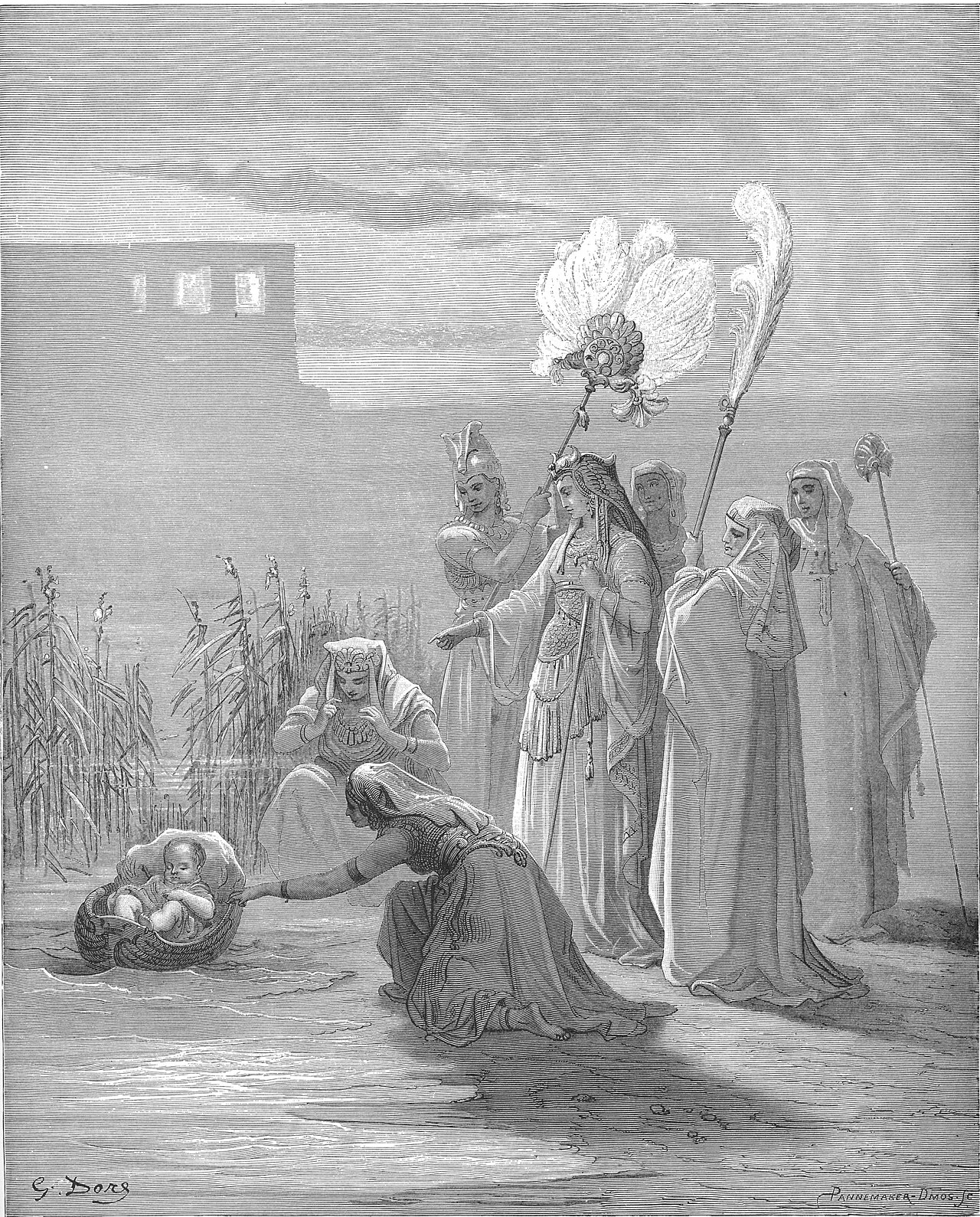
in Exodus 2When she opened it, she saw the child, and behold, the little boy was crying. So she had compassion on him and said, “This is one of the Hebrew children.”
BSB
The same verse in ASV and KJV ▾
ASV
And she opened it, and saw the child: and, behold, the babe wept. And she had compassion on him, and said, This is one of the Hebrews’ children.
KJV
And when she had opened it, she saw the child: and, behold, the babe wept. And she had compassion on him, and said, This is one of the Hebrews’ children.
⋯
This verse in Exodus 2
Commentary
6 notes on this verseThis site's exposition
And his sister stood at a distance
on Exodus 2:4-6
The sister posts herself downstream to see what will be done, and the chapter leaves her unnamed, though Exodus 15:20 and Numbers 26:59 give her as Miriam. Pharaoh's daughter identifies the child correctly the moment she opens the ark, saying that this is one of the Hebrews' children, and she keeps him. The decree of Exodus 1:22 is broken inside Pharaoh's own house by Pharaoh's own daughter.
This site's exposition
the little boy was crying
The princess opened the basket, found the baby crying and was moved to pity. She knew at once that he was one of the Hebrew children, the sons her father had ordered thrown into the Nile. Her compassion sets aside the decree of 1:22 inside Pharaoh's own house. Albert Barnes, on the verse before, notes that Egyptian princesses held a high and almost independent position.
The record, by era
The Puritans and the Awakening2 voices
And when she had opened it,....
God often raises up friends for his people even among their enemies. Pharaoh cruelly seeks Israel's destruction, but his own daughter charitably compassionates a Hebrew child, and not only so, but, beyond her intention, preserves Israel's deliverer. O Lord, how wonderful are thy counsels!
The Nineteenth Century2 voices
She had compassion on him - The sight of a beautiful babe in distress could not fail to make the impression here mentioned; see Clarke on Exo 2:2 (note). It has already been conjectured that the cruel edict of the Egyptian king did not continue long in force; see Exo 1:22. And it will not appear unreasonable to suppose that the circumstance related here might have brought about its abolition.
A commentator
Albert Barnes1798–1870
Notes, Explanatory and Practical, on the Old and New Testaments (1832-1869)
proposed
She had compassion on him - The Egyptians regarded such tenderness as a condition of acceptance on the day of reckoning. In the presence of the Lord of truth each spirit had to answer, “I have not afflicted any man, I have not made any man weep, I have not withheld milk from the mouths of sucklings” (‘Funeral Ritual’). There was special ground for mentioning the feeling, since it led the princess to save and adopt the child in spite of her father’s commands.
The words behind it
13 Hebrew wordsEvery Hebrew word of this verse in the order it stands, with what it means and the door to its own study. The last column counts the times a word stands in the whole Bible: the rarer the word, the more the places it appears belong together.
| Hebrew | Sound | Meaning | Word study | In the Bible |
|---|---|---|---|---|
| וַתִּפְתַּח֙ | vatiftach | and she opened [it] | H6605 → | 144 times |
| וַתִּרְאֵ֣הוּ | vatirehu | and she saw him | H7200 → | 1300 times |
| אֶת־ | ʾet- | <obj.> | H853 → | 10935 times |
| הַיֶּ֔לֶד | haiyeled | the child | H3206 → | 89 times |
| וְהִנֵּה־ | vehineh- | and there! | H2009 → | 843 times |
| נַ֖עַר | naar | a lad | H5288 → | 239 times |
| בֹּכֶ֑ה | bokheh | [was] crying | H1058 → | |
| וַתַּחְמֹ֣ל | vatachmol | and she had compassion | H2550 → | |
| עָלָ֔יו | ʾalav | on him | H5921 → | 5755 times |
| וַתֹּ֕אמֶר | vatomer | and she said | H559 → | 5305 times |
| מִיַּלְדֵ֥י | miyaldei | [is] one of [the] children of | H3206 → | 89 times |
| הָֽעִבְרִ֖ים | haivrim | the Hebrews | H5680 → | 34 times |
| זֶֽה׃ | zeh | this | H2088 → | 1180 times |
וַתִּפְתַּח֙and she opened [it]
vatiftachH6605 →144 times
וַתִּרְאֵ֣הוּand she saw him
vatirehuH7200 →1300 times
אֶת־<obj.>
ʾet-H853 →10935 times
הַיֶּ֔לֶדthe child
haiyeledH3206 →89 times
וְהִנֵּה־and there!
vehineh-H2009 →843 times
נַ֖עַרa lad
naarH5288 →239 times
בֹּכֶ֑ה[was] crying
bokhehH1058 →
וַתַּחְמֹ֣לand she had compassion
vatachmolH2550 →
עָלָ֔יוon him
ʾalavH5921 →5755 times
וַתֹּ֕אמֶרand she said
vatomerH559 →5305 times
מִיַּלְדֵ֥י[is] one of [the] children of
miyaldeiH3206 →89 times
הָֽעִבְרִ֖יםthe Hebrews
haivrimH5680 →34 times
זֶֽה׃this
zehH2088 →1180 times
A shaded row is a word that stands 400 times or fewer in the Bible.
The walk
8 stopsEach card is a verse this one points to, and under it the verses that one points to in turn. Where several paths arrive at the same place, that place is listed first: the text keeps returning to it.
Through
1 Peter 3:8Finally, all of you, be like-minded and sympathetic, love as brothers, be tenderhearted and humble.
it leads to
- Romans 12:10
Be devoted to one another in brotherly love. Outdo yourselves in honoring one another.
- Ephesians 4:31
Get rid of all bitterness, rage and anger, outcry and slander, along with every form of malice.
- 1 Peter 1:22
Since you have purified your souls by obedience to the truth so that you have a genuine love for your brothers, love one another deeply, from a pure heart.
- Philippians 4:8–9
Finally, brothers, whatever is true, whatever is honorable, whatever is right, whatever is pure, whatever is lovely, whatever is admirable—if anything is excellent or praiseworthy—think on these things.
- James 3:17
But the wisdom from above is first of all pure, then peace-loving, gentle, accommodating, full of mercy and good fruit, impartial, and sincere.
- Romans 12:10
Through
Nehemiah 1:11O Lord, may Your ear be attentive to my prayer and to the prayers of Your servants who delight to revere Your name. Give Your servant success this day, I pray, and grant him…
it leads to
- Nehemiah 1:6
let Your eyes be open and Your ears attentive to hear the prayer that I, Your servant, now pray before You day and night for Your servants, the Israelites. I confess the sins that…
- Nehemiah 2:8
And may I have a letter to Asaph, keeper of the king’s forest, so that he will give me timber to make beams for the gates of the citadel to the temple, for the…
- Nehemiah 2:1
Now in the month of Nisan, in the twentieth year of King Artaxerxes, when wine was set before him, I took the wine and gave it to the king. I had never been sad…
- Nehemiah 1:6
Where this verse is studied
On this page
Studies4
About Exodus
This page draws on Adam Clarke, Commentary on the Bible; Albert Barnes, Notes, Explanatory and Practical, on the Old and New Testaments; Albert Barnes, Notes, Explanatory and Practical, on the Old and New Testaments (1832-1869); John Gill, Exposition of the Old Testament; John Gill, Exposition of the Old Testament (1748-1763) and Matthew Henry, Commentary on the Whole Bible.