
Concept
AnthropologyTrees
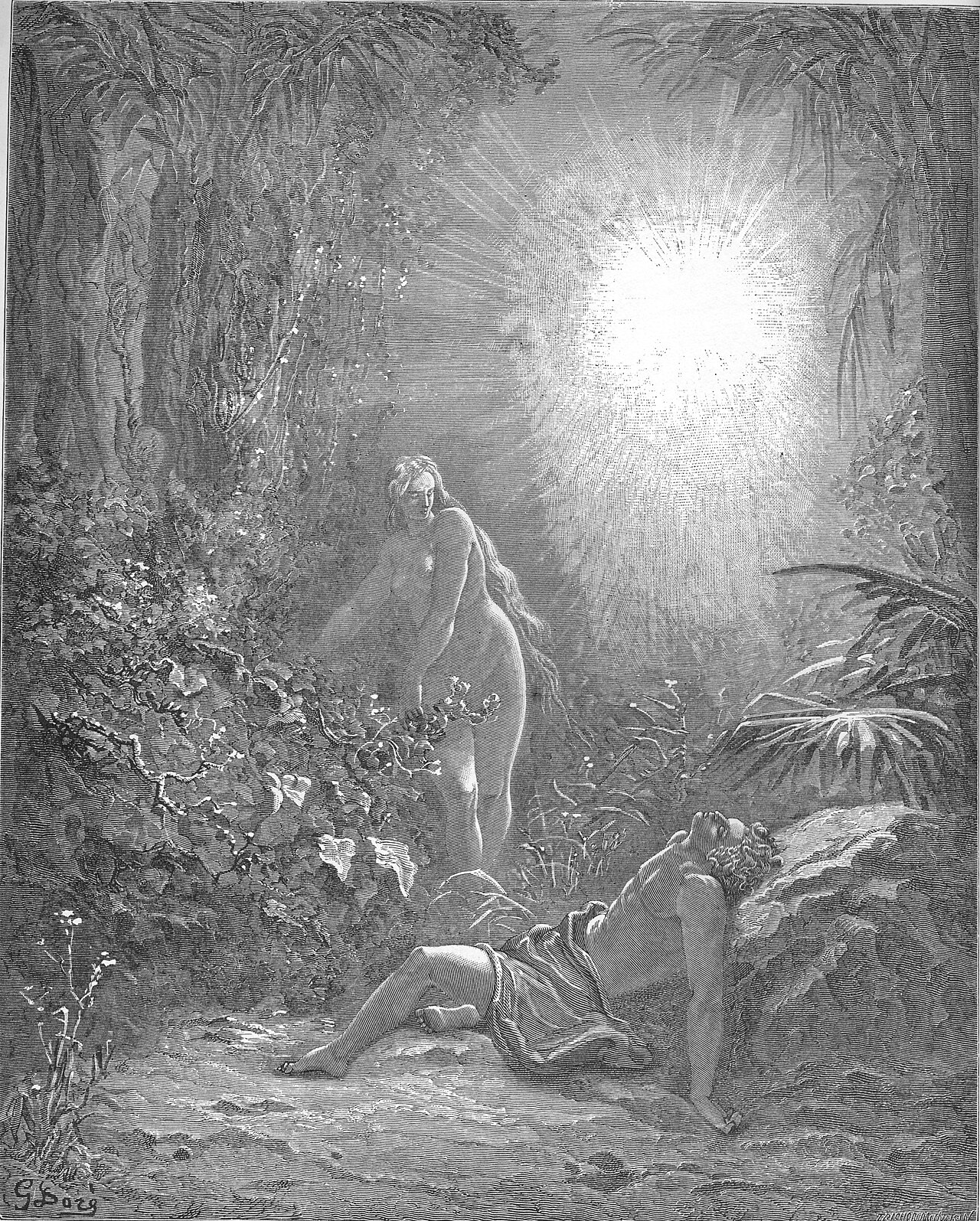
The Bible's story turns at trees: two in the garden, one bearing a curse, one bearing healing for the nations.
#motif#typology
- 18passages
- 143original words
- 1approved connection
- 240cross-references
The words behind it
Hebrew and Greek standing in the 18 passages listed below, not a lexicon of "trees" itself. The number on each word is how often it occurs in those passages; the connecting words the languages use everywhere are set aside so the words that carry meaning can be seen.
Hebrew95
85 more hebrew words ▾
Greek48
38 more greek words ▾
The passages
Every passage this site attaches to the concept, in canon order. Each row says where it came from.
Old Testament13
- Genesis 2:9listed key text
Out of the ground the LORD God gave growth to every tree that is pleasing to the eye and good for food. And in the middle of the garden were the tree of life and the tree of the knowledge of good and evil.(opening verse of the passage)
- Genesis 2:17topical floor
but you must not eat from the tree of the knowledge of good and evil; for in the day that you eat of it, you will surely die.”
Commentary on Genesis 2:172 voices
“What is the difference between saying 'ye shall die' and 'ye shall die the death'? We ought to point out that there is nothing superfluous in the command of God. Here is my solution. Since life and death are contradictory ideas, in unaffected language we say 'we live in life' and 'die in death.'”
Ambrose of Milan · On ParadisePatristic
“Knowing once more how the will of man could sway to either side, in anticipation God secured the grace given them by a command and by the place where he put them. For he brought them into his own garden and gave them a law so that, if they kept the grace and remained good, they might still keep the life in paradise without sorrow or pain or care, besides having the promise of incorruption in heaven.”
Athanasius of Alexandria · On the Incarnation of the Word 3.4Patristic
- Genesis 3:3topical floor
but about the fruit of the tree in the middle of the garden, God has said, ‘You must not eat of it or touch it, or you will die.’”(opening verse of the passage)
Commentary on Genesis 3:31 voice
“The manner in which the devil proceeded in the temptation was of great cunning, because he proceeded by testing, impelling, and enticing. For he conducted his test through questioning, he impelled through assurance, and he enticed through promise.”
Bonaventure · Breviloquium, Part 3, Chapter 2, 1257Patristic
- Genesis 3:11topical floor
“Who told you that you were naked?” asked the LORD God. “Have you eaten from the tree of which I commanded you not to eat?”
- Genesis 3:12topical floor
And the man answered, “The woman whom You gave me, she gave me fruit from the tree, and I ate it.”
Commentary on Genesis 3:121 voice
“And the man said, etc. - We have here some farther proofs of the fallen state of man, and that the consequences of that state extend to his remotest posterity. 1. On the question, Hast thou eaten of the tree? Adam is obliged to acknowledge his transgression; but he does this in such a way as to shift off the blame from himself, and lay it upon God and upon the woman!”
Adam Clarke · Commentary on the BibleEvangelical
- Genesis 3:17topical floor
And to Adam He said: “Because you have listened to the voice of your wife and have eaten from the tree of which I commanded you not to eat, cursed is the ground because of you; through toil you will eat of it all the days of your life.
Commentary on Genesis 3:172 voices
“The two sentences seem to have a certain similarity, yet in that similarity there is a great difference. There is a difference in the way a person eats of the earth, as the serpent is related to have done and the manner in which this is recorded of the man: 'In sadness shall you eat.' That very phrase 'in sadness' makes the precise difference. Note how important this difference is.”
Ambrose of Milan · On Paradise, 15.75Patristic
“Unto Adam he said - The man being the last in the transgression is brought up last to receive his sentence: Because thou hast hearkened unto the voice of thy wife - ‘thou wast not deceived, she only gave and counseled thee to eat; this thou shouldst have resisted;’ and that he did not is the reason of his condemnation.”
Adam Clarke · Commentary on the BibleEvangelical
- Genesis 3:22topical floor
Then the LORD God said, “Behold, the man has become like one of Us, knowing good and evil. And now, lest he reach out his hand and take also from the tree of life, and eat, and live forever...”
Commentary on Genesis 3:222 voices
“And how will that statement of the Lord stand, after the sin of the first man: ‘Behold, Adam is become like one of us, knowing good and evil?’ For he must not to be thought to have been such before the sin that he was wholly ignorant of good. Otherwise, it must be admitted that he was created like an irrational and senseless animal; and this is quite absurd and foreign to the Catholic faith. No, rather, according to the pronouncement of the most wise Solomon, ‘God made man right,’ that is, to enjoy continually the knowledge of good alone.”
John Cassian · CONFERENCES 13.12.1-2Patristic
“Behold, the man is become as one of us - On all hands this text is allowed to be difficult, and the difficulty is increased by our translation, which is opposed to the original Hebrew and the most authentic versions. The Hebrew has היה hayah, which is the third person preterite tense, and signifies was, not is. The Samaritan text, the Samaritan version, the Syriac, and the Septuagint, have the same tense.”
Adam Clarke · Commentary on the BibleEvangelical
- Genesis 3:24topical floor
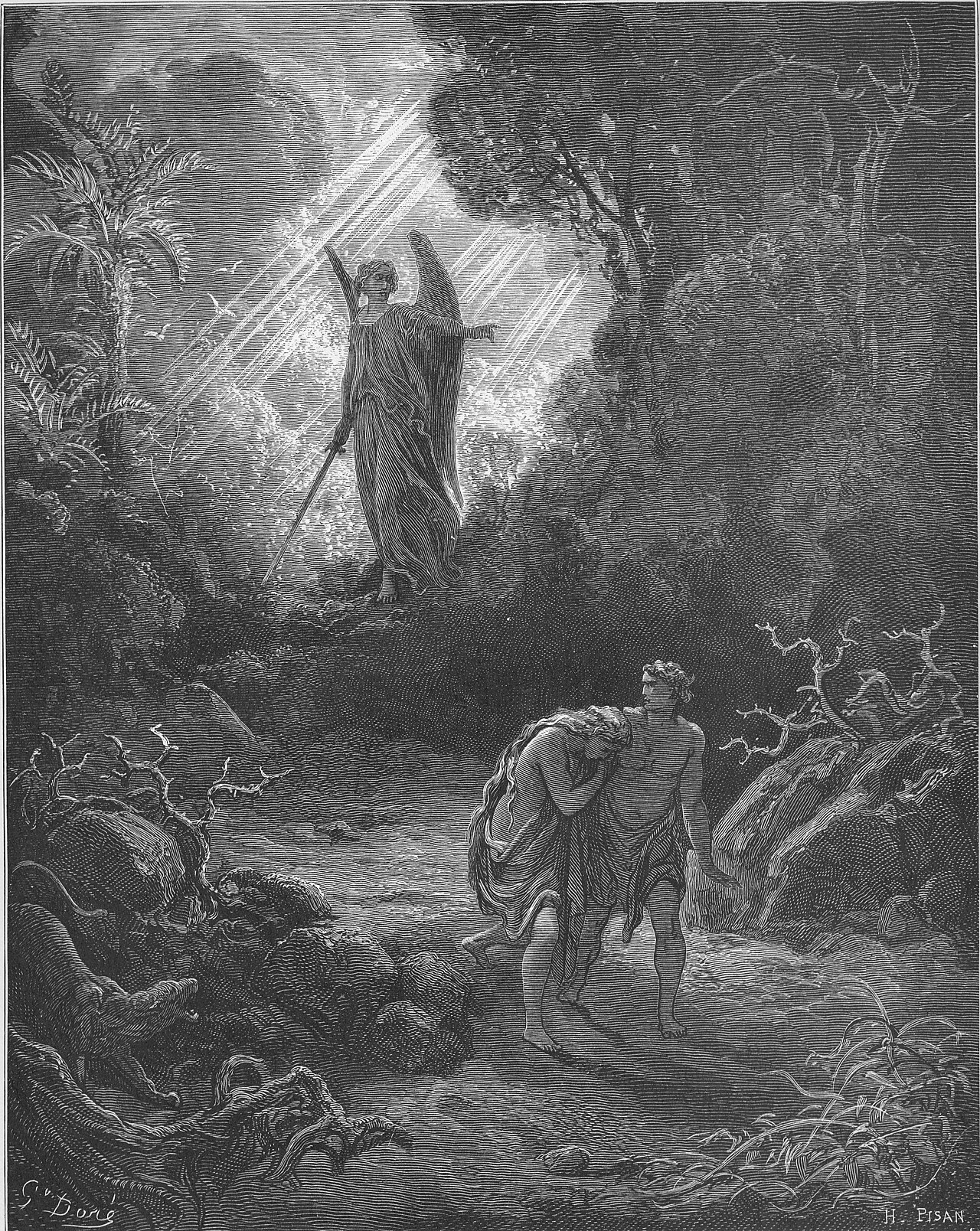
So He drove out the man and stationed cherubim on the east side of the Garden of Eden, along with a whirling sword of flame to guard the way to the tree of life.
Commentary on Genesis 3:241 voice
“So he drove out the man - Three things are noted here: 1. God’s displeasure against sinful man, evidenced by his expelling him from this place of blessedness; 2. Man’s unfitness for the place, of which he had rendered himself unworthy by his ingratitude and transgression; and, 3. His reluctance to leave this place of happiness. He was, as we may naturally conclude, unwilling to depart, and God drove him out. He placed at the east - מכדם mikkedem, or before the garden of Eden, before what may be conceived its gate or entrance; Cherubims, הכרבים hakkerubim, The cherubim.”
Adam Clarke · Commentary on the BibleEvangelical
- Exodus 25:31approved connection
Then you are to make a lampstand of pure, hammered gold. It shall be made of one piece, including its base and shaft, its cups, and its buds and petals.
Commentary on Exodus 25:311 voice
“Exo 25:31 A candlestick of pure gold - (Compare Exo 37:17-24.) A lampstand rather than a candlestick. Its purpose was to support seven oil-lamps. Its height appears to have been about three feet, and its width two feet. The original foot was lost or stolen when the candlestick was taken out of the temple, and the pedestal in the sculpture was added by some Roman artist to set off the trophy. His shaft, and his branches, his bowls, his knops, and his flowers - Or, its base, its stem, its flower cups, its knobs, and its lilies.”
Albert Barnes · Notes, Explanatory and Practical, on the Old and New Testaments (1832-1869)Evangelical
- Deuteronomy 21:23listed key text
you must not leave the body on the tree overnight, but you must be sure to bury him that day, because anyone who is hung on a tree is under God’s curse. You must not defile the land that the LORD your God is giving you as an inheritance.(opening verse of the passage)
Commentary on Deuteronomy 21:232 voices
“If any of our own people also inquire, not from love of debate but from love of learning, why he suffered death in no other way except on the cross, let him also be told that no other way than this was good for us and that it was well that the Lord suffered this for our sakes. For if he himself came to bear the curse laid upon us, how else could he have ‘become a curse’ unless he received the death set for a curse? And that is the cross.”
Athanasius of Alexandria · On the Incarnation of the Word 25Patristic
“He that is hanged is accursed of God - i. e. ‘Bury him that is hanged out of the way before evening: his hanging body defiles the land; for God’s curse rests on it.’ The curse of God is probably regarded as lying on the malefactor because, from the fact of his being hanged, be must have been guilty of a especially atrocious breach of God’s covenant. Such an offender could not remain on the face of the earth without defiling it (compare Lev 18:25, Lev 18:28; Num 35:34).”
Albert Barnes · Notes, Explanatory and Practical, on the Old and New Testaments (1832-1869)Evangelical
- Psalms 1:3topical floor
He is like a tree planted by streams of water, yielding its fruit in season, whose leaf does not wither, and who prospers in all he does.
Commentary on Psalms 1:32 voices
“(Verse 3.) And it shall be like a tree that is planted by the courses of water, which will yield its fruit in its season. And its leaf shall not wither, and whatever it does, it shall prosper. What is this blessedness that is compared to the tree, unless we understand it to be in paradise, that blessed place, the tree of life produced from the earth in the midst of other trees?”
Ambrose of Milan · Commentaries on the Twelve Davidic PsalmsPatristic
“And he shall be like a tree planted—not a wild tree, but ‘a tree planted, ‘ chosen, considered as property, cultivated and secured from the last terrible uprooting, for ‘every plant which my heavenly Father hath not planted, shall be rooted up:’ Matthew 15:13. ‘By the rivers of water;’ so that even if one river should fail, he hath another. The rivers of pardon and the rivers of grace, the rivers of the promise and the rivers of communion with Christ, are never-failing sources of supply.”
Charles Spurgeon · The Treasury of David, Vol. 1, 1869
- Jeremiah 17:8topical floor
He is like a tree planted by the waters that sends out its roots toward the stream. It does not fear when the heat comes, and its leaves are always green. It does not worry in a year of drought, nor does it cease to produce fruit.
Commentary on Jeremiah 17:82 voices
“It may be said both of the Jews and of the heretics that they put their hope in humankind, for the messiah whom they believe to be coming is clearly not the Son of God but a mere man. The person of the church, in contrast, who puts faith in the Lord, hears this: ‘Know that the Lord himself is God.’”
Jerome · Six Books on Jeremiah 3:73.2-5Patristic
“A s a tree planted by the waters - Which is sufficiently supplied with moisture, though the heat be intense, and there be no rain; for the roots being spread out by the river, they absorb from it all the moisture requisite for the flourishing vegetation of the tree. Shall not see when heat cometh - Shall not feel any damage by drought, for the reason already assigned. It shall be strong and vigorous, its leaf always green; and shall produce plenty of fruit in its season.”
Adam Clarke · Commentary on the BibleEvangelical
- Daniel 4:10topical floor
In these visions of my mind as I was lying in bed, I saw this come to pass: There was a tree in the midst of the land, and its height was great.(opening verse of the passage)
Commentary on Daniel 4:102 voices
“I saw - a tree - This vision Nebuchadnezzar says made him afraid. What a mercy it is that God has hidden futurity from us! Were he to show every man the lot that is before him, the misery of the human race would be complete. Great men and princes are often represented, in the language of the prophets, under the similitude of trees; see Eze 17:5, Eze 17:6; Eze 31:3, etc.; Jer 22:15; Psa 1:3; Psa 37:35.”
Adam Clarke · Commentary on the BibleEvangelical
“Verse 10. ‘'I saw, and behold there was a tree in the midst of the earth, and its height was very great...'’ It was not only of Nebuchadnezzar, King of the Chaldeans, but also of all impious men that the prophet says: ‘I beheld the impious man highly exalted and lifted up like the cedars of Lebanon’ (Psalm 37:35). Such men are lifted up, not by the greatness of their virtues, but by their own pride; and for that reason they are cut down and fall into ruin.”
Jerome · St. Jerome, Commentary on Daniel, CHAPTER FOURPatristic
New Testament5
- Acts 5:30listed key text
The God of our fathers raised up Jesus, whom you had killed by hanging Him on a tree.(opening verse of the passage)
Commentary on Acts 5:301 voice
“The God of our fathers raised up Jesus - It was well to introduce this, that the council might at once see that they preached no strange God; and that he who so highly honored the patriarchs, Moses, and the prophets, had yet more highly honored Jesus Christ in raising him from the dead and seating him at his right hand, and proclaiming him as the only giver of salvation and the repentance which leads to it.”
Adam Clarke · Commentary on the BibleEvangelical
- Galatians 3:13listed key text
Christ redeemed us from the curse of the law by becoming a curse for us. For it is written: “Cursed is everyone who is hung on a tree.”(opening verse of the passage)
Commentary on Galatians 3:132 voices
“And everywhere, when [referring to] the passion of our Lord, and to His human nature, and His subjection to death, he employs the name of Christ, as in that passage: ‘Destroy not him with thy meat for whom Christ died.’ And again: ‘But now, in Christ, ye who sometimes were far off are made nigh by the blood of Christ.’ And again: ‘Christ has redeemed us from the curse of the law, being made a curse for us: for it is written, Cursed is every one that hangeth upon a tree.’”
Irenaeus · Against Heresies Book IIIPatristic
“Christ hath redeemed us from the curse of the law,.... The Redeemer is Christ, the Son of God; who was appointed and called to this work by his Father, and which he himself agreed to; he was spoken of in prophecy under this character; he came as such, and has obtained eternal redemption, for which he was abundantly qualified; as man, he was a near kinsman, to whom the right of redemption belonged; and as God, he was able to accomplish it.”
John Gill · Exposition of the New Testament (1746-1748)Reformed
- 1 Peter 2:24listed key text
He Himself bore our sins in His body on the tree, so that we might die to sin and live to righteousness. “By His stripes you are healed.”(opening verse of the passage)
Commentary on 1 Peter 2:242 voices
“Who his own self bare our sins,.... As was typified by the high priest bearing the sins of the holy things of the people of Israel, when he went into the most holy place, and by the scape goat bearing the iniquities of all the people unto a land not inhabited, and as was foretold by the Prophet Isaiah. The apostle here explains the nature and end of Christ's sufferings, which were to make atonement for sins, and which was done by bearing them.”
John Gill · Exposition of the New Testament (1746-1748)Reformed
“Who his own self - Not another in his place, as some anciently supposed, because they thought it impossible that the Christ should suffer. Bare our sins in his own body - Bore the punishment due to our sins. In no other sense could Christ bear them. To say that they were so imputed to him as if they had been his own, and that the Father beheld him as blackened with imputed sin, is monstrous, if not blasphemous.”
Adam Clarke · Commentary on the BibleEvangelical
- Revelation 22:2listed key text
down the middle of the main street of the city. On either side of the river stood a tree of life, bearing twelve kinds of fruit and yielding a fresh crop for each month. And the leaves of the tree are for the healing of the nations.(opening verse of the passage)
Commentary on Revelation 22:22 voices
“In the midst of the street of it - That is, of the city which was described in the preceding chapter. The tree of life - An allusion to Gen 2:9. As this tree of life is stated to be in the streets of the city, and on each side of the river, tree must here be an enallage of the singular for the plural number, trees of life, or trees which yielded fruit by which life was preserved.”
Adam Clarke · Commentary on the BibleEvangelical
“This river waters the saints who are planted alongside it. They are here figuratively called the ‘tree of life’ by virtue of their participation and imitation of him who is the Tree of Life. Moreover, they give forth ‘twelve fruits,’ that is, they unceasingly yield …”
Andreas of Caesarea · Commentary on the Apocalypse 22:2Patristic
- Revelation 22:14topical floor
Blessed are those who wash their robes, so that they may have the right to the tree of life and may enter the city by its gates.
Commentary on Revelation 22:142 voices
“Inserting thus the particle of present time, ‘And now,’ He shows that He had made for a time, and at present, a prolongation of man's life. Therefore He did not actually curse Adam and Eve, for they were candidates for restoration, and they had been relieved by confession.”
Tertullian · Against Marcion Book IIPatristic
“Blessed are they that do his commandments - They are happy who are obedient. That they may have right to the tree of life - The original is much more expressive, Ἱνα εσται ἡ εξουσια αυτων επι το ξυλον της ζωης· That they may have authority over the tree of life; an authority founded on right, this right founded on obedience to the commandments of God, and that obedience produced by the grace of God working in them.”
Adam Clarke · Commentary on the BibleEvangelical
Approved connections
1 link an editor approved, each with the reason it was kept.
- typologyExodus 25:31
The tree of life stylized as the seven-branched golden lampstand, a tree of light in the Holy Place.
Beale 2004
Voices on these passages
Commentary matched to the verses above, each named with its source: the full pool sits on each verse page.
“What is the difference between saying 'ye shall die' and 'ye shall die the death'? We ought to point out that there is nothing superfluous in the command of God. Here is my solution. Since life and death are contradictory ideas, in unaffected language we say 'we live in life' and 'die in death.'”
Ambrose of Milan · On ParadisePatristic
Genesis 2:17
“The manner in which the devil proceeded in the temptation was of great cunning, because he proceeded by testing, impelling, and enticing. For he conducted his test through questioning, he impelled through assurance, and he enticed through promise.”
Bonaventure · Breviloquium, Part 3, Chapter 2Patristic
Genesis 3:3
“And the man said, etc. - We have here some farther proofs of the fallen state of man, and that the consequences of that state extend to his remotest posterity. 1. On the question, Hast thou eaten of the tree? Adam is obliged to acknowledge his transgression; but he does this in such a way as to shift off the blame from himself, and lay it upon God and upon the woman!”
Adam Clarke · Commentary on the BibleEvangelical
Genesis 3:12
Study it deeper
5 moves a student can make from here. Every one opens a tool on this site.
Trace one word to every place it stands
A word page lists every verse that word occurs in, with its definition and its range of meaning. Start with the roots that occur most under the passages above.
Walk out from the passages
The passages above carry 240 cross-references between them, links from the Treasury of Scripture Knowledge, the great 1830s reference work, together with the reader-voted index at OpenBible.info. The most-linked destinations:
Read it in both testaments
Set the earliest passage beside the New Testament one and ask what changed and what did not, the shape of trees before Christ and after him.
Read the whole chapter around it
A verse quoted alone can mean almost anything. Open Genesis 2 in the reader, where the Hebrew or Greek sits under every line.
See everywhere else it appears
The search page is a doorway: it returns verses, word studies, people, places and studies for one term at once.
Where this comes from
Trees mark the hinges of Scripture: the tree of life and the tree of the knowledge of good and evil in Eden, the oaks of Mamre where the promise is repeated, the tree that carries a curse in Deuteronomy 21:23, and the tree of life in the new Jerusalem.
Peter calls the cross a tree (Acts 5:30; 1 Peter 2:24), and Paul makes the connection explicit: Deuteronomy's curse laid on Golgotha (Galatians 3:13): which turns the pattern into a single arc rather than a set of coincidences.