
Joshua 8:15
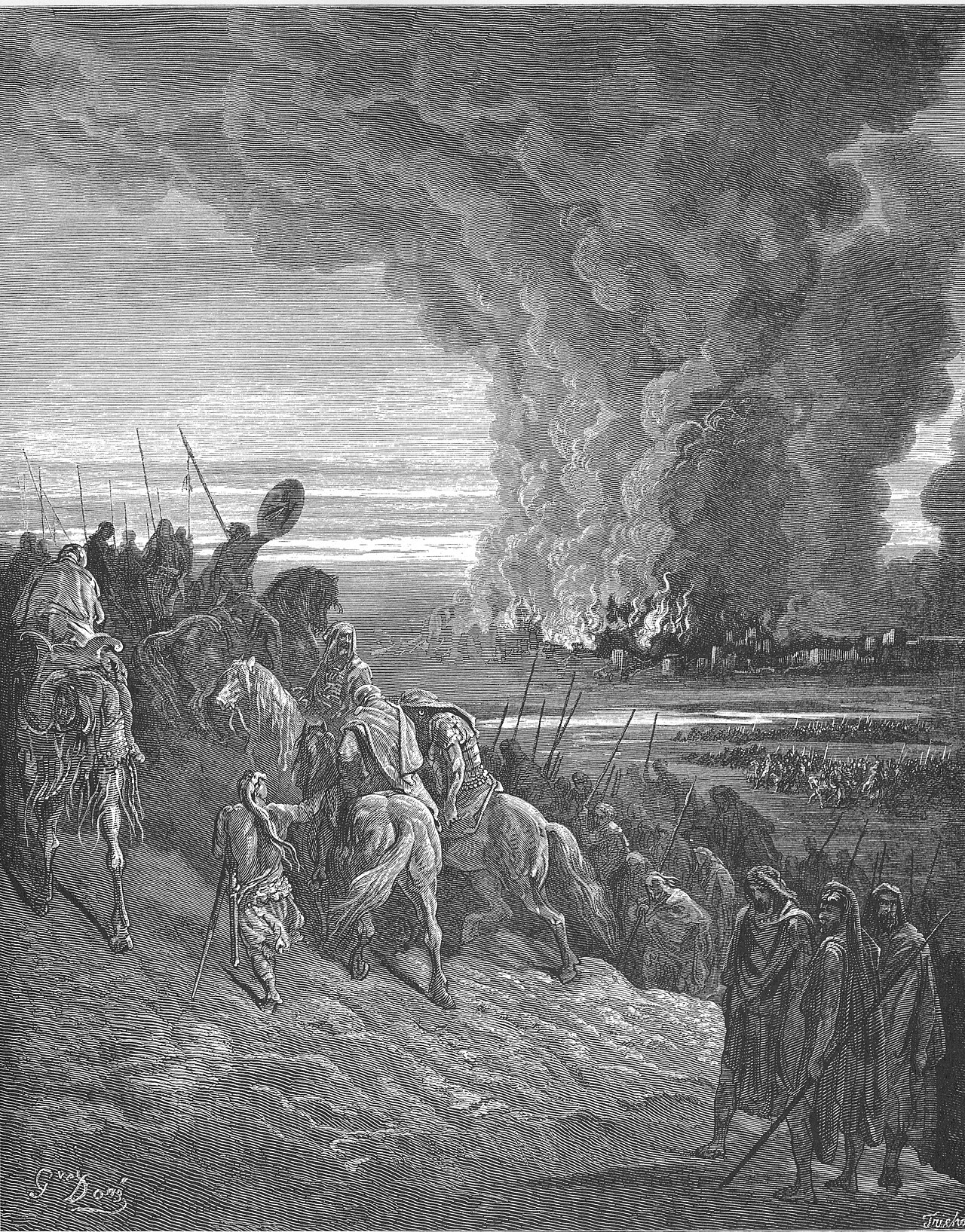
in Joshua 8Joshua and all Israel let themselves be beaten back before them, and they fled toward the wilderness.
BSB
The same verse in ASV and KJV ▾
ASV
And Joshua and all Israel made as if they were beaten before them, and fled by the way of the wilderness.
KJV
And Joshua and all Israel made as if they were beaten before them, and fled by the way of the wilderness.
⋯
This verse in Joshua 8
Commentary
2 notes on this verseAnd Joshua and all Israel made as if they were beaten before them,.... Or smitten, as some of them might be in the pursuit: and fled by the way of the wilderness; not a barren desert, but, according to Kimchi and Ben Melech, a place for the pasture of cattle; though perhaps it is the same with the wilderness of Bethaven, Jos 18:12. Epiphanius (w) makes mention of the wilderness of Bethel and Ephraim as near Jericho. (w) Contr. Haeres. l. 1. tom. 2.
This site's exposition
the king of Ai saw
on Joshua 8:14-15
The king moves fast and moves early, and the verse says so twice over, that they hasted and rose up early. At a time appointed is read by Barnes as a place appointed, ground fixed beforehand for drawing up men, which suits a king who had fought on that field once already. Then the clause the chapter turns on, but he wist not that there were liers in ambush against him behind the city, which is the one thing in the whole account he does not know.
How the passage was read
What the Jewish commentators add
Pretended to be stricken. This is an expression of נֶגַע, plague, or beating. They gave the appearance of being beaten before them.
1 more on this passage, in their own words ▾
At the appointed time. At the time of day they had astrologically predicted previously, saying “at that time we will go out,” for they were sorcerers and diviners.
This section is reception history: how the passage was read and kept in the Jewish tradition. Where a reading parts from an essential of the Christian faith, the section says so at that point.
Texts and citation data: Sefaria; each excerpt follows its version’s licence. 3 further sources are cited on this chapter that carry no English text this site may quote or only restate the verse.
The words behind it
8 Hebrew wordsEvery Hebrew word of this verse in the order it stands, with what it means and the door to its own study. The last column counts the times a word stands in the whole Bible: the rarer the word, the more the places it appears belong together.
| Hebrew | Sound | Meaning | Word study | In the Bible |
|---|---|---|---|---|
| וַיִּנָּֽגְע֛וּ | vaiyinageu | and they were struck | H5060 → | |
| יְהוֹשֻׁ֥עַ | yehoshua' | Joshua | H3091 → | 218 times |
| וְכָל־ | vekhol | and all | H3605 → | 5413 times |
| יִשְׂרָאֵ֖ל | yisrael | Israel | H3478 → | 2507 times |
| לִפְנֵיהֶ֑ם | lifneihem | <to> before them | H6440 → | 2123 times |
| וַיָּנֻ֖סוּ | vaiyanusu | and they fled | H5127 → | 159 times |
| דֶּ֥רֶךְ | derekh | [the] direction of | H1870 → | 707 times |
| הַמִּדְבָּֽר׃ | hamidbar | the wilderness | H4057 → | 270 times |
וַיִּנָּֽגְע֛וּand they were struck
vaiyinageuH5060 →
יְהוֹשֻׁ֥עַJoshua
yehoshua'H3091 →218 times
וְכָל־and all
vekholH3605 →5413 times
יִשְׂרָאֵ֖לIsrael
yisraelH3478 →2507 times
לִפְנֵיהֶ֑ם<to> before them
lifneihemH6440 →2123 times
וַיָּנֻ֖סוּand they fled
vaiyanusuH5127 →159 times
דֶּ֥רֶךְ[the] direction of
derekhH1870 →707 times
הַמִּדְבָּֽר׃the wilderness
hamidbarH4057 →270 times
A shaded row is a word that stands 400 times or fewer in the Bible.
The walk
8 stopsEach card is a verse this one points to, and under it the verses that one points to in turn. Where several paths arrive at the same place, that place is listed first: the text keeps returning to it.
Through
Joshua 16:1The allotment for the descendants of Joseph extended from the Jordan at Jericho to the waters of Jericho on the east, through the wilderness that goes up from Jericho into the hill country of…
it leads to
- Joshua 18:12
On the north side their border began at the Jordan, went up past the northern slope of Jericho, headed west through the hill country, and came out at the wilderness of Beth-aven.
- 2 Kings 2:19–21
Then the men of the city said to Elisha, “Please note, our lord, that the city’s location is good, as you can see. But the water is bad and the land is unfruitful.”
- Joshua 18:12
Through
Joshua 18:12On the north side their border began at the Jordan, went up past the northern slope of Jericho, headed west through the hill country, and came out at the wilderness of Beth-aven.
it leads to
- Joshua 16:1
The allotment for the descendants of Joseph extended from the Jordan at Jericho to the waters of Jericho on the east, through the wilderness that goes up from Jericho into the hill country of…
- Joshua 7:2
Meanwhile, Joshua sent men from Jericho to Ai, which is near Beth-aven to the east of Bethel, and told them, “Go up and spy out the land.” So the men went up and spied…
- Joshua 2:1
Then Joshua son of Nun secretly sent two spies from Shittim, saying, “Go, inspect the land, especially Jericho.” So they went and entered the house of a prostitute named Rahab and stayed there.
- Hosea 10:5
The people of Samaria will fear for the calf of Beth-aven. Indeed, its people will mourn with its idolatrous priests— those who rejoiced in its glory— for it has been taken from them into…
- Joshua 16:1
Through
Joshua 15:61These were in the wilderness:
it leads to
- Joshua 15:6
The northern border started from the bay of the sea at the mouth of the Jordan, went up to Beth-hoglah, proceeded north of Beth-arabah, and went up to the Stone of Bohan son of…
- Joshua 15:6
Through
Judges 20:36Then the Benjamites realized they had been defeated. Now the men of Israel had retreated before Benjamin because they were relying on the ambush they had set against Gibeah.
it leads to
- Joshua 8:15–29
Joshua and all Israel let themselves be beaten back before them, and they fled toward the wilderness.
- Joshua 8:15–29
About Joshua
Who and where
1 name in this verse with a page on the site.
This page draws on Albert Barnes, Notes on the Old Testament; John Gill, Exposition of the Old Testament (1748-1763) and Matthew Henry, Commentary on the Whole Bible.