
Judges 9:35
in Judges 9Now Gaal son of Ebed went out and stood at the entrance of the city gate just as Abimelech and his men came out from their hiding places.
BSB
The same verse in ASV and KJV ▾
ASV
And Gaal the son of Ebed went out, and stood in the entrance of the gate of the city: and Abimelech rose up, and the people that were with him, from the ambushment.
KJV
And Gaal the son of Ebed went out, and stood in the entering of the gate of the city: and Abimelech rose up, and the people that were with him, from lying in wait.
⋯
This verse in Judges 9
Commentary
5 notes on this verseThis site's exposition
lay in wait against Shechem in four companies
on Judges 9:34-36
Gaal stands "at the entrance of the city gate," where a town's leaders sat to judge, and sees men coming off the hills. Zebul answers, "The shadows of the mountains look like men to you," holding him there while the companies close in. In the Hebrew, shadows is the thornbush's word for its shade at verse 15, and the man the town trusted is told that armed men are shadows.
This site's exposition
stood at the entrance of the city gate
Adam Clarke supposes Gaal had some warning of the plan, which would explain why he stands watching at the gate. The verse times his arrival to the moment Abimelech's men leave their hiding places. The watcher and the ambush arrive together.
The record, by era
The Puritans and the Awakening1 voice
And Gaul the son or Ebed went out,....
The Nineteenth Century2 voices
A commentator
Jamieson, Fausset & Brown1802–1910
Commentary Critical and Explanatory on the Whole Bible (1871)
proposed
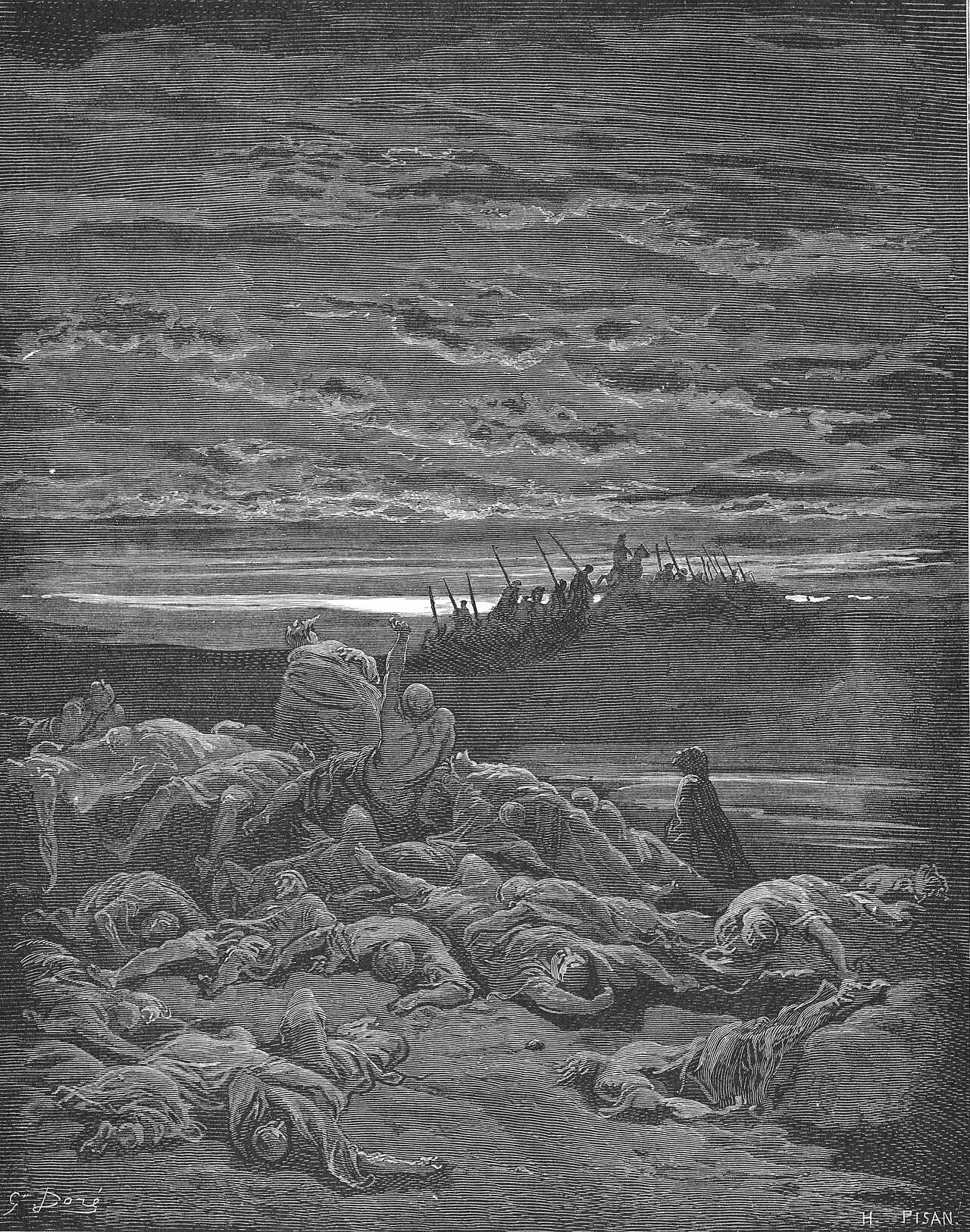
The consequence was that he allowed himself to be drawn into an ambush, was defeated, the city of Shechem destroyed and strewn with salt. The people took refuge in the stronghold, which was set on fire, and all in it perished.
Stood in the entering of the gate - Having probably got some intimation of the designs of Zebul and Abimelech.
The words behind it
15 Hebrew wordsEvery Hebrew word of this verse in the order it stands, with what it means and the door to its own study. The last column counts the times a word stands in the whole Bible: the rarer the word, the more the places it appears belong together.
| Hebrew | Sound | Meaning | Word study | In the Bible |
|---|---|---|---|---|
| וַיֵּצֵא֙ | vaiyetze' | and he went out | H3318 → | 1067 times |
| גַּ֣עַל | gaal | Gaal | H1603 → | 9 times |
| בֶּן־ | ben- | [the] son of | H1121 → | 4930 times |
| עֶ֔בֶד | ʾeved | Ebed | H5651 → | 6 times |
| וַיַּעֲמֹ֕ד | vaiyaamod | and he stood | H5975 → | 521 times |
| פֶּ֖תַח | petach | [the] entrance of | H6607 → | 164 times |
| שַׁ֣עַר | shaar | [the] gate of | H8179 → | 374 times |
| הָעִ֑יר | hair | the city | H5892 → | 1090 times |
| וַיָּ֧קָם | vaiyakom | and he arose | H6965 → | 628 times |
| אֲבִימֶ֛לֶךְ | ʾavimelekh | Abimelech | H40 → | 66 times |
| וְהָעָ֥ם | vehaam | and the people | H5971 → | 1873 times |
| אֲשֶׁר־ | ʾasher- | which | H834 → | 5497 times |
| אִתּ֖וֹ | ʾito | [was] with him | H854 → | 929 times |
| מִן־ | min- | from | H4480 → | 1188 times |
| הַמַּאְרָֽב׃ | hama'rav | the ambush | H3993 → |
וַיֵּצֵא֙and he went out
vaiyetze'H3318 →1067 times
גַּ֣עַלGaal
gaalH1603 →9 times
בֶּן־[the] son of
ben-H1121 →4930 times
עֶ֔בֶדEbed
ʾevedH5651 →6 times
וַיַּעֲמֹ֕דand he stood
vaiyaamodH5975 →521 times
פֶּ֖תַח[the] entrance of
petachH6607 →164 times
שַׁ֣עַר[the] gate of
shaarH8179 →374 times
הָעִ֑ירthe city
hairH5892 →1090 times
וַיָּ֧קָםand he arose
vaiyakomH6965 →628 times
אֲבִימֶ֛לֶךְAbimelech
ʾavimelekhH40 →66 times
וְהָעָ֥םand the people
vehaamH5971 →1873 times
אֲשֶׁר־which
ʾasher-H834 →5497 times
אִתּ֖וֹ[was] with him
ʾitoH854 →929 times
מִן־from
min-H4480 →1188 times
הַמַּאְרָֽב׃the ambush
hama'ravH3993 →
A shaded row is a word that stands 400 times or fewer in the Bible.
About Judges
This page draws on Adam Clarke, Commentary on the Bible; Jamieson, Fausset & Brown, Commentary Critical and Explanatory on the Whole Bible; John Gill, Exposition of the Old Testament (1748-1763) and Keil and Delitzsch, Biblical Commentary on the Old Testament: Joshua, Judges, Ruth.