
Judges 2:1
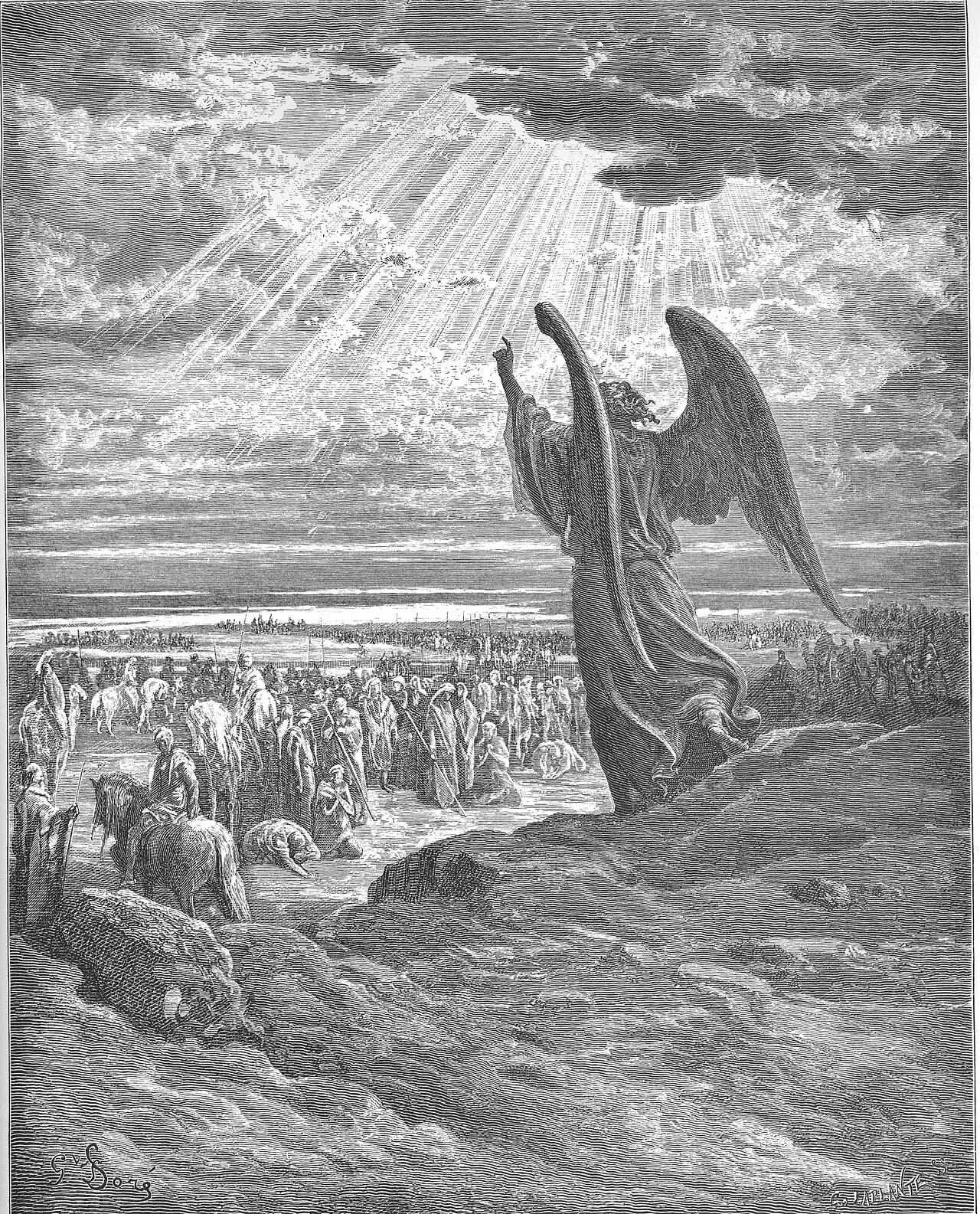
in Judges 2Now the angel of the LORD went up from Gilgal to Bochim and said, “I brought you up out of Egypt and led you into the land that I had promised to your fathers, and I said, ‘I will never break My covenant with you,
BSB
The same verse in ASV and KJV ▾
ASV
And the angel of Jehovah came up from Gilgal to Bochim. And he said, I made you to go up out of Egypt, and have brought you unto the land which I sware unto your fathers; and I said, I will never break my covenant with you:
KJV
And an angel of the Lord came up from Gilgal to Bochim, and said, I made you to go up out of Egypt, and have brought you unto the land which I sware unto your fathers; and I said, I will never break my covenant with you.
⋯
This verse in Judges 2
Commentary
4 notes on this verseA commentator
Albert Barnes1798–1870
Notes, Explanatory and Practical, on the Old and New Testaments (1832-1869)
The angel of the Lord (not an angel). - The phrase is used nearly 60 times to designate the Angel of God’s presence. See Gen 12:7 note. In all cases where “the angel of the Lord” delivers a message, he does it as if God Himself were speaking, without the intervening words “Thus saith the Lord,” which are used in the case of prophets. (Compare Jdg 6:8; Jos 24:2.)
This site's exposition
an angel of the LORD came up from Gilgal
on Judges 2:1-3
The messenger comes from Gilgal, which is where Joshua 5 put the circumcision and the passover, so the rebuke starts from the place the obedience started. He speaks in the first person throughout, I made you to go up out of Egypt, and says I will never break my covenant with you, and then asks a question nobody answers: why have ye done this. The sentence at verse 3 is the exact wording of the warning at Numbers 33:55 and Joshua 23:13, thorns in your sides and their gods a snare, so what falls on Israel is what it was told would fall.
The record, by era
The Puritans and the Awakening2 voices
Bochim - A place so called by anticipation; it seems to be no other than Shiloh, where it is probable, the people were met together upon some solemn festival. I said - That is, I promised upon condition of your keeping covenant with me.
The learned bishop Patrick is clearly of opinion that this was not a created angel, but the Angel of the covenant, the same that appeared to Joshua as captain of the hosts of the Lord, who was God himself. Christ himself, says Dr. Lightfoot; who but God and Christ could say, I made you to go up out of Egypt?
How the passage was read
What the Jewish commentators add
Adonoy's emissary went up. We learn in Seder Olam that this was Pinchos. 1 Son of Elazar, grandson of Aharon Hakohen. (Bemidbar,:11.) 2 Why is Pinchas entitled מַלְאַךְ ה׳, lit. “an angel of Adonoy”? Because, when visited by the sacred spirit, he was enflamed with radiance. (Vayikra Rabah, A.
This section is reception history: how the passage was read and kept in the Jewish tradition. Where a reading parts from an essential of the Christian faith, the section says so at that point.
Texts and citation data: Sefaria; each excerpt follows its version’s licence. 5 further sources are cited on this chapter that carry no English text this site may quote or only restate the verse.
The words behind it
24 Hebrew wordsEvery Hebrew word of this verse in the order it stands, with what it means and the door to its own study. The last column counts the times a word stands in the whole Bible: the rarer the word, the more the places it appears belong together.
| Hebrew | Sound | Meaning | Word study | In the Bible |
|---|---|---|---|---|
| וַיַּ֧עַל | vaiyaal | and he went up | H5927 → | 890 times |
| מַלְאַךְ־ | malakh- | [the] angel of | H4397 → | 213 times |
| יְהוָ֛ה | yahweh | Yahweh | H3068 → | 6520 times |
| מִן־ | min- | from | H4480 → | 1188 times |
| הַגִּלְגָּ֖ל | hagilgal | <the> Gilgal | H1537 → | |
| אֶל־ | ʾel- | to | H413 → | 5510 times |
| הַבֹּכִ֑ים פ | habokhim | <the> Bokim | H1066 → | |
| וַיֹּאמֶר֩ | vaiyomer | and he said | H559 → | 5305 times |
| אַעֲלֶ֨ה | ʾaaleh | I brought up | H5927 → | 890 times |
| אֶתְכֶ֜ם | ʾetkhem | <obj.> you | H853 → | 10935 times |
| מִמִּצְרַ֗יִם | mimitzrayim | from Egypt | H4714 → | 641 times |
| וָאָבִ֤יא | vaavi' | and I brought | H935 → | 2568 times |
| אֶתְכֶם֙ | ʾetkhem | <obj.> you | H853 → | 10935 times |
| אֶל־ | ʾel- | into | H413 → | 5510 times |
| הָאָ֗רֶץ | haaretz | the land | H776 → | 2504 times |
| אֲשֶׁ֤ר | ʾasher | which | H834 → | 5497 times |
| נִשְׁבַּ֙עְתִּי֙ | nishba'ti | I swore | H7650 → | 186 times |
| לַאֲבֹ֣תֵיכֶ֔ם | laavoteikhem | to ancestors your | H1 → | 1212 times |
| וָאֹמַ֕ר | vaomar | and I said | H559 → | 5305 times |
| לֹֽא־ | lo'- | not | H3808 → | 5168 times |
| אָפֵ֧ר | ʾafer | I will break | H6565 → | |
| בְּרִיתִ֛י | beriti | covenant my | H1285 → | 284 times |
| אִתְּכֶ֖ם | ʾitekhem | with you | H854 → | 929 times |
| לְעוֹלָֽם׃ | leolam | for ever | H5769 → |
וַיַּ֧עַלand he went up
vaiyaalH5927 →890 times
מַלְאַךְ־[the] angel of
malakh-H4397 →213 times
יְהוָ֛הYahweh
yahwehH3068 →6520 times
מִן־from
min-H4480 →1188 times
הַגִּלְגָּ֖ל<the> Gilgal
hagilgalH1537 →
אֶל־to
ʾel-H413 →5510 times
הַבֹּכִ֑ים פ<the> Bokim
habokhimH1066 →
וַיֹּאמֶר֩and he said
vaiyomerH559 →5305 times
אַעֲלֶ֨הI brought up
ʾaalehH5927 →890 times
אֶתְכֶ֜ם<obj.> you
ʾetkhemH853 →10935 times
מִמִּצְרַ֗יִםfrom Egypt
mimitzrayimH4714 →641 times
וָאָבִ֤יאand I brought
vaavi'H935 →2568 times
אֶתְכֶם֙<obj.> you
ʾetkhemH853 →10935 times
אֶל־into
ʾel-H413 →5510 times
הָאָ֗רֶץthe land
haaretzH776 →2504 times
אֲשֶׁ֤רwhich
ʾasherH834 →5497 times
נִשְׁבַּ֙עְתִּי֙I swore
nishba'tiH7650 →186 times
לַאֲבֹ֣תֵיכֶ֔םto ancestors your
laavoteikhemH1 →1212 times
וָאֹמַ֕רand I said
vaomarH559 →5305 times
לֹֽא־not
lo'-H3808 →5168 times
אָפֵ֧רI will break
ʾaferH6565 →
בְּרִיתִ֛יcovenant my
beritiH1285 →284 times
אִתְּכֶ֖םwith you
ʾitekhemH854 →929 times
לְעוֹלָֽם׃for ever
leolamH5769 →
A shaded row is a word that stands 400 times or fewer in the Bible.
The walk
8 stopsEach card is a verse this one points to, and under it the verses that one points to in turn. Where several paths arrive at the same place, that place is listed first: the text keeps returning to it.
Through
Exodus 20:2“I am the LORD your God, who brought you out of the land of Egypt, out of the house of slavery.
it leads to
- Deuteronomy 5:6
“I am the LORD your God, who brought you out of the land of Egypt, out of the house of slavery.
- Hosea 13:4
Yet I am the LORD your God ever since the land of Egypt; you know no God but Me, for there is no Savior besides Me.
- Psalms 81:10
I am the LORD your God, who brought you up out of Egypt. Open wide your mouth, and I will fill it.
- Deuteronomy 5:6
Through
Exodus 23:20Behold, I am sending an angel before you to protect you along the way and to bring you to the place I have prepared.
it leads to
- Exodus 33:14
And the LORD answered, “My Presence will go with you, and I will give you rest.”
- Psalms 91:11
For He will command His angels concerning you to guard you in all your ways.
- Exodus 32:34
Now go, lead the people to the place I described. Behold, My angel shall go before you. But on the day I settle accounts, I will punish them for their sin.”
- Exodus 14:19
And the angel of God, who had gone before the camp of Israel, withdrew and went behind them. The pillar of cloud also moved from before them and stood behind them,
- Exodus 33:2
And I will send an angel before you, and I will drive out the Canaanites, Amorites, Hittites, Perizzites, Hivites, and Jebusites.
- Exodus 33:14
Where this verse is studied
On this page
What the record shows
1 entry- Merneptah Stele (Israel Stele)undisputed
Merneptah's mortuary temple, Thebes · Egyptian Museum, Cairo (JE 31408)
Counterpoint: Egyptologists agree the name reads Israel, and alternatives such as 'Jezreel' have not persuaded the field. What is genuinely argued is what the name meant in 1208 BC: the scribe marked it as a people rather than a city or state, and scholars including Israel Finkelstein and William Dever disagree sharply over how that group relates to the later kingdom of Israel.
About Judges
Who and where
2 names in this verse with a page on the site.
- PlaceThe NileEgyptThe land where Joseph rose, where Israel grew into a nation in bondage, where the Passover lamb was slain and the sea opened, and…
- PlaceJordan valley near JerichoGilgalIsrael's first Canaan camp where the stones were set and the reproach rolled away (Josh 4-5); later a corrupted shrine the prophet…
This page draws on Albert Barnes, Notes, Explanatory and Practical, on the Old and New Testaments (1832-1869); John Wesley, Explanatory Notes upon the Old Testament; Keil and Delitzsch, Biblical Commentary on the Old Testament: Joshua, Judges, Ruth and Matthew Henry, Commentary on the Whole Bible.