
Genesis 22:5
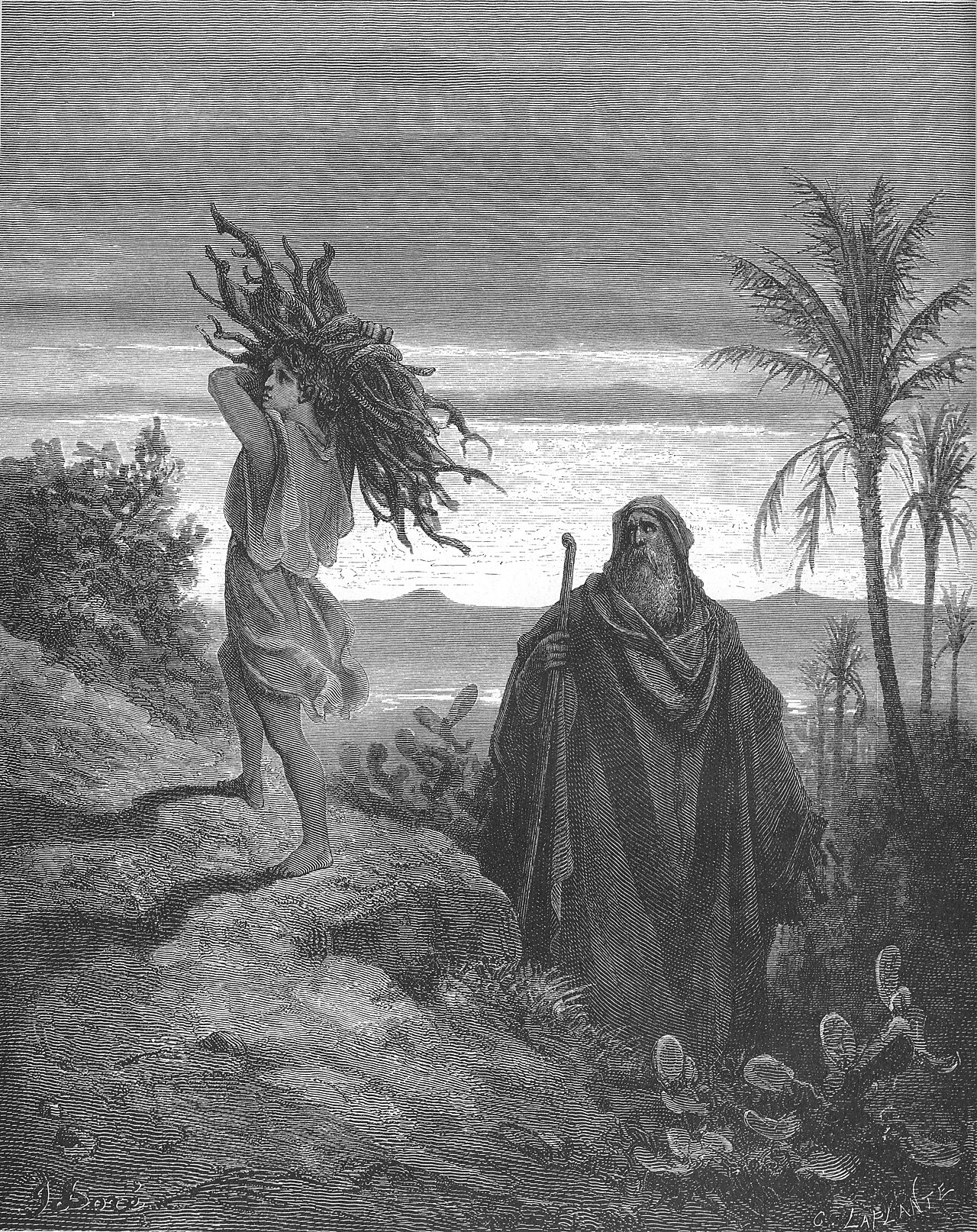
in Genesis 22“Stay here with the donkey,” Abraham told his servants. “The boy and I will go over there to worship, and then we will return to you.”
BSB
The same verse in ASV and KJV ▾
ASV
And Abraham said unto his young men, Abide ye here with the ass, and I and the lad will go yonder; and we will worship, and come again to you.
KJV
And Abraham said unto his young men, Abide ye here with the ass; and I and the lad will go yonder and worship, and come again to you.
⋯
This verse in Genesis 22
Commentary
4 notes on this verseI and the lad will go and come again - How could Abraham consistently with truth say this, when he knew he was going to make his son a burnt-offering?
This site's exposition
The boy and I will go over there to worship
The word Genesis uses for the boy here and at verse 12 is the word used of Joseph at seventeen in 37:2 and of Benjamin at 44:22 to 34, whose sons are listed at 46:21, and it covers a young man of working age. The son who carries the wood up the mountain is grown. Josephus reckons Isaac twenty-five, and Jewish tradition commonly gives thirty-seven. Abraham tells the servants that he and the boy will go over there to worship and come back, and Hebrews 11:19 says he counted God able to raise his son from the dead.
The record, by era
The Puritans and the Awakening1 voice
Thus, when Christ was entering upon his agony in the garden, he took only three of his disciples with him, and left the rest at the garden door. Note, It is our wisdom and duty, when we are going to worship God, to lay aside all those thoughts and cares which may divert us from the service, leave them at the bottom of the hill, that we may attend on the Lord without distraction.
The Nineteenth Century1 voice
A commentator
Jamieson, Fausset & Brown1802–1910
Commentary Critical and Explanatory on the Whole Bible (1871)
It is more likely that his words were spoken evasively to his son in ignorance of the issue, yet in unbounded confidence that that son, though sacrificed, would, in some miraculous way, be restored (Heb 11:19).
The words behind it
17 Hebrew wordsEvery Hebrew word of this verse in the order it stands, with what it means and the door to its own study. The last column counts the times a word stands in the whole Bible: the rarer the word, the more the places it appears belong together.
| Hebrew | Sound | Meaning | Word study | In the Bible |
|---|---|---|---|---|
| וַיֹּ֨אמֶר | vaiyomer | and he said | H559 → | 5305 times |
| אַבְרָהָ֜ם | ʾavraham | Abraham | H85 → | 175 times |
| אֶל־ | ʾel- | to | H413 → | 5510 times |
| נְעָרָ֗יו | nearav | servants his | H5288 → | 239 times |
| שְׁבוּ־ | shevu- | remain | H3427 → | 1079 times |
| לָכֶ֥ם | lakhem | for <the> yourselves | ||
| פֹּה֙ | poh | here | H6311 → | 82 times |
| עִֽם־ | ʾim- | with | H5973 → | 1050 times |
| הַחֲמ֔וֹר | hachamor | the donkey | H2543 → | 96 times |
| וַאֲנִ֣י | vaani | and I | H589 → | 874 times |
| וְהַנַּ֔עַר | vehanaar | and the lad | H5288 → | 239 times |
| נֵלְכָ֖ה | nelekhah | we will go | H1980 → | 1546 times |
| עַד־ | ʾad- | to | H5704 → | 1261 times |
| כֹּ֑ה | koh | there | H3541 → | 577 times |
| וְנִֽשְׁתַּחֲוֶ֖ה | venishtachaveh | so we may bow down | H7812 → | 172 times |
| וְנָשׁ֥וּבָה | venashuvah | and we will return | H7725 → | 1056 times |
| אֲלֵיכֶֽם׃ | ʾaleikhem | to you | H413 → | 5510 times |
וַיֹּ֨אמֶרand he said
vaiyomerH559 →5305 times
אַבְרָהָ֜םAbraham
ʾavrahamH85 →175 times
אֶל־to
ʾel-H413 →5510 times
נְעָרָ֗יוservants his
nearavH5288 →239 times
שְׁבוּ־remain
shevu-H3427 →1079 times
לָכֶ֥םfor <the> yourselves
lakhem
פֹּה֙here
pohH6311 →82 times
עִֽם־with
ʾim-H5973 →1050 times
הַחֲמ֔וֹרthe donkey
hachamorH2543 →96 times
וַאֲנִ֣יand I
vaaniH589 →874 times
וְהַנַּ֔עַרand the lad
vehanaarH5288 →239 times
נֵלְכָ֖הwe will go
nelekhahH1980 →1546 times
עַד־to
ʾad-H5704 →1261 times
כֹּ֑הthere
kohH3541 →577 times
וְנִֽשְׁתַּחֲוֶ֖הso we may bow down
venishtachavehH7812 →172 times
וְנָשׁ֥וּבָהand we will return
venashuvahH7725 →1056 times
אֲלֵיכֶֽם׃to you
ʾaleikhemH413 →5510 times
A shaded row is a word that stands 400 times or fewer in the Bible.
The walk
8 stopsEach card is a verse this one points to, and under it the verses that one points to in turn. Where several paths arrive at the same place, that place is listed first: the text keeps returning to it.
Through
Hebrews 12:1Therefore, since we are surrounded by such a great cloud of witnesses, let us throw off every encumbrance and the sin that so easily entangles, and let us run with endurance the race set…
it leads to
- 2 Timothy 4:7
I have fought the good fight, I have finished the race, I have kept the faith.
- 1 Corinthians 9:24–27
Do you not know that in a race all the runners run, but only one receives the prize? Run in such a way as to take the prize.
- Philippians 2:16
as you hold forth the word of life, in order that I may boast on the day of Christ that I did not run or labor in vain.
- Luke 21:34
But watch yourselves, or your hearts will be weighed down by dissipation, drunkenness, and the worries of life—and that day will spring upon you suddenly like a snare.
- Hebrews 10:35–39
So do not throw away your confidence; it holds a great reward.
- 2 Timothy 4:7
Through
Hebrews 11:19Abraham reasoned that God could raise the dead, and in a sense, he did receive Isaac back from death.
it leads to
- Matthew 9:28
After Jesus had entered the house, the blind men came to Him. “Do you believe that I am able to do this?” He asked. “Yes, Lord,” they answered.
- Romans 4:17–21
As it is written: “I have made you a father of many nations.” He is our father in the presence of God, in whom he believed, the God who gives life to the dead…
- Ephesians 3:20
Now to Him who is able to do immeasurably more than all we ask or imagine, according to His power that is at work within us,
- Matthew 9:28
Where this verse is studied
On this page
By subject
Worship35 verses
About Genesis
Who and where
1 name in this verse with a page on the site.
This page draws on Adam Clarke, Commentary on the Bible; Jamieson, Fausset & Brown, Commentary Critical and Explanatory on the Whole Bible and Matthew Henry, Commentary on the Whole Bible.