
Exodus 33:7
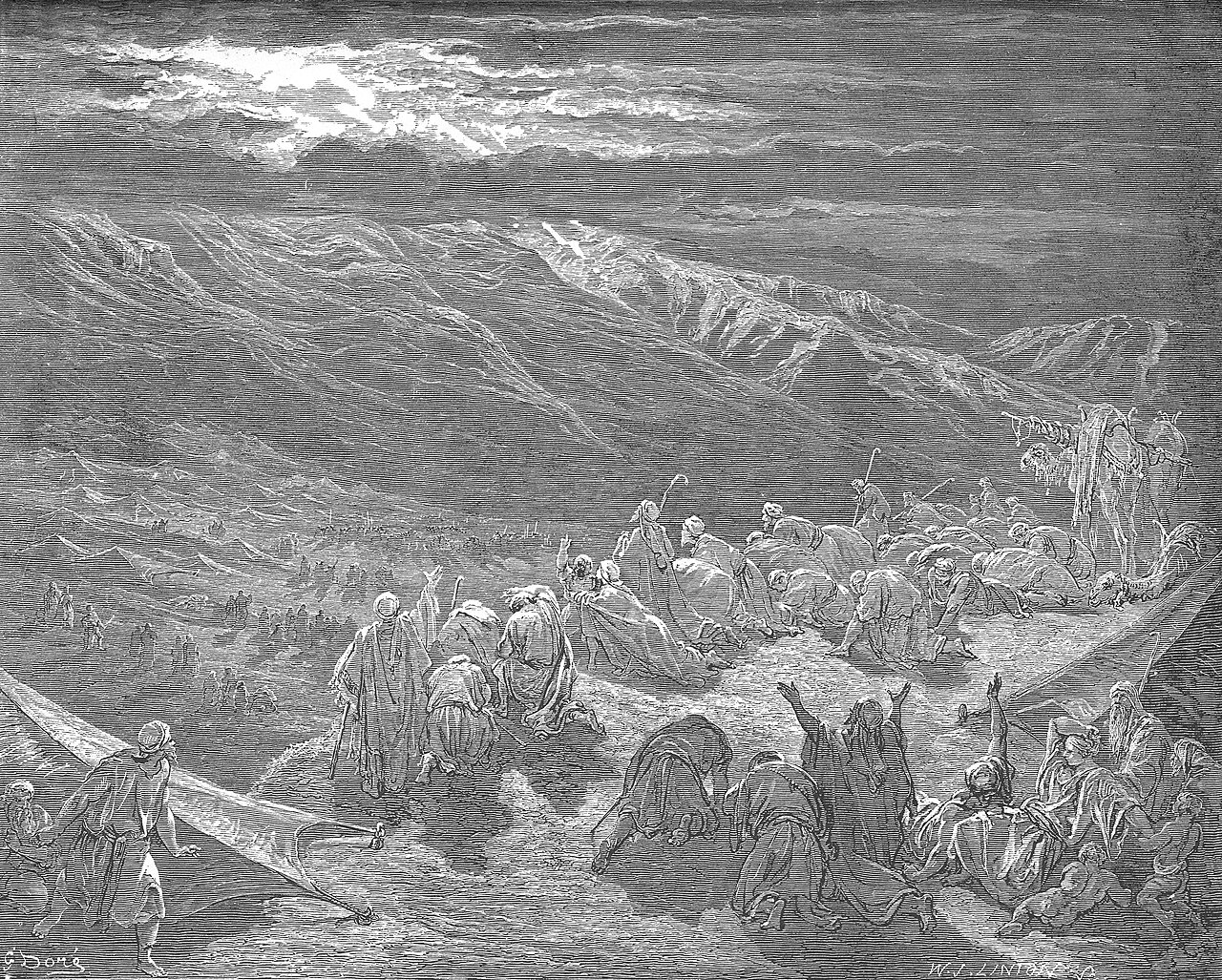
in Exodus 33Now Moses used to take the tent and pitch it at a distance outside the camp. He called it the Tent of Meeting, and anyone inquiring of the LORD would go to the Tent of Meeting outside the camp.
BSB
The same verse in ASV and KJV ▾
ASV
Now Moses used to take the tent and to pitch it without the camp, afar off from the camp; and he called it, The tent of meeting. And it came to pass, that every one that sought Jehovah went out unto the tent of meeting, which was without the camp.
KJV
And Moses took the tabernacle, and pitched it without the camp, afar off from the camp, and called it the Tabernacle of the congregation. And it came to pass, that every one which sought the Lord went out unto the tabernacle of the congregation, which was without the camp.
⋯
This verse in Exodus 33
Commentary
9 notes on this verseTherefore did Jesus go forth out of the city, that you going out of this world may be above the world. Moses alone, who saw God, had his tabernacle without the camp when he talked with God; and the blood indeed of the victims which were offered for sin, was brought to the altar, but the bodies were burnt without the camp; for no one placed amidst the evil of this world can lay aside sin, nor is his blood accepted of God, except he go forth from the defilement of this body.
This site's exposition
pitched it without the camp
on Exodus 33:7-8
This is a tent Moses takes and sets outside the settlement, seven chapters before the tabernacle of chapters 35 to 40 is built, and he gives it the name that structure will later carry. The place of meeting stands outside the camp that made the calf, so every man who sought the LORD had to walk out of the camp in the open to reach it. Verse 8 has the whole people standing at their own tent doors watching Moses go, which makes the walk itself public.
The record, by era
The Puritans and the Awakening3 voices
), to signify to them that they had rendered themselves unworthy of it, and that, unless peace was made, it would return to them no more. God would thus let them know that he was at variance with them: The Lord is far from the wicked. Thus the glory of the Lord departed from the temple when it was polluted with sin, Ezek. x.
quarantine:debris (2026-07-29) — leading-punctuation+unbalanced-parens
And Moses took the tabernacle,....
A place was appointed for them to go to without the camp, to solicit God's return to them. Thus when Ezra (a second Moses) interceded for Israel there were assembled to him many that trembled at God's word, Ezra ix. When God designs mercy, he stirs up prayer.
The Nineteenth Century2 voices
A commentator
Albert Barnes1798–1870
Notes, Explanatory and Practical, on the Old and New Testaments (1832-1869)
The tabernacle - The tent. The only word in the Old Testament which ought to be rendered “tabernacle” משׁכן mı̂shkān does not occur once in this narrative Exo 26:1. What is here meant is a tent appointed for this temporary purpose by Moses, possibly that in which he was accustomed to dwell. Pitched it without the camp, afar off from the camp - That the people might feel that they had forfeited the divine presence (see Exo 25:8). This tent was to be a place for meeting with Yahweh, like the tabernacle which was about to be constructed.
I HAVE been somewhat perplexed in studying this text, for according to the book of Exodus, the Tabernacle—the Tabernacle strictly so called—did not exist at the time to which it refers. In the succeeding Chapters of this very Book, we have an account of the gifts which were made by the people for the construction of that Tabernacle, wherein God dwelt while the children of Israel abode in the wilderness.
2 more voices on this verse
The Nineteenth Century2 voices
I HAVE been somewhat perplexed in studying this text, for according to the book of Exodus, the Tabernacle—the Tabernacle strictly so called—did not exist at the time to which it refers. In the succeeding Chapters of this very Book, we have an account of the gifts which were made by the people for the construction of that Tabernacle, wherein God dwelt while the children of Israel abode in the wilderness. It seems to me, after looking at the various authorities upon the point, and considering the opinions of those who have well studied it, that when the children of Israel came out of Egypt there may have been some large tent constantly pitched in the center of the camp which had no Ark of the Covenant in it and probably no altar. The vessels and implements for the service of the sanctuary had not then been made. Not even had the pattern been seen by Moses in the holy mountain. The people may be considered to have been at that time under the Patriarchal dispensation which reaches on, if I understand Scripture aright, until the time of the giving of the Law and 40 days beyond that, really—for it was 40 days after the giving of the Law, before the ceremonials of Levitical worship were thoroughly established. Moses was 40 days in the mountain receiving instruction as to how the future worship of God should be ordered; that worship had not then begun in all its glorious splendor—Aaron had not even been ordained a priest. The service of the Levitical dispensation awaited as yet those statutes and ordinances by which its observances were solemnly imposed. Previous to this, as I take it, there was a large tent in the center of the camp set apart for that worship which was common to Patriarchal times—for prayer, praise and burnt sacrifices. Now, here God dwelt in the midst of this Tabernacle.
Moses took the tabernacle - אה האהל eth haohel, the Tent; not את המשכן eth hammishcan, the tabernacle, the dwelling-place of Jehovah, see Exo 36:11, for this was not as yet erected; but probably the tent of Moses, which was before in the midst of the camp, and to which the congregation came for judgment, and where, no doubt, God frequently met with his servant. This is now removed to a considerable distance from the camp, (two thousand cubits, according to the Talmudists), as God refuses to dwell any longer among this rebellious people. And as this was the place to which all the people came for justice and judgment, hence it was probably called the tabernacle, more properly the tent, of the congregation.
The words behind it
26 Hebrew wordsEvery Hebrew word of this verse in the order it stands, with what it means and the door to its own study. The last column counts the times a word stands in the whole Bible: the rarer the word, the more the places it appears belong together.
| Hebrew | Sound | Meaning | Word study | In the Bible |
|---|---|---|---|---|
| וּמֹשֶׁה֩ | umosheh | and Moses | H4872 → | 765 times |
| יִקַּ֨ח | yikach | he took | H3947 → | 966 times |
| אֶת־ | ʾet- | <obj.> | H853 → | 10935 times |
| הָאֹ֜הֶל | haohel | the tent | H168 → | 345 times |
| וְנָֽטָה־ | venatah- | and he pitched | H5186 → | 214 times |
| ל֣וֹ׀ | lo | <to> <the> it | ||
| מִח֣וּץ | michutz | from [the] outside | H2351 → | 164 times |
| לַֽמַּחֲנֶ֗ה | lamachaneh | of the camp | H4264 → | 215 times |
| הַרְחֵק֙ | harchek | at a distance | H7368 → | 57 times |
| מִן־ | min- | from | H4480 → | 1188 times |
| הַֽמַּחֲנֶ֔ה | hamachaneh | the camp | H4264 → | 215 times |
| וְקָ֥רָא | vekara' | and he called | H7121 → | 733 times |
| ל֖וֹ | lo | <to> <the> it | ||
| אֹ֣הֶל | ʾohel | [the] tent of | H168 → | 345 times |
| מוֹעֵ֑ד | moed | meeting | H4150 → | 223 times |
| וְהָיָה֙ | vehayah | and it was | H1961 → | 3559 times |
| כָּל־ | kol- | any | H3605 → | 5413 times |
| מְבַקֵּ֣שׁ | mevakesh | [one who] sought | H1245 → | 225 times |
| יְהוָ֔ה | yahweh | Yahweh | H3068 → | 6520 times |
| יֵצֵא֙ | yetze' | he went out | H3318 → | 1067 times |
| אֶל־ | ʾel- | to | H413 → | 5510 times |
| אֹ֣הֶל | ʾohel | [the] tent of | H168 → | 345 times |
| מוֹעֵ֔ד | moed | meeting | H4150 → | 223 times |
| אֲשֶׁ֖ר | ʾasher | which | H834 → | 5497 times |
| מִח֥וּץ | michutz | [was] from [the] outside | H2351 → | 164 times |
| לַֽמַּחֲנֶֽה׃ | lamachaneh | of the camp | H4264 → | 215 times |
וּמֹשֶׁה֩and Moses
umoshehH4872 →765 times
יִקַּ֨חhe took
yikachH3947 →966 times
אֶת־<obj.>
ʾet-H853 →10935 times
הָאֹ֜הֶלthe tent
haohelH168 →345 times
וְנָֽטָה־and he pitched
venatah-H5186 →214 times
ל֣וֹ׀<to> <the> it
lo
מִח֣וּץfrom [the] outside
michutzH2351 →164 times
לַֽמַּחֲנֶ֗הof the camp
lamachanehH4264 →215 times
הַרְחֵק֙at a distance
harchekH7368 →57 times
מִן־from
min-H4480 →1188 times
הַֽמַּחֲנֶ֔הthe camp
hamachanehH4264 →215 times
וְקָ֥רָאand he called
vekara'H7121 →733 times
ל֖וֹ<to> <the> it
lo
אֹ֣הֶל[the] tent of
ʾohelH168 →345 times
מוֹעֵ֑דmeeting
moedH4150 →223 times
וְהָיָה֙and it was
vehayahH1961 →3559 times
כָּל־any
kol-H3605 →5413 times
מְבַקֵּ֣שׁ[one who] sought
mevakeshH1245 →225 times
יְהוָ֔הYahweh
yahwehH3068 →6520 times
יֵצֵא֙he went out
yetze'H3318 →1067 times
אֶל־to
ʾel-H413 →5510 times
אֹ֣הֶל[the] tent of
ʾohelH168 →345 times
מוֹעֵ֔דmeeting
moedH4150 →223 times
אֲשֶׁ֖רwhich
ʾasherH834 →5497 times
מִח֥וּץ[was] from [the] outside
michutzH2351 →164 times
לַֽמַּחֲנֶֽה׃of the camp
lamachanehH4264 →215 times
A shaded row is a word that stands 400 times or fewer in the Bible.
The walk
8 stopsEach card is a verse this one points to, and under it the verses that one points to in turn. Where several paths arrive at the same place, that place is listed first: the text keeps returning to it.
Through
Isaiah 59:2But your iniquities have built barriers between you and your God, and your sins have hidden His face from you, so that He does not hear.
it leads to
- Proverbs 15:29
The LORD is far from the wicked, but He hears the prayer of the righteous.
- Jeremiah 5:25
Your iniquities have diverted these from you; your sins have deprived you of My bounty.
- Micah 3:4
Then they will cry out to the LORD, but He will not answer them. At that time He will hide His face from them because of the evil they have done.
- Isaiah 1:15
When you spread out your hands in prayer, I will hide My eyes from you; even though you multiply your prayers, I will not listen. Your hands are covered with blood.
- Deuteronomy 31:17–18
On that day My anger will burn against them, and I will abandon them and hide My face from them, so that they will be consumed, and many troubles and afflictions will befall them.…
- Proverbs 15:29
Through
Proverbs 15:29The LORD is far from the wicked, but He hears the prayer of the righteous.
it leads to
- John 9:31
We know that God does not listen to sinners, but He does listen to the one who worships Him and does His will.
- Psalms 145:18–19
The LORD is near to all who call on Him, to all who call out to Him in truth.
- Proverbs 15:8
The sacrifice of the wicked is detestable to the LORD, but the prayer of the upright is His delight.
- John 9:31
Where this verse is studied
On this page
Studies2
On this verse
On this chapter
About Exodus
Who and where
1 name in this verse with a page on the site.
This page draws on Adam Clarke, Commentary on the Bible; Albert Barnes, Notes, Explanatory and Practical, on the Old and New Testaments (1832-1869); Ambrose of Milan, Epistle 63.104; Charles Spurgeon, The Metropolitan Tabernacle Pulpit, Sermon No. 359: “The Tabernacle—Outside The Camp” (lightly modernized text, CCEL edition); John Gill, Exposition of the Old Testament (1748-1763); Keil and Delitzsch, Biblical Commentary on the Old Testament: The Pentateuch and Matthew Henry, Commentary on the Whole Bible.