
2 Samuel 15:18
in 2 Samuel 15and all his servants marched past him—all the Cherethites and Pelethites, and six hundred Gittites who had followed him from Gath.
BSB
The same verse in ASV and KJV ▾
ASV
And all his servants passed on beside him; and all the Cherethites, and all the Pelethites, and all the Gittites, six hundred men that came after him from Gath, passed on before the king.
KJV
And all his servants passed on beside him; and all the Cherethites, and all the Pelethites, and all the Gittites, six hundred men which came after him from Gath, passed on before the king.
⋯
This verse in 2 Samuel 15
Commentary
5 notes on this verseA commentator
Albert Barnes1798–1870
Notes, Explanatory and Practical, on the Old and New Testaments (1832-1869)
Passed on - Rather, “crossed” the Brook Kidron, as in 2Sa 15:22-23. Gittites - During David’s residence in the country of the Philistines he attached such a band to himself; and after the settlement of his kingdom, and the subjugation of the Philistines, the band received recruits from Gath, perhaps with the king of Gath’s consent. They were now under the command of Ittai the Gittite, a foreigner 2Sa 15:19, and “his brethren” 2Sa 15:20. The number 600 probably indicates that this band or regiment of Gittites had its origin in David’s band of 600 1Sa 23:13; 1Sa 27:
This site's exposition
the Cherethites, and all the Pelethites
on 2 Samuel 15:18-22
David's foreign guard passes before him first, six hundred Gittites who followed him out of Gath itself years earlier. Among them Ittai refuses David's offer of release at verse 20, and his oath at verse 21, as the Lord liveth, and as my lord the king liveth, binds him to the king's fate in life or in death. A stranger and an exile of a single day outlasts the loyalty David's own son has just broken, and David lets him pass over the brook with everything he owns.
The record, by era
The Puritans and the Awakening3 voices
David made them of his garde du corps--his body-guard, and they adhered to him in his distress. The Son of David found not such great faith in Israel as in a Roman centurion and a woman of Canaan.
Hebron - This place he chose as being an eminent city, and next to Jerusalem, the chief of the tribe of Judah, and the place where his father began his kingdom, which he took for a good omen. And where it is probable he had secured many friends. It was also at a convenient distance from Jerusalem.
And all his servants passed on beside him,....
How the passage was read
What the Jewish commentators add
On the verses either side of this one
Far away. [Targum Yonasan translates:] "in a far away place."
This section is reception history: how the passage was read and kept in the Jewish tradition. Where a reading parts from an essential of the Christian faith, the section says so at that point.
Texts and citation data: Sefaria; each excerpt follows its version’s licence. 5 further sources are cited on this chapter that carry no English text this site may quote or only restate the verse.
The words behind it
22 Hebrew wordsEvery Hebrew word of this verse in the order it stands, with what it means and the door to its own study. The last column counts the times a word stands in the whole Bible: the rarer the word, the more the places it appears belong together.
| Hebrew | Sound | Meaning | Word study | In the Bible |
|---|---|---|---|---|
| וְכָל־ | vekhol | and all | H3605 → | 5413 times |
| עֲבָדָיו֙ | ʾavadav | servants his | H5650 → | 799 times |
| עֹבְרִ֣ים | ʾoerim | [were] passing by | H5674 → | 556 times |
| עַל־ | ʾal- | at | H5921 → | 5755 times |
| יָד֔וֹ | yado | side his | H3027 → | 1618 times |
| וְכָל־ | vekhol | and all | H3605 → | 5413 times |
| הַכְּרֵתִ֖י | hakereti | the Kerethite[s] | H3774 → | 10 times |
| וְכָל־ | vekhol | and all | H3605 → | 5413 times |
| הַפְּלֵתִ֑י | hapeleti | the Pelethite[s] | H6432 → | 7 times |
| וְכָֽל־ | vekhol | and all | H3605 → | 5413 times |
| הַגִּתִּ֞ים | hagitim | the Gittites | H1663 → | 10 times |
| שֵׁשׁ־ | shesh- | six | H8337 → | 216 times |
| מֵא֣וֹת | meot | hundred<s> | H3967 → | 581 times |
| אִ֗ישׁ | ʾish | man | H376 → | 1663 times |
| אֲשֶׁר־ | ʾasher- | who | H834 → | 5497 times |
| בָּ֤אוּ | bau | they had come | H935 → | 2568 times |
| בְרַגְלוֹ֙ | veraglo | at foot his | H7272 → | 247 times |
| מִגַּ֔ת | migat | from Gath | H1661 → | 32 times |
| עֹבְרִ֖ים | ʾoerim | [were] passing by | H5674 → | 556 times |
| עַל־ | ʾal- | at | H5921 → | 5755 times |
| פְּנֵ֥י | penei | [the] face of | H6440 → | 2123 times |
| הַמֶּֽלֶךְ׃ | hamelekh | the king | H4428 → | 2525 times |
וְכָל־and all
vekholH3605 →5413 times
עֲבָדָיו֙servants his
ʾavadavH5650 →799 times
עֹבְרִ֣ים[were] passing by
ʾoerimH5674 →556 times
עַל־at
ʾal-H5921 →5755 times
יָד֔וֹside his
yadoH3027 →1618 times
וְכָל־and all
vekholH3605 →5413 times
הַכְּרֵתִ֖יthe Kerethite[s]
hakeretiH3774 →10 times
וְכָל־and all
vekholH3605 →5413 times
הַפְּלֵתִ֑יthe Pelethite[s]
hapeletiH6432 →7 times
וְכָֽל־and all
vekholH3605 →5413 times
הַגִּתִּ֞יםthe Gittites
hagitimH1663 →10 times
שֵׁשׁ־six
shesh-H8337 →216 times
מֵא֣וֹתhundred<s>
meotH3967 →581 times
אִ֗ישׁman
ʾishH376 →1663 times
אֲשֶׁר־who
ʾasher-H834 →5497 times
בָּ֤אוּthey had come
bauH935 →2568 times
בְרַגְלוֹ֙at foot his
veragloH7272 →247 times
מִגַּ֔תfrom Gath
migatH1661 →32 times
עֹבְרִ֖ים[were] passing by
ʾoerimH5674 →556 times
עַל־at
ʾal-H5921 →5755 times
פְּנֵ֥י[the] face of
peneiH6440 →2123 times
הַמֶּֽלֶךְ׃the king
hamelekhH4428 →2525 times
A shaded row is a word that stands 400 times or fewer in the Bible.
The walk
8 stopsEach card is a verse this one points to, and under it the verses that one points to in turn. Where several paths arrive at the same place, that place is listed first: the text keeps returning to it.
Through
1 Chronicles 18:17Benaiah son of Jehoiada was over the Cherethites and Pelethites; and David’s sons were chief officials at the king’s side.
it leads to
- 2 Samuel 8:18
Benaiah son of Jehoiada was over the Cherethites and Pelethites; and David’s sons were priestly leaders.
Reached by 3 separate paths from here.
- 2 Samuel 8:18
Through
1 Samuel 30:14We raided the Negev of the Cherethites, the territory of Judah, and the Negev of Caleb, and we burned down Ziklag.”
it leads to
- Zephaniah 2:5
Woe to the dwellers of the seacoast, O nation of the Cherethites! The word of the LORD is against you, O Canaan, land of the Philistines: “I will destroy you, and no one will…
Reached by 3 separate paths from here.
- 1 Kings 1:44
And with Solomon, the king has sent Zadok the priest, Nathan the prophet, and Benaiah son of Jehoiada, along with the Cherethites and Pelethites, and they have set him on the king’s mule.
Reached by 2 separate paths from here.
- Ezekiel 25:16
therefore this is what the Lord GOD says: Behold, I will stretch out My hand against the Philistines, and I will cut off the Cherethites and destroy the remnant along the coast.
- 1 Kings 1:38
Then Zadok the priest, Nathan the prophet, and Benaiah son of Jehoiada, along with the Cherethites and Pelethites, went down and set Solomon on King David’s mule, and they escorted him to Gihon.
- Zephaniah 2:5
Through
2 Samuel 8:18Benaiah son of Jehoiada was over the Cherethites and Pelethites; and David’s sons were priestly leaders.
it leads to
- 1 Samuel 30:14
We raided the Negev of the Cherethites, the territory of Judah, and the Negev of Caleb, and we burned down Ziklag.”
Reached by 2 separate paths from here.
- 2 Samuel 20:23
Now Joab was over the whole army of Israel; Benaiah son of Jehoiada was over the Cherethites and Pelethites;
Reached by 2 separate paths from here.
- 1 Samuel 30:14
Through
2 Samuel 20:23Now Joab was over the whole army of Israel; Benaiah son of Jehoiada was over the Cherethites and Pelethites;
it leads to
- 2 Samuel 8:16–18
Joab son of Zeruiah was over the army; Jehoshaphat son of Ahilud was the recorder;
- 2 Samuel 8:16–18
Where this verse is studied
On this page
About 2 Samuel
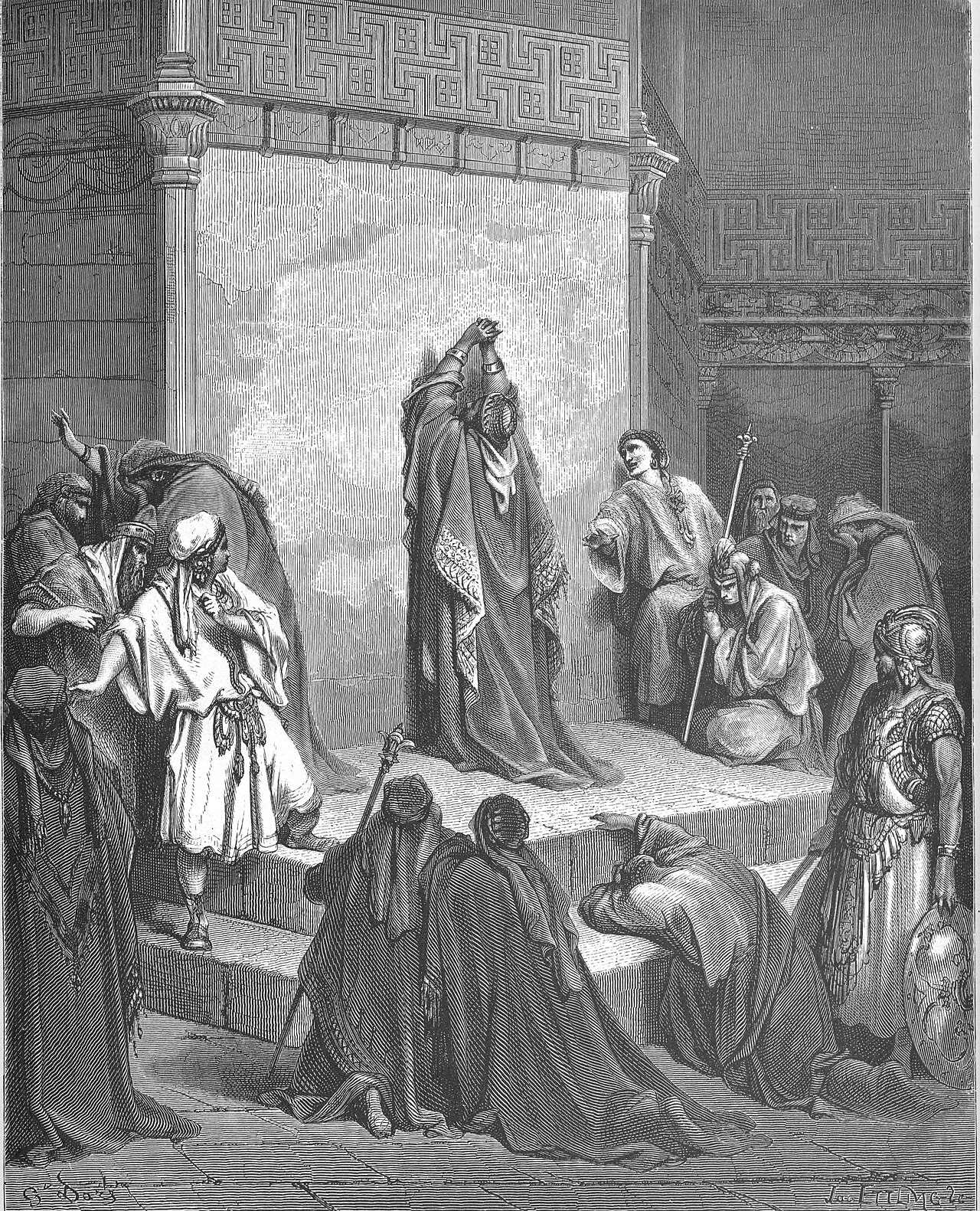
This page draws on Albert Barnes, Notes, Explanatory and Practical, on the Old and New Testaments (1832-1869); John Gill, Exposition of the Old Testament (1748-1763); John Wesley, Explanatory Notes upon the Old Testament; Keil and Delitzsch, Biblical Commentary on the Books of Samuel and Matthew Henry, Commentary on the Whole Bible.