
2 Samuel 15:14
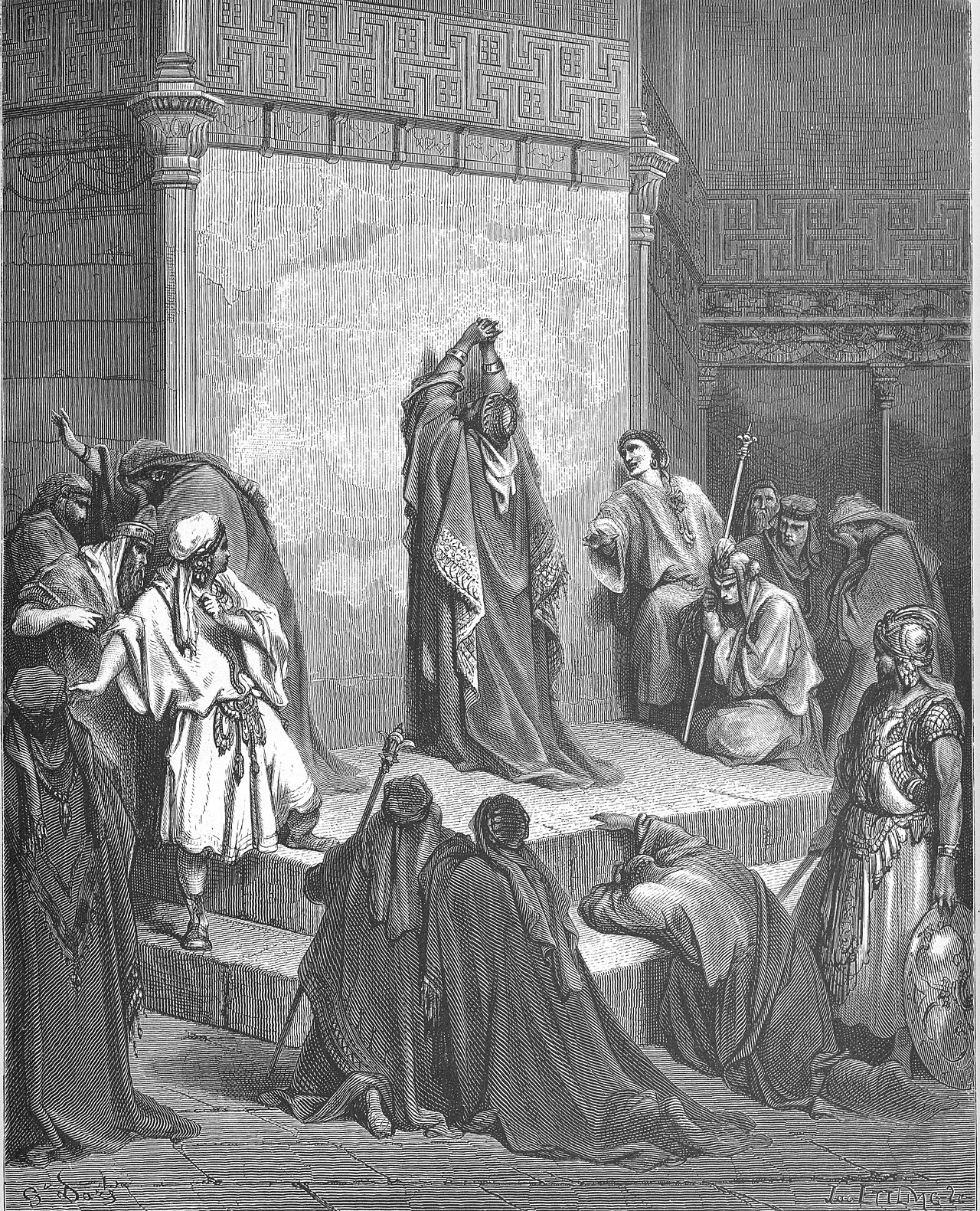
in 2 Samuel 15And David said to all the servants with him in Jerusalem, “Arise and let us flee, or we will not escape from Absalom! We must leave quickly, or he will soon overtake us, heap disaster on us, and put the city to the sword.”
BSB
The same verse in ASV and KJV ▾
ASV
And David said unto all his servants that were with him at Jerusalem, Arise, and let us flee; for else none of us shall escape from Absalom: make speed to depart, lest he overtake us quickly, and bring down evil upon us, and smite the city with the edge of the sword.
KJV
And David said unto all his servants that were with him at Jerusalem, Arise, and let us flee; for we shall not else escape from Absalom: make speed to depart, lest he overtake us suddenly, and bring evil upon us, and smite the city with the edge of the sword.
⋯
This verse in 2 Samuel 15
Commentary
7 notes on this verseDavid said - Arise - let us flee - This, I believe, was the first time that David turned his back to his enemies. And why did he now flee? Jerusalem, far from not being in a state to sustain a siege, was so strong that even the blind and the lame were supposed to be a sufficient defense for the walls, see 2Sa 5:6. And he had still with him his faithful Cherethites and Pelethites; besides six hundred faithful Gittites, who were perfectly willing to follow his fortunes.
This site's exposition
Arise and let us flee
on 2 Samuel 15:14-17
David decides at once, “Arise and let us flee”, before Absalom can “put the city to the sword”. He leaves ten concubines to keep the palace, a detail that returns at 16:22. The reigning king goes out with his household as an exile among his own people.
The record, by era
The Puritans and the Awakening4 voices
Let us flee - For though the fort of Zion was strong, and he might have defended himself there; yet he had not laid in provisions for a long siege; and, if he had been once besieged there, Absalom would have got speedy possession of his whole kingdom; whereas if he marched abroad, he might raise a considerable army for his defense.
"Now," thinks he, "the word of God begins to be fulfilled, and it is not for me to contend with it or fight against it; God is righteous and I submit." Before unrighteous Absalom he could justify himself and stand it out; but before the righteous God he must condemn himself and yield to his judgments.
Hebron - This place he chose as being an eminent city, and next to Jerusalem, the chief of the tribe of Judah, and the place where his father began his kingdom, which he took for a good omen. And where it is probable he had secured many friends. It was also at a convenient distance from Jerusalem.
And David said unto all his servants that were with him at Jerusalem,....
The Nineteenth Century1 voice
A commentator
Albert Barnes1798–1870
Notes, Explanatory and Practical, on the Old and New Testaments (1832-1869)
proposed
And smite the city - David’s kind nature induced him to spare Jerusalem the horrors of a siege, and the risk of being taken by assault. He had no standing army with which to resist this sudden attack from so unexpected a quarter. Possibly too he remembered Nathan’s prophecy 2Sa 12:10-12.
The words behind it
29 Hebrew wordsEvery Hebrew word of this verse in the order it stands, with what it means and the door to its own study. The last column counts the times a word stands in the whole Bible: the rarer the word, the more the places it appears belong together.
| Hebrew | Sound | Meaning | Word study | In the Bible |
|---|---|---|---|---|
| וַיֹּ֣אמֶר | vaiyomer | and he said | H559 → | 5305 times |
| דָּ֠וִד | david | David | H1732 → | 999 times |
| לְכָל־ | lekhol | to all | H3605 → | 5413 times |
| עֲבָדָ֨יו | ʾavadav | servants his | H5650 → | 799 times |
| אֲשֶׁר־ | ʾasher- | who | H834 → | 5497 times |
| אִתּ֤וֹ | ʾito | [were] with him | H854 → | 929 times |
| בִירוּשָׁלִַ֙ם֙ | virushalim | in Jerusalem | H3389 → | 643 times |
| ק֣וּמוּ | kumu | arise | H6965 → | 628 times |
| וְנִבְרָ֔חָה | venivrachah | so let us flee | H1272 → | 63 times |
| כִּ֛י | ki | for | H3588 → | 4482 times |
| לֹא־ | lo'- | not | H3808 → | 5168 times |
| תִֽהְיֶה־ | tihyeh- | it will belong | H1961 → | 3559 times |
| לָּ֥נוּ | lanu | to <the> us | ||
| פְלֵיטָ֖ה | feleitah | an escape | H6413 → | |
| מִפְּנֵ֣י | mipenei | from before | H6440 → | 2123 times |
| אַבְשָׁל֑וֹם | ʾavshalom | Absalom | H53 → | 110 times |
| מַהֲר֣וּ | maharu | hurry | H4116 → | 68 times |
| לָלֶ֗כֶת | lalekhet | to go | H1980 → | 1546 times |
| פֶּן־ | pen- | lest | H6435 → | 133 times |
| יְמַהֵ֤ר | yemaher | he should hurry | H4116 → | 68 times |
| וְהִשִּׂגָ֙נוּ֙ | vehisiganu | and he will overtake us | H5381 → | |
| וְהִדִּ֤יחַ | vehidiach | and he will thrust | H5080 → | 55 times |
| עָלֵ֙ינוּ֙ | ʾaleinu | on us | H5921 → | 5755 times |
| אֶת־ | ʾet- | <obj.> | H853 → | 10935 times |
| הָ֣רָעָ֔ה | haraah | <the> calamity | H7451 → | 662 times |
| וְהִכָּ֥ה | vehikah | and he will strike | H5221 → | 499 times |
| הָעִ֖יר | hair | the city | H5892 → | 1090 times |
| לְפִי־ | lefi- | to [the] mouth of | H6310 → | 498 times |
| חָֽרֶב׃ | charev | [the] sword | H2719 → | 413 times |
וַיֹּ֣אמֶרand he said
vaiyomerH559 →5305 times
דָּ֠וִדDavid
davidH1732 →999 times
לְכָל־to all
lekholH3605 →5413 times
עֲבָדָ֨יוservants his
ʾavadavH5650 →799 times
אֲשֶׁר־who
ʾasher-H834 →5497 times
אִתּ֤וֹ[were] with him
ʾitoH854 →929 times
בִירוּשָׁלִַ֙ם֙in Jerusalem
virushalimH3389 →643 times
ק֣וּמוּarise
kumuH6965 →628 times
וְנִבְרָ֔חָהso let us flee
venivrachahH1272 →63 times
כִּ֛יfor
kiH3588 →4482 times
לֹא־not
lo'-H3808 →5168 times
תִֽהְיֶה־it will belong
tihyeh-H1961 →3559 times
לָּ֥נוּto <the> us
lanu
פְלֵיטָ֖הan escape
feleitahH6413 →
מִפְּנֵ֣יfrom before
mipeneiH6440 →2123 times
אַבְשָׁל֑וֹםAbsalom
ʾavshalomH53 →110 times
מַהֲר֣וּhurry
maharuH4116 →68 times
לָלֶ֗כֶתto go
lalekhetH1980 →1546 times
פֶּן־lest
pen-H6435 →133 times
יְמַהֵ֤רhe should hurry
yemaherH4116 →68 times
וְהִשִּׂגָ֙נוּ֙and he will overtake us
vehisiganuH5381 →
וְהִדִּ֤יחַand he will thrust
vehidiachH5080 →55 times
עָלֵ֙ינוּ֙on us
ʾaleinuH5921 →5755 times
אֶת־<obj.>
ʾet-H853 →10935 times
הָ֣רָעָ֔ה<the> calamity
haraahH7451 →662 times
וְהִכָּ֥הand he will strike
vehikahH5221 →499 times
הָעִ֖ירthe city
hairH5892 →1090 times
לְפִי־to [the] mouth of
lefi-H6310 →498 times
חָֽרֶב׃[the] sword
charevH2719 →413 times
A shaded row is a word that stands 400 times or fewer in the Bible.
The walk
8 stopsEach card is a verse this one points to, and under it the verses that one points to in turn. Where several paths arrive at the same place, that place is listed first: the text keeps returning to it.
Through
Matthew 11:12From the days of John the Baptist until now, the kingdom of heaven has been subject to violence, and the violent lay claim to it.
it leads to
- Luke 16:16
The Law and the Prophets were proclaimed until John. Since that time, the gospel of the kingdom of God is being preached, and everyone is forcing his way into it.
- Luke 13:24
“Make every effort to enter through the narrow door. For many, I tell you, will try to enter and will not be able.
- Ephesians 6:11–13
Put on the full armor of God, so that you can make your stand against the devil’s schemes.
- Philippians 2:12
Therefore, my beloved, just as you have always obeyed, not only in my presence, but now even more in my absence, continue to work out your salvation with fear and trembling.
- John 6:27
Do not work for food that perishes, but for food that endures to eternal life, which the Son of Man will give you. For on Him God the Father has placed His seal of…
- Luke 16:16
Through
Psalms 51:18In Your good pleasure, cause Zion to prosper; build up the walls of Jerusalem.
it leads to
- Psalms 102:16
For the LORD will rebuild Zion; He has appeared in His glory.
- Philippians 2:13
For it is God who works in you to will and to act on behalf of His good purpose.
- Zechariah 2:5
For I will be a wall of fire around it, declares the LORD, and I will be the glory within it.’”
- Psalms 102:16
Where this verse is studied
About 2 Samuel
Who and where
2 names in this verse with a page on the site.
This page draws on Adam Clarke, Commentary on the Bible; Albert Barnes, Notes, Explanatory and Practical, on the Old and New Testaments (1832-1869); John Gill, Exposition of the Old Testament (1748-1763); John Wesley, Explanatory Notes upon the Old Testament; Matthew Henry, Commentary on the Whole Bible and W. G. Blaikie, The Second Book of Samuel (Expositor's Bible).