
2 Samuel 13:11
in 2 Samuel 13And when she had brought them to him to eat, he took hold of her and said, “Come lie with me, my sister!”
BSB
The same verse in ASV and KJV ▾
ASV
And when she had brought them near unto him to eat, he took hold of her, and said unto her, Come, lie with me, my sister.
KJV
And when she had brought them unto him to eat, he took hold of her, and said unto her, Come lie with me, my sister.
⋯
This verse in 2 Samuel 13
Commentary
6 notes on this verseAs if to show that near relationship is no safeguard, Amnon burned with illicit passion for his sister Tamar.
This site's exposition
sent home to Tamar
on 2 Samuel 13:7-11
David sends his own daughter into Amnon's house at his son's request, never asking why a grown man needs his sister alone to bake for him. Amnon puts every other man out before he acts, leaving Tamar without a witness in the room, the circumstance later law treats as decisive at Deuteronomy 22:25. The king who wept over Bathsheba's dying child now sends Tamar in unknowing, and the sword promised at 12:10 finds its first opening inside his own house.
This site's exposition
Come lie with me, my sister
Amnon took hold of Tamar and called her sister in the same breath as he demanded that she lie with him. John Gill marks that he names the very tie that forbade the act. Near kinship gave her no protection.
The record, by era
The Medieval Church1 voice
No man shall rely upon chastity in the past, for none whose hearts are tainted by women can become holier than David or wiser than Solomon. That none may assume that his chastity is safe in the presence of a woman related to him, let …
The Puritans and the Awakening2 voices
We are Israelites; if we do such things, we are more inexcusable than others, and our condemnation will be more intolerable, for we reproach the Lord, and that worthy name by which we are called. She represents to him the shame of it, which perhaps might influence him more than the sin of it: "For my part, whither shall I cause my shame to go?
quarantine:debris (2026-07-29) — odd-straight-quotes
And when she had brought them unto him to eat,.... Not only into the chamber, but to the side of the bed or couch where he had laid himself, or sat, in a proper position to answer his purpose: he took hold of her; by the arm, or threw his hands about her: and said unto her, come, lie with me, my sister; one would think the relation he observes she stood in to him would have checked him from making so vile a motion.
The words behind it
11 Hebrew wordsEvery Hebrew word of this verse in the order it stands, with what it means and the door to its own study. The last column counts the times a word stands in the whole Bible: the rarer the word, the more the places it appears belong together.
| Hebrew | Sound | Meaning | Word study | In the Bible |
|---|---|---|---|---|
| וַתַּגֵּ֥שׁ | vatagesh | and she brought [them] | H5066 → | 125 times |
| אֵלָ֖יו | ʾelav | to him | H413 → | 5510 times |
| לֶֽאֱכֹ֑ל | leekhol | to eat | H398 → | 810 times |
| וַיַּֽחֲזֶק־ | vaiyachazek- | and he took hold | H2388 → | 291 times |
| בָּהּ֙ | bah | on <the> her | ||
| וַיֹּ֣אמֶר | vaiyomer | and he said | H559 → | 5305 times |
| לָ֔הּ | lah | to <the> her | ||
| בּ֛וֹאִי | boi | come | H935 → | 2568 times |
| שִׁכְבִ֥י | shikhvi | lie | H7901 → | 212 times |
| עִמִּ֖י | ʾimi | with me | H5973 → | 1050 times |
| אֲחוֹתִֽי׃ | ʾachoti | O sister my | H269 → | 114 times |
וַתַּגֵּ֥שׁand she brought [them]
vatageshH5066 →125 times
אֵלָ֖יוto him
ʾelavH413 →5510 times
לֶֽאֱכֹ֑לto eat
leekholH398 →810 times
וַיַּֽחֲזֶק־and he took hold
vaiyachazek-H2388 →291 times
בָּהּ֙on <the> her
bah
וַיֹּ֣אמֶרand he said
vaiyomerH559 →5305 times
לָ֔הּto <the> her
lah
בּ֛וֹאִיcome
boiH935 →2568 times
שִׁכְבִ֥יlie
shikhviH7901 →212 times
עִמִּ֖יwith me
ʾimiH5973 →1050 times
אֲחוֹתִֽי׃O sister my
ʾachotiH269 →114 times
A shaded row is a word that stands 400 times or fewer in the Bible.
Where this verse is studied
On this page
About 2 Samuel
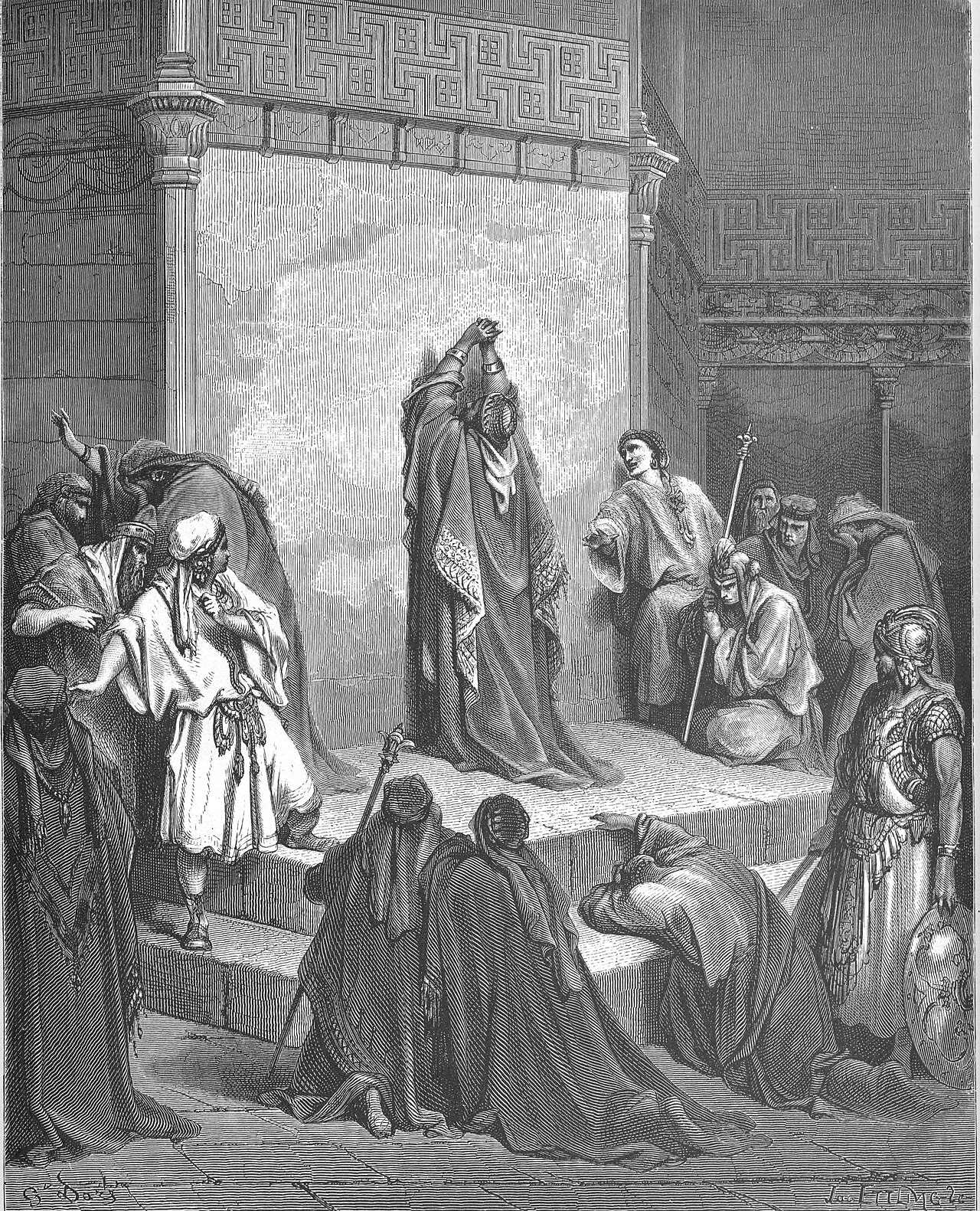
This page draws on Fructuosus of Braga, GENERAL RULE FOR MONASTERIES 17; Jerome, LETTER 22.12; John Gill, Exposition of the Old Testament; John Gill, Exposition of the Old Testament (1748-1763) and Matthew Henry, Commentary on the Whole Bible.