
2 Samuel 12:9
in 2 Samuel 12Why then have you despised the command of the LORD by doing evil in His sight? You put Uriah the Hittite to the sword and took his wife as your own, for you have slain him with the sword of the Ammonites.
BSB
The same verse in ASV and KJV ▾
ASV
Wherefore hast thou despised the word of Jehovah, to do that which is evil in his sight? thou hast smitten Uriah the Hittite with the sword, and hast taken his wife to be thy wife, and hast slain him with the sword of the children of Ammon.
KJV
Wherefore hast thou despised the commandment of the Lord, to do evil in his sight? thou hast killed Uriah the Hittite with the sword, and hast taken his wife to be thy wife, and hast slain him with the sword of the children of Ammon.
⋯
This verse in 2 Samuel 12
Commentary
8 notes on this verseThou hast killed Uriah - Thou art the Murderer, as having planned his death; the sword of the Ammonites was Thy instrument only.
This site's exposition
Thou art the man
on 2 Samuel 12:7-9
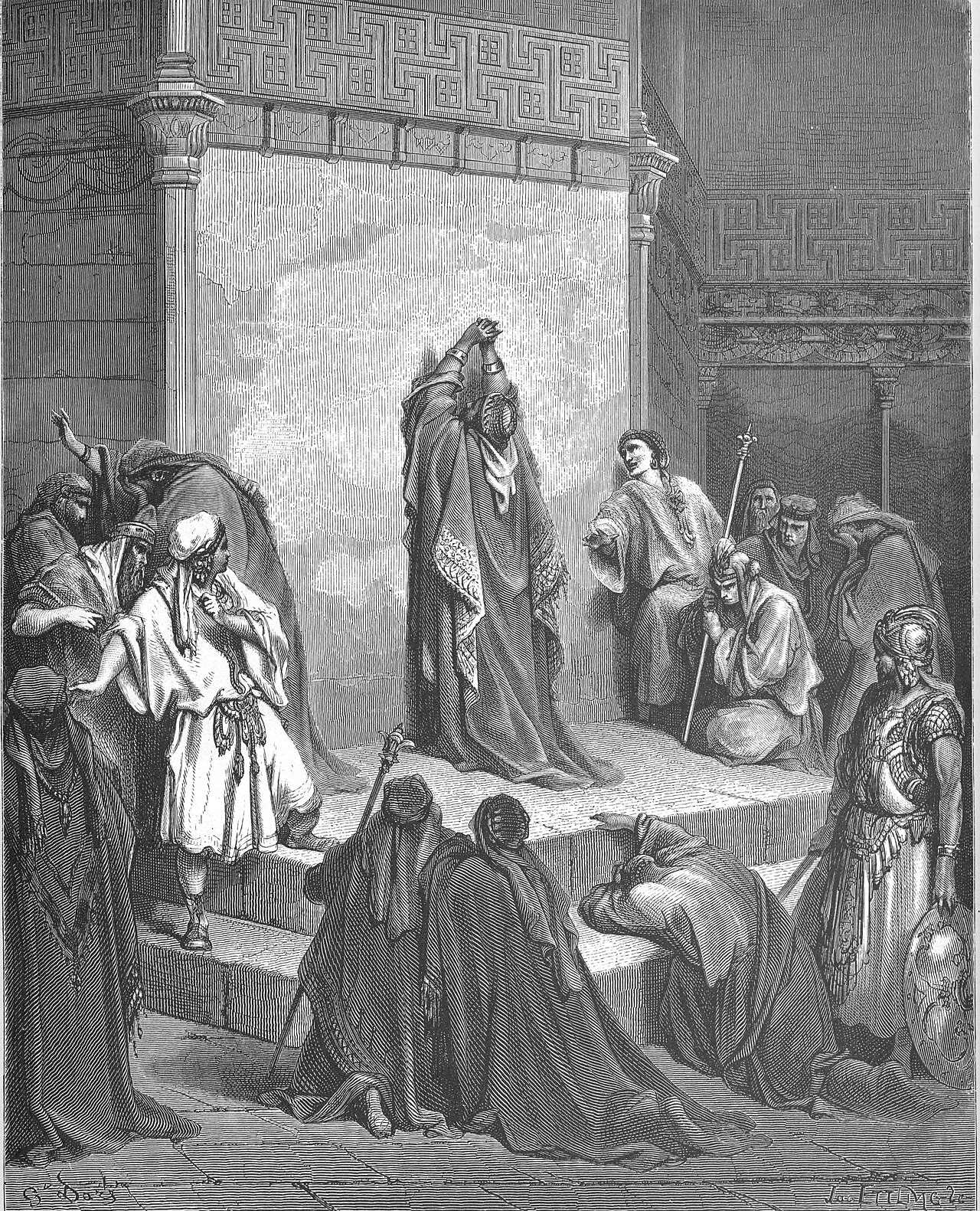
Thou art the man is Nathan's whole reply, and the phrase occurs nowhere else in Scripture, the parable's judge becoming the accused in three words. Nathan recites what the Lord had given David, the kingdom, the house of Israel and Judah, and more besides for the asking, before naming what David took that was never his to take. The charge is put in the sharpest terms the text allows, thou hast killed Uriah the Hittite with the sword and hast taken his wife, with the Ammonite blade named only as the instrument David chose. Jamieson Fausset and Brown read the rebuke as necessary precisely because David's public standing made a private sin into a public wound on the name of the Lord.
This site's exposition
Why then have you despised the command of the LORD
Matthew Henry and John Wesley note that the Hebrew reads the word of the LORD. They take it as the promise of a house from God. Henry says a man who valued that promise would have kept his house clean of lust and blood.
The record, by era
The Church Fathers1 voice
A commentator
John ChrysostomHOMILIES ON REPENTANCE AND ALMSGIVING 2.2.9 · Written in the 5th century.
proposed
Therefore, Nathan went to David and wove a dramatic act for judgment. And what did he say? "My king, I want your judgment. There was a certain rich man and a certain poor one. The rich person possessed herds of cattle and many other flocks; and the poor one had one ewe that drank from his glass, ate from his table and slept in his embrace." Here Nathan revealed the genuine bond between a husband and wife. "When a certain stranger arrived, the rich man desired to keep his own animals, and he took the poor man's ewe and slaughtered her." Here, do you see how Nathan wove the dramatic act, mysteriously concealing the weapon in the glands of David's throat? Then what did the king say? Thinking that he had to pass judgment against someone else, he decided most severely. For such are human beings. When it concerns other people, they gladly and abruptly render decisions and publicize them. And what did David say? "As the Lord lives, the man who did this thing is worthy of death. And he shall restore the lamb fourfold." Therefore, what did Nathan reply? He did not allow the wound to be relieved for many hours; rather, he quickly stripped it naked and sharply embedded the knife deeply into it, so as not to rob it of the painful sensation. "You are the man, my king." What did the king say? "I have sinned against the Lord." He did not say, "Who are you who censures me? Who sent you to speak with such boldness? With what daring did you prevail?" He did not say anything of the sort; rather, he perceived the sin. And what did he say? "I have sinned against the Lord." Therefore, what did Nathan say to him? "And the Lord remitted your sin." You condemned yourself; I [God] remit your sentence. You confessed prudently; you annulled the sin. You appropriated a condemnatory decision against yourself; I repealed the sentence. […]
The Puritans and the Awakening4 voices
In all this he despised the word of the Lord (so it is in the Hebrew), not only his commandment in general which forbade such things, but the particular word of promise which God had, by Nathan, sent to him some time before, that he would build him a house. If he had had a due value and veneration for this sacred promise, he would not thus have polluted his house with lust and blood.
In all this he despised the word of the Lord; (so it is in the Hebrew.) Not only his commandment in general, but the particular word of promise, which God had before sent him by Nathan, that he would build him an house: which sacred promise if he had had a due value for, he would not have polluted his house with lust and blood.
Wherefore hast thou despised the commandment of the Lord, to do evil in his sight?....
This is the spring and this is the malignity of sin, that it is making light of the divine law and the law-maker; as if the obligation of it were weak, the precepts of it trifling, and the threats not at all formidable.
The words behind it
23 Hebrew wordsEvery Hebrew word of this verse in the order it stands, with what it means and the door to its own study. The last column counts the times a word stands in the whole Bible: the rarer the word, the more the places it appears belong together.
| Hebrew | Sound | Meaning | Word study | In the Bible |
|---|---|---|---|---|
| מַדּ֜וּעַ | madua' | why? | H4069 → | 72 times |
| בָּזִ֣יתָ׀ | bazita | have you despised | H959 → | 44 times |
| אֶת־ | ʾet- | <obj.> | H853 → | 10935 times |
| דְּבַ֣ר | devar | [the] word of | H1697 → | 1440 times |
| יְהוָ֗ה | yahweh | Yahweh | H3068 → | 6520 times |
| לַעֲשׂ֣וֹת | laasot | by doing | H6213 → | 2628 times |
| הָרַע֮ | hara' | the evil | H7451 → | 662 times |
| בְּעֵינַי֒ | beeino | in eyes my | H5869 → | 887 times |
| אֵ֣ת | ʾet | <obj.> | H853 → | 10935 times |
| אוּרִיָּ֤ה | ʾuriyah | Uriah | H223 → | 39 times |
| הַֽחִתִּי֙ | hachiti | the Hittite | H2850 → | 48 times |
| הִכִּ֣יתָ | hikita | you struck down | H5221 → | 499 times |
| בַחֶ֔רֶב | vacherev | with the sword | H2719 → | 413 times |
| וְאֶ֨ת־ | veet | and <obj.> | H853 → | 10935 times |
| אִשְׁתּ֔וֹ | ʾishto | wife his | H802 → | 781 times |
| לָקַ֥חְתָּ | lakachta | you took | H3947 → | 966 times |
| לְּךָ֖ | lekha | for <the> yourself | ||
| לְאִשָּׁ֑ה | leishah | to a wife | H802 → | 781 times |
| וְאֹת֣וֹ | veoto | and <obj.> him | H853 → | 10935 times |
| הָרַ֔גְתָּ | haragta | you killed | H2026 → | 167 times |
| בְּחֶ֖רֶב | becherev | with [the] sword of | H2719 → | 413 times |
| בְּנֵ֥י | benei | [the] people of | H1121 → | 4930 times |
| עַמּֽוֹן׃ | amon | Ammon | H5983 → | 106 times |
מַדּ֜וּעַwhy?
madua'H4069 →72 times
בָּזִ֣יתָ׀have you despised
bazitaH959 →44 times
אֶת־<obj.>
ʾet-H853 →10935 times
דְּבַ֣ר[the] word of
devarH1697 →1440 times
יְהוָ֗הYahweh
yahwehH3068 →6520 times
לַעֲשׂ֣וֹתby doing
laasotH6213 →2628 times
הָרַע֮the evil
hara'H7451 →662 times
בְּעֵינַי֒in eyes my
beeinoH5869 →887 times
אֵ֣ת<obj.>
ʾetH853 →10935 times
אוּרִיָּ֤הUriah
ʾuriyahH223 →39 times
הַֽחִתִּי֙the Hittite
hachitiH2850 →48 times
הִכִּ֣יתָyou struck down
hikitaH5221 →499 times
בַחֶ֔רֶבwith the sword
vacherevH2719 →413 times
וְאֶ֨ת־and <obj.>
veetH853 →10935 times
אִשְׁתּ֔וֹwife his
ʾishtoH802 →781 times
לָקַ֥חְתָּyou took
lakachtaH3947 →966 times
לְּךָ֖for <the> yourself
lekha
לְאִשָּׁ֑הto a wife
leishahH802 →781 times
וְאֹת֣וֹand <obj.> him
veotoH853 →10935 times
הָרַ֔גְתָּyou killed
haragtaH2026 →167 times
בְּחֶ֖רֶבwith [the] sword of
becherevH2719 →413 times
בְּנֵ֥י[the] people of
beneiH1121 →4930 times
עַמּֽוֹן׃Ammon
amonH5983 →106 times
A shaded row is a word that stands 400 times or fewer in the Bible.
The walk
8 stopsEach card is a verse this one points to, and under it the verses that one points to in turn. Where several paths arrive at the same place, that place is listed first: the text keeps returning to it.
Through
1 Samuel 15:23For rebellion is like the sin of divination, and arrogance is like the wickedness of idolatry. Because you have rejected the word of the LORD, He has rejected you as king.”
it leads to
- Jeremiah 28:16
Therefore this is what the LORD says: ‘I am about to remove you from the face of the earth. You will die this year because you have preached rebellion against the LORD.’”
- 1 Samuel 13:14
But now your kingdom will not endure; the LORD has sought a man after His own heart and appointed him ruler over His people, because you have not kept the command of the LORD.”
- Leviticus 20:6
Whoever turns to mediums or spiritists to prostitute himself with them, I will also set My face against that person and cut him off from his people.
- Galatians 5:20
idolatry and sorcery; hatred, discord, jealousy, and rage; rivalries, divisions, factions,
- Jeremiah 29:32
this is what the LORD says: ‘I will surely punish Shemaiah the Nehelamite and his descendants. He will have no one left among this people, nor will he see the good that I will…
- Jeremiah 28:16
Through
Psalms 90:8You have set our iniquities before You, our secret sins in the light of Your presence.
it leads to
- Jeremiah 16:17
For My eyes are on all their ways. They are not hidden from My face, and their guilt is not concealed from My eyes.
- Ecclesiastes 12:14
For God will bring every deed into judgment, along with every hidden thing, whether good or evil.
- Jeremiah 16:17
Through
Amos 2:4This is what the LORD says: “For three transgressions of Judah, even four, I will not revoke My judgment, because they reject the Law of the LORD and fail to keep His statutes; they…
it leads to
- Ezekiel 20:24
For they did not practice My ordinances, but they rejected My statutes and profaned My Sabbaths, fixing their eyes on the idols of their fathers.
- Ezekiel 20:24
Where this verse is studied
On this page
Studies4
About 2 Samuel
This page draws on Adam Clarke, Commentary on the Bible; Jamieson Fausset and Brown, Commentary Critical and Explanatory on the Whole Bible; John Chrysostom, HOMILIES ON REPENTANCE AND ALMSGIVING 2.2.9; John Gill, Exposition of the Old Testament (1748-1763); John Wesley, Explanatory Notes upon the Old Testament and Matthew Henry, Commentary on the Whole Bible.