
2 Samuel 12:20
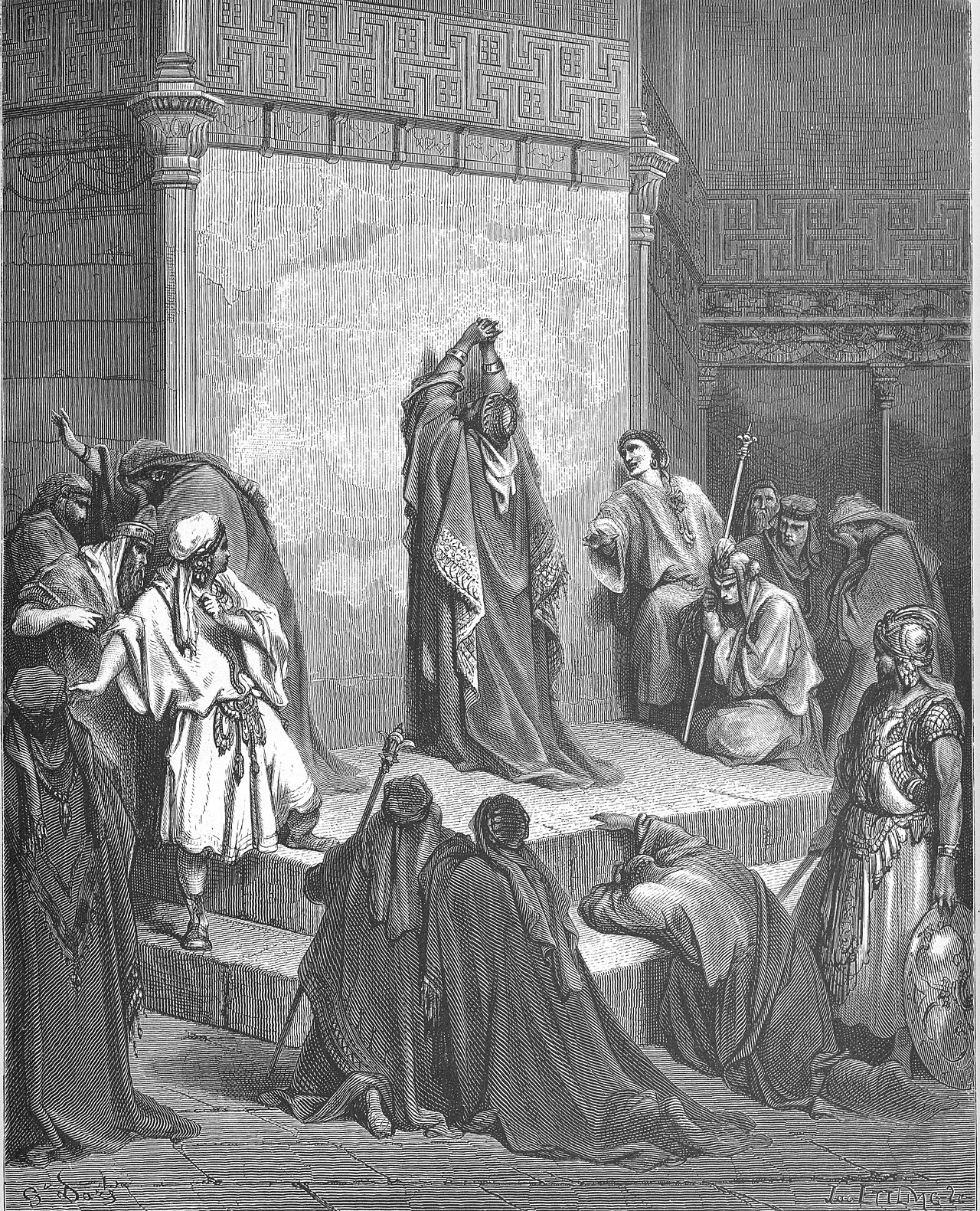
in 2 Samuel 12Then David got up from the ground, washed and anointed himself, changed his clothes, and went into the house of the LORD and worshiped. Then he went to his own house, and at his request they set food before him, and he ate.
BSB
The same verse in ASV and KJV ▾
ASV
Then David arose from the earth, and washed, and anointed himself, and changed his apparel; and he came into the house of Jehovah, and worshipped: then he came to his own house; and when he required, they set bread before him, and he did eat.
KJV
Then David arose from the earth, and washed, and anointed himself, and changed his apparel, and came into the house of the Lord, and worshipped: then he came to his own house; and when he required, they set bread before him, and he did eat.
⋯
This verse in 2 Samuel 12
Commentary
6 notes on this verseA commentator
Ambrose of MilanCONSOLATION ON THE DEATH OF EMPEROR VALENTINIAN 47.48 · Written before 397.
Thus David wept for his son who was about to die; he did not grieve for him when dead. He wept that he might not be snatched from him, but he ceased to weep when he was snatched away, for he knew that he was with Christ. And that you may know what I declare is true, he wept for his incestuous son Amnon when he was killed, and he mourned for the parricide Absalom when he perished, saying, "My son Absalom, my son Absalom!"
This site's exposition
David got up from the ground, washed and anointed himself
on 2 Samuel 12:20-23
David washes, anoints himself, changes his clothes and goes first to the house of the LORD to worship, then eats, reversing every sign of mourning. His servants ask why, and he answers that he fasted while the LORD might yet be gracious, but now the child is dead.
The record, by era
The Church Fathers1 voice
Holy David lost two sons. One was guilty of incest, the other of fratricide. To have had them caused him shame; to have lost them brought him grief. He also lost a third, a child whom he loved. He wept over him while he was still alive, but he did not long for him after he died. For so we read that when the boy fell sick, David besought the Lord for him and fasted and lay upon sackcloth, and, although the elders approached him and tried to make him get up from the ground, he resolved neither to rise nor to eat. After he learned that the boy was dead, however, he arose from the ground, bathed upon the spot, anointed himself, changed clothing, worshiped the Lord and took food. Since this seemed strange to his servants, he answered that while the child was still alive, he had rightly fasted and wept, because he justly thought that God might pity him and was certain that he who could restore the dead to life could surely preserve the life of one still living. But now that the child was dead, why should he fast, since he could not bring him back from death and restore him to life. "I shall go to him rather;" he said, "but he shall not return to me."What greater consolation to a mourner! What a true judgment from a wise man! What wonderful wisdom exhibited by a servant! [Thus] no one should protest that some misfortune has befallen him and complain that he has been afflicted contrary to his merit. For who are you to proclaim your merit beforehand? Why do you desire to anticipate your judge? Why do you snatch the verdict from the mouth of him who is going to pronounce it?
The Puritans and the Awakening2 voices
And came - That is, to the tabernacle, to confess his sin before the Lord, to own his justice in this stroke, to deprecate his just displeasure, to acknowledge God's rich mercy, in sparing his own life; and to offer such sacrifices as were required in such cases.
Then David arose from the earth,....
The Nineteenth Century1 voice
David arose from the earth, and washed - Bathing, anointing the body, and changing the apparel, are the first outward signs among the Hindoos of coming out of a state of mourning or sickness.
The words behind it
19 Hebrew wordsEvery Hebrew word of this verse in the order it stands, with what it means and the door to its own study. The last column counts the times a word stands in the whole Bible: the rarer the word, the more the places it appears belong together.
| Hebrew | Sound | Meaning | Word study | In the Bible |
|---|---|---|---|---|
| וַיָּקָם֩ | vaiyakam | and he arose | H6965 → | 628 times |
| דָּוִ֨ד | david | David | H1732 → | 999 times |
| מֵהָאָ֜רֶץ | mehaaretz | from the ground | H776 → | 2504 times |
| וַיִּרְחַ֣ץ | vaiyirchatz | and he bathed | H7364 → | 72 times |
| וַיָּ֗סֶךְ | vaiyasekh | and he anointed himself | H5480 → | |
| וַיְחַלֵּף֙ | vaychalef | and he changed | H2498 → | |
| שִׂמְלֹתָ֔יו | simloto | garments his | H8071 → | |
| וַיָּבֹ֥א | vaiyavo' | and he went | H935 → | 2568 times |
| בֵית־ | veit- | [the] house of | H1004 → | 2046 times |
| יְהוָ֖ה | yahweh | Yahweh | H3068 → | 6520 times |
| וַיִּשְׁתָּ֑חוּ | vaiyishtachu | and he bowed down | H7812 → | 172 times |
| וַיָּבֹא֙ | vaiyavo' | and he went | H935 → | 2568 times |
| אֶל־ | ʾel- | to | H413 → | 5510 times |
| בֵּית֔וֹ | beito | own house his | H1004 → | 2046 times |
| וַיִּשְׁאַ֕ל | vaiyishal | and he asked | H7592 → | 171 times |
| וַיָּשִׂ֥ימוּ | vaiyasimu | and they set | H7760 → | 584 times |
| ל֛וֹ | lo | for <the> him | ||
| לֶ֖חֶם | lechem | food | H3899 → | 298 times |
| וַיֹּאכַֽל׃ | vaiyokhal | and he ate | H398 → | 810 times |
וַיָּקָם֩and he arose
vaiyakamH6965 →628 times
דָּוִ֨דDavid
davidH1732 →999 times
מֵהָאָ֜רֶץfrom the ground
mehaaretzH776 →2504 times
וַיִּרְחַ֣ץand he bathed
vaiyirchatzH7364 →72 times
וַיָּ֗סֶךְand he anointed himself
vaiyasekhH5480 →
וַיְחַלֵּף֙and he changed
vaychalefH2498 →
שִׂמְלֹתָ֔יוgarments his
simlotoH8071 →
וַיָּבֹ֥אand he went
vaiyavo'H935 →2568 times
בֵית־[the] house of
veit-H1004 →2046 times
יְהוָ֖הYahweh
yahwehH3068 →6520 times
וַיִּשְׁתָּ֑חוּand he bowed down
vaiyishtachuH7812 →172 times
וַיָּבֹא֙and he went
vaiyavo'H935 →2568 times
אֶל־to
ʾel-H413 →5510 times
בֵּית֔וֹown house his
beitoH1004 →2046 times
וַיִּשְׁאַ֕לand he asked
vaiyishalH7592 →171 times
וַיָּשִׂ֥ימוּand they set
vaiyasimuH7760 →584 times
ל֛וֹfor <the> him
lo
לֶ֖חֶםfood
lechemH3899 →298 times
וַיֹּאכַֽל׃and he ate
vaiyokhalH398 →810 times
A shaded row is a word that stands 400 times or fewer in the Bible.
The walk
8 stopsEach card is a verse this one points to, and under it the verses that one points to in turn. Where several paths arrive at the same place, that place is listed first: the text keeps returning to it.
Through
Ruth 3:3Therefore wash yourself, put on perfume, and wear your best clothes. Go down to the threshing floor, but do not let the man know you are there until he has finished eating and drinking.
it leads to
- 2 Samuel 14:2
So Joab sent to Tekoa to bring a wise woman from there. He told her, “Please pretend to be a mourner; put on clothes for mourning and do not anoint yourself with oil. Act…
Reached by 2 separate paths from here.
- 2 Samuel 14:2
Through
Matthew 6:17But when you fast, anoint your head and wash your face,
it leads to
- Ruth 3:3
Therefore wash yourself, put on perfume, and wear your best clothes. Go down to the threshing floor, but do not let the man know you are there until he has finished eating and drinking.
- Ecclesiastes 9:8
Let your garments always be white, and never spare the oil for your head.
- Ruth 3:3
Through
Ecclesiastes 9:8Let your garments always be white, and never spare the oil for your head.
it leads to
- Revelation 19:14
The armies of heaven, dressed in fine linen, white and pure, follow Him on white horses.
- Revelation 3:4–5
But you do have a few people in Sardis who have not soiled their garments, and because they are worthy, they will walk with Me in white.
- Revelation 19:8
She was given clothing of fine linen, bright and pure.” For the fine linen she wears is the righteous acts of the saints.
- Revelation 7:13–14
Then one of the elders addressed me: “These in white robes,” he asked, “who are they, and where have they come from?”
- Revelation 19:14
Through
Job 1:20Then Job stood up, tore his robe, and shaved his head. He fell to the ground and worshiped,
it leads to
- 1 Peter 5:6
Humble yourselves, therefore, under God’s mighty hand, so that in due time He may exalt you.
- 1 Peter 5:6
Where this verse is studied
On this page
About 2 Samuel
Who and where
1 name in this verse with a page on the site.
This page draws on Adam Clarke, Commentary on the Bible; Ambrose of Milan, CONSOLATION ON THE DEATH OF EMPEROR VALENTINIAN 47.48; Ambrose of Milan, On the Death of Satyrus 2.25-26; John Gill, Exposition of the Old Testament (1748-1763) and John Wesley, Explanatory Notes upon the Old Testament.