
2 Samuel 12:4
in 2 Samuel 12Now a traveler came to the rich man, who refrained from taking one of his own sheep or cattle to prepare for the traveler who had come to him. Instead, he took the poor man’s lamb and prepared it for his guest.”
BSB
The same verse in ASV and KJV ▾
ASV
And there came a traveller unto the rich man, and he spared to take of his own flock and of his own herd, to dress for the wayfaring man that was come unto him, but took the poor man’s lamb, and dressed it for the man that was come to him.
KJV
And there came a traveller unto the rich man, and he spared to take of his own flock and of his own herd, to dress for the wayfaring man that was come unto him; but took the poor man’s lamb, and dressed it for the man that was come to him.
⋯
This verse in 2 Samuel 12
Commentary
7 notes on this verseA commentator
Gregory the DialogistThe Book of Pastoral Rule, Part 3, Chapter 2 · Written before 604.
But sometimes, when the powerful of this world are taken to task, they are first to be searched by certain similitudes, as on a matter not concerning them; and, when they have pronounced a right sentence as against another man, then in fitting ways they are to be smitten with regard to their own guilt; so that the mind puffed up with temporal power may in no wise lift itself up against the reprover, having by its own judgment trodden on the neck of pride, and may not try to defend itself, being bound by the sentence of its own mouth.
This site's exposition
Now a traveler came to the rich man
on 2 Samuel 12:4-6
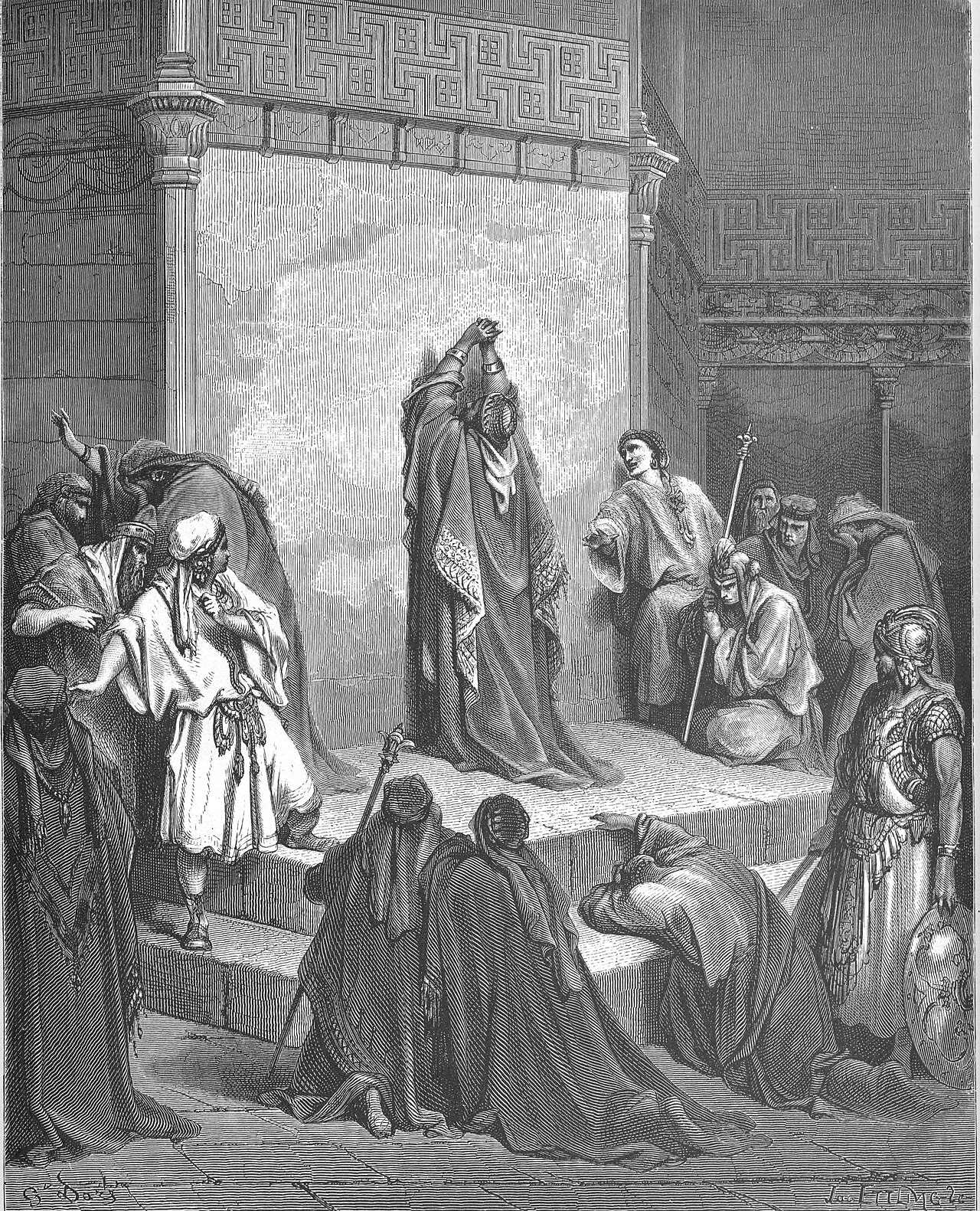
A traveler comes, and the rich man spares his own flock and takes the poor man's lamb, and David's anger burns before he sees the story is his own. He swears that “the man who did this deserves to die”, a son of death in the Hebrew, as Adam Clarke notes. He sets the payment the Law requires at Exodus 22:1: “he must pay for the lamb four times over”. David passes sentence on himself with his own mouth.
The record, by era
The Church Fathers3 voices
And with what moderation and self-restraint those men used their wives appears chiefly in this, that when this same king, carried away by the heat of passion and by temporal prosperity, had taken unlawful possession of one woman, whose husband also he ordered to be put to death, he was accused of his crime by a prophet, who, when he had come to show him his sin, set before him the parable of the poor man who had but one ewe lamb, and whose neighbor, though he had many, yet when a guest came to him, refused to take of his own flock but set his poor neighbor's one lamb before his guest to eat. And David's anger being kindled against the man, he commanded that he should be put to death and the lamb restored fourfold to the poor man; thus unwittingly condemning the sin he had wittingly committed. And when he had been shown this, and God's punishment had been announced against him, he wiped out his sin in deep penitence. But yet in this parable it was the adultery only that was indicated by the poor man's ewe lamb. About the killing of the woman's husband—that is, about the murder of the poor man himself who had the one ewe lamb—nothing is said in the parable, so that the sentence of condemnation is pronounced against the adultery alone. And hence we may understand with what temperance he possessed a number of wives when he was forced to punish himself for transgressing in regard to one woman. But in his case the immoderate desire did not take up its abode with him but was only a passing guest. On this account the unlawful appetite is called even by the accusing prophet, a guest. For he did not say that he took the poor man's ewe lamb to make a feast for his king, but for his guest. In the case of his son Solomon, however, this lust did not come and pass away like a guest but reigned as a king. […]
For I admit my wrongdoing, and my offense confronts me all the time. "I have not thrust my deed behind my back; I do not look askance at others while forgetting myself; I do not presume to extract a speck of straw from my brother's eye while there is a timber in my own; my sin is in front of me, not behind my back. It was behind me until the prophet was sent to me and put to me the parable of the poor man's sheep." What the prophet Nathan said to David was this: There was a certain rich man who had a large flock of sheep. His neighbor was a poor man who had only one little ewe lamb; she rested in his arms and was fed from his own dish. Then a guest arrived at the rich man's house. The rich man took nothing from his flock; what he wanted was the little ewe lamb that belonged to his neighbor, so he slaughtered that for his guest. What does he deserve? Angrily David pronounced sentence. Obviously the king was unaware of the trap into which he had fallen, and he decreed that the rich man deserved to die and must make fourfold restitution for the sheep. It was a very severe view, and entirely just. But his own sin was not yet before his eyes; what he had done was still behind his back. He did not yet admit his own iniquity and hence would not remit another's. But the prophet had been sent to him for this purpose. He brought the sin out from behind David's back and held it before his eyes, so that he might see that the severe sentence had been passed on himself. To cut away diseased tissue in David's heart and heal the wound there, Nathan used David's tongue as a knife.
A commentator
John ChrysostomHOMILIES ON REPENTANCE AND ALMSGIVING 2.2.9 · Written in the 5th century.
proposed
Therefore, Nathan went to David and wove a dramatic act for judgment. And what did he say? "My king, I want your judgment. There was a certain rich man and a certain poor one. The rich person possessed herds of cattle and many other flocks; and the poor one had one ewe that drank from his glass, ate from his table and slept in his embrace." Here Nathan revealed the genuine bond between a husband and wife. "When a certain stranger arrived, the rich man desired to keep his own animals, and he took the poor man's ewe and slaughtered her." Here, do you see how Nathan wove the dramatic act, mysteriously concealing the weapon in the glands of David's throat? Then what did the king say? Thinking that he had to pass judgment against someone else, he decided most severely. For such are human beings. When it concerns other people, they gladly and abruptly render decisions and publicize them. And what did David say? "As the Lord lives, the man who did this thing is worthy of death. And he shall restore the lamb fourfold." Therefore, what did Nathan reply? He did not allow the wound to be relieved for many hours; rather, he quickly stripped it naked and sharply embedded the knife deeply into it, so as not to rob it of the painful sensation. "You are the man, my king." What did the king say? "I have sinned against the Lord." He did not say, "Who are you who censures me? Who sent you to speak with such boldness? With what daring did you prevail?" He did not say anything of the sort; rather, he perceived the sin. And what did he say? "I have sinned against the Lord." Therefore, what did Nathan say to him? "And the Lord remitted your sin." You condemned yourself; I [God] remit your sentence. You confessed prudently; you annulled the sin. You appropriated a condemnatory decision against yourself; I repealed the sentence. […]
The Puritans and the Awakening2 voices
And there came a traveller unto the rich man,....
Marriage is a remedy against fornication, but marrying many is not; for, when once the law of unity is transgressed, the indulged lust will hardly stint itself.
The words behind it
21 Hebrew wordsEvery Hebrew word of this verse in the order it stands, with what it means and the door to its own study. The last column counts the times a word stands in the whole Bible: the rarer the word, the more the places it appears belong together.
| Hebrew | Sound | Meaning | Word study | In the Bible |
|---|---|---|---|---|
| וַיָּ֣בֹא | vaiyavo' | and he came | H935 → | 2568 times |
| הֵלֶךְ֮ | helekh | a traveler | H1982 → | |
| לְאִ֣ישׁ | leish | to [the] man | H376 → | 1663 times |
| הֶֽעָשִׁיר֒ | heashir | <the> rich | H6223 → | 23 times |
| וַיַּחְמֹ֗ל | vaiyachmol | and he spared | H2550 → | 41 times |
| לָקַ֤חַת | lakachat | to take | H3947 → | 966 times |
| מִצֹּאנוֹ֙ | mitzono | one of own sheep his | H6629 → | 274 times |
| וּמִבְּקָר֔וֹ | umibekaro | and one of own cattle his | H1241 → | 183 times |
| לַעֲשׂ֕וֹת | laasot | to prepare | H6213 → | 2628 times |
| לָאֹרֵ֖חַ | laoreach | for the traveler | H732 → | |
| הַבָּא־ | haba'- | who had come | H935 → | 2568 times |
| ל֑וֹ | lo | to <the> him | ||
| וַיִּקַּ֗ח | vaiyikach | and he took | H3947 → | 966 times |
| אֶת־ | ʾet- | <obj.> | H853 → | 10935 times |
| כִּבְשַׂת֙ | kivsat | [the] ewe-lamb of | H3535 → | 8 times |
| הָאִ֣ישׁ | haish | the man | H376 → | 1663 times |
| הָרָ֔אשׁ | harash | <the> poor | H7326 → | 24 times |
| וַֽיַּעֲשֶׂ֔הָ | vaiyaaseha | and he prepared it | H6213 → | 2628 times |
| לָאִ֖ישׁ | laish | for the man | H376 → | 1663 times |
| הַבָּ֥א | haba' | who had come | H935 → | 2568 times |
| אֵלָֽיו׃ | ʾelav | to him | H413 → | 5510 times |
וַיָּ֣בֹאand he came
vaiyavo'H935 →2568 times
הֵלֶךְ֮a traveler
helekhH1982 →
לְאִ֣ישׁto [the] man
leishH376 →1663 times
הֶֽעָשִׁיר֒<the> rich
heashirH6223 →23 times
וַיַּחְמֹ֗לand he spared
vaiyachmolH2550 →41 times
לָקַ֤חַתto take
lakachatH3947 →966 times
מִצֹּאנוֹ֙one of own sheep his
mitzonoH6629 →274 times
וּמִבְּקָר֔וֹand one of own cattle his
umibekaroH1241 →183 times
לַעֲשׂ֕וֹתto prepare
laasotH6213 →2628 times
לָאֹרֵ֖חַfor the traveler
laoreachH732 →
הַבָּא־who had come
haba'-H935 →2568 times
ל֑וֹto <the> him
lo
וַיִּקַּ֗חand he took
vaiyikachH3947 →966 times
אֶת־<obj.>
ʾet-H853 →10935 times
כִּבְשַׂת֙[the] ewe-lamb of
kivsatH3535 →8 times
הָאִ֣ישׁthe man
haishH376 →1663 times
הָרָ֔אשׁ<the> poor
harashH7326 →24 times
וַֽיַּעֲשֶׂ֔הָand he prepared it
vaiyaasehaH6213 →2628 times
לָאִ֖ישׁfor the man
laishH376 →1663 times
הַבָּ֥אwho had come
haba'H935 →2568 times
אֵלָֽיו׃to him
ʾelavH413 →5510 times
A shaded row is a word that stands 400 times or fewer in the Bible.
The walk
5 stopsEach card is a verse this one points to, and under it the verses that one points to in turn. Where several paths arrive at the same place, that place is listed first: the text keeps returning to it.
Through
James 1:14But each one is tempted when by his own evil desires he is lured away and enticed.
it leads to
- Mark 7:21–22
For from within the hearts of men come evil thoughts, sexual immorality, theft, murder, adultery,
- Ephesians 4:22
to put off your former way of life, your old self, which is being corrupted by its deceitful desires;
- Matthew 15:18
But the things that come out of the mouth come from the heart, and these things defile a man.
- Hebrews 3:13
But exhort one another daily, as long as it is called today, so that none of you may be hardened by sin’s deceitfulness.
- Romans 7:13
Did that which is good, then, become death to me? Certainly not! But in order that sin might be exposed as sin, it produced death in me through what was good, so that through…
- Mark 7:21–22
Where this verse is studied
On this page
Studies4
About 2 Samuel
This page draws on Adam Clarke, Commentary on the Bible; Albert Barnes, Notes on the Old Testament; Augustine of Hippo, CHRISTIAN INSTRUCTION 3.21; Augustine of Hippo, EXPLANATIONS OF THE PSALMS 50; Gregory the Dialogist, The Book of Pastoral Rule, Part 3, Chapter 2; John Chrysostom, HOMILIES ON REPENTANCE AND ALMSGIVING 2.2.9; John Gill, Exposition of the Old Testament (1748-1763) and Matthew Henry, Commentary on the Whole Bible.