
1 Samuel 25:14
in 1 Samuel 25Meanwhile, one of Nabal’s young men informed Nabal’s wife Abigail, “Look, David sent messengers from the wilderness to greet our master, but he scolded them.
BSB
The same verse in ASV and KJV ▾
ASV
But one of the young men told Abigail, Nabal’s wife, saying, Behold, David sent messengers out of the wilderness to salute our master; and he railed at them.
KJV
But one of the young men told Abigail, Nabal’s wife, saying, Behold, David sent messengers out of the wilderness to salute our master; and he railed on them.
⋯
This verse in 1 Samuel 25
Commentary
5 notes on this verseThis site's exposition
he railed on them
on 1 Samuel 25:14-17
An unnamed servant goes around Nabal to warn Abigail, because evil is determined against the whole household and Nabal is such a son of Belial that a man cannot speak to him. Belial, worthless one, is the word the narrator used for the sons of Eli at 2:12, and Scripture uses it again for Sheba's rebellion at 2 Sam 20:1 and in David's own last words for the thorns burned rather than handled at 2 Sam 23:6. The servant's account, a wall unto us both by night and day, repeats what David's own men had already claimed, confirming to Abigail that the danger to her house is real and that David's men have kept faith with it.
The record, by era
The Medieval Church1 voice
But one of the young men told Abigail, Nabal's wife, etc. When the chiefs of the Jews scorned the word of faith, the unity of Christ's disciples announced to the synagogue subject to them, saying: Behold, Jesus Christ sent apostles, namely messengers of truth, instructed …
The Puritans and the Awakening2 voices
But one of the young men told Abigail, Nabal's wife,....
Had this servant spoken to Nabal, and shown him the danger he had exposed himself to by his own rudeness, he would have said, "Servants are now-a-days so saucy, and so apt to prescribe, that there is no enduring them," and, it may be, would have turned him out of doors.
The Nineteenth Century1 voice
A commentator
Albert Barnes1798–1870
Notes, Explanatory and Practical, on the Old and New Testaments (1832-1869)
proposed
Railed on them - The marginal reading, “flew upon them,” is nearer to the original.
How the passage was read
What the Jewish commentators add
On the verses either side of this one
And Dovid too, girded his sword. From here [we learn] that we commence, in cases involving capital punishment, from the less significant first.
This section is reception history: how the passage was read and kept in the Jewish tradition. Where a reading parts from an essential of the Christian faith, the section says so at that point.
Texts and citation data: Sefaria; each excerpt follows its version’s licence. 6 further sources are cited on this chapter that carry no English text this site may quote or only restate the verse.
The words behind it
18 Hebrew wordsEvery Hebrew word of this verse in the order it stands, with what it means and the door to its own study. The last column counts the times a word stands in the whole Bible: the rarer the word, the more the places it appears belong together.
| Hebrew | Sound | Meaning | Word study | In the Bible |
|---|---|---|---|---|
| וְלַאֲבִיגַ֙יִל֙ | velaavigayil | and to Abigail | H26 → | 17 times |
| אֵ֣שֶׁת | ʾeshet | [the] wife of | H802 → | 781 times |
| נָבָ֔ל | naval | Nabal | H5037 → | 22 times |
| הִגִּ֧יד | higid | he told | H5046 → | 370 times |
| נַֽעַר־ | naar- | a young man | H5288 → | 239 times |
| אֶחָ֛ד | ʾechad | one | H259 → | 971 times |
| מֵהַנְּעָרִ֖ים | mehanearim | from the young men | H5288 → | 239 times |
| לֵאמֹ֑ר | lemor | <to> saying | H559 → | 5305 times |
| הִנֵּ֣ה | hineh | there! | H2009 → | 843 times |
| שָׁלַח֩ | shalach | he sent | H7971 → | 845 times |
| דָּוִ֨ד | david | David | H1732 → | 999 times |
| מַלְאָכִ֧ים׀ | malakhim | messengers | H4397 → | 213 times |
| מֵֽהַמִּדְבָּ֛ר | mehamidbar | from the wilderness | H4057 → | 270 times |
| לְבָרֵ֥ךְ | levarekh | to bless | H1288 → | 330 times |
| אֶת־ | ʾet- | <obj.> | H853 → | 10935 times |
| אֲדֹנֵ֖ינוּ | ʾadoneinu | master<s> our | H113 → | 333 times |
| וַיָּ֥עַט | vaiyaat | and he shouted | H5860 → | 3 times |
| בָּהֶֽם׃ | bahem | at them |
וְלַאֲבִיגַ֙יִל֙and to Abigail
velaavigayilH26 →17 times
אֵ֣שֶׁת[the] wife of
ʾeshetH802 →781 times
נָבָ֔לNabal
navalH5037 →22 times
הִגִּ֧ידhe told
higidH5046 →370 times
נַֽעַר־a young man
naar-H5288 →239 times
אֶחָ֛דone
ʾechadH259 →971 times
מֵהַנְּעָרִ֖יםfrom the young men
mehanearimH5288 →239 times
לֵאמֹ֑ר<to> saying
lemorH559 →5305 times
הִנֵּ֣הthere!
hinehH2009 →843 times
שָׁלַח֩he sent
shalachH7971 →845 times
דָּוִ֨דDavid
davidH1732 →999 times
מַלְאָכִ֧ים׀messengers
malakhimH4397 →213 times
מֵֽהַמִּדְבָּ֛רfrom the wilderness
mehamidbarH4057 →270 times
לְבָרֵ֥ךְto bless
levarekhH1288 →330 times
אֶת־<obj.>
ʾet-H853 →10935 times
אֲדֹנֵ֖ינוּmaster<s> our
ʾadoneinuH113 →333 times
וַיָּ֥עַטand he shouted
vaiyaatH5860 →3 times
בָּהֶֽם׃at them
bahem
A shaded row is a word that stands 400 times or fewer in the Bible.
The walk
8 stopsEach card is a verse this one points to, and under it the verses that one points to in turn. Where several paths arrive at the same place, that place is listed first: the text keeps returning to it.
Through
1 Samuel 13:10Just as he finished offering the burnt offering, Samuel arrived, and Saul went out to greet him.
it leads to
- 1 Samuel 15:13
When Samuel reached him, Saul said to him, “May the LORD bless you. I have carried out the LORD’s instructions.”
- Psalms 129:8
May none who pass by say to them, “The blessing of the LORD be on you; we bless you in the name of the LORD.”
- Ruth 2:4
Just then Boaz arrived from Bethlehem and said to the harvesters, “The LORD be with you.” “The LORD bless you,” they replied.
- 1 Samuel 15:13
Through
Mark 15:29And those who passed by heaped abuse on Him, shaking their heads and saying, “Aha! You who are going to destroy the temple and rebuild it in three days,
it leads to
- Psalms 109:25
I am an object of scorn to my accusers; when they see me, they shake their heads.
- Mark 14:58
“We heard Him say, ‘I will destroy this man-made temple, and in three days I will build another that is made without hands.’”
- Lamentations 1:12
Is this nothing to you, all you who pass by? Look around and see! Is there any sorrow like mine, which was inflicted on me, which the LORD made me suffer on the day…
- John 2:18–22
On account of this, the Jews demanded, “What sign can You show us to prove Your authority to do these things?”
- Lamentations 2:15
All who pass by clap their hands at you in scorn. They hiss and shake their heads at the Daughter of Jerusalem: “Is this the city that was called the perfection of beauty, the…
- Psalms 109:25
Where this verse is studied
On this page
Studies1
About 1 Samuel
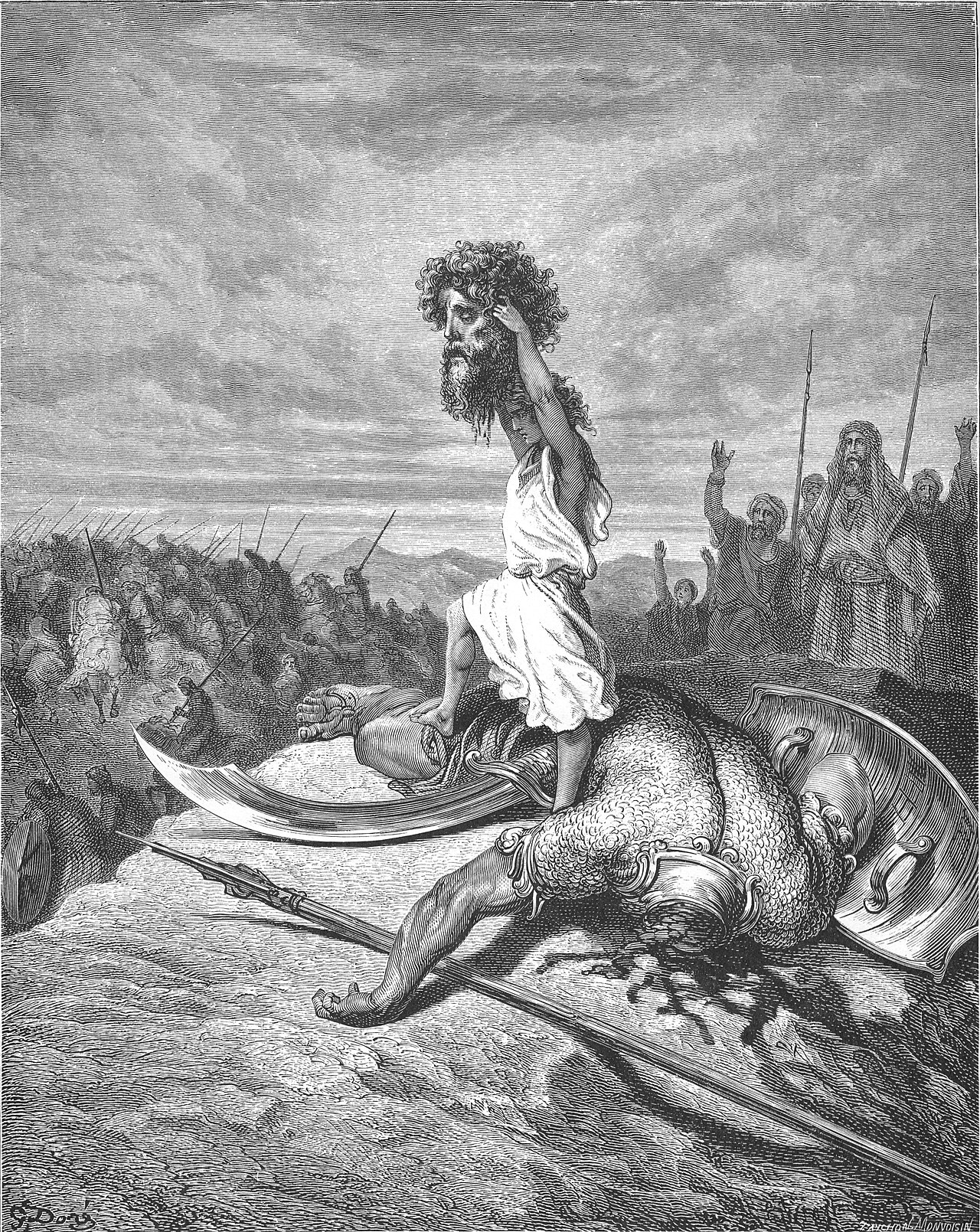
Who and where
2 names in this verse with a page on the site.
- PersonUnited MonarchyDavidSecond king of united Israel, shepherd-turned-monarch, ancestor of the Messiah, and traditional author of many Psalms.
- PersonEarly monarchyAbigailNabal's wife, a woman of good understanding whose swift intercession kept David from avenging himself with his own hand — and who…
This page draws on Albert Barnes, Notes on the Old Testament; Albert Barnes, Notes, Explanatory and Practical, on the Old and New Testaments (1832-1869); Bede, Commentary on Samuel; John Gill, Exposition of the Old Testament (1748-1763) and Matthew Henry, Commentary on the Whole Bible.