
1 Samuel 17:8
in 1 Samuel 17And Goliath stood and shouted to the ranks of Israel, “Why do you come out and array yourselves for battle? Am I not a Philistine, and are you not servants of Saul? Choose one of your men and have him come down against me.
BSB
The same verse in ASV and KJV ▾
ASV
And he stood and cried unto the armies of Israel, and said unto them, Why are ye come out to set your battle in array? am not I a Philistine, and ye servants to Saul? choose you a man for you, and let him come down to me.
KJV
And he stood and cried unto the armies of Israel, and said unto them, Why are ye come out to set your battle in array? am not I a Philistine, and ye servants to Saul? choose you a man for you, and let him come down to me.
⋯
This verse in 1 Samuel 17
Commentary
6 notes on this verseI a Philistine - The Targum adds much to this speech. This is the substance: “I am Goliath the Philistine of Gath, who killed the two sons of Eli, Hophni and Phinehas the priests; and led into captivity the ark of the covenant of Jehovah, and placed it in the temple of Dagon my god; and it remained in the cities of the Philistines seven months.
This site's exposition
Am I not a Philistine, and are you not servants of Saul
on 1 Samuel 17:8-9
Goliath proposes representative combat: one man from each side, and the losing nation serves the winner. The proposal frames the whole chapter, because whoever fights him fights for all Israel, and his victory or fall is counted to the people he stands for. Gill observes that the Philistines never honored the terms after their champion fell, which is what such offers were worth.
The record, by era
The Puritans and the Awakening2 voices
And he stood and cried unto the armies of Israel,....
The Chaldee paraphrase brings him in boasting that he was the man that had killed Hophni and Phinehas and taken the ark prisoner, but that the Philistines had never given him so much as the command of a regiment in recompence of his services, whereas Saul had been made king for his services: "Let him therefore take up the challenge." 4.
The Nineteenth Century2 voices
A commentator
Jamieson, Fausset & Brown1802–1910
Commentary Critical and Explanatory on the Whole Bible (1871)
I defy the armies of Israel . . .; give me a man, that we may fight together--In cases of single combat, a warrior used to go out in front of his party, and advancing towards the opposite ranks, challenge someone to fight with him.
A commentator
Jamieson, Fausset & Brown1802–1910
Commentary Critical and Explanatory on the Whole Bible (1871)
proposed
a champion--Hebrew, a "man between two"; that is, a person who, on the part of his own people, undertook to determine the national quarrel by engaging in single combat with a chosen warrior in the hostile army.
quarantine:debris (2026-07-29) — starts-lowercase
The words behind it
22 Hebrew wordsEvery Hebrew word of this verse in the order it stands, with what it means and the door to its own study. The last column counts the times a word stands in the whole Bible: the rarer the word, the more the places it appears belong together.
| Hebrew | Sound | Meaning | Word study | In the Bible |
|---|---|---|---|---|
| וַֽיַּעֲמֹ֗ד | vaiyaamod | and he stood | H5975 → | 521 times |
| וַיִּקְרָא֙ | vaiyikra' | and he called out | H7121 → | 733 times |
| אֶל־ | ʾel- | to | H413 → | 5510 times |
| מַעַרְכֹ֣ת | maarkhot | [the] battle lines of | H4634 → | 19 times |
| יִשְׂרָאֵ֔ל | yisrael | Israel | H3478 → | 2507 times |
| וַיֹּ֣אמֶר | vaiyomer | and he said | H559 → | 5305 times |
| לָהֶ֔ם | lahem | to <the> them | ||
| לָ֥מָּה | lamah | <to> why? | H4100 → | 752 times |
| תֵצְא֖וּ | tetzeu | do you come out | H3318 → | 1067 times |
| לַעֲרֹ֣ךְ | laarokh | to deploy | H6186 → | 74 times |
| מִלְחָמָ֑ה | milchamah | battle | H4421 → | 320 times |
| הֲל֧וֹא | halo' | ¿ not | H3808 → | 5168 times |
| אָנֹכִ֣י | ʾanokhi | [am] I | H595 → | 359 times |
| הַפְּלִשְׁתִּ֗י | hapelishti | the Philistine | H6430 → | 287 times |
| וְאַתֶּם֙ | veatem | and [are] you? | H859 → | 1094 times |
| עֲבָדִ֣ים | ʾavadim | servants | H5650 → | 799 times |
| לְשָׁא֔וּל | leshaul | of Saul | H7586 → | 402 times |
| בְּרוּ־ | beru- | commission | H1262 → | |
| לָכֶ֥ם | lakhem | for <the> yourselves | ||
| אִ֖ישׁ | ʾish | a man | H376 → | 1663 times |
| וְיֵרֵ֥ד | veyered | so he may come down | H3381 → | 381 times |
| אֵלָֽי׃ | ʾelai | to me | H413 → | 5510 times |
וַֽיַּעֲמֹ֗דand he stood
vaiyaamodH5975 →521 times
וַיִּקְרָא֙and he called out
vaiyikra'H7121 →733 times
אֶל־to
ʾel-H413 →5510 times
מַעַרְכֹ֣ת[the] battle lines of
maarkhotH4634 →19 times
יִשְׂרָאֵ֔לIsrael
yisraelH3478 →2507 times
וַיֹּ֣אמֶרand he said
vaiyomerH559 →5305 times
לָהֶ֔םto <the> them
lahem
לָ֥מָּה<to> why?
lamahH4100 →752 times
תֵצְא֖וּdo you come out
tetzeuH3318 →1067 times
לַעֲרֹ֣ךְto deploy
laarokhH6186 →74 times
מִלְחָמָ֑הbattle
milchamahH4421 →320 times
הֲל֧וֹא¿ not
halo'H3808 →5168 times
אָנֹכִ֣י[am] I
ʾanokhiH595 →359 times
הַפְּלִשְׁתִּ֗יthe Philistine
hapelishtiH6430 →287 times
וְאַתֶּם֙and [are] you?
veatemH859 →1094 times
עֲבָדִ֣יםservants
ʾavadimH5650 →799 times
לְשָׁא֔וּלof Saul
leshaulH7586 →402 times
בְּרוּ־commission
beru-H1262 →
לָכֶ֥םfor <the> yourselves
lakhem
אִ֖ישׁa man
ʾishH376 →1663 times
וְיֵרֵ֥דso he may come down
veyeredH3381 →381 times
אֵלָֽי׃to me
ʾelaiH413 →5510 times
A shaded row is a word that stands 400 times or fewer in the Bible.
The walk
8 stopsEach card is a verse this one points to, and under it the verses that one points to in turn. Where several paths arrive at the same place, that place is listed first: the text keeps returning to it.
Through
1 Samuel 17:26David asked the men who were standing with him, “What will be done for the man who kills this Philistine and removes this disgrace from Israel? Just who is this uncircumcised Philistine, that he…
it leads to
- Deuteronomy 5:26
For who of all flesh has heard the voice of the living God speaking out of the fire, as we have, and survived?
- 1 Samuel 11:2
But Nahash the Ammonite replied, “I will make a treaty with you on one condition, that I may put out everyone’s right eye and bring reproach upon all Israel.”
- 1 Samuel 17:36
Your servant has killed lions and bears; this uncircumcised Philistine will be like one of them, for he has defied the armies of the living God.”
- 1 Samuel 17:10
Then the Philistine said, “I defy the ranks of Israel this day! Give me a man to fight!”
- 1 Samuel 14:6
Jonathan said to the young man bearing his armor, “Come, let us cross over to the outpost of these uncircumcised men. Perhaps the LORD will work on our behalf. Nothing can hinder the LORD…
- Deuteronomy 5:26
Through
2 Samuel 11:11Uriah answered, “The ark and Israel and Judah are dwelling in tents, and my master Joab and his soldiers are camped in the open field. How can I go to my house to eat…
it leads to
- 2 Samuel 7:2
he said to Nathan the prophet, “Here I am, living in a house of cedar, while the ark of God remains in a tent.”
- 2 Samuel 7:6
For I have not dwelt in a house from the day I brought the Israelites up out of Egypt until this day, but I have moved about with a tent as My dwelling.
- 2 Samuel 20:6
And David said to Abishai, “Now Sheba the son of Bichri will do us more harm than Absalom. Take your lord’s servants and pursue him, or he will find fortified cities and elude us.”
- 2 Samuel 7:2
Where this verse is studied
About 1 Samuel
Who and where
2 names in this verse with a page on the site.
- PersonUnited monarchySaulIsrael's first king, head and shoulders above the people; began in humility, ended in rejection — sparing what God devoted, consul…
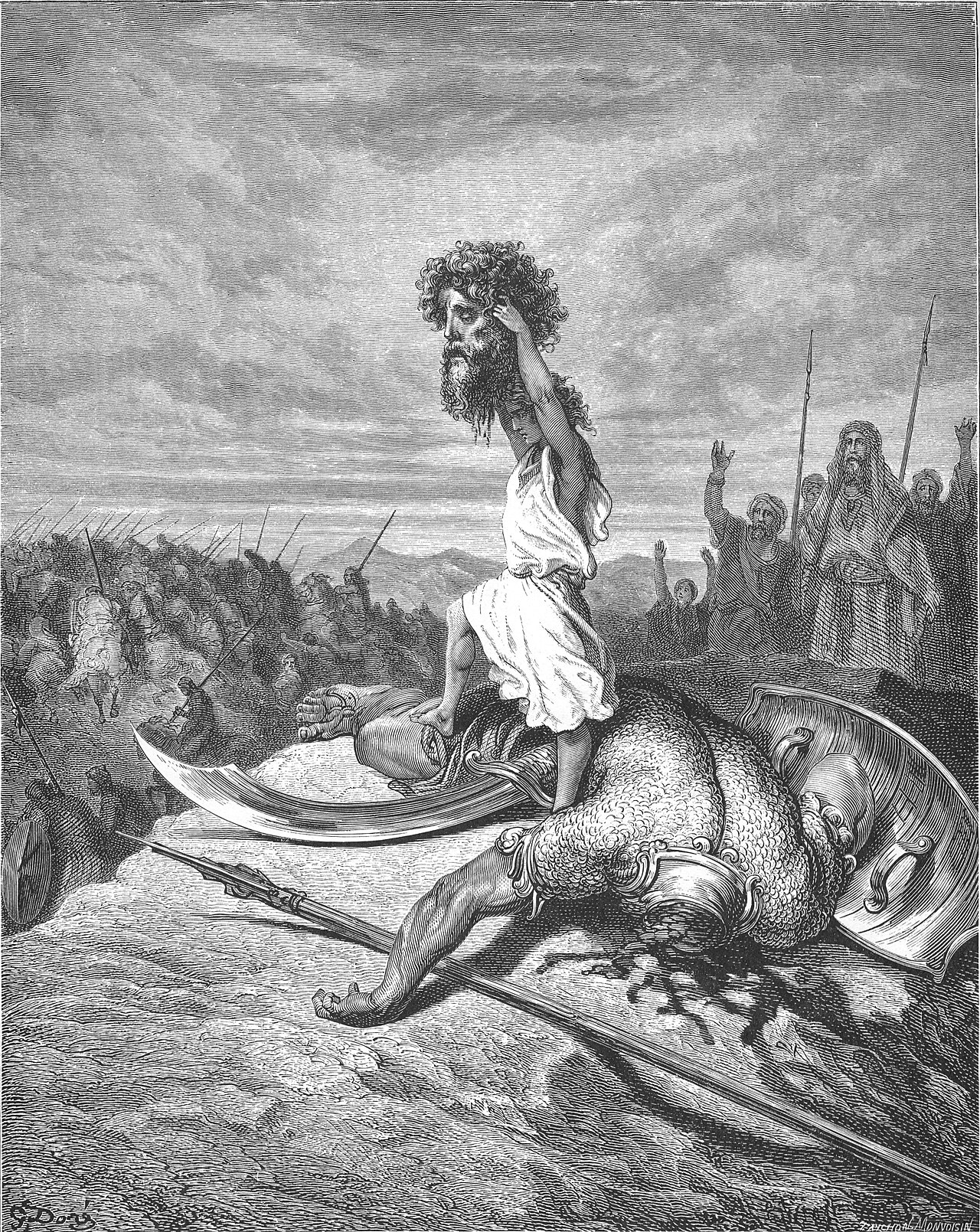
- PersonEarly monarchyGoliathThe Philistine champion of Gath who defied the armies of the living God for forty days — felled by a shepherd's sling stone and be…
This page draws on Adam Clarke, Commentary on the Bible; Jamieson, Fausset & Brown, Commentary Critical and Explanatory on the Whole Bible; John Gill, Exposition of the Old Testament; John Gill, Exposition of the Old Testament (1748-1763) and Matthew Henry, Commentary on the Whole Bible.