
1 Samuel 17:58
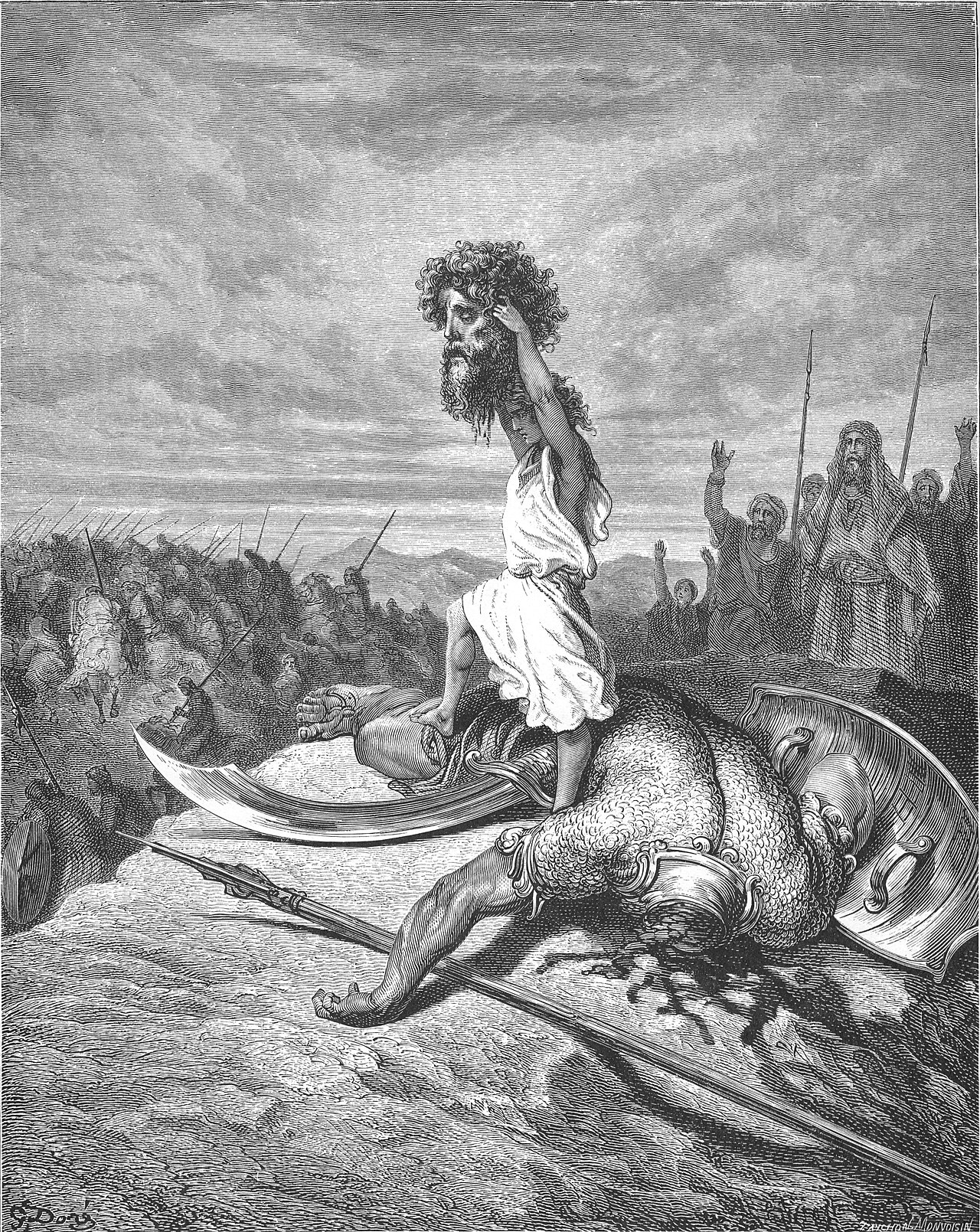
in 1 Samuel 17“Whose son are you, young man?” asked Saul. “I am the son of your servant Jesse of Bethlehem,” David replied.
BSB
The same verse in ASV and KJV ▾
ASV
And Saul said to him, Whose son art thou, thou young man? And David answered, I am the son of thy servant Jesse the Beth-lehemite.
KJV
And Saul said to him, Whose son art thou, thou young man? And David answered, I am the son of thy servant Jesse the Beth–lehemite.
⋯
This verse in 1 Samuel 17
Commentary
5 notes on this verseAnd Saul said unto him, whose son art thou, thou young man?.... Still the question was such as did not necessarily imply ignorance of his person, but of his family: and David answered, I am the son of thy servant Jesse the Bethlehemite; which doubtless refreshed the memory of Saul, and he quickly called to mind who he was. This interview was very probably at Gibeah of Saul, which was the place of his birth and residence, 1Sa 10:26, and where he kept his court, and to which he returned after the above victory was obtained.
The record, by era
The Medieval Church1 voice
"I am the son of your servant Jesse the Bethlehemite. When the Lord was preaching before his passion and healing all those oppressed by the devil, which is to go out against the Philistine, to be laid low by the staff of the cross and …
The Puritans and the Awakening1 voice
4 And there went out a champion out of the camp of the Philistines, named Goliath, of Gath, whose height was six cubits and a span. 5 And he had a helmet of brass upon his head, and he was armed with a coat of mail; and the weight of the coat was five thousand shekels of brass.
quarantine:scripture (2026-07-29) — scripture-overlap:100%@v3-5
The Nineteenth Century2 voices
Whose son art thou, thou young man? - That Saul should not know David with whom he had treated a little before, and even armed him for the combat, and that he should not know who his father was, though he had sent to his father for permission to David to reside constantly with him, (1Sa 16:22), is exceedingly strange! I fear all Bishop Warburton’s attempts to rectify the chronology by assumed anticipations, will not account for this.
A commentator
Jamieson, Fausset & Brown1802–1910
Commentary Critical and Explanatory on the Whole Bible (1871)
Saul . . . said unto Abner . . . whose son is this youth?--A young man is more spoken of in many Eastern countries by his father's name than his own. The growth of the beard, and other changes on a now full-grown youth, prevented the king from recognizing his former favorite minstrel [1Sa 16:23].
The words behind it
14 Hebrew wordsEvery Hebrew word of this verse in the order it stands, with what it means and the door to its own study. The last column counts the times a word stands in the whole Bible: the rarer the word, the more the places it appears belong together.
| Hebrew | Sound | Meaning | Word study | In the Bible |
|---|---|---|---|---|
| וַיֹּ֤אמֶר | vaiyomer | and he said | H559 → | 5305 times |
| אֵלָיו֙ | ʾelav | to him | H413 → | 5510 times |
| שָׁא֔וּל | shaul | Saul | H7586 → | 402 times |
| בֶּן־ | ben- | son of | H1121 → | 4930 times |
| מִ֥י | mi | whom? | H4310 → | 423 times |
| אַתָּ֖ה | ʾatah | [are] you | H859 → | 1094 times |
| הַנָּ֑עַר | hanaar | O youth | H5288 → | 239 times |
| וַיֹּ֣אמֶר | vaiyomer | and he said | H559 → | 5305 times |
| דָּוִ֔ד | david | David | H1732 → | 999 times |
| בֶּֽן־ | ben- | [the] son of | H1121 → | 4930 times |
| עַבְדְּךָ֥ | ʾavdekha | servant your | H5650 → | 799 times |
| יִשַׁ֖י | yishai | Jesse | H3448 → | 42 times |
| בֵּ֥ית | beit | [the] Beth- | H1022 → | 8 times |
| הַלַּחְמִֽי׃ | halachmi | <the> -lehemite | H1022 → | 8 times |
וַיֹּ֤אמֶרand he said
vaiyomerH559 →5305 times
אֵלָיו֙to him
ʾelavH413 →5510 times
שָׁא֔וּלSaul
shaulH7586 →402 times
בֶּן־son of
ben-H1121 →4930 times
מִ֥יwhom?
miH4310 →423 times
אַתָּ֖ה[are] you
ʾatahH859 →1094 times
הַנָּ֑עַרO youth
hanaarH5288 →239 times
וַיֹּ֣אמֶרand he said
vaiyomerH559 →5305 times
דָּוִ֔דDavid
davidH1732 →999 times
בֶּֽן־[the] son of
ben-H1121 →4930 times
עַבְדְּךָ֥servant your
ʾavdekhaH5650 →799 times
יִשַׁ֖יJesse
yishaiH3448 →42 times
בֵּ֥ית[the] Beth-
beitH1022 →8 times
הַלַּחְמִֽי׃<the> -lehemite
halachmiH1022 →8 times
A shaded row is a word that stands 400 times or fewer in the Bible.
The walk
5 stopsEach card is a verse this one points to, and under it the verses that one points to in turn. Where several paths arrive at the same place, that place is listed first: the text keeps returning to it.
Through
1 Samuel 17:12Now David was the son of a man named Jesse, an Ephrathite from Bethlehem of Judah who had eight sons in the days of Saul. And Jesse was old and well along in years.
it leads to
- 1 Samuel 16:10–11
Thus Jesse made seven of his sons pass before Samuel, but Samuel told him, “The LORD has not chosen any of these.”
- Genesis 35:19
So Rachel died and was buried on the way to Ephrath (that is, Bethlehem).
- 1 Samuel 16:18
One of the servants answered, “I have seen a son of Jesse of Bethlehem who knows how to play the harp. He is a mighty man of valor, a warrior, eloquent and handsome, and…
- Ruth 4:22
Obed was the father of Jesse, and Jesse was the father of David.
- 1 Chronicles 2:13–16
Jesse was the father of Eliab his firstborn; Abinadab was born second, Shimea third,
- 1 Samuel 16:10–11
Where this verse is studied
About 1 Samuel
Who and where
3 names in this verse with a page on the site.
- PersonUnited MonarchyDavidSecond king of united Israel, shepherd-turned-monarch, ancestor of the Messiah, and traditional author of many Psalms.
- PersonUnited monarchySaulIsrael's first king, head and shoulders above the people; began in humility, ended in rejection — sparing what God devoted, consul…
- PlaceBethlehemBethlehemDavid’s town, six miles south of Jerusalem, where Ruth gleaned, where Samuel anointed a shepherd boy, and where Jesus was born as…
This page draws on Adam Clarke, Commentary on the Bible; Bede, Commentary on Samuel; Jamieson, Fausset & Brown, Commentary Critical and Explanatory on the Whole Bible; John Gill, Exposition of the Old Testament (1748-1763) and Matthew Henry, Commentary on the Whole Bible.