
1 Samuel 14:30
in 1 Samuel 14How much better it would have been if the troops had eaten freely today from the plunder they took from their enemies! Would not the slaughter of the Philistines have been much greater?”
BSB
The same verse in ASV and KJV ▾
ASV
How much more, if haply the people had eaten freely to-day of the spoil of their enemies which they found? for now hath there been no great slaughter among the Philistines.
KJV
How much more, if haply the people had eaten freely to day of the spoil of their enemies which they found? for had there not been now a much greater slaughter among the Philistines?
⋯
This verse in 1 Samuel 14
Commentary
5 notes on this verseThis site's exposition
Your father bound the troops with a solemn oath
on 1 Samuel 14:28-30
A soldier tells Jonathan of the oath, and Jonathan answers plainly, "My father has brought trouble to the land," pointing to his own renewed strength as proof the oath did harm. His closing question widens the charge, since an army fed on the plunder would have made the slaughter of the Philistines much greater. He does not yet know the words will nearly cost him his life.
This site's exposition
if the troops had eaten freely today
Adam Clarke agreed with Jonathan that the oath meant to secure the pursuit left men too weak to finish it. Albert Barnes puts Aijalon fifteen or twenty miles from Michmash, a long chase for men who had eaten nothing. The Philistines escaped home.
The record, by era
The Medieval Church1 voice
A commentator
Gregory the DialogistCommentary on 1 Kings, Book 5, Chapter 4 · Written before 604.
proposed
37. For what does it mean that he rebukes the father for having troubled the land, except that he reproves the leaders for having confused their own decrees through ignorance? By the name "land," the humility of subjects is designated, which is indeed seen to be troubled when, through the erring judgment of pastors, it seems to abandon the order of tranquil truth. And because while they eagerly seek the favors of arrogant men and try to assert that this is lawful, they bring forward their own accomplishments as testimony.
The Puritans and the Awakening2 voices
); but, as it was, they were very faint, too much fatigued (so the Chaldee), and began to think more of their meat than of their work. The worst effect of all was that at evening, when the restraint was taken off and they returned to their food again, they were so greedy and eager upon it that they ate the flesh with the blood, expressly contrary to the law of God,
quarantine:debris (2026-07-29) — leading-punctuation+unbalanced-parens
How much more, if haply the people had eaten freely today of the spoil of their enemies which they found?....
The words behind it
17 Hebrew wordsEvery Hebrew word of this verse in the order it stands, with what it means and the door to its own study. The last column counts the times a word stands in the whole Bible: the rarer the word, the more the places it appears belong together.
| Hebrew | Sound | Meaning | Word study | In the Bible |
|---|---|---|---|---|
| אַ֗ף | ʾaf | indeed? | H637 → | 134 times |
| כִּ֡י | ki | for | H3588 → | 4482 times |
| לוּא֩ | lu' | <if> | H3863 → | |
| אָכֹ֨ל | ʾakhol | certainly [if] <to eat> | H398 → | 810 times |
| אָכַ֤ל | ʾakhal | it had eaten | H398 → | 810 times |
| הַיּוֹם֙ | haiyom | this day | H3117 → | 2304 times |
| הָעָ֔ם | haam | the people | H5971 → | 1873 times |
| מִשְּׁלַ֥ל | mishelal | any of [the] plunder of | H7998 → | 73 times |
| אֹיְבָ֖יו | ʾoyevav | enemies its | H341 → | 282 times |
| אֲשֶׁ֣ר | ʾasher | which | H834 → | 5497 times |
| מָצָ֑א | matza' | it found | H4672 → | 455 times |
| כִּ֥י | ki | for | H3588 → | 4482 times |
| עַתָּ֛ה | ʾatah | now | H6258 → | 433 times |
| לֹֽא־ | lo'- | not | H3808 → | 5168 times |
| רָבְתָ֥ה | ravetah | it has been great | H7235 → | 227 times |
| מַכָּ֖ה | makah | defeat | H4347 → | 48 times |
| בַּפְּלִשְׁתִּֽים׃ | bapelishtim | among the Philistines | H6430 → | 287 times |
אַ֗ףindeed?
ʾafH637 →134 times
כִּ֡יfor
kiH3588 →4482 times
לוּא֩<if>
lu'H3863 →
אָכֹ֨לcertainly [if] <to eat>
ʾakholH398 →810 times
אָכַ֤לit had eaten
ʾakhalH398 →810 times
הַיּוֹם֙this day
haiyomH3117 →2304 times
הָעָ֔םthe people
haamH5971 →1873 times
מִשְּׁלַ֥לany of [the] plunder of
mishelalH7998 →73 times
אֹיְבָ֖יוenemies its
ʾoyevavH341 →282 times
אֲשֶׁ֣רwhich
ʾasherH834 →5497 times
מָצָ֑אit found
matza'H4672 →455 times
כִּ֥יfor
kiH3588 →4482 times
עַתָּ֛הnow
ʾatahH6258 →433 times
לֹֽא־not
lo'-H3808 →5168 times
רָבְתָ֥הit has been great
ravetahH7235 →227 times
מַכָּ֖הdefeat
makahH4347 →48 times
בַּפְּלִשְׁתִּֽים׃among the Philistines
bapelishtimH6430 →287 times
A shaded row is a word that stands 400 times or fewer in the Bible.
The walk
5 stopsEach card is a verse this one points to, and under it the verses that one points to in turn. Where several paths arrive at the same place, that place is listed first: the text keeps returning to it.
Through
Ecclesiastes 9:18Wisdom is better than weapons of war, but one sinner destroys much good.
it leads to
- Joshua 7:1
The Israelites, however, acted unfaithfully regarding the things devoted to destruction. Achan son of Carmi, the son of Zabdi, the son of Zerah, of the tribe of Judah, took some of what was set…
- Joshua 7:11–12
Israel has sinned; they have transgressed My covenant that I commanded them, and they have taken some of what was devoted to destruction. Indeed, they have stolen and lied, and they have put these…
- Joshua 7:5
And the men of Ai struck down about thirty-six of them, chasing them from the gate as far as the quarries and striking them down on the slopes. So the hearts of the people…
- 2 Timothy 4:3–4
For the time will come when men will not tolerate sound doctrine, but with itching ears they will gather around themselves teachers to suit their own desires.
- 2 Timothy 2:16–18
But avoid irreverent, empty chatter, which will only lead to more ungodliness,
- Joshua 7:1
Where this verse is studied
On this page
Studies1
About 1 Samuel
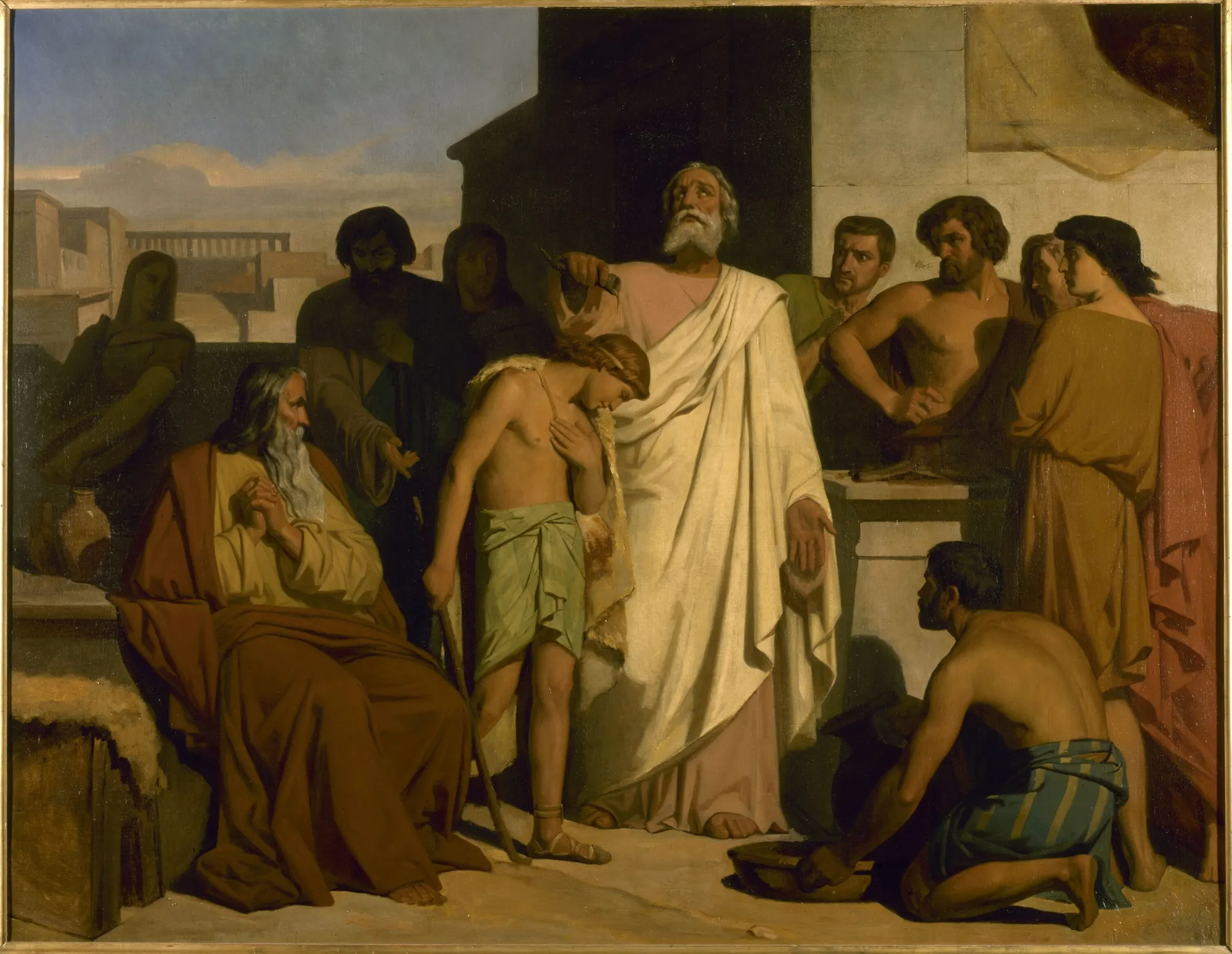
This page draws on Adam Clarke, Commentary on the Bible; Albert Barnes, Notes, Explanatory and Practical, on the Old and New Testaments; Gregory the Dialogist, Commentary on 1 Kings, Book 5, Chapter 4; John Gill, Exposition of the Old Testament (1748-1763); Keil and Delitzsch, Biblical Commentary on the Books of Samuel and Matthew Henry, Commentary on the Whole Bible.