
1 Kings 22:52
in 1 Kings 22And he did evil in the sight of the LORD and walked in the ways of his father and mother and of Jeroboam son of Nebat, who had caused Israel to sin.
BSB
The same verse in ASV and KJV ▾
ASV
And he did that which was evil in the sight of Jehovah, and walked in the way of his father, and in the way of his mother, and in the way of Jeroboam the son of Nebat, wherein he made Israel to sin.
KJV
And he did evil in the sight of the Lord, and walked in the way of his father, and in the way of his mother, and in the way of Jeroboam the son of Nebat, who made Israel to sin:
⋯
This verse in 1 Kings 22
Commentary
5 notes on this verseWhich evil was idolatry: and walked in the way of his father; his father Ahab, who worshipped Baal: and in the way of his mother; his mother Jezebel, who was still living, and served Baal and Astarte, the deities of her country: and in the way of Jeroboam the son of Nebat; who set up and worshipped the golden calves: who made Israel to sin; by the worship of the same, into which he drew them by his example and authority.
The record, by era
The Puritans and the Awakening3 voices
7 And Jehoshaphat said, Is there not here a prophet of the L ORD besides, that we might enquire of him? 8 And the king of Israel said unto Jehoshaphat, There is yet one man, Micaiah the son of Imlah, by whom we may enquire of the L ORD : but I hate him; for he doth not prophesy good concerning me, but evil.
quarantine:scripture (2026-07-29) — scripture-overlap:93%@v7-8
In the way - Which seems added, to shew, how little the example of parents, or ancestors, is to be valued where it is opposed to the will and word of God.
Miserable are the children that not only derive a stock of corruption from their parents, but are thus taught by them to trade with it; and unhappy, most unhappy parents, are those that help to damn their children's souls.
The Nineteenth Century1 voice
A commentator
Albert Barnes1798–1870
Notes, Explanatory and Practical, on the Old and New Testaments (1832-1869)
In the way of his mother - In this phrase, which does not occur anywhere else, we see the strong feeling of the writer as to the influence of Jezebel (compare 1Ki 16:31). Verses 1Ki 22:51-53. It would be of advantage if these verses were transferred to the Second Book of Kings, which would thus open with the commencement of Ahaziah’s reign. The division of the books does not proceed from the author. See the introduction to the Book of Kings
The words behind it
17 Hebrew wordsEvery Hebrew word of this verse in the order it stands, with what it means and the door to its own study. The last column counts the times a word stands in the whole Bible: the rarer the word, the more the places it appears belong together.
| Hebrew | Sound | Meaning | Word study | In the Bible |
|---|---|---|---|---|
| וַיַּ֥עַשׂ | vaiyaas | and he did | H6213 → | 2628 times |
| הָרַ֖ע | hara' | the evil | H7451 → | 662 times |
| בְּעֵינֵ֣י | beeinei | in [the] eyes of | H5869 → | 887 times |
| יְהוָ֑ה | yahweh | Yahweh | H3068 → | 6520 times |
| וַיֵּ֗לֶךְ | vaiyelekh | and he walked | H1980 → | 1546 times |
| בְּדֶ֤רֶךְ | bederekh | in [the] way of | H1870 → | 707 times |
| אָבִיו֙ | ʾaviv | father his | H1 → | 1212 times |
| וּבְדֶ֣רֶךְ | uvederekh | and in [the] way of | H1870 → | 707 times |
| אִמּ֔וֹ | ʾimo | mother his | H517 → | 220 times |
| וּבְדֶ֙רֶךְ֙ | uvederekh | and in [the] way of | H1870 → | 707 times |
| יָרָבְעָ֣ם | yaraveam | Jeroboam | H3379 → | 104 times |
| בֶּן־ | ben- | [the] son of | H1121 → | 4930 times |
| נְבָ֔ט | nevat | Nebat | H5028 → | 25 times |
| אֲשֶׁ֥ר | ʾasher | who | H834 → | 5497 times |
| הֶחֱטִ֖יא | hecheti' | he caused to sin | H2398 → | 238 times |
| אֶת־ | ʾet- | <obj.> | H853 → | 10935 times |
| יִשְׂרָאֵֽל׃ | yisrael | Israel | H3478 → | 2507 times |
וַיַּ֥עַשׂand he did
vaiyaasH6213 →2628 times
הָרַ֖עthe evil
hara'H7451 →662 times
בְּעֵינֵ֣יin [the] eyes of
beeineiH5869 →887 times
יְהוָ֑הYahweh
yahwehH3068 →6520 times
וַיֵּ֗לֶךְand he walked
vaiyelekhH1980 →1546 times
בְּדֶ֤רֶךְin [the] way of
bederekhH1870 →707 times
אָבִיו֙father his
ʾavivH1 →1212 times
וּבְדֶ֣רֶךְand in [the] way of
uvederekhH1870 →707 times
אִמּ֔וֹmother his
ʾimoH517 →220 times
וּבְדֶ֙רֶךְ֙and in [the] way of
uvederekhH1870 →707 times
יָרָבְעָ֣םJeroboam
yaraveamH3379 →104 times
בֶּן־[the] son of
ben-H1121 →4930 times
נְבָ֔טNebat
nevatH5028 →25 times
אֲשֶׁ֥רwho
ʾasherH834 →5497 times
הֶחֱטִ֖יאhe caused to sin
hecheti'H2398 →238 times
אֶת־<obj.>
ʾet-H853 →10935 times
יִשְׂרָאֵֽל׃Israel
yisraelH3478 →2507 times
A shaded row is a word that stands 400 times or fewer in the Bible.
The walk
8 stopsEach card is a verse this one points to, and under it the verses that one points to in turn. Where several paths arrive at the same place, that place is listed first: the text keeps returning to it.
Through
1 Kings 21:25(Surely there was never one like Ahab, who sold himself to do evil in the sight of the LORD, incited by his wife Jezebel.
it leads to
- Ecclesiastes 7:26
And I find more bitter than death the woman who is a snare, whose heart is a net, and whose hands are chains. The man who pleases God escapes her, but the sinner is…
Reached by 2 separate paths from here.
- Proverbs 22:14
The mouth of an adulteress is a deep pit; he who is under the wrath of the LORD will fall into it.
- 1 Kings 21:20
When Elijah arrived, Ahab said to him, “So you have found me out, my enemy.” He replied, “I have found you out because you have sold yourself to do evil in the sight of…
- 1 Kings 16:30–33
However, Ahab son of Omri did evil in the sight of the LORD, more than all who were before him.
- Ecclesiastes 7:26
Through
Mark 6:24Then she went out and asked her mother, “What should I request?” And her mother answered, “The head of John the Baptist.”
it leads to
- 2 Chronicles 22:3–4
Ahaziah also walked in the ways of the house of Ahab, for his mother was his counselor in wickedness.
Reached by 2 separate paths from here.
- 2 Chronicles 22:3–4
Through
1 Kings 15:26And he did evil in the sight of the LORD and walked in the way of his father and in his sin, which he had caused Israel to commit.
it leads to
- 1 Kings 14:16
So He will give Israel over on account of the sins Jeroboam has committed and has caused Israel to commit.”
- 1 Kings 15:30
because of the sins Jeroboam had committed and had caused Israel to commit, and because he had provoked the LORD, the God of Israel, to anger.
- 1 Kings 15:34
And Baasha did evil in the sight of the LORD and walked in the way of Jeroboam and in his sin, which he had caused Israel to commit.
- 1 Kings 14:16
Where this verse is studied
On this page
About 1 Kings
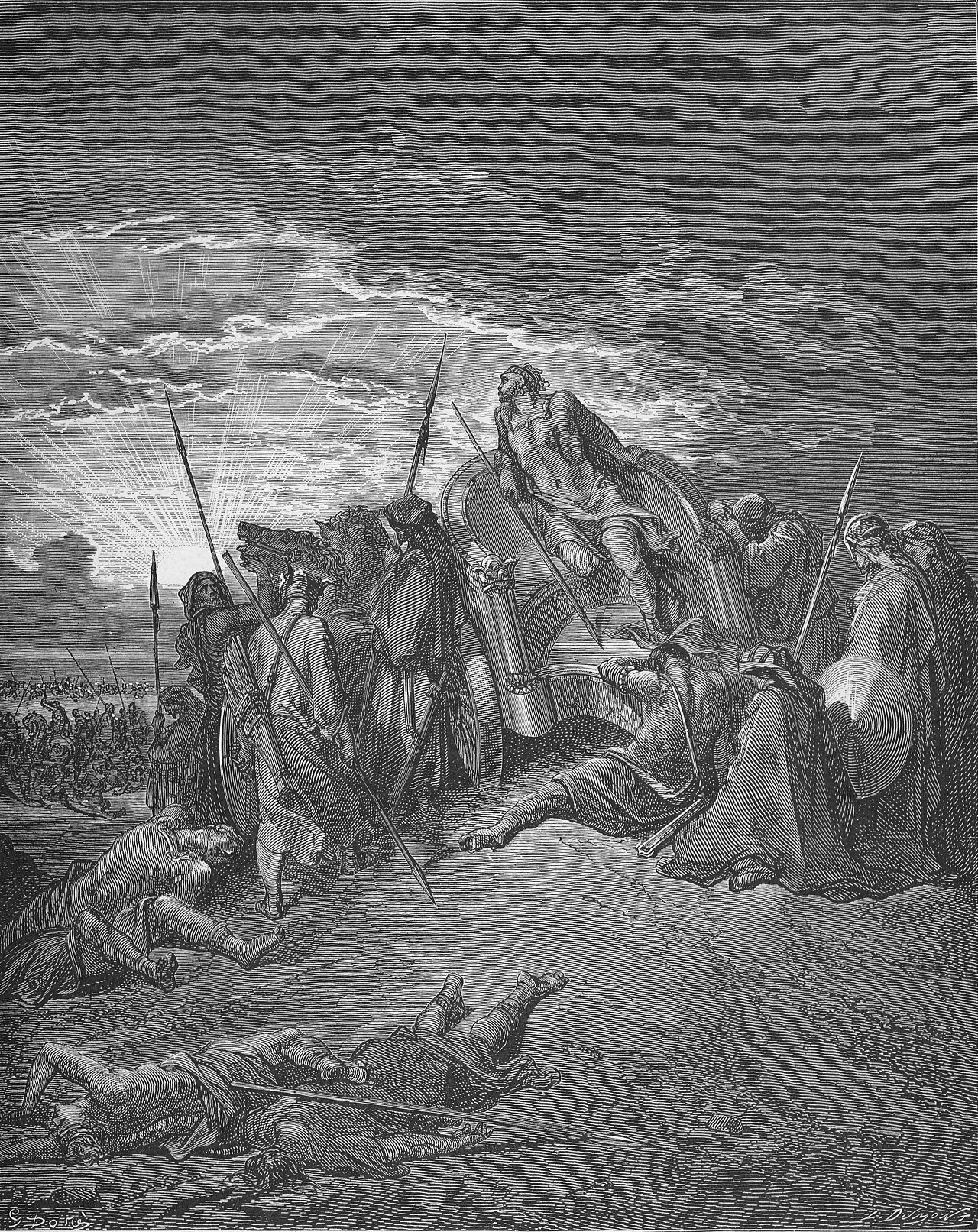
This page draws on Albert Barnes, Notes, Explanatory and Practical, on the Old and New Testaments (1832-1869); John Gill, Exposition of the Old Testament (1748-1763); John Wesley, Explanatory Notes upon the Old Testament and Matthew Henry, Commentary on the Whole Bible.