
1 Kings 22:17
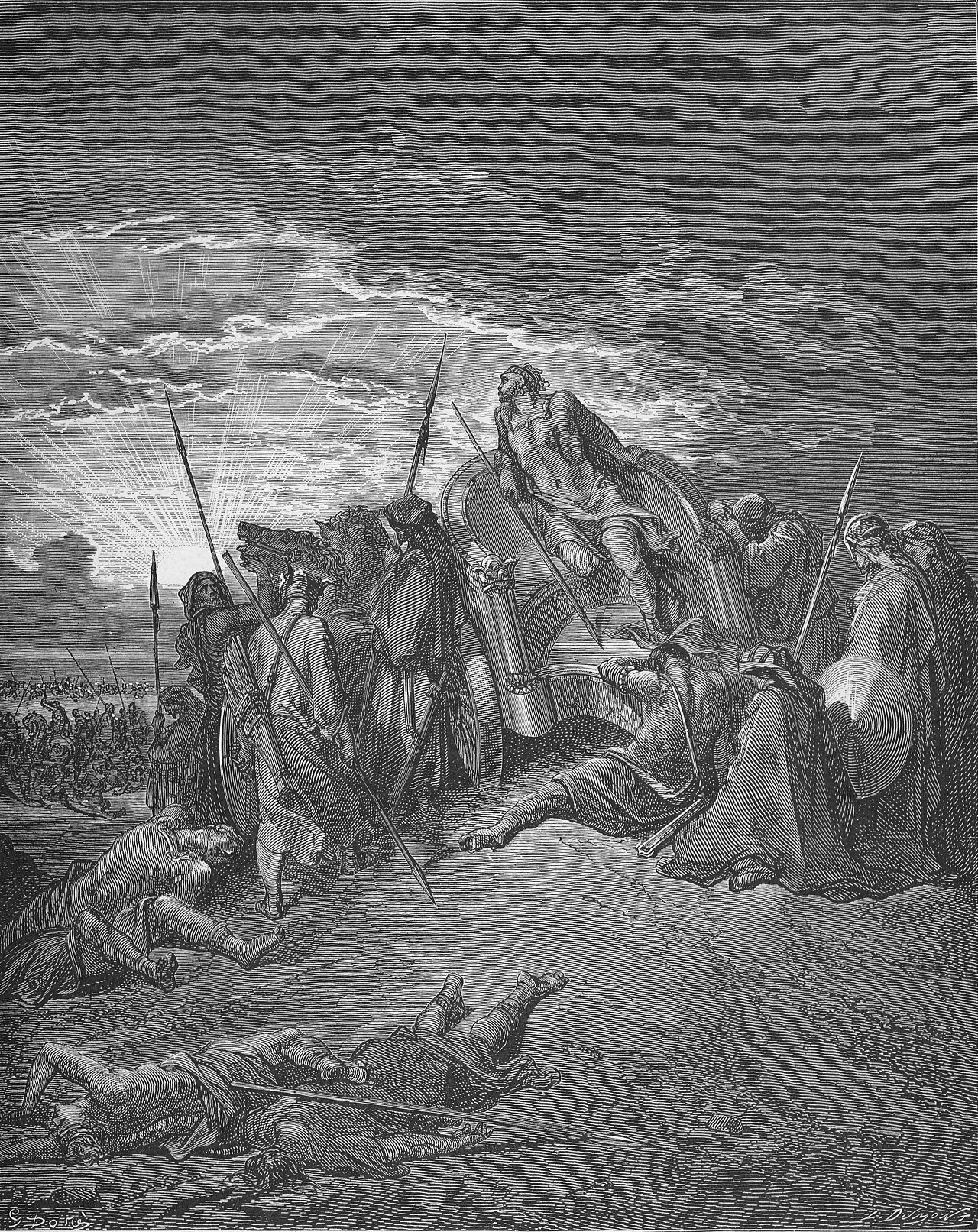
in 1 Kings 22So Micaiah declared: “I saw all Israel scattered on the hills like sheep without a shepherd. And the LORD said, ‘These people have no master; let each one return home in peace.’”
BSB
The same verse in ASV and KJV ▾
ASV
And he said, I saw all Israel scattered upon the mountains, as sheep that have no shepherd: and Jehovah said, These have no master; let them return every man to his house in peace.
KJV
And he said, I saw all Israel scattered upon the hills, as sheep that have not a shepherd: and the Lord said, These have no master: let them return every man to his house in peace.
⋯
This verse in 1 Kings 22
Commentary
9 notes on this verseA commentator
Albert Barnes1798–1870
Notes, Explanatory and Practical, on the Old and New Testaments (1832-1869)
Thus adjured, Micaiah wholly changes his tone. Ahab cannot possibly mistake the meaning of his vision, especially as the metaphor of “sheep and shepherd” for king and people was familiar to the Israelites from the prayer of Moses Num 27:17.
This site's exposition
adjure thee that thou tell
on 1 Kings 22:16-17
Once Ahab demands the truth in the name of the Lord, Micaiah gives it: I saw all Israel scattered upon the hills, as sheep that have not a shepherd, an image whose earlier occurrence at Num 27:17 is Moses pleading for a successor so the congregation will not be left without one. Here the shepherdless flock is the army Ahab is about to lead to Ramoth-gilead without him.
The record, by era
The Medieval Church1 voice
A commentator
Walafrid StraboGLOSSA ORDINARIA, THIRD BOOK OF KINGS 22.17 · Written before 849.
proposed
"I saw all Israel scattered on the mountains, like sheep that have no shepherd; and the Lord said, 'These have no master; let each one go home in peace.' " Through these words [the prophet] shows that [Ahab's] iniquity is the cause of the slaughter. …
The Puritans and the Awakening3 voices
The hills - Upon the mountains of Gilead, nigh Ramoth, where they lay encamped by Ahab's order. As sheep - As people who have lost their king. Return - Discharged from the war: which was fulfilled, ver. 26.
quarantine:anchor (2026-07-29) — cites-ver-26-anchored-17-17
And he said,....
"The prophet that has a dream let him tell that, and so quote his authority; and he that has my word, let him speak my word faithfully, and not his own; for what is the chaff to the wheat? " Now Ahab finds himself aggrieved, turns to Jehoshaphat, and appeals to him whether Micaiah had not manifestly a spite against him,
The Nineteenth Century1 voice
A commentator
Jamieson, Fausset & Brown1802–1910
Commentary Critical and Explanatory on the Whole Bible (1871)
I saw all Israel scattered upon the hills, as sheep that have not a shepherd--The purport of this was that the army of Israel would be defeated and dispersed; that Ahab would fall in the battle, and the people return without either being pursued or destroyed by the enemy.
2 more voices on this verse
The Nineteenth Century2 voices
A commentator
Jamieson, Fausset & Brown1802–1910
Commentary Critical and Explanatory on the Whole Bible (1871)
proposed
what the Lord saith unto me, that will I speak--On the way the messenger who conducted [Micaiah] to the royal presence informed him of the tenor of the prophecies already given and recommended him to agree with the rest, no doubt from the kindly motive of seeing him released from imprisonment.
quarantine:debris (2026-07-29) — starts-lowercase
These have no master - Here the prophet foretells the defeat of Israel, and the death of the king; they were as sheep that had not a shepherd, people that had no master, the political shepherd and master (Ahab) shall fall in battle.
How the passage was read
What the Jewish commentators add
These have no masters. You alone will die in the war, as the matter is stated below, “Do not battle the small or the great, but only with the king of Yisroel himself.” 7 Below v.
This section is reception history: how the passage was read and kept in the Jewish tradition. Where a reading parts from an essential of the Christian faith, the section says so at that point.
Texts and citation data: Sefaria; each excerpt follows its version’s licence. 5 further sources are cited on this chapter that carry no English text this site may quote or only restate the verse.
The words behind it
22 Hebrew wordsEvery Hebrew word of this verse in the order it stands, with what it means and the door to its own study. The last column counts the times a word stands in the whole Bible: the rarer the word, the more the places it appears belong together.
| Hebrew | Sound | Meaning | Word study | In the Bible |
|---|---|---|---|---|
| וַיֹּ֗אמֶר | vaiyomer | and he said | H559 → | 5305 times |
| רָאִ֤יתִי | raiti | I saw | H7200 → | 1300 times |
| אֶת־ | ʾet- | <obj.> | H853 → | 10935 times |
| כָּל־ | kol- | all | H3605 → | 5413 times |
| יִשְׂרָאֵל֙ | yisrael | Israel | H3478 → | 2507 times |
| נְפֹצִ֣ים | nefotzim | scattered | H6327 → | |
| אֶל־ | ʾel- | to | H413 → | 5510 times |
| הֶהָרִ֔ים | heharim | the mountains | H2022 → | 546 times |
| כַּצֹּ֕אן | katzon | like <the> flock | H6629 → | 274 times |
| אֲשֶׁ֥ר | ʾasher | which | H834 → | 5497 times |
| אֵין־ | ʾein- | not | H369 → | 789 times |
| לָהֶ֖ם | lahem | [belongs] to them | ||
| רֹעֶ֑ה | roeh | a shepherd | H7462 → | |
| וַיֹּ֤אמֶר | vaiyomer | and he said | H559 → | 5305 times |
| יְהוָה֙ | yahweh | Yahweh | H3068 → | 6520 times |
| לֹֽא־ | lo'- | not | H3808 → | 5168 times |
| אֲדֹנִ֣ים | ʾadonim | masters | H113 → | 333 times |
| לָאֵ֔לֶּה | laeleh | [belong] to these | H428 → | 746 times |
| יָשׁ֥וּבוּ | yashuvu | let them return | H7725 → | 1056 times |
| אִישׁ־ | ʾish- | each | H376 → | 1663 times |
| לְבֵית֖וֹ | leveito | to house his | H1004 → | 2046 times |
| בְּשָׁלֽוֹם׃ | beshalom | in peace | H7965 → | 236 times |
וַיֹּ֗אמֶרand he said
vaiyomerH559 →5305 times
רָאִ֤יתִיI saw
raitiH7200 →1300 times
אֶת־<obj.>
ʾet-H853 →10935 times
כָּל־all
kol-H3605 →5413 times
יִשְׂרָאֵל֙Israel
yisraelH3478 →2507 times
נְפֹצִ֣יםscattered
nefotzimH6327 →
אֶל־to
ʾel-H413 →5510 times
הֶהָרִ֔יםthe mountains
heharimH2022 →546 times
כַּצֹּ֕אןlike <the> flock
katzonH6629 →274 times
אֲשֶׁ֥רwhich
ʾasherH834 →5497 times
אֵין־not
ʾein-H369 →789 times
לָהֶ֖ם[belongs] to them
lahem
רֹעֶ֑הa shepherd
roehH7462 →
וַיֹּ֤אמֶרand he said
vaiyomerH559 →5305 times
יְהוָה֙Yahweh
yahwehH3068 →6520 times
לֹֽא־not
lo'-H3808 →5168 times
אֲדֹנִ֣יםmasters
ʾadonimH113 →333 times
לָאֵ֔לֶּה[belong] to these
laelehH428 →746 times
יָשׁ֥וּבוּlet them return
yashuvuH7725 →1056 times
אִישׁ־each
ʾish-H376 →1663 times
לְבֵית֖וֹto house his
leveitoH1004 →2046 times
בְּשָׁלֽוֹם׃in peace
beshalomH7965 →236 times
A shaded row is a word that stands 400 times or fewer in the Bible.
The walk
8 stopsEach card is a verse this one points to, and under it the verses that one points to in turn. Where several paths arrive at the same place, that place is listed first: the text keeps returning to it.
Through
Matthew 9:36When He saw the crowds, He was moved with compassion for them, because they were harassed and helpless, like sheep without a shepherd.
it leads to
- Mark 6:34
When Jesus stepped ashore and saw a large crowd, He had compassion on them, because they were like sheep without a shepherd. And He began to teach them many things.
Reached by 2 separate paths from here.
- Numbers 27:17
who will go out and come in before them, and who will lead them out and bring them in, so that the congregation of the LORD will not be like sheep without a shepherd.”
- Jeremiah 50:6
My people are lost sheep; their shepherds have led them astray, causing them to roam the mountains. They have wandered from mountain to hill; they have forgotten their resting place.
- Ezekiel 34:3–6
You eat the fat, wear the wool, and butcher the fattened sheep, but you do not feed the flock.
- Matthew 14:14
When He stepped ashore and saw a large crowd, He had compassion on them and healed their sick.
- Mark 6:34
Through
Zechariah 13:7Awake, O sword, against My Shepherd, against the man who is My Companion, declares the LORD of Hosts. Strike the Shepherd, and the sheep will be scattered, and I will turn My hand against…
it leads to
- Mark 14:27
Then Jesus said to them, “You will all fall away, for it is written: ‘I will strike the Shepherd, and the sheep will be scattered.’
- Matthew 26:31
Then Jesus said to them, “This very night you will all fall away on account of Me. For it is written: ‘I will strike the Shepherd, and the sheep of the flock will be…
- John 16:32
“Look, an hour is coming and has already come when you will be scattered, each to his own home, and you will leave Me all alone. Yet I am not alone, because the Father…
- Mark 14:27
Where this verse is studied
On this page
About 1 Kings
This page draws on Adam Clarke, Commentary on the Bible; Albert Barnes, Notes, Explanatory and Practical, on the Old and New Testaments (1832-1869); F. W. Farrar, The First Book of Kings (Expositor's Bible); Jamieson, Fausset & Brown, Commentary Critical and Explanatory on the Whole Bible; John Gill, Exposition of the Old Testament (1748-1763); John Wesley, Explanatory Notes upon the Old Testament; Matthew Henry, Commentary on the Whole Bible and Walafrid Strabo, GLOSSA ORDINARIA, THIRD BOOK OF KINGS 22.17.