
1 Kings 11:42
in 1 Kings 11Thus the time that Solomon reigned in Jerusalem over all Israel was forty years.
BSB
The same verse in ASV and KJV ▾
ASV
And the time that Solomon reigned in Jerusalem over all Israel was forty years.
KJV
And the time that Solomon reigned in Jerusalem over all Israel was forty years.
⋯
This verse in 1 Kings 11
Commentary
4 notes on this verseAnd the time that Solomon reigned in Jerusalem, over all Israel, was forty years. The same says Eupolemus (z), an Heathen writer, who makes him to live but fifty two years; which is the common tradition of the Jews, who suppose he was but twelve years of age when he began to reign; which is to be confuted from the age of his son Rehoboam, see 1Ki 14:21. Josephus (a), on the other hand, makes him to live to too great an age, who says that he reigned eighty years, and lived to ninety four. (z) Apud Euseb. Praepar.
This site's exposition
the book of the acts of Solomon
on 1 Kings 11:41-43
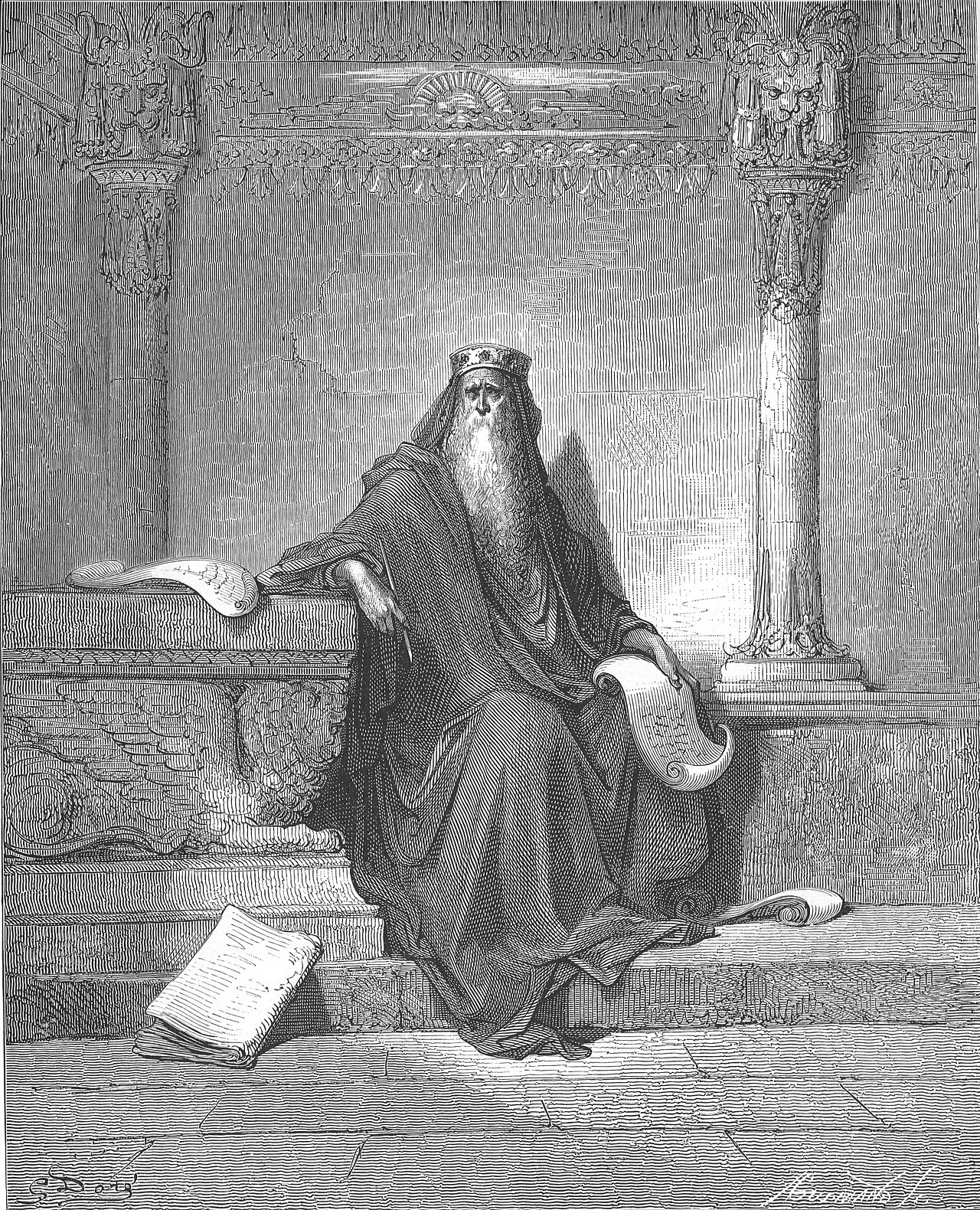
The closing formula, the book of the acts of Solomon, a source the narrator names and does not reproduce, and forty years on the throne matching David's own reign length at 2:11, frame a life that opened in unmatched wisdom and closes under a sentence of division. Solomon slept with his fathers and was buried in the city of David, the family plot rather than a new monument, and Rehoboam reigned in his stead, carrying into the next chapter the burden his father's building projects and his father's wives had both stored up for him.
The record, by era
The Puritans and the Awakening1 voice
on 1 Kings 11:41-43
Shall Solomon fall, that was the beauty of Israel, and so great a blessing of his generation? Yes, it is too true, and the scripture is faithful in relating it, and repeating it, and referring to it long after, Neh. xiii. There was no king like Solomon who was beloved of his God, yet even him did outlandish women cause to sin.
The Nineteenth Century1 voice
Solomon reigned - forty years - Josephus says fourscore years, which is sufficiently absurd. Calmet supposes him to have been eighteen years old when he came to the throne, and that he died A.M. 3029, aged fifty-eight years; and, when we consider the excess in which he lived, and the criminal passions which he must have indulged among his thousand wives, and their idolatrous and impure worship, this life was as long as could be reasonably expected.
The words behind it
10 Hebrew wordsEvery Hebrew word of this verse in the order it stands, with what it means and the door to its own study. The last column counts the times a word stands in the whole Bible: the rarer the word, the more the places it appears belong together.
| Hebrew | Sound | Meaning | Word study | In the Bible |
|---|---|---|---|---|
| וְהַיָּמִ֗ים | vehaiyamim | and the days | H3117 → | 2304 times |
| אֲשֶׁר֩ | ʾasher | which | H834 → | 5497 times |
| מָלַ֨ךְ | malakh | he reigned | H4427 → | 348 times |
| שְׁלֹמֹ֤ה | shelomoh | Solomon | H8010 → | 291 times |
| בִירוּשָׁלִַ֙ם֙ | virushalim | in Jerusalem | H3389 → | 643 times |
| עַל־ | ʾal- | over | H5921 → | 5755 times |
| כָּל־ | kol- | all | H3605 → | 5413 times |
| יִשְׂרָאֵ֔ל | yisrael | Israel | H3478 → | 2507 times |
| אַרְבָּעִ֖ים | ʾarbaim | [were] forty | H705 → | 136 times |
| שָׁנָֽה׃ | shanah | year[s] | H8141 → | 877 times |
וְהַיָּמִ֗יםand the days
vehaiyamimH3117 →2304 times
אֲשֶׁר֩which
ʾasherH834 →5497 times
מָלַ֨ךְhe reigned
malakhH4427 →348 times
שְׁלֹמֹ֤הSolomon
shelomohH8010 →291 times
בִירוּשָׁלִַ֙ם֙in Jerusalem
virushalimH3389 →643 times
עַל־over
ʾal-H5921 →5755 times
כָּל־all
kol-H3605 →5413 times
יִשְׂרָאֵ֔לIsrael
yisraelH3478 →2507 times
אַרְבָּעִ֖ים[were] forty
ʾarbaimH705 →136 times
שָׁנָֽה׃year[s]
shanahH8141 →877 times
A shaded row is a word that stands 400 times or fewer in the Bible.
The walk
2 stopsEach card is a verse this one points to, and under it the verses that one points to in turn. Where several paths arrive at the same place, that place is listed first: the text keeps returning to it.
Through
1 Kings 2:11The length of David’s reign over Israel was forty years—seven years in Hebron and thirty-three years in Jerusalem.
it leads to
- 2 Samuel 5:4–5
David was thirty years old when he became king, and he reigned forty years.
- 1 Chronicles 29:26–27
David son of Jesse was king over all Israel.
- 2 Samuel 5:4–5
Where this verse is studied
On this page
Studies1
About 1 Kings
Who and where
2 names in this verse with a page on the site.
This page draws on Adam Clarke, Commentary on the Bible; John Gill, Exposition of the Old Testament (1748-1763); John Gill, Exposition of the Old Testament; Keil, The Books of the Kings and Matthew Henry, Commentary on the Whole Bible.