
Skip to content
mannafest.faith
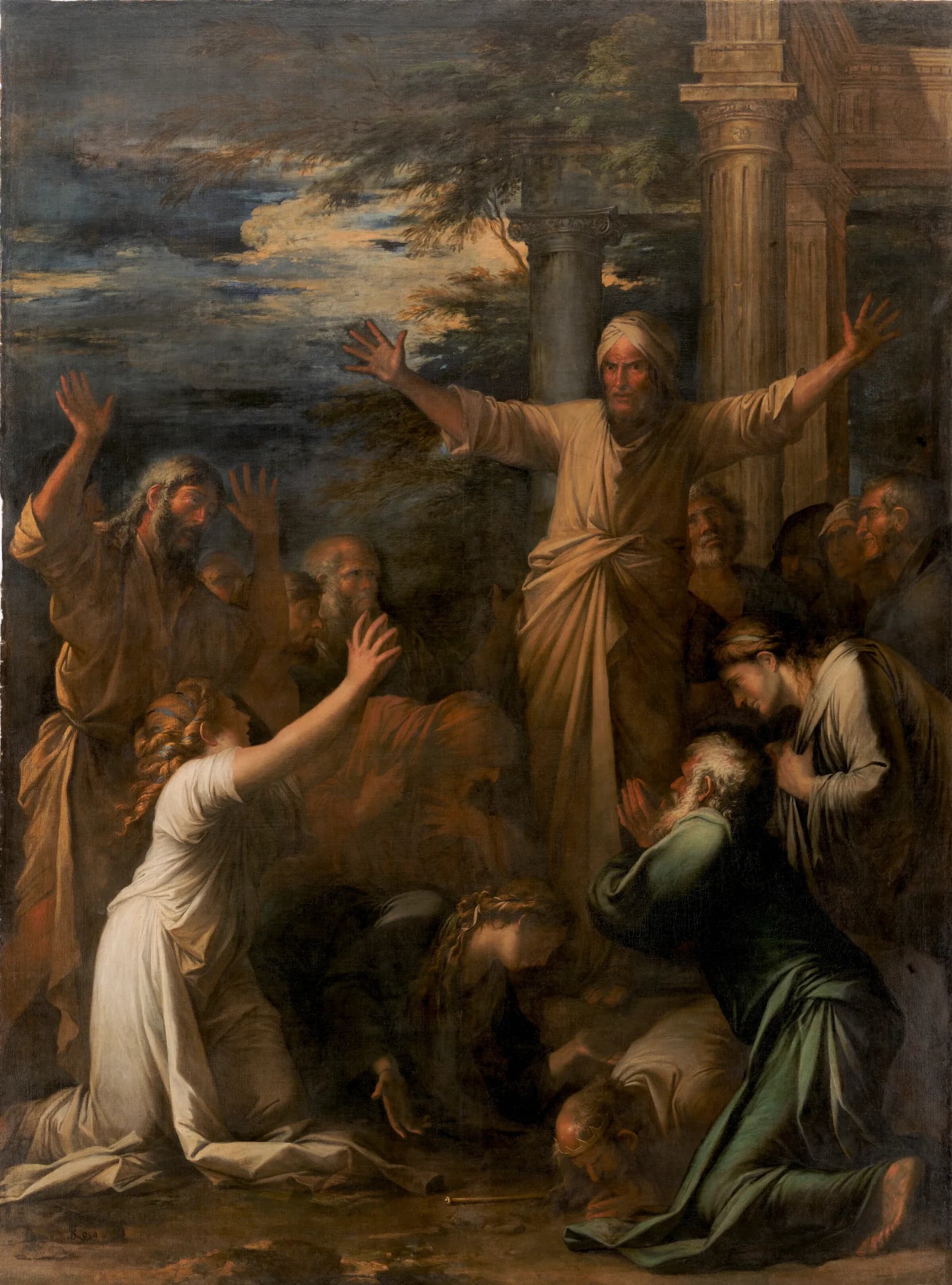
Jonah Preaching to the People of Niniveh, Salvator Rosa, 1661, Statens Museum for Kunst, Copenhagen

Jonah Preaching to the People of Niniveh, Salvator Rosa, 1661, Statens Museum for Kunst, Copenhagen. Public domain.

A movement of the canon · the Old Testament

The Minor Prophets

Twelve books of prophecy from Hosea to Malachi, written between the 9th century BC and 430 BC, that carry God's word to Israel, Judah and their neighbours before, during and after the exile.

What are the Minor Prophets?

Summary

The Minor Prophets are twelve shorter books of prophecy in which God speaks through his prophets to Israel, to Judah and to the nations around them.

  • The Hebrew Bible copies the twelve on one scroll and counts them as one book, the Book of the Twelve.
  • Hosea, Amos, Jonah and Micah spoke while Assyria grew strong and conquered the northern kingdom.
  • Nahum, Zephaniah and Habakkuk spoke in Judah's last century before Babylon took Jerusalem, and Obadiah answered Edom's part in its fall.
  • Haggai, Zechariah and Malachi spoke to the people who came home from Babylon and rebuilt the temple.

The Minor Prophets are the twelve books from Hosea to Malachi that close the Old Testament in the English Bible. They are called minor because they are short beside Isaiah, Jeremiah and Ezekiel. In the Hebrew Bible they stand after Ezekiel among the prophets.

Most of the twelve can be placed by the kings they name or the events they describe, and from Amos to Malachi they run across about three centuries. The book of Jonah names no king of Israel or Judah, and its prophet is dated by 2 Kings 14:25, which places him in the reign of Jeroboam II. Joel names no king and no event that fixes its date.

Several threads run through all twelve. The day of the LORD, when God judges his enemies and rescues his people, appears in Joel, Amos, Obadiah, Zephaniah, Zechariah and Malachi. The prophets call Israel to return to God, charge the rich and the rulers with injustice, and warn that sacrifices offered without justice and mercy do not please him. Beside the warnings stand promises of a remnant kept, of nations gathered to worship, and of a king from David's line.

The New Testament quotes these books often. Matthew reads Hosea 11:1 and Micah 5:2 in the childhood of Jesus, and Matthew 21 and John 12 read Zechariah 9:9 at his entry into Jerusalem. In Acts, Peter preaches Joel 2:28 to 32 at Pentecost, and James cites Amos 9:11 and 12 at the council in Jerusalem. Paul quotes Habakkuk 2:4 in Romans 1 and Galatians 3, Mark opens his Gospel with Malachi 3:1, and Jesus names John the Baptist as the Elijah of Malachi 4:5.

When was each book written?

The twelve fall into three ages of Israel's history: the kingdoms before the exile, the exile in Babylon, and the years after the return.

The 12 books on one line of years, from 900 to 430 BC

A bar is a span of years or a century the table gives.A dot is a date the table gives as one year.
Year BC
  1. Before the exile

    1. Joel9th century BC

    2. Jonah8th century BC

    3. Amosabout 760 BC

    4. Hosea755 to 715 BC

    5. Micah750 to 686 BC

    6. Nahum663 to 612 BC

    7. Zephaniah640 to 622 BC

    8. Habakkuk609 to 605 BC

  2. During the exile

    1. Obadiahabout 586 BC

  3. After the return

    1. Haggai520 BC

    2. Zechariah520 to 518 BC

    3. Malachi460 to 430 BC

Each book stands on one scale of years at the date this site's authorship table gives. The books are grouped by the era of this site's timeline in which they fall: the divided kingdom (930 to 586 BC), the exile (605 to 538 BC) and the return (538 to 430 BC). The first two overlap from 605 to 586 BC, when Babylon took Judah's people in stages, and each book stands in the one era the timeline names it in. The table dates Joel and Jonah to a century, so each of them draws a bar across the whole century.

The 12 books of the Minor Prophets, in canon order

Each entry tells what happens in the book from its first chapter to its last and lists the feature pages that open on it.

Hosea, James Tissot, 1902. Public domain.

Book 1 of 12 on the shelf

Hosea

Hosea 755 to 715 BC 14 chapters

Hosea preaches to the northern kingdom in its last decades, while Jeroboam II reigns in Israel and Uzziah to Hezekiah reign in Judah. God tells him to marry Gomer, a woman who will be unfaithful, and the names of her three children announce judgment on Israel. Before chapter 1 ends, God promises that those called not his people will be called sons of the living God. In chapter 3 Hosea buys Gomer back, a picture of Israel living many days without a king.

From chapter 4 the book brings the charge. Israel has no faithfulness and no knowledge of God, its priests lead it astray, and its kings run to Assyria and Egypt for help. In chapter 11 God remembers calling his son out of Egypt, and his heart will not give Israel up. Chapter 14 calls Israel to return and promises healing.

Open the book pageRead Hosea 1

Feature pages on Hosea4

Joel, James Tissot, 1902. Public domain.

Book 2 of 12 on the shelf

Joel

Joel 9th century BC 3 chapters

Joel speaks to Judah and Jerusalem after a plague of locusts has stripped the land and a drought has followed it. The vines and fig trees are bare, the cattle have no pasture, and the priests have no grain or wine to offer in the temple. Joel calls the old men, the farmers and the priests to mourn, and he says the disaster points to the day of the LORD.

In chapter 2 the locusts become an army marching on Zion, and Joel calls the whole people to a fast and to return to God with all their heart. God answers with pity, promises to repay them for the years eaten by locusts, and promises to pour out his Spirit on all people. Chapter 3 gathers the nations for judgment in the Valley of Jehoshaphat and ends with the LORD dwelling in Zion.

Open the book pageRead Joel 1

The Prophet Amos, Gustave Doré, 1866. Public domain.

Book 3 of 12 on the shelf

Amos

Amos about 760 BC 9 chapters

Amos is a herdsman from Tekoa in Judah, and God sends him north to Israel in the prosperous reign of Jeroboam II, two years before an earthquake. He opens with judgments on the nations around Israel, Damascus, Gaza, Tyre, Edom, Ammon and Moab, then on Judah, and at last on Israel itself, which sells the righteous for silver and crushes the poor.

Chapters 3 to 6 press the charge. Israel's worship at Bethel and Gilgal is busy, and God calls instead for justice to roll on like a river. Chapters 7 to 9 give five visions, and in chapter 7 Amaziah, the priest of Bethel, orders Amos home to Judah. The book ends with Israel sifted among the nations and a promise that God will raise up the fallen tent of David.

Open the book pageRead Amos 1

El Deir, Petra, David Roberts, 1839, Library of Congress. Public domain.

Book 4 of 12 on the shelf

Obadiah

Obadiah about 586 BC 1 chapter

Obadiah is one chapter of twenty-one verses, the shortest book in the Old Testament, and all of it is spoken against Edom, the nation descended from Esau. Edom lives high in the rocky hills and believes that no one can bring it down, and God answers that he will bring it down even from among the stars. Its allies will betray it, and its wise men and warriors will be cut off.

The charge is what Edom did on the day Jerusalem fell. It stood aside while strangers carried off the city's wealth, gloated over Judah's ruin, looted the city and waited at the crossroads to hand over those who fled. In verse 15 the book turns to all the nations, because the day of the LORD is near. It ends with deliverance on Mount Zion and the kingdom belonging to the LORD.

Open the book pageRead Obadiah 1

Feature pages on Obadiah2

Jonah Preaches to the Ninevites, Gustave Doré, 1866. Public domain.

Book 5 of 12 on the shelf

Jonah

Jonah, by tradition 8th century BC 4 chapters

God sends Jonah to preach against Nineveh, the capital of Assyria, and Jonah boards a ship at Joppa bound for Tarshish in the opposite direction. God sends a great storm, the sailors cast lots, and the lot falls on Jonah, who tells them to throw him into the sea. The sea grows calm, and a great fish swallows him and holds him for three days and three nights. Chapter 2 is the prayer he prays inside the fish.

In chapter 3 the word of the LORD comes to Jonah a second time, and he goes. He walks into the city and announces that in forty days Nineveh will be overturned. The people believe God, the king calls a fast, and God relents. In chapter 4 Jonah is angry at God's mercy, and God teaches him with a plant, a worm and a hot east wind. The book ends with God's question about his pity for the great city.

Open the book pageRead Jonah 1

Feature pages on Jonah2

Micah Exhorts the Israelites to Repent, Gustave Doré, 1866. Public domain.

Book 6 of 12 on the shelf

Micah

Micah 750 to 686 BC 7 chapters

Micah comes from the village of Moresheth in Judah and preaches in the reigns of Jotham, Ahaz and Hezekiah, while Isaiah was also prophesying. His word concerns both capitals, Samaria and Jerusalem. In chapter 1 God comes down in judgment, Samaria becomes a heap of ruins, and the wound reaches the gate of Jerusalem. Chapters 2 and 3 accuse the men who seize fields and houses, the rulers who devour the people and the prophets who preach for pay, and Micah warns that Zion will be plowed like a field.

Chapters 4 and 5 turn to hope. The mountain of the LORD's house will stand above the hills, and a ruler will come from Bethlehem. Chapter 6 asks what the LORD requires, and chapter 7 ends with a God who pardons sin and casts it into the depths of the sea.

Open the book pageRead Micah 1

The Palaces of Nimroud Restored, Austen Henry Layard, 1853, British Museum. Public domain.

Book 7 of 12 on the shelf

Nahum

Nahum 663 to 612 BC 3 chapters

Nahum of Elkosh announces the fall of Nineveh, the Assyrian capital, about a century after Jonah preached there. Assyria had destroyed the northern kingdom and laid waste to Judah, and Nahum's word comes to Judah as comfort. Chapter 1 opens with a hymn to God, who is slow to anger and great in power and will not leave the guilty unpunished. The LORD is good, a stronghold in the day of distress, and a messenger comes over the mountains with good news for Judah.

Chapter 2 describes the siege of Nineveh as it happens, with red shields and racing chariots, until the river gates are thrown open, the palace falls and the city is plundered. Chapter 3 pronounces woe on the city of blood and reminds Nineveh that Thebes in Egypt also fell. The book ends with everyone who hears the news applauding its downfall.

Open the book pageRead Nahum 1

Feature pages on Nahum1

Belshazzar's Feast, John Martin, 1820. Public domain.

Book 8 of 12 on the shelf

Habakkuk

Habakkuk 609 to 605 BC 3 chapters

Habakkuk opens with a complaint to God. He asks how long violence and injustice will go on in Judah while God seems not to hear. God answers that he is raising up the Chaldeans of Babylon, a fierce and swift nation, to punish Judah. That answer raises a harder question, and Habakkuk asks how a holy God can use a nation more wicked than the one it punishes.

In chapter 2 Habakkuk stands at his watchpost and waits. God tells him to write the vision plainly, because it will surely come, and declares that the righteous will live by faith. Five woes follow against the proud plunderer. Chapter 3 is a prayer set to music, and it ends with the prophet rejoicing in God even if the fig tree does not blossom and the fields yield no food.

Open the book pageRead Habakkuk 1

Feature pages on Habakkuk4

The Destruction of Sodom and Gomorrah, John Martin, 1852. Public domain.

Book 9 of 12 on the shelf

Zephaniah

Zephaniah 640 to 622 BC 3 chapters

Zephaniah traces his family back four generations to King Hezekiah, and he prophesies in the reign of Josiah. Chapter 1 announces that God will sweep away everything from the face of the earth, and then narrows to Judah, where people worship Baal and the stars and say that the LORD will do nothing. The great day of the LORD is near, a day of wrath, trouble and distress.

Chapter 2 calls the humble of the land to seek the LORD, righteousness and humility, so that they may be sheltered on that day. Then judgment moves around the compass, to Philistia, to Moab and Ammon, to Cush, and to Assyria and its capital Nineveh. Chapter 3 turns back to Jerusalem, a city that will not listen, and then promises a humble remnant who trust in the LORD. The book ends with God rejoicing over his people with singing.

Open the book pageRead Zephaniah 1

Feature pages on Zephaniah3

The Rebuilding of the Temple Is Begun, Gustave Doré, 1866. Public domain.

Book 10 of 12 on the shelf

Haggai

Haggai 520 BC 2 chapters

Haggai speaks in the second year of King Darius of Persia, to Zerubbabel the governor, to Joshua the high priest and to the people who have come back from Babylon. The temple's foundation was laid years before, and the work has stopped. The people say it is not yet time to build the LORD's house, while they live in paneled houses of their own. Haggai tells them to consider their ways, because they sow much and harvest little, and within a month the work begins again.

Chapter 2 gives three more dated messages. The old men who remember Solomon's temple weep at the new one, and God promises to shake the nations and fill this house with glory. A question to the priests about what is clean shows that the people's sin has made their offerings unclean. The last message promises Zerubbabel that God will make him like a signet ring.

Open the book pageRead Haggai 1

Feature pages on Haggai

No feature page opens on this book yet.

Zechariah's Vision of Four Chariots, Gustave Doré, 1866. Public domain.

Book 11 of 12 on the shelf

Zechariah

Zechariah 520 to 518 BC 14 chapters

Zechariah begins to prophesy in the same year as Haggai, to the same people rebuilding the temple, and he opens with a call to return to the LORD. In chapters 1 to 6 he sees eight visions in the night, among them horsemen among myrtle trees, a man measuring Jerusalem, Joshua the high priest given clean garments, a golden lampstand fed by two olive trees and four chariots. Chapter 6 ends with a crown set on Joshua's head and a promise of the man called the Branch.

Chapters 7 and 8 answer a question about fasting and promise a Jerusalem full of old people and of children at play. Chapters 9 to 14 look further ahead, to a king coming on a donkey, a shepherd valued at thirty pieces of silver, the one they have pierced, and the day the LORD stands on the Mount of Olives and becomes king over all the earth.

Open the book pageRead Zechariah 1

The Sermon of Saint John the Baptist, Pieter Brueghel the Elder, 1566. Public domain.

Book 12 of 12 on the shelf

Malachi

Malachi 460 to 430 BC 4 chapters

Malachi speaks to Judah after the temple has been rebuilt, when the promises seem slow and worship has grown careless. The book is a series of disputes. God makes a statement, the people answer with a question, and God replies. He begins by telling them he has loved them, and points to the ruin of Edom. Then he charges the priests who offer blind, lame and sick animals on his altar and have failed in the covenant with Levi.

Chapter 2 rebukes the men who have broken faith with the wives of their youth. Chapter 3 promises a messenger who will prepare the way before the Lord comes to his temple, and calls the people to bring the whole tithe. Chapter 4 promises that the sun of righteousness will rise for those who fear God's name, and the book ends with the promise to send Elijah before the day of the LORD.

Open the book pageRead Malachi 1

Sources for this page

Each passage this page names is given by its chapter or verse. The author, the date and the chapter count of each book come from this site's authorship table and its list of books, and the three ages on the figure follow the eras of this site's timeline. The storylines are written from the dossier of each book on the shelf and from the chapter summaries this site publishes for each chapter. The paintings, in the order the page shows them, are Jonah Preaching to the People of Niniveh, Salvator Rosa, 1661, Statens Museum for Kunst, Copenhagen; Hosea, James Tissot, 1902; Joel, James Tissot, 1902; The Prophet Amos, Gustave Doré, 1866; El Deir, Petra, David Roberts, 1839, Library of Congress; Jonah Preaches to the Ninevites, Gustave Doré, 1866; Micah Exhorts the Israelites to Repent, Gustave Doré, 1866; The Palaces of Nimroud Restored, Austen Henry Layard, 1853, British Museum; Belshazzar's Feast, John Martin, 1820; The Destruction of Sodom and Gomorrah, John Martin, 1852; The Rebuilding of the Temple Is Begun, Gustave Doré, 1866; Zechariah's Vision of Four Chariots, Gustave Doré, 1866; The Sermon of Saint John the Baptist, Pieter Brueghel the Elder, 1566. Every one of them is in the public domain.