
Joshua 24:11
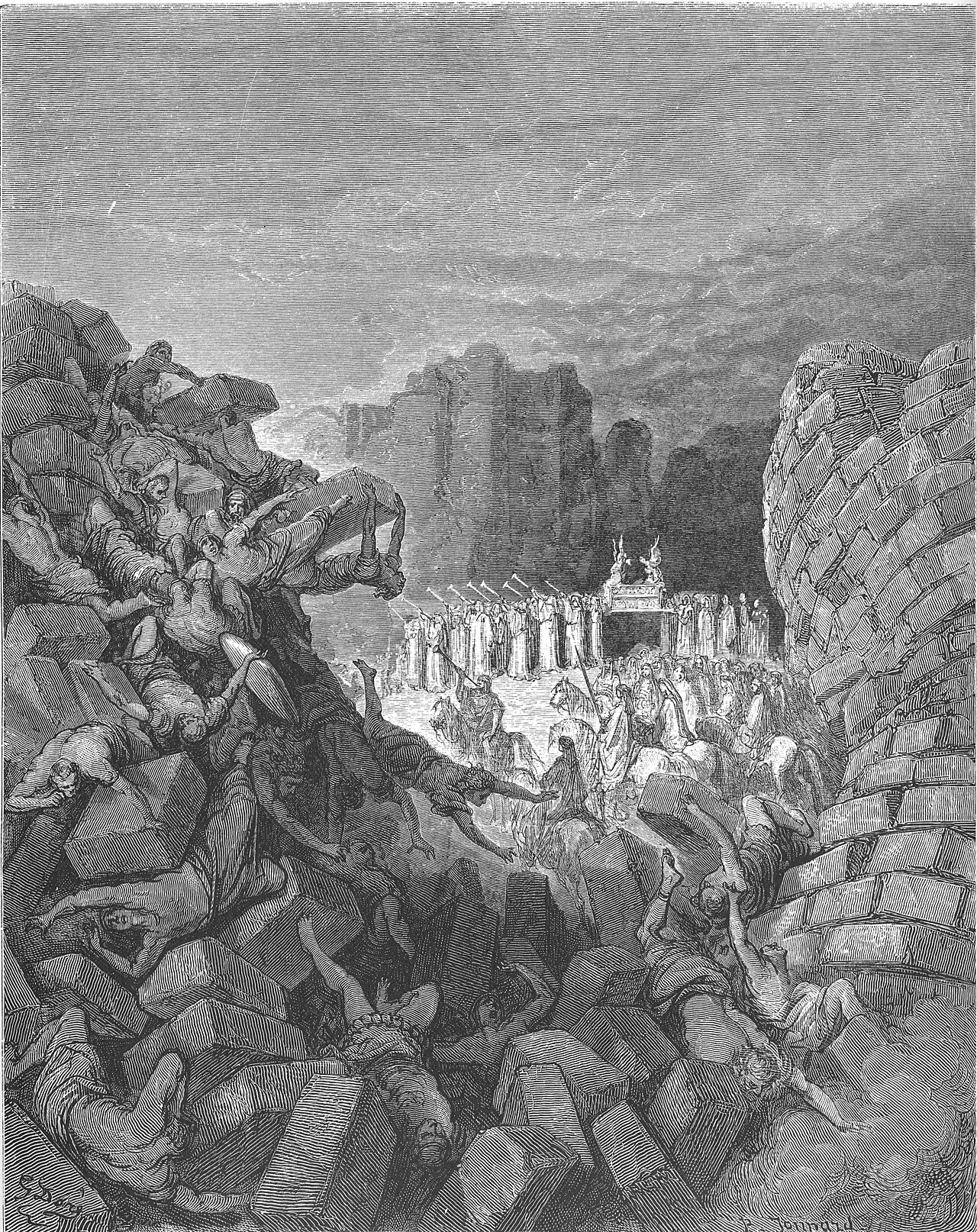
in Joshua 24After this, you crossed the Jordan and came to Jericho. The people of Jericho fought against you, as did the Amorites, Perizzites, Canaanites, Hittites, Girgashites, Hivites, and Jebusites, and I delivered them into your hand.
BSB
The same verse in ASV and KJV ▾
ASV
And ye went over the Jordan, and came unto Jericho: and the men of Jericho fought against you, the Amorite, and the Perizzite, and the Canaanite, and the Hittite, and the Girgashite, the Hivite, and the Jebusite; and I delivered them into your hand.
KJV
And ye went over Jordan, and came unto Jericho: and the men of Jericho fought against you, the Amorites, and the Perizzites, and the Canaanites, and the Hittites, and the Girgashites, the Hivites, and the Jebusites; and I delivered them into your hand.
⋯
This verse in Joshua 24
Commentary
5 notes on this verseAnd ye went over Jordan,.... In a miraculous manner, the waters parting to make way for the host of Israel: and came unto Jericho; the first city of any size and strength in the land, which was about seven or eight miles from Jordan; See Gill on Num 22:1, and the men of Jericho fought against you; by endeavouring to intercept their spies, and cut them off; by shutting up the gates of their city against Israel; and it may be throwing darts, arrows, and stones, from off the walls of it at them.
This site's exposition
ye went over Jordan, and came
on Joshua 24:11-13
Seven nations are named in verse 11, the standard list of Deuteronomy 7:1. The hornet of verse 12 was promised at Exodus 23:28 and Deuteronomy 7:20 and appears in Scripture only in those three places, and readers have taken it two ways for a long time: as literal swarms driving the inhabitants out, and as a figure for the terror that ran ahead of Israel, which is how Keil and Delitzsch read it. Verse 13 is Deuteronomy 6:10-11 reported as done, cities they built not and vineyards they planted not, and the sentence leaves Israel no share in the work.
The record, by era
The Church Fathers1 voice
"And those who inhabited Jericho waged war against you." One might well ask how this statement could be true, when they were merely protecting themselves by hiding behind the walls and closing the city gates. But this is spoken correctly, since the closing of gates to an enemy is a sign of warfare. For the inhabitants of Jericho did not send ambassadors to ask for terms of peace.… For a war does not always have one battle after another. Some wars have frequent battles, some a few, still others none. A war, however, is when there is a disagreement involving arms in some way.
The Puritans and the Awakening1 voice
Deliver them - Namely, successively; for in these few words he seems to comprise all their wars, which being so fresh in their memory, he thought it needless particularly to mention.
The Nineteenth Century1 voice
The men of Jericho fought against you - See the notes on Joshua 3:1-16 (note) and Jos 6:1 (note), etc. The people of Jericho are said to have fought against the Israelites, because they opposed them by shutting their gates, etc., though they did not attempt to meet them in the field.
How the passage was read
What the Jewish commentators add
The people of Yericho went to war against you. As did the Emorites, the Perezites etc. 5 Why were these nations involved in the battle of Yericho? All these seven nations are mentioned here because Yericho is on the border, and was the bolt and lock of Eretz Yisroel.
This section is reception history: how the passage was read and kept in the Jewish tradition. Where a reading parts from an essential of the Christian faith, the section says so at that point.
Texts and citation data: Sefaria; each excerpt follows its version’s licence. 6 further sources are cited on this chapter that carry no English text this site may quote or only restate the verse.
The words behind it
20 Hebrew wordsEvery Hebrew word of this verse in the order it stands, with what it means and the door to its own study. The last column counts the times a word stands in the whole Bible: the rarer the word, the more the places it appears belong together.
| Hebrew | Sound | Meaning | Word study | In the Bible |
|---|---|---|---|---|
| וַתַּעַבְר֣וּ | vataavru | and you passed over | H5674 → | 556 times |
| אֶת־ | ʾet- | <obj.> | H853 → | 10935 times |
| הַיַּרְדֵּן֮ | haiyarden | the Jordan | H3383 → | 182 times |
| וַתָּבֹ֣אוּ | vatavou | and you came | H935 → | 2568 times |
| אֶל־ | ʾel- | to | H413 → | 5510 times |
| יְרִיחוֹ֒ | yericho | Jericho | H3405 → | 57 times |
| וַיִּלָּחֲמ֣וּ | vaiyilachamu | and they fought | H3898 → | 177 times |
| בָכֶ֣ם | vakhem | against <the> you | ||
| בַּעֲלֵֽי־ | baalei- | [the] citizens of | H1167 → | |
| יְ֠רִיחוֹ | yericho | Jericho | H3405 → | 57 times |
| הָֽאֱמֹרִ֨י | haemori | the Amorite[s] | H567 → | 87 times |
| וְהַפְּרִזִּ֜י | vehapperizi | and the Perizzite[s] | H6522 → | 23 times |
| וְהַֽכְּנַעֲנִ֗י | vehakenaani | and the Canaanite[s] | H3669 → | 73 times |
| וְהַֽחִתִּי֙ | vehachiti | and the Hittite[s] | H2850 → | 48 times |
| וְהַגִּרְגָּשִׁ֔י | vehagirgashi | and the Girgashite[s] | H1622 → | |
| הַֽחִוִּ֖י | hachivi | the Hivite[s] | H2340 → | 25 times |
| וְהַיְבוּסִ֑י | vehayvusi | and the Jebusite[s] | H2983 → | 41 times |
| וָאֶתֵּ֥ן | vaeten | and I gave | H5414 → | 2011 times |
| אוֹתָ֖ם | ʾotam | <obj.> them | H853 → | 10935 times |
| בְּיֶדְכֶֽם׃ | beyedkhem | in hand your | H3027 → | 1618 times |
וַתַּעַבְר֣וּand you passed over
vataavruH5674 →556 times
אֶת־<obj.>
ʾet-H853 →10935 times
הַיַּרְדֵּן֮the Jordan
haiyardenH3383 →182 times
וַתָּבֹ֣אוּand you came
vatavouH935 →2568 times
אֶל־to
ʾel-H413 →5510 times
יְרִיחוֹ֒Jericho
yerichoH3405 →57 times
וַיִּלָּחֲמ֣וּand they fought
vaiyilachamuH3898 →177 times
בָכֶ֣םagainst <the> you
vakhem
בַּעֲלֵֽי־[the] citizens of
baalei-H1167 →
יְ֠רִיחוֹJericho
yerichoH3405 →57 times
הָֽאֱמֹרִ֨יthe Amorite[s]
haemoriH567 →87 times
וְהַפְּרִזִּ֜יand the Perizzite[s]
vehapperiziH6522 →23 times
וְהַֽכְּנַעֲנִ֗יand the Canaanite[s]
vehakenaaniH3669 →73 times
וְהַֽחִתִּי֙and the Hittite[s]
vehachitiH2850 →48 times
וְהַגִּרְגָּשִׁ֔יand the Girgashite[s]
vehagirgashiH1622 →
הַֽחִוִּ֖יthe Hivite[s]
hachiviH2340 →25 times
וְהַיְבוּסִ֑יand the Jebusite[s]
vehayvusiH2983 →41 times
וָאֶתֵּ֥ןand I gave
vaetenH5414 →2011 times
אוֹתָ֖ם<obj.> them
ʾotamH853 →10935 times
בְּיֶדְכֶֽם׃in hand your
beyedkhemH3027 →1618 times
A shaded row is a word that stands 400 times or fewer in the Bible.
The walk
8 stopsEach card is a verse this one points to, and under it the verses that one points to in turn. Where several paths arrive at the same place, that place is listed first: the text keeps returning to it.
Through
Joshua 4:23For the LORD your God dried up the waters of the Jordan before you until you had crossed over, just as He did to the Red Sea, which He dried up before us until…
it leads to
- Exodus 14:21
Then Moses stretched out his hand over the sea, and all that night the LORD drove back the sea with a strong east wind that turned it into dry land. So the waters were…
- Isaiah 43:16
Thus says the LORD, who makes a way in the sea and a path through the surging waters,
- Isaiah 63:12–14
who sent His glorious arm to lead them by the right hand of Moses, who divided the waters before them to gain for Himself everlasting renown,
- Exodus 14:21
Through
Acts 7:45And our fathers who received it brought it in with Joshua when they dispossessed the nations God drove out before them. It remained until the time of David,
it leads to
- Psalms 44:2
With Your hand You drove out the nations and planted our fathers there; You crushed the peoples and cast them out.
- Joshua 23:9
The LORD has driven out great and powerful nations before you, and to this day no one can stand against you.
- Joshua 18:1
Then the whole congregation of Israel assembled at Shiloh and set up the Tent of Meeting there. And though the land was subdued before them,
- Joshua 24:18
And the LORD drove out before us all the nations, including the Amorites who lived in the land. We too will serve the LORD, because He is our God!”
- 1 Chronicles 16:39
And David left Zadok the priest and his fellow priests before the tabernacle of the LORD at the high place in Gibeon
- Psalms 44:2
Where this verse is studied
On this page
Studies1
About Joshua
Who and where
1 name in this verse with a page on the site.
This page draws on Adam Clarke, Commentary on the Bible; Albert Barnes, Notes on the Old Testament; Augustine of Hippo, QUESTIONS ON JOSHUA 26; John Gill, Exposition of the Old Testament (1748-1763); John Wesley, Explanatory Notes upon the Old Testament and Keil and Delitzsch, Biblical Commentary on the Old Testament: Joshua, Judges, Ruth.