
Joshua 10:12
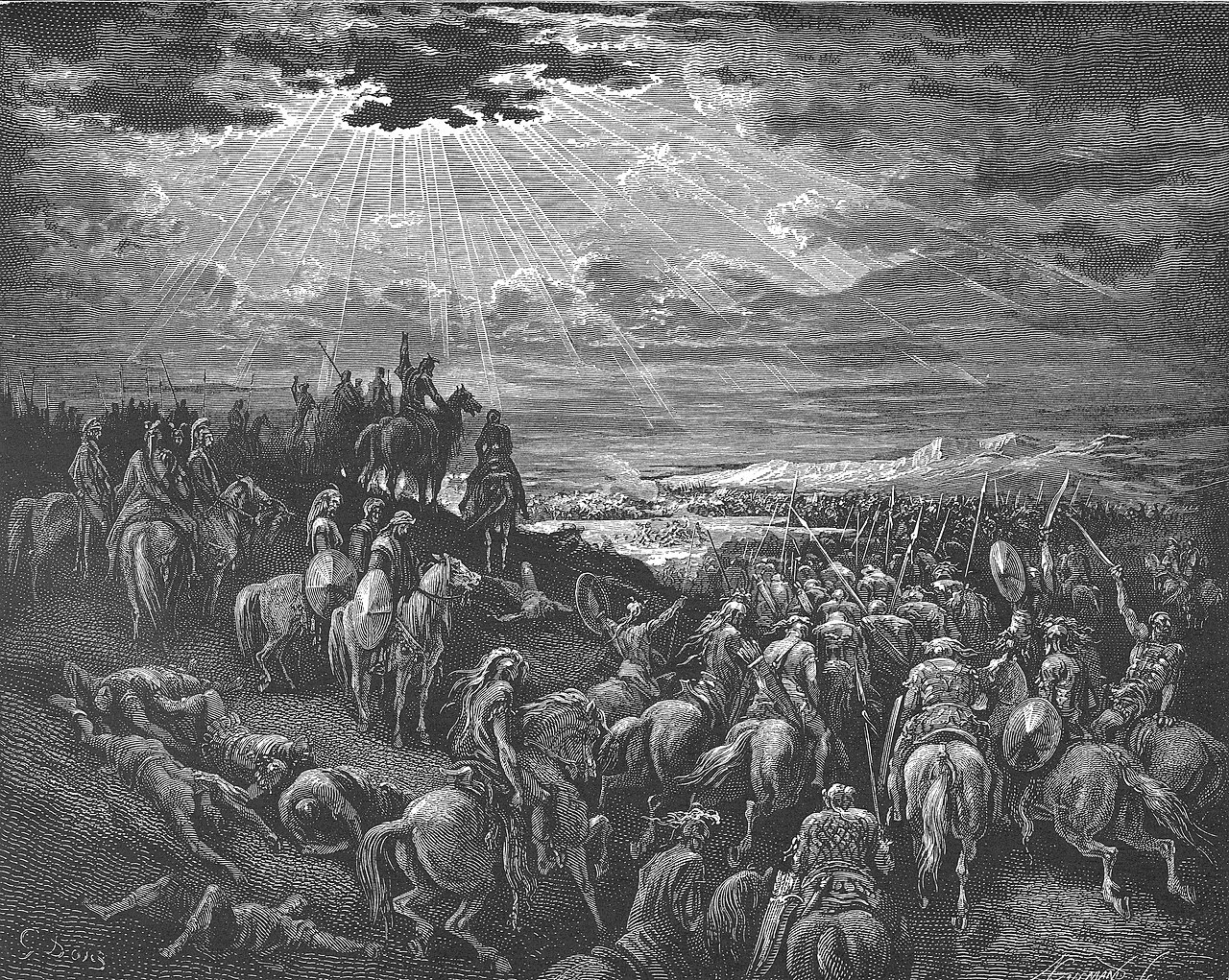
in Joshua 10On the day that the LORD gave the Amorites over to the Israelites, Joshua spoke to the LORD in the presence of Israel: “O sun, stand still over Gibeon, O moon, over the Valley of Aijalon.”
BSB
The same verse in ASV and KJV ▾
ASV
Then spake Joshua to Jehovah in the day when Jehovah delivered up the Amorites before the children of Israel; and he said in the sight of Israel, Sun, stand thou still upon Gibeon; And thou, Moon, in the valley of Aijalon.
KJV
Then spake Joshua to the Lord in the day when the Lord delivered up the Amorites before the children of Israel, and he said in the sight of Israel, Sun, stand thou still upon Gibeon; and thou, Moon, in the valley of Ajalon.
⋯
This verse in Joshua 10
Commentary
5 notes on this verseon Joshua 10:12-13
Everywhere, therefore, he alone kept close to holy Moses amid all these wondrous works and dread secrets. In this way it happened that the one who had been Moses' companion in this intercourse with God succeeded to his power. Worthy surely was he to stand forth as a man who might stay the course of the river, and who might say, "Sun, stand still," and delay the night and lengthen the day, as though to witness his victory. Why?—a blessing denied to Moses—he alone was chosen to lead the people into the promised land.
This site's exposition
stand thou still upon Gibeon
on Joshua 10:12-13
The words Joshua speaks stand as poetry, addressed to the sun over Gibeon and the moon over the valley of Ajalon, which are the two ends of the sky from a man on that battlefield. The book of Jasher is named here for the first time in Scripture and once more at 2 Samuel 1:18, and the book itself has not survived; the volumes printed under that title today are later compositions with no line back to the one this writer cites. Keil and Delitzsch make the quotation the governing fact and hold that a poet's language should not be pressed for astronomy, while Matthew Henry and John Gill read a real lengthening of the day. Habakkuk 3:11 uses the same picture, the sun and moon stood still in their habitation, inside a poem.
The record, by era
The Puritans and the Awakening1 voice
Now, First, It looked great for Joshua to say, Sun, stand thou still. His ancestor Joseph had indeed dreamed that the sun and moon did homage to him; but who would have thought that, after it had been fulfilled in the figure, it should be again fulfilled in the letter to one of his posterity?
The Nineteenth Century2 voices
Then spake Joshua to the Lord - Though Joshua saw that the enemies of his people were put to flight, yet he well knew that all which escaped would rally again, and that he should be obliged to meet them once more in the field of battle if permitted now to escape; finding that the day was drawing towards a close, he feared that he should not have time sufficient to complete the destruction of the confederate armies; in this moment, being suddenly inspired with Divine confidence, he requested the Lord to perform the most stupendous miracle that had ever been wrought, which was no less than to arrest the sun in his course, and prolong the day till the destruction of his enemies had been completed!
A commentator
Jamieson, Fausset & Brown1802–1910
Commentary Critical and Explanatory on the Whole Bible (1871)
on Joshua 10:12-15
It would seem, from Jos 10:14, that the command of Joshua was in reality a prayer to God for the performance of this miracle; and that, although the prayers of eminently good men like Moses often prevailed with God, never was there on any other occasion so astonishing a display of divine power made in behalf of His people, as in answer to the prayer of Joshua.
How the passage was read
What the Jewish commentators add
On the verses either side of this one
Is it not written [in the Seifer Ha Yoshor.] This subject is recorded in the Torah, 8 What is the Seifer Ha Yoshor that is mentioned in this verse? We do not have any book that is called by that name.
This section is reception history: how the passage was read and kept in the Jewish tradition. Where a reading parts from an essential of the Christian faith, the section says so at that point.
Texts and citation data: Sefaria; each excerpt follows its version’s licence. 7 further sources are cited on this chapter that carry no English text this site may quote or only restate the verse.
The words behind it
21 Hebrew wordsEvery Hebrew word of this verse in the order it stands, with what it means and the door to its own study. The last column counts the times a word stands in the whole Bible: the rarer the word, the more the places it appears belong together.
| Hebrew | Sound | Meaning | Word study | In the Bible |
|---|---|---|---|---|
| אָ֣ז | ʾaz | then | H227 → | 141 times |
| יְדַבֵּ֤ר | yedaber | he spoke | H1696 → | 1141 times |
| יְהוֹשֻׁעַ֙ | yehoshua' | Joshua | H3091 → | 218 times |
| לַֽיהוָ֔ה | layahweh | to Yahweh | H3068 → | 6520 times |
| בְּי֗וֹם | beyom | on [the] day | H3117 → | 2304 times |
| תֵּ֤ת | tet | delivered up | H5414 → | 2011 times |
| יְהוָה֙ | yahweh | Yahweh | H3068 → | 6520 times |
| אֶת־ | ʾet- | <obj.> | H853 → | 10935 times |
| הָ֣אֱמֹרִ֔י | haemori | the Amorite[s] | H567 → | 87 times |
| לִפְנֵ֖י | lifnei | <to> before | H6440 → | 2123 times |
| בְּנֵ֣י | benei | [the] people of | H1121 → | 4930 times |
| יִשְׂרָאֵ֑ל | yisrael | Israel | H3478 → | 2507 times |
| וַיֹּ֣אמֶר׀ | vaiyomer | and he said | H559 → | 5305 times |
| לְעֵינֵ֣י | leeinei | to [the] eyes of | H5869 → | 887 times |
| יִשְׂרָאֵ֗ל | yisrael | Israel | H3478 → | 2507 times |
| שֶׁ֚מֶשׁ | shemesh | O sun | H8121 → | 134 times |
| בְּגִבְע֣וֹן | begivon | at Gibeon | H1391 → | 38 times |
| דּ֔וֹם | dom | be still | H1826 → | |
| וְיָרֵ֖חַ | veyareach | and O moon | H3394 → | |
| בְּעֵ֥מֶק | beemek | in [the] valley | H6010 → | 69 times |
| אַיָּלֽוֹן׃ | ʾaiyalon | Aijalon | H357 → | 10 times |
אָ֣זthen
ʾazH227 →141 times
יְדַבֵּ֤רhe spoke
yedaberH1696 →1141 times
יְהוֹשֻׁעַ֙Joshua
yehoshua'H3091 →218 times
לַֽיהוָ֔הto Yahweh
layahwehH3068 →6520 times
בְּי֗וֹםon [the] day
beyomH3117 →2304 times
תֵּ֤תdelivered up
tetH5414 →2011 times
יְהוָה֙Yahweh
yahwehH3068 →6520 times
אֶת־<obj.>
ʾet-H853 →10935 times
הָ֣אֱמֹרִ֔יthe Amorite[s]
haemoriH567 →87 times
לִפְנֵ֖י<to> before
lifneiH6440 →2123 times
בְּנֵ֣י[the] people of
beneiH1121 →4930 times
יִשְׂרָאֵ֑לIsrael
yisraelH3478 →2507 times
וַיֹּ֣אמֶר׀and he said
vaiyomerH559 →5305 times
לְעֵינֵ֣יto [the] eyes of
leeineiH5869 →887 times
יִשְׂרָאֵ֗לIsrael
yisraelH3478 →2507 times
שֶׁ֚מֶשׁO sun
shemeshH8121 →134 times
בְּגִבְע֣וֹןat Gibeon
begivonH1391 →38 times
דּ֔וֹםbe still
domH1826 →
וְיָרֵ֖חַand O moon
veyareachH3394 →
בְּעֵ֥מֶקin [the] valley
beemekH6010 →69 times
אַיָּלֽוֹן׃Aijalon
ʾaiyalonH357 →10 times
A shaded row is a word that stands 400 times or fewer in the Bible.
The walk
8 stopsEach card is a verse this one points to, and under it the verses that one points to in turn. Where several paths arrive at the same place, that place is listed first: the text keeps returning to it.
Through
Isaiah 60:20Your sun will no longer set, and your moon will not wane; for the LORD will be your everlasting light, and the days of your sorrow will cease.
it leads to
- Revelation 21:4
‘He will wipe away every tear from their eyes,’ and there will be no more death or mourning or crying or pain, for the former things have passed away.”
- Psalms 84:11
For the LORD God is a sun and a shield; the LORD gives grace and glory; He withholds no good thing from those who walk with integrity.
- Isaiah 35:10
So the redeemed of the LORD will return and enter Zion with singing, crowned with everlasting joy. Gladness and joy will overtake them, and sorrow and sighing will flee.
- Psalms 27:1
The LORD is my light and my salvation— whom shall I fear? The LORD is the stronghold of my life— whom shall I dread?
- Malachi 4:2
“But for you who fear My name, the sun of righteousness will rise with healing in its wings, and you will go out and leap like calves from the stall.
- Revelation 21:4
Through
Joshua 10:13So the sun stood still and the moon stopped until the nation took vengeance upon its enemies. Is this not written in the Book of Jashar? “So the sun stopped in the middle of…
it leads to
- Habakkuk 3:11
Sun and moon stood still in their places at the flash of Your flying arrows, at the brightness of Your shining spear.
- Isaiah 38:8
I will make the sun’s shadow that falls on the stairway of Ahaz go back ten steps.’” So the sunlight went back the ten steps it had descended.
- Habakkuk 3:11
Through
Isaiah 28:21For the LORD will rise up as at Mount Perazim. He will rouse Himself as in the Valley of Gibeon, to do His work, His strange work, and to perform His task, His disturbing…
it leads to
- 1 Chronicles 14:11
So David and his men went up to Baal-perazim, where he defeated the Philistines and said, “Like a bursting flood, God has burst out against my enemies by my hand.” So they called that…
- 1 Chronicles 14:11
About Joshua
Who and where
1 name in this verse with a page on the site.
This page draws on Adam Clarke, Commentary on the Bible; Ambrose of Milan, On the Duties of the Clergy 2.20.99; Jamieson, Fausset & Brown, Commentary Critical and Explanatory on the Whole Bible; Keil and Delitzsch, Biblical Commentary on the Old Testament: Joshua, Judges, Ruth and Matthew Henry, Commentary on the Whole Bible.