
Joshua 10:11
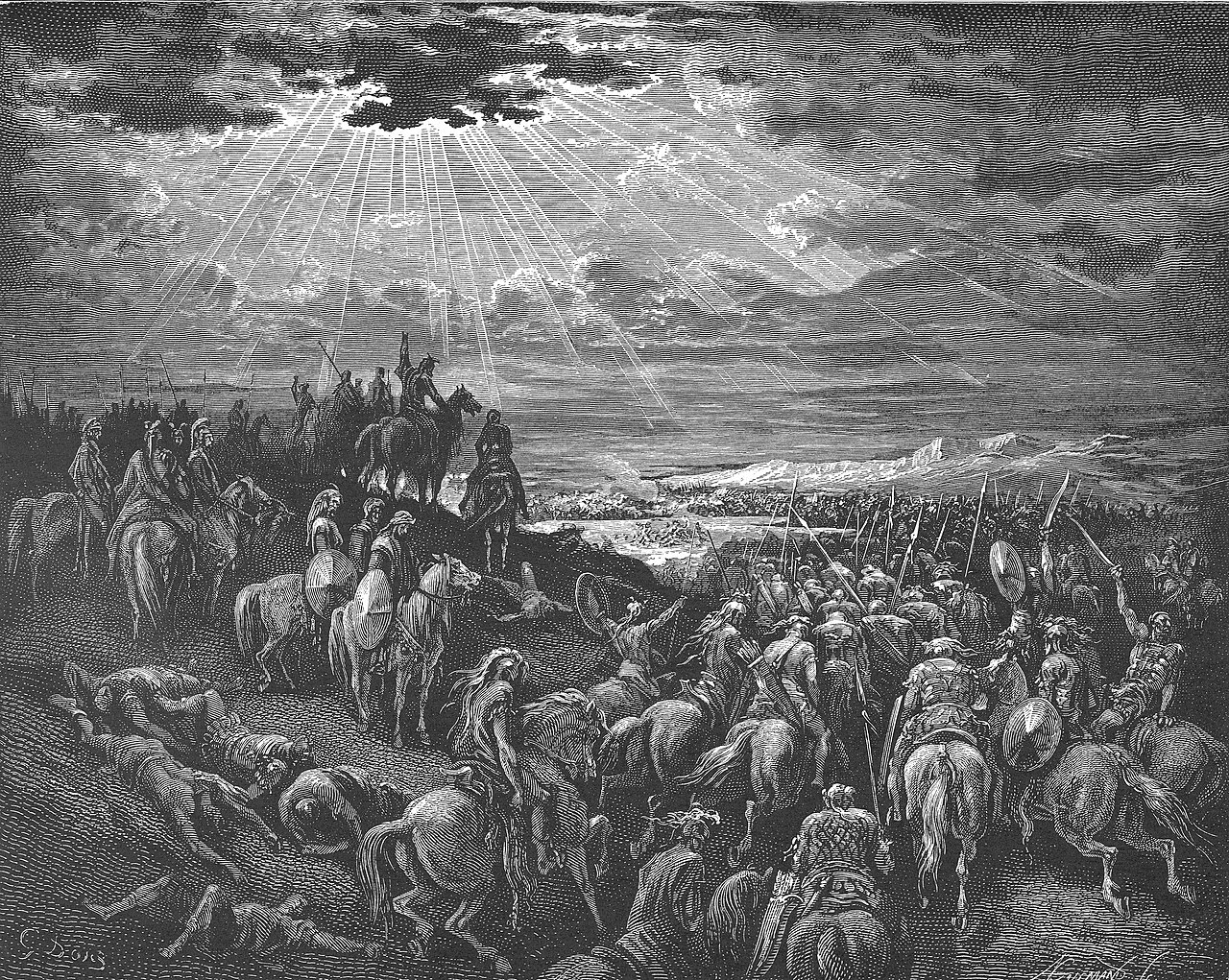
in Joshua 10As they fled before Israel along the descent from Beth-horon to Azekah, the LORD cast down on them large hailstones from the sky, and more of them were killed by the hailstones than by the swords of the Israelites.
BSB
The same verse in ASV and KJV ▾
ASV
And it came to pass, as they fled from before Israel, while they were at the descent of Beth-horon, that Jehovah cast down great stones from heaven upon them unto Azekah, and they died: they were more who died with the hailstones than they whom the children of Israel slew with the sword.
KJV
And it came to pass, as they fled from before Israel, and were in the going down to Beth–horon, that the Lord cast down great stones from heaven upon them unto Azekah, and they died: they were more which died with hailstones than they whom the children of Israel slew with the sword.
⋯
This verse in Joshua 10
Commentary
7 notes on this verseA commentator
Albert Barnes1798–1870
Notes, Explanatory and Practical, on the Old and New Testaments (1832-1869)
Compare Ecclesiasticus 46:6. Frightful storms occasionally sweep over the hills of Judaea; but this was evidently a miraculous occurrence, like the hail which smote Egypt Exo 9:24 and the tempest which fell on the Philistines at Ebenezer 1Sa 7:10.
This site's exposition
the LORD threw them into confusion before Israel
on Joshua 10:10-11
The Hebrew verb for throwing into confusion is used of Joshua against Amalek at Exodus 17:13, and here the LORD does it while Israel chases. Verse 11 keeps the count, “more of them were killed by the hailstones than by the swords”, so the day is credited to the LORD.
This site's exposition
large hailstones from the sky
Adam Clarke weighs whether these were stones fallen from the sky, and judges true hail more likely. Albert Barnes grants that fierce storms cross the hills of Judea. He holds this one miraculous, like the hail on Egypt and the storm that fell on the Philistines at 1 Samuel 7:10.
The record, by era
The Puritans and the Awakening3 voices
Josephus affirms, that thunder and lightning were mixed with the hail, which may seem probable from Hab. iii, 11. They had robbed the true God of his honour, by worshipping the host of heaven, and now the hosts of heaven fights against them, and triumphs in their ruin.
And it came to pass, as they fled before Israel, and were in the going down to Bethhoron,.... The descent of it on that side towards Azekah, and which was also a very narrow passage, of which Josephus (s) makes mention.
They had affronted the true God and robbed him of his honour by worshipping the host of heaven, giving that worship to the creature which is due to the Creator only; and now the host of heaven fights against them, and even that part of the creation which they had idolized is at war with them, and even triumphs in their ruin, Jer. viii.
The Nineteenth Century1 voice
The Lord cast down great stones from heaven upon them - Some have contended that stones, in the common acceptation of the word, are intended here; and that the term hail-stones is only used to point out the celerity of their fall, and their quantity. That stones have fallen from the clouds, if not from a greater height, is a most incontestable fact. That these have fallen in different parts of the world is also true; the East Indies, America, France, Germany, England, Ireland, etc., have all witnessed this phenomenon: of such stones I possess and have seen several fragments; some considerable pieces may be seen in the British Museum. That God might have cast down such stones as these on the Canaanites, there can be no doubt, because his power is unlimited; and the whole account proves that here there was a miraculous interference. But it is more likely that hail-stones, in the proper sense of the word, are meant as well as expressed in the text. That God on other occasions has made use of hail-stones to destroy both men and cattle, we have ample proof in the plague of hail that fell on the Egyptians. See the note on Exo 9:18. There is now before me a square of glass, taken out of a south window in the house of Mr. Ball of Crockerton, in the parish of Longbridge Deverell, county of Wilts., through which a hail-stone passed in a shower that fell there June 1, 1780, at two o’clock, P.M. The hole is an obtuse ellipsis or oval, and is cut as true as if it had been done with a diamond: it is three inches and a half in diameter; a proof that the stone that pierced it, which was about eleven inches in circumference, came with inconceivable velocity, else the glass must have been shivered to pieces. […]
The words behind it
28 Hebrew wordsEvery Hebrew word of this verse in the order it stands, with what it means and the door to its own study. The last column counts the times a word stands in the whole Bible: the rarer the word, the more the places it appears belong together.
| Hebrew | Sound | Meaning | Word study | In the Bible |
|---|---|---|---|---|
| וַיְהִ֞י | vayhi | and it was | H1961 → | 3559 times |
| בְּנֻסָ֣ם׀ | benusam | when fled they | H5127 → | 159 times |
| מִפְּנֵ֣י | mipenei | from before | H6440 → | 2123 times |
| יִשְׂרָאֵ֗ל | yisrael | Israel | H3478 → | 2507 times |
| הֵ֞ם | hem | they | H1992 → | 553 times |
| בְּמוֹרַ֤ד | bemorad | [were] at [the] descent of | H4174 → | |
| בֵּית־ | beit- | Beth | H1032 → | 28 times |
| חוֹרֹן֙ | choron | Horon | H1032 → | 28 times |
| וַֽיהוָ֡ה | vayahweh | and Yahweh | H3068 → | 6520 times |
| הִשְׁלִ֣יךְ | hishlikh | he threw | H7993 → | 125 times |
| עֲלֵיהֶם֩ | ʾaleihem | on them | H5921 → | 5755 times |
| אֲבָנִ֨ים | ʾavanim | stones | H68 → | 273 times |
| גְּדֹל֧וֹת | gedolot | large | H1419 → | 526 times |
| מִן־ | min- | from | H4480 → | 1188 times |
| הַשָּׁמַ֛יִם | hashamayim | the heavens | H8064 → | 421 times |
| עַד־ | ʾad- | to | H5704 → | 1261 times |
| עֲזֵקָ֖ה | ʾazekah | Azekah | H5825 → | 7 times |
| וַיָּמֻ֑תוּ | vaiyamutu | and they died | H4191 → | 839 times |
| רַבִּ֗ים | rabim | [were] many | H7227 → | 454 times |
| אֲשֶׁר־ | ʾasher- | [those] who | H834 → | 5497 times |
| מֵ֙תוּ֙ | metu | they died | H4191 → | 839 times |
| בְּאַבְנֵ֣י | beavnei | by [the] stones of | H68 → | 273 times |
| הַבָּרָ֔ד | habarad | the hail | H1259 → | |
| מֵאֲשֶׁ֥ר | measher | more than [those] whom | H834 → | 5497 times |
| הָרְג֛וּ | haregu | they killed | H2026 → | 167 times |
| בְּנֵ֥י | benei | [the] people of | H1121 → | 4930 times |
| יִשְׂרָאֵ֖ל | yisrael | Israel | H3478 → | 2507 times |
| בֶּחָֽרֶב׃ ס | becharev | with the sword | H2719 → | 413 times |
וַיְהִ֞יand it was
vayhiH1961 →3559 times
בְּנֻסָ֣ם׀when fled they
benusamH5127 →159 times
מִפְּנֵ֣יfrom before
mipeneiH6440 →2123 times
יִשְׂרָאֵ֗לIsrael
yisraelH3478 →2507 times
הֵ֞םthey
hemH1992 →553 times
בְּמוֹרַ֤ד[were] at [the] descent of
bemoradH4174 →
בֵּית־Beth
beit-H1032 →28 times
חוֹרֹן֙Horon
choronH1032 →28 times
וַֽיהוָ֡הand Yahweh
vayahwehH3068 →6520 times
הִשְׁלִ֣יךְhe threw
hishlikhH7993 →125 times
עֲלֵיהֶם֩on them
ʾaleihemH5921 →5755 times
אֲבָנִ֨יםstones
ʾavanimH68 →273 times
גְּדֹל֧וֹתlarge
gedolotH1419 →526 times
מִן־from
min-H4480 →1188 times
הַשָּׁמַ֛יִםthe heavens
hashamayimH8064 →421 times
עַד־to
ʾad-H5704 →1261 times
עֲזֵקָ֖הAzekah
ʾazekahH5825 →7 times
וַיָּמֻ֑תוּand they died
vaiyamutuH4191 →839 times
רַבִּ֗ים[were] many
rabimH7227 →454 times
אֲשֶׁר־[those] who
ʾasher-H834 →5497 times
מֵ֙תוּ֙they died
metuH4191 →839 times
בְּאַבְנֵ֣יby [the] stones of
beavneiH68 →273 times
הַבָּרָ֔דthe hail
habaradH1259 →
מֵאֲשֶׁ֥רmore than [those] whom
measherH834 →5497 times
הָרְג֛וּthey killed
hareguH2026 →167 times
בְּנֵ֥י[the] people of
beneiH1121 →4930 times
יִשְׂרָאֵ֖לIsrael
yisraelH3478 →2507 times
בֶּחָֽרֶב׃ סwith the sword
becharevH2719 →413 times
A shaded row is a word that stands 400 times or fewer in the Bible.
The walk
8 stopsEach card is a verse this one points to, and under it the verses that one points to in turn. Where several paths arrive at the same place, that place is listed first: the text keeps returning to it.
Through
Revelation 11:19Then the temple of God in heaven was opened, and the ark of His covenant appeared in His temple. And there were flashes of lightning, and rumblings, and peals of thunder, and an earthquake,…
it leads to
- Revelation 16:21
And great hailstones weighing almost a hundred pounds each rained down on them from above. And men cursed God for the plague of hail, because it was so horrendous.
- Ezekiel 38:22
I will execute judgment upon him with plague and bloodshed. I will pour out torrents of rain, hailstones, fire, and sulfur on him and on his troops and on the many nations with him.
- Revelation 15:5–8
After this I looked, and the temple—the tabernacle of the Testimony—was opened in heaven.
- Revelation 4:5
From the throne came flashes of lightning, and rumblings, and peals of thunder. Before the throne burned seven torches of fire. These are the seven Spirits of God.
- Revelation 8:5
Then the angel took the censer, filled it with fire from the altar, and hurled it to the earth; and there were peals of thunder, and rumblings, and flashes of lightning, and an earthquake.
- Revelation 16:21
Through
Judges 5:20From the heavens the stars fought; from their courses they fought against Sisera.
it leads to
- 1 Samuel 7:10
As the Philistines drew near to fight against Israel, Samuel was sacrificing the burnt offering. But that day the LORD thundered loudly against the Philistines and threw them into such confusion that they fled…
- Psalms 77:17–18
The clouds poured down water; the skies resounded with thunder; Your arrows flashed back and forth.
- Judges 4:15
And in front of him the LORD routed with the sword Sisera, all his charioteers, and all his army. Sisera abandoned his chariot and fled on foot.
- 1 Samuel 7:10
Where this verse is studied
On this page
About Joshua
This page draws on Adam Clarke, Commentary on the Bible; Albert Barnes, Notes, Explanatory and Practical, on the Old and New Testaments (1832-1869); Albert Barnes, Notes on the Old Testament; John Gill, Exposition of the Old Testament (1748-1763); John Wesley, Explanatory Notes upon the Old Testament; Keil and Delitzsch, Biblical Commentary on the Old Testament: Joshua, Judges, Ruth and Matthew Henry, Commentary on the Whole Bible.