
Genesis 37:3
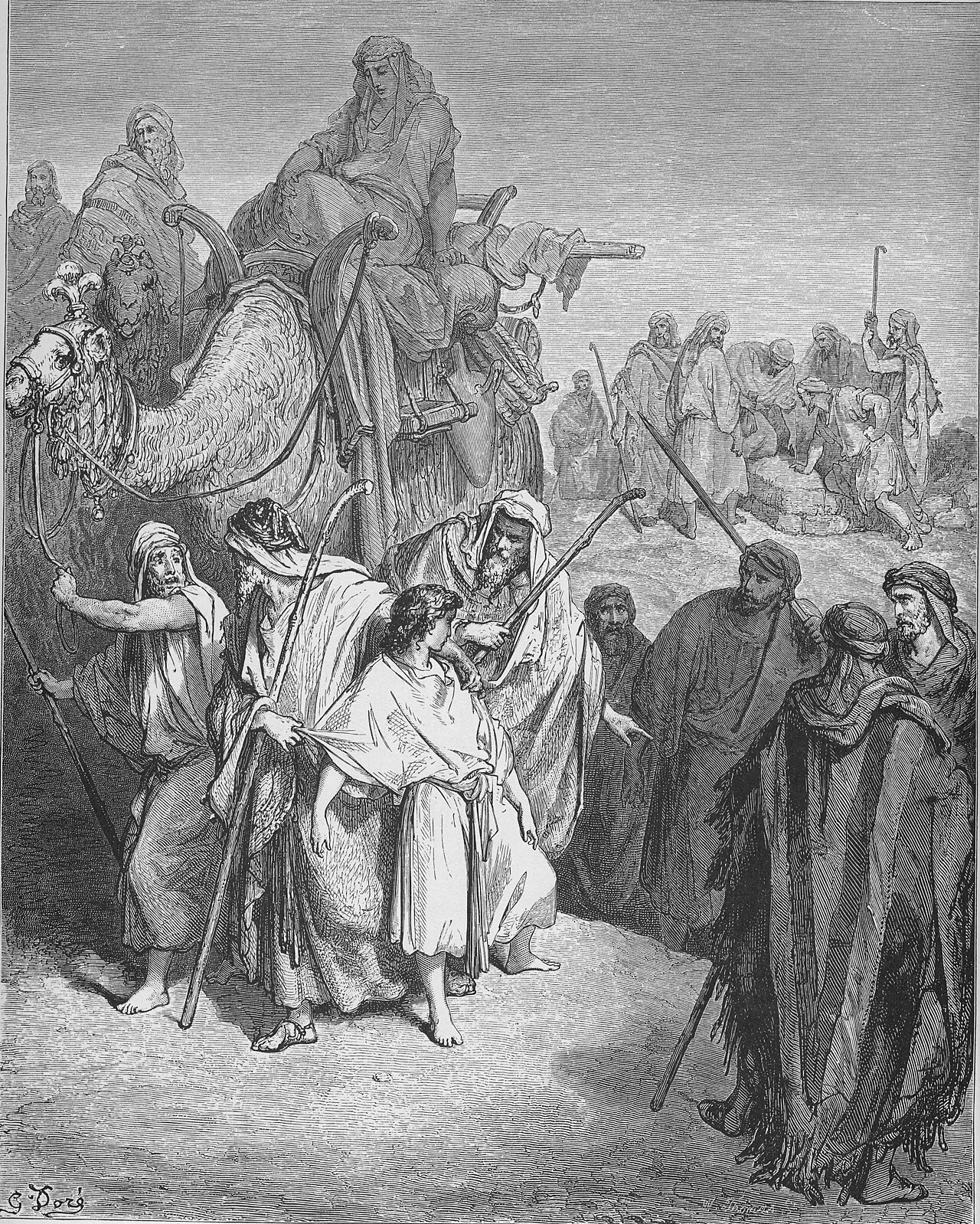
in Genesis 37Now Israel loved Joseph more than his other sons, because Joseph had been born to him in his old age; so he made him a robe of many colors.
BSB
The same verse in ASV and KJV ▾
ASV
Now Israel loved Joseph more than all his children, because he was the son of his old age: and he made him a coat of many colors.
KJV
Now Israel loved Joseph more than all his children, because he was the son of his old age: and he made him a coat of many colours.
⋯
This verse in Genesis 37
Commentary
13 notes on this verseAnd so we are taught the proper nature of parental love and filial gratitude. It is pleasant to love one's children and very pleasant to love them exceedingly, but often even parental love does harm to the children unless it is practiced with restraint; for it may give the beloved child free rein out of excessive indulgence or, by preference shown to one child, may alienate the others from the spirit of brotherly love. That son gains more who gains the love of his brothers.
This site's exposition
Israel loved Joseph more than his other sons
on Genesis 37:3-4
Israel loved Joseph more than the rest, and the robe of many colors put the preference where everyone could see it. Clarke describes the garment as a long tunic reaching to the wrists and ankles, the dress of a son kept at home while his brothers worked the flocks. They hated him and had no kind word for him.
The record, by era
The Church Fathers5 voices
According to a mystical or allegorical interpretation Joseph prefigured a type of our Lord. Now if we consider the actions of Joseph, at least in part, we clearly recognize in him an obvious figure of the Lord.
(Chapter 37, Verse 3) And Israel loved Joseph more than all his sons, because he was the son of his old age: and he made him a coat of many colors. As for the coat of many colors, Aquila interprets it as a long-sleeved tunic, that is, a talar garment. Symmachus, a tunic with sleeves, or because it reached down to the ankles, and was distinguished by the wonderful variety of the craftsman's hands: or because it had sleeves: For the ancients used more often to wear woven garments.
Therefore, in order that our words do not wander from the right way, we say that the Immanuel was born to the Father as a Son of his old age, because he appeared in the latter times of the world, that is, in these times, and after him there will be no other. We expect to be saved in no one else. He alone is sufficient, because we say that the salvation and life of the world is placed in no one else. He shepherds us forever, according to the words of the psalmist, and we will be the subjects of him who is beloved, who appeared in the latter times of the world, as I just said, after he had assumed the flesh and who preexisted as God. In fact, we say that he is coeternal with the Father.
What is meant by "he loved Joseph more than all his other sons, as he was a son of his old age"? Since he was born in Jacob's old age, it is saying, toward the end of his life, on this account he loved Joseph more than all the others. You see, somehow the children born to one in old age seem particularly dear and manage to attract their father's favor in greater measure. For us to learn, however, that this was not the only factor in winning his father and causing him to prefer him to his brothers, sacred Scripture teaches us that even after him another son was born. If the manifestation of love had proceeded according to natural inclination, that last son would have been loved more for being truly a son of his old age and born at the time the good man reached the end of his life. So what can we say it means? That it was a kind of grace from on high that made the young man amiable and rendered him preferable to all the others on account of the virtue of his soul.… In Scripture the reason is given as his being a son of his old age and on that account he loved him more, in case the real reason might increase the brothers' envy.
When the Christian people devoutly come to church, of what benefit is it that they hear how the holy patriarchs took their wives or begot their children, unless they perceive in a spiritual sense why these things happened or what the facts prefigured?
6 more voices on this verse
The Reformation1 voice
But it was not surprising that the boy should be a great favorite with his aged father, for so it is wont to happen: and no just ground is here given for envy; seeing that sons of a more robust age, by the dictate of nature, might well concede such a point.
The Puritans and the Awakening2 voices
), partly for his dear mother's sake that was dead, and partly for his own sake, because he was the greatest comfort of his old age; probably he waited on him, and was more observant of him than the rest of his sons; he was the son of the ancient so some; that is, when he was a child, he was as grave and discreet as if he had been an old man, a child, but not childish.
quarantine:debris (2026-07-29) — leading-punctuation+unbalanced-parens
Now Israel loved Joseph more than all his children,.... He being the firstborn of his beloved Rachel, and a lovely youth, of a beautiful aspect, very promising, prudent and pious: the reason given in the text follows: because he was the son of his old age; being ninety one years of age when he was born; and the youngest children are generally most beloved, and especially such as are born to their parents when in years.
The Nineteenth Century2 voices
A coat of many colors - כתנת פסים kethoneth passim, a coat made up of stripes of differently colored cloth. Similar to this was the toga praetexta of the Roman youth, which was white, striped or fringed with purple; this they wore till they were seventeen years of age, when they changed it for the toga virilis, or toga pura, which was all white. Such vestures as clothing of distinction are worn all over Persia, India, and China to the present day.
A commentator
Jamieson, Fausset & Brown1802–1910
Commentary Critical and Explanatory on the Whole Bible (1871)
proposed
The passion for various colors still reigns among the Arabs and other people of the East, who are fond of dressing their children in this gaudy attire. But since the art of interweaving various patterns was introduced, "the coats of colors" are different now from what they seem to have been in patriarchal times, and bear a close resemblance to the varieties of tartan.
Modern Voices1 voice
Numbers in dreams generally represent the identical number in waking life. However, the number will probably be linked to something that needs to be interpreted symbolically. For example, when Joseph dreamed of eleven stars, the eleven was literal but the stars were symbolic and actually represented his brothers.
The words behind it
15 Hebrew wordsEvery Hebrew word of this verse in the order it stands, with what it means and the door to its own study. The last column counts the times a word stands in the whole Bible: the rarer the word, the more the places it appears belong together.
| Hebrew | Sound | Meaning | Word study | In the Bible |
|---|---|---|---|---|
| וְיִשְׂרָאֵ֗ל | veyisrael | and Israel | H3478 → | 2507 times |
| אָהַ֤ב | ʾahav | he loved | H157 → | 211 times |
| אֶת־ | ʾet- | <obj.> | H853 → | 10935 times |
| יוֹסֵף֙ | yosef | Joseph | H3130 → | 213 times |
| מִכָּל־ | mikol | more than all | H3605 → | 5413 times |
| בָּנָ֔יו | banav | sons his | H1121 → | 4930 times |
| כִּֽי־ | ki- | for | H3588 → | 4482 times |
| בֶן־ | ven- | [was] a son of | H1121 → | 4930 times |
| זְקֻנִ֥ים | zekunim | old age<s> | H2208 → | 4 times |
| ה֖וּא | hu' | he | H1931 → | 1879 times |
| ל֑וֹ | lo | for <the> him | ||
| וְעָ֥שָׂה | veasah | and he made | H6213 → | 2628 times |
| ל֖וֹ | lo | for <the> him | ||
| כְּתֹ֥נֶת | ketonet | a long garment of | H3801 → | 29 times |
| פַּסִּֽים׃ | pasim | palms and soles | H6446 → | 5 times |
וְיִשְׂרָאֵ֗לand Israel
veyisraelH3478 →2507 times
אָהַ֤בhe loved
ʾahavH157 →211 times
אֶת־<obj.>
ʾet-H853 →10935 times
יוֹסֵף֙Joseph
yosefH3130 →213 times
מִכָּל־more than all
mikolH3605 →5413 times
בָּנָ֔יוsons his
banavH1121 →4930 times
כִּֽי־for
ki-H3588 →4482 times
בֶן־[was] a son of
ven-H1121 →4930 times
זְקֻנִ֥יםold age<s>
zekunimH2208 →4 times
ה֖וּאhe
hu'H1931 →1879 times
ל֑וֹfor <the> him
lo
וְעָ֥שָׂהand he made
veasahH6213 →2628 times
ל֖וֹfor <the> him
lo
כְּתֹ֥נֶתa long garment of
ketonetH3801 →29 times
פַּסִּֽים׃palms and soles
pasimH6446 →5 times
A shaded row is a word that stands 400 times or fewer in the Bible.
The walk
8 stopsEach card is a verse this one points to, and under it the verses that one points to in turn. Where several paths arrive at the same place, that place is listed first: the text keeps returning to it.
Through
John 3:35The Father loves the Son and has placed all things in His hands.
it leads to
- Matthew 28:18
Then Jesus came to them and said, “All authority in heaven and on earth has been given to Me.
- Luke 10:22
All things have been entrusted to Me by My Father. No one knows who the Son is except the Father, and no one knows who the Father is except the Son and those to…
- John 5:20
The Father loves the Son and shows Him all He does. And to your amazement, He will show Him even greater works than these.
- John 5:22
Furthermore, the Father judges no one, but has assigned all judgment to the Son,
- Matthew 11:27
All things have been entrusted to Me by My Father. No one knows the Son except the Father, and no one knows the Father except the Son and those to whom the Son chooses…
- Matthew 28:18
Through
2 Samuel 13:18So Amnon’s attendant threw her out and bolted the door behind her. Now Tamar was wearing a robe of many colors, because this is what the king’s virgin daughters wore.
it leads to
- Judges 5:30
‘Are they not finding and dividing the spoil—a girl or two for each warrior, a plunder of dyed garments for Sisera, the spoil of embroidered garments for the neck of the looter?’
- Judges 5:30
Through
Genesis 37:23So when Joseph came to his brothers, they stripped him of his robe—the robe of many colors he was wearing—
it leads to
- Genesis 37:31–33
Then they took Joseph’s robe, slaughtered a young goat, and dipped the robe in its blood.
- Matthew 27:28
They stripped Him and put a scarlet robe on Him.
- Genesis 37:31–33
Where this verse is studied
On this page
Studies4
On this verse
About Genesis
Who and where
1 name in this verse with a page on the site.
This page draws on 12 works. Open the list of works
This page draws on Adam Clarke, Commentary on the Bible; Ambrose of Milan, On Joseph the Patriarch; Caesarius of Arles, SERMON 93.3; Caesarius of Arles, SERMON 89.1; Cyril of Alexandria, GLAPHYRA ON GENESIS, 6.4; Jamieson, Fausset & Brown, Commentary Critical and Explanatory on the Whole Bible; Jerome, Hebrew Questions on Genesis; John Calvin, Commentaries; John Chrysostom, HOMILIES ON GENESIS 61.3; John Gill, Exposition of the Old Testament (1748-1763); Mark Virkler, Understanding Your Prophetic Dreams! (Elijah List article) and Matthew Henry, Commentary on the Whole Bible.