
Genesis 27:34
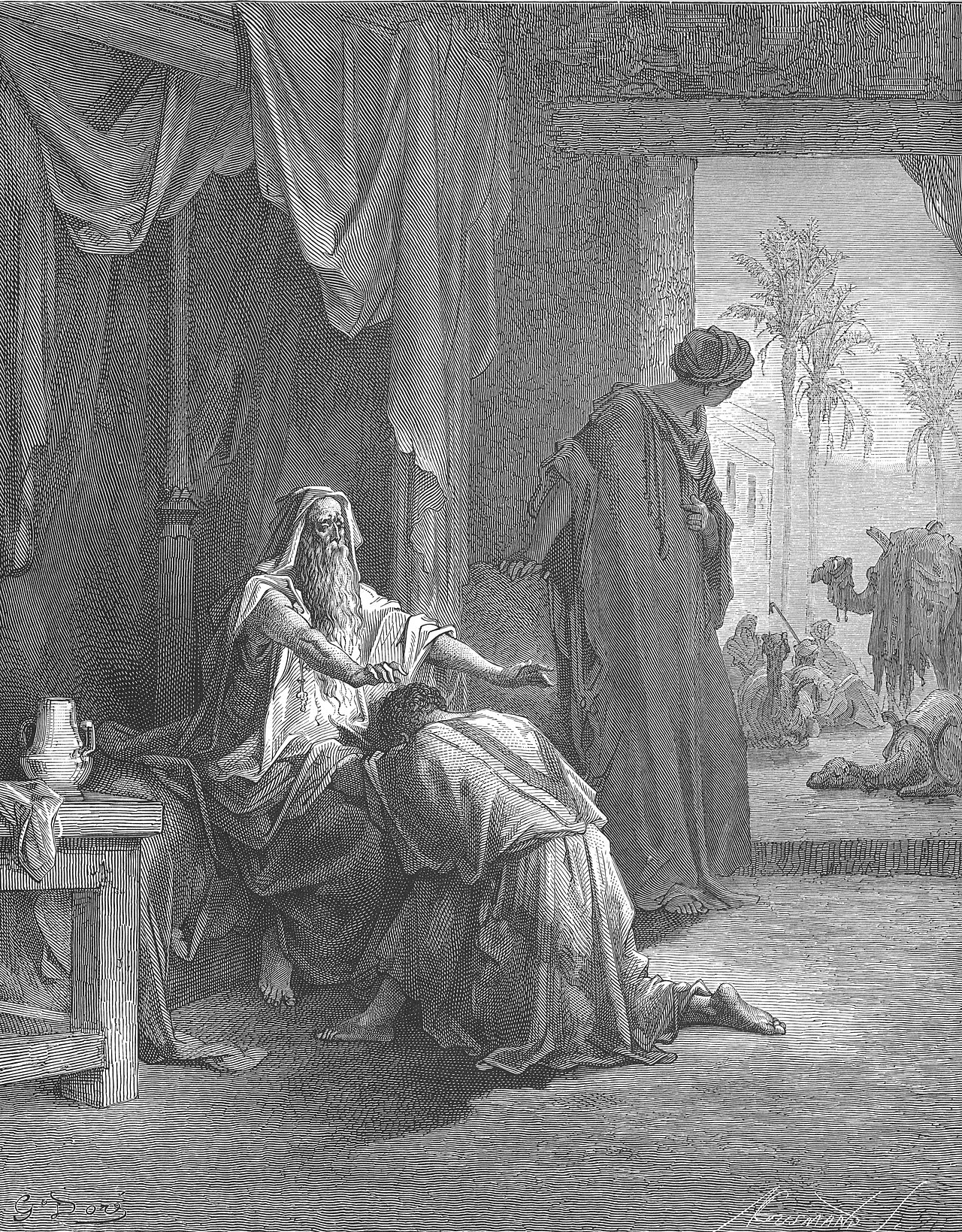
in Genesis 27When Esau heard his father’s words, he let out a loud and bitter cry and said to his father, “Bless me too, O my father!”
BSB
The same verse in ASV and KJV ▾
ASV
When Esau heard the words of his father, he cried with an exceeding great and bitter cry, and said unto his father, Bless me, even me also, O my father.
KJV
And when Esau heard the words of his father, he cried with a great and exceeding bitter cry, and said unto his father, Bless me, even me also, O my father.
⋯
This verse in Genesis 27
Commentary
4 notes on this verseAnd Esau cried out and wailed bitterly, not because he lost his spiritual blessings but because he was now deprived of the bountiful produce of the blessed earth.
This site's exposition
a loud and bitter cry
on Genesis 27:34-35
Esau's cry is the loudest sound in the chapter. Hebrews 12:17 sends the reader back to it, saying he found no ground for repentance though he sought the blessing with tears. Readers divide over what he failed to find, his father's mind or a change in himself. Isaac names the method plainly: your brother came deceitfully and took the blessing.
The record, by era
The Puritans and the Awakening1 voice
And when Esau heard the words of his father,....
The Nineteenth Century1 voice
A commentator
Jamieson, Fausset & Brown1802–1910
Commentary Critical and Explanatory on the Whole Bible (1871)
proposed
But a moment's reflection convinced the aged patriarch that the transfer of the blessing was "of the Lord," and now irrevocable. The importunities of Esau, however, overpowered him; and as the prophetic afflatus was upon the patriarch, he added what was probably as pleasing to a man of Esau's character as the other would have been.
The words behind it
17 Hebrew wordsEvery Hebrew word of this verse in the order it stands, with what it means and the door to its own study. The last column counts the times a word stands in the whole Bible: the rarer the word, the more the places it appears belong together.
| Hebrew | Sound | Meaning | Word study | In the Bible |
|---|---|---|---|---|
| כִּשְׁמֹ֤עַ | kishmoa' | when heard | H8085 → | 1159 times |
| עֵשָׂו֙ | ʾesav | Esau | H6215 → | 97 times |
| אֶת־ | ʾet- | <obj.> | H853 → | 10935 times |
| דִּבְרֵ֣י | divrei | [the] words of | H1697 → | 1440 times |
| אָבִ֔יו | ʾaviv | father his | H1 → | 1212 times |
| וַיִּצְעַ֣ק | vaiyitzak | and he cried | H6817 → | 55 times |
| צְעָקָ֔ה | tzeakah | a cry | H6818 → | 21 times |
| גְּדֹלָ֥ה | gedolah | great | H1419 → | 526 times |
| וּמָרָ֖ה | umarah | and bitter | H4751 → | |
| עַד־ | ʾad- | up to | H5704 → | 1261 times |
| מְאֹ֑ד | meod | muchness | H3966 → | 300 times |
| וַיֹּ֣אמֶר | vaiyomer | and he said | H559 → | 5305 times |
| לְאָבִ֔יו | leaviv | to father his | H1 → | 1212 times |
| בָּרֲכֵ֥נִי | barakheni | bless me | H1288 → | 330 times |
| גַם־ | gam- | also | H1571 → | 769 times |
| אָ֖נִי | ʾani | me | H589 → | 874 times |
| אָבִֽי׃ | ʾavi | O father my | H1 → | 1212 times |
כִּשְׁמֹ֤עַwhen heard
kishmoa'H8085 →1159 times
עֵשָׂו֙Esau
ʾesavH6215 →97 times
אֶת־<obj.>
ʾet-H853 →10935 times
דִּבְרֵ֣י[the] words of
divreiH1697 →1440 times
אָבִ֔יוfather his
ʾavivH1 →1212 times
וַיִּצְעַ֣קand he cried
vaiyitzakH6817 →55 times
צְעָקָ֔הa cry
tzeakahH6818 →21 times
גְּדֹלָ֥הgreat
gedolahH1419 →526 times
וּמָרָ֖הand bitter
umarahH4751 →
עַד־up to
ʾad-H5704 →1261 times
מְאֹ֑דmuchness
meodH3966 →300 times
וַיֹּ֣אמֶרand he said
vaiyomerH559 →5305 times
לְאָבִ֔יוto father his
leavivH1 →1212 times
בָּרֲכֵ֥נִיbless me
barakheniH1288 →330 times
גַם־also
gam-H1571 →769 times
אָ֖נִיme
ʾaniH589 →874 times
אָבִֽי׃O father my
ʾaviH1 →1212 times
A shaded row is a word that stands 400 times or fewer in the Bible.
The walk
8 stopsEach card is a verse this one points to, and under it the verses that one points to in turn. Where several paths arrive at the same place, that place is listed first: the text keeps returning to it.
Through
Proverbs 1:31So they will eat the fruit of their own way, and be filled with their own devices.
it leads to
- Proverbs 14:14
The backslider in heart receives the fill of his own ways, but a good man is rewarded for his ways.
- Jeremiah 6:19
Hear, O earth! I am bringing disaster on this people, the fruit of their own schemes, because they have paid no attention to My word and have rejected My instruction.
- Job 4:8
As I have observed, those who plow iniquity and those who sow trouble reap the same.
- Proverbs 22:8
He who sows injustice will reap disaster, and the rod of his fury will be destroyed.
- Galatians 6:7–8
Do not be deceived: God is not to be mocked. Whatever a man sows, he will reap in return.
- Proverbs 14:14
Through
Hebrews 12:17For you know that afterward, when he wanted to inherit the blessing, he was rejected. He could find no ground for repentance, though he sought the blessing with tears.
it leads to
- Proverbs 1:24–31
Because you refused my call, and no one took my outstretched hand,
- Matthew 25:11–12
Later the other virgins arrived and said, ‘Lord, lord, open the door for us!’
- Matthew 7:23
Then I will tell them plainly, ‘I never knew you; depart from Me, you workers of lawlessness!’
- Proverbs 1:24–31
Where this verse is studied
About Genesis
Who and where
1 name in this verse with a page on the site.
This page draws on Adam Clarke, Commentary on the Bible; Ephrem the Syrian, COMMENTARY ON GENESIS 25:3; Jamieson, Fausset & Brown, Commentary Critical and Explanatory on the Whole Bible; John Gill, Exposition of the Old Testament (1748-1763) and Matthew Henry, Commentary on the Whole Bible.