
Genesis 27:30
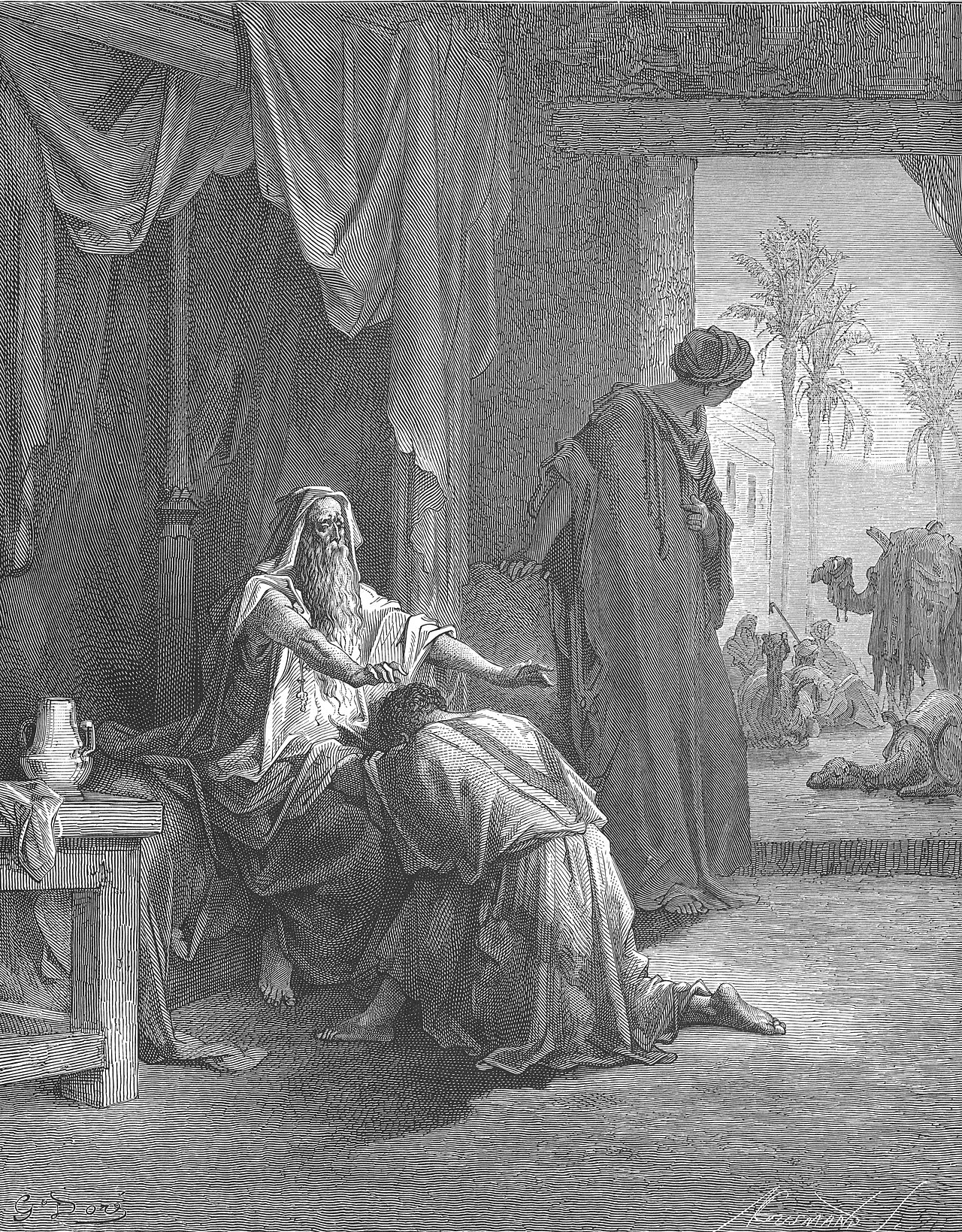
in Genesis 27As soon as Isaac had finished blessing him and Jacob had left his father’s presence, his brother Esau returned from the hunt.
BSB
The same verse in ASV and KJV ▾
ASV
And it came to pass, as soon as Isaac had made an end of blessing Jacob, and Jacob was yet scarce gone out from the presence of Isaac his father, that Esau his brother came in from his hunting.
KJV
And it came to pass, as soon as Isaac had made an end of blessing Jacob, and Jacob was yet scarce gone out from the presence of Isaac his father, that Esau his brother came in from his hunting.
⋯
This verse in Genesis 27
Commentary
4 notes on this verseThis site's exposition
As soon as Isaac had finished blessing him
on Genesis 27:30-31
Jacob leaves his father's presence as Esau walks in from the hunt, the two of them within a minute of each other. Esau brings the same dish and asks for the same blessing, in nearly his brother's words. Genesis reports the timing and draws nothing from it.
The record, by era
The Church Fathers1 voice
The other one, you see, comes along in the evening, and brings what his father ordered, and finds his brother has been blessed instead of himself and is not blessed with a second blessing. Because those two men were two peoples. One blessing signifies the unity of the church. But they are two peoples.… But the two peoples who belong to Jacob are represented in other ways. You see, our Lord Jesus Christ, who had come to Jews and Gentiles, was repudiated by the Jews, who belonged to the elder son. However, he chose some of them who belonged to the younger son, who had begun to desire and understand the Lord's promises, not taking that land they desired materialistically but spiritually desiring that city where no one is materially born, because in it no one either materially or spiritually dies.
The Puritans and the Awakening1 voice
And it came to pass, as soon as Isaac had made an end of, blessing Jacob,....
The Nineteenth Century1 voice
A commentator
Jamieson, Fausset & Brown1802–1910
Commentary Critical and Explanatory on the Whole Bible (1871)
proposed
But a moment's reflection convinced the aged patriarch that the transfer of the blessing was "of the Lord," and now irrevocable. The importunities of Esau, however, overpowered him; and as the prophetic afflatus was upon the patriarch, he added what was probably as pleasing to a man of Esau's character as the other would have been.
The words behind it
20 Hebrew wordsEvery Hebrew word of this verse in the order it stands, with what it means and the door to its own study. The last column counts the times a word stands in the whole Bible: the rarer the word, the more the places it appears belong together.
| Hebrew | Sound | Meaning | Word study | In the Bible |
|---|---|---|---|---|
| וַיְהִ֗י | vayhi | and it was | H1961 → | 3559 times |
| כַּאֲשֶׁ֨ר | kaasher | just as | H834 → | 5497 times |
| כִּלָּ֣ה | kilah | he had finished | H3615 → | 208 times |
| יִצְחָק֮ | yitzchak | Isaac | H3327 → | 108 times |
| לְבָרֵ֣ךְ | levarekh | to bless | H1288 → | 330 times |
| אֶֽת־ | ʾet- | <obj.> | H853 → | 10935 times |
| יַעֲקֹב֒ | yaako | Jacob | H3290 → | 350 times |
| וַיְהִ֗י | vayhi | and it was | H1961 → | 3559 times |
| אַ֣ךְ | ʾakh | surely | H389 → | 161 times |
| יָצֹ֤א | yatzo' | certainly <to go out> | H3318 → | 1067 times |
| יָצָא֙ | yatza' | he had gone out | H3318 → | 1067 times |
| יַעֲקֹ֔ב | yaako | Jacob | H3290 → | 350 times |
| מֵאֵ֥ת | meet | from with | H854 → | 929 times |
| פְּנֵ֖י | penei | [the] face of | H6440 → | 2123 times |
| יִצְחָ֣ק | yitzchak | Isaac | H3327 → | 108 times |
| אָבִ֑יו | ʾaviv | father his | H1 → | 1212 times |
| וְעֵשָׂ֣ו | veesav | and Esau | H6215 → | 97 times |
| אָחִ֔יו | ʾachiv | brother his | H251 → | 630 times |
| בָּ֖א | ba' | he came | H935 → | 2568 times |
| מִצֵּידֽוֹ׃ | mitzeido | from hunting his | H6718 → | 19 times |
וַיְהִ֗יand it was
vayhiH1961 →3559 times
כַּאֲשֶׁ֨רjust as
kaasherH834 →5497 times
כִּלָּ֣הhe had finished
kilahH3615 →208 times
יִצְחָק֮Isaac
yitzchakH3327 →108 times
לְבָרֵ֣ךְto bless
levarekhH1288 →330 times
אֶֽת־<obj.>
ʾet-H853 →10935 times
יַעֲקֹב֒Jacob
yaakoH3290 →350 times
וַיְהִ֗יand it was
vayhiH1961 →3559 times
אַ֣ךְsurely
ʾakhH389 →161 times
יָצֹ֤אcertainly <to go out>
yatzo'H3318 →1067 times
יָצָא֙he had gone out
yatza'H3318 →1067 times
יַעֲקֹ֔בJacob
yaakoH3290 →350 times
מֵאֵ֥תfrom with
meetH854 →929 times
פְּנֵ֖י[the] face of
peneiH6440 →2123 times
יִצְחָ֣קIsaac
yitzchakH3327 →108 times
אָבִ֑יוfather his
ʾavivH1 →1212 times
וְעֵשָׂ֣וand Esau
veesavH6215 →97 times
אָחִ֔יוbrother his
ʾachivH251 →630 times
בָּ֖אhe came
ba'H935 →2568 times
מִצֵּידֽוֹ׃from hunting his
mitzeidoH6718 →19 times
A shaded row is a word that stands 400 times or fewer in the Bible.
Where this verse is studied
About Genesis
Who and where
3 names in this verse with a page on the site.
- PersonPatriarchsEsauIsaac's elder son who despised his birthright (Heb 12:16); father of Edom, Israel's perennial neighbor and adversary.
- PersonPatriarchsIsaacThe son of promise and of laughter — bound on Moriah, the quiet inheritor of the covenant.
- PersonPatriarchsJacobThe heel-grasping supplanter reshaped at Peniel into 'Israel, he who strives with God' — father of the twelve tribes.
This page draws on Augustine of Hippo, SERMON 4.17; Jamieson, Fausset & Brown, Commentary Critical and Explanatory on the Whole Bible; John Calvin, Commentary on Genesis; John Gill, Exposition of the Old Testament and John Gill, Exposition of the Old Testament (1748-1763).