
Genesis 22:6
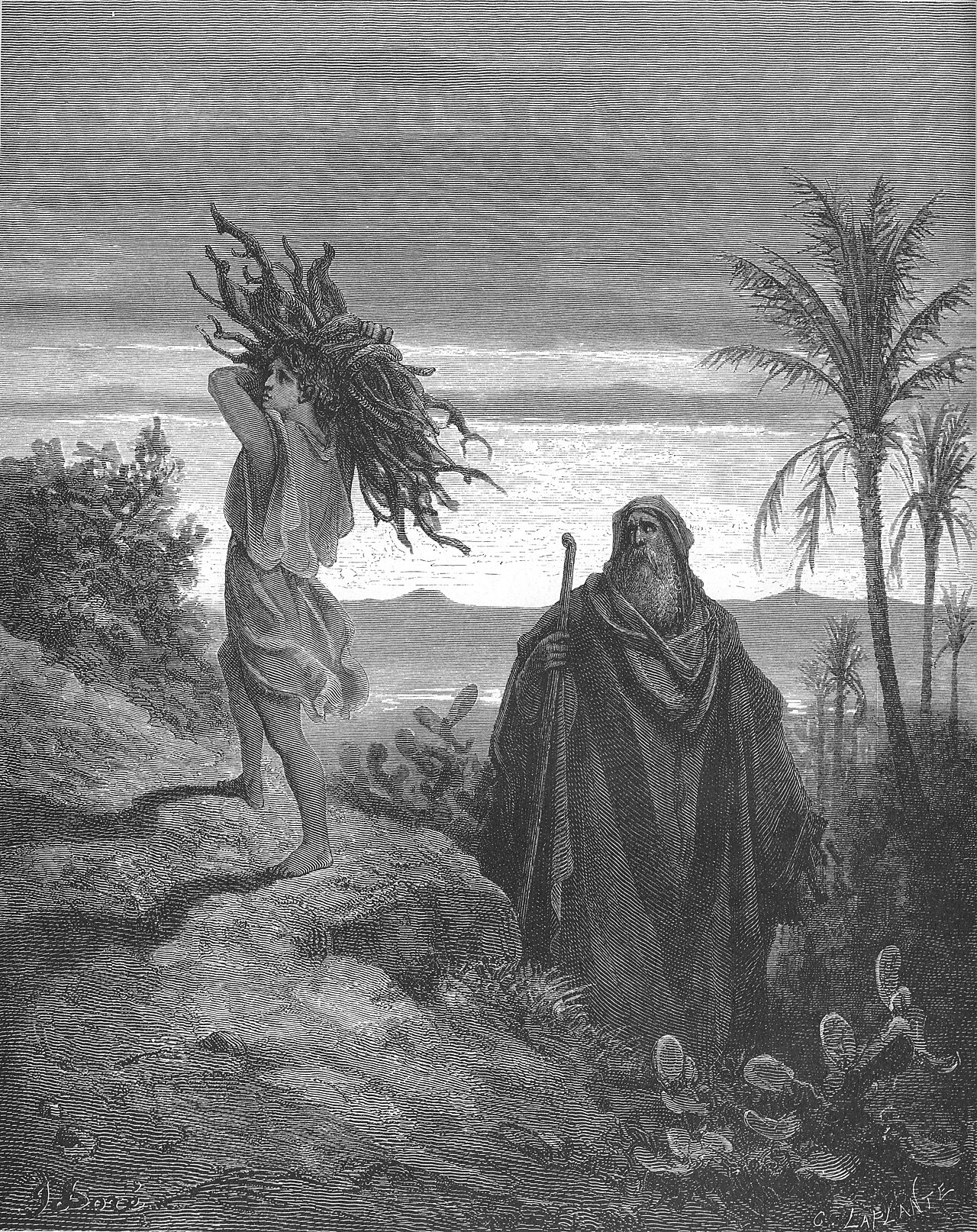
in Genesis 22Abraham took the wood for the burnt offering and placed it on his son Isaac. He himself carried the fire and the sacrificial knife, and the two of them walked on together.
BSB
The same verse in ASV and KJV ▾
ASV
And Abraham took the wood of the burnt-offering, and laid it upon Isaac his son; and he took in his hand the fire and the knife; and they went both of them together.
KJV
And Abraham took the wood of the burnt offering, and laid it upon Isaac his son; and he took the fire in his hand, and a knife; and they went both of them together.
⋯
This verse in Genesis 22
Commentary
9 notes on this verseThat Isaac carries on himself "the wood for the burnt offering" is a figure, because Christ also "himself carried his own cross," and yet to carry "the wood for the burnt offering" is the duty of a priest. He therefore becomes victim and priest. But what is added also is related to this: "And they both went off together." For when Abraham carries the fire and knife as if to sacrifice, Isaac does not go behind him but with him, that he might be shown to contribute equally with the priesthood itself.
This site's exposition
placed it on his son Isaac
Abraham lays the wood on his son Isaac and carries the fire and the sacrificial knife himself, so the son bears what will burn him. The verse closes on the two of them walking on together, and verse 8 closes the same way. Wesley reads Isaac with the wood as Christ with His cross.
The record, by era
The Church Fathers1 voice
Isaac is another type too (he can easily be taken in this other sense), this time of the Lord. He was a son, just as is the Son (he is the son of Abraham; Christ, of God). He was a victim, as was the Lord, but his sacrifice was not consummated, while the Lord's was. All he did was to carry the wood of his sacrifice, just as the Lord bore the wood of the cross. Isaac rejoiced for a mystical reason, to prefigure the joy with which the Lord has filled us, in saving us from destruction through his blood.
The Medieval Church1 voice
A commentator
BonaventureCollations on the Hexaemeron, Collation 14 · Written in the 13th century.
proposed
In the mystery of the calling, Christ is symbolized by the sacrifice of Isaac, because Abraham is a proper representation of God the Father. Christ is represented by Isaac who carried his own wood on his neck, like the wood of the Cross.
The Puritans and the Awakening3 voices
Isaac's carrying the wood was a type of Christ, who carried his own cross, while Abraham, with a steady and undaunted resolution, carried the fatal knife and fire.
Isaac's carrying the wood was a type of Christ, who carried his own cross, while Abraham, with a steady and undaunted resolution, carried the fatal knife and fire.
And Abraham took the wood of the burnt offering,....
2 more voices on this verse
The Puritans and the Awakening1 voice
Note, Those that through grace are resolved upon the substance of any service or suffering for God must overlook the little circumstances which make it doubly difficult to flesh and blood.
The Nineteenth Century1 voice
Took the wood - and laid it upon Isaac - Probably the mountain-top to which they were going was too difficult to be ascended by the ass; therefore either the father or the son must carry the wood, and it was most becoming in the latter.
The words behind it
18 Hebrew wordsEvery Hebrew word of this verse in the order it stands, with what it means and the door to its own study. The last column counts the times a word stands in the whole Bible: the rarer the word, the more the places it appears belong together.
| Hebrew | Sound | Meaning | Word study | In the Bible |
|---|---|---|---|---|
| וַיִּקַּ֨ח | vaiyikach | and he took | H3947 → | 966 times |
| אַבְרָהָ֜ם | ʾavraham | Abraham | H85 → | 175 times |
| אֶת־ | ʾet- | <obj.> | H853 → | 10935 times |
| עֲצֵ֣י | ʾatzei | [the] wood<s> of | H6086 → | 328 times |
| הָעֹלָ֗ה | haolah | the burnt offering | H5930 → | 287 times |
| וַיָּ֙שֶׂם֙ | vaiyasem | and he put [it] | H7760 → | 584 times |
| עַל־ | ʾal- | on | H5921 → | 5755 times |
| יִצְחָ֣ק | yitzchak | Isaac | H3327 → | 108 times |
| בְּנ֔וֹ | beno | son his | H1121 → | 4930 times |
| וַיִּקַּ֣ח | vaiyikach | and he took | H3947 → | 966 times |
| בְּיָד֔וֹ | beyado | in hand his | H3027 → | 1618 times |
| אֶת־ | ʾet- | <obj.> | H853 → | 10935 times |
| הָאֵ֖שׁ | haesh | the fire | H784 → | 378 times |
| וְאֶת־ | veet | and <obj.> | H853 → | 10935 times |
| הַֽמַּאֲכֶ֑לֶת | hamaakhelet | the knife | H3979 → | |
| וַיֵּלְכ֥וּ | vaiyelekhu | and they went | H1980 → | 1546 times |
| שְׁנֵיהֶ֖ם | sheneihem | [the] two of them | H8147 → | 768 times |
| יַחְדָּֽו׃ | yachdav | together | H3162 → | 141 times |
וַיִּקַּ֨חand he took
vaiyikachH3947 →966 times
אַבְרָהָ֜םAbraham
ʾavrahamH85 →175 times
אֶת־<obj.>
ʾet-H853 →10935 times
עֲצֵ֣י[the] wood<s> of
ʾatzeiH6086 →328 times
הָעֹלָ֗הthe burnt offering
haolahH5930 →287 times
וַיָּ֙שֶׂם֙and he put [it]
vaiyasemH7760 →584 times
עַל־on
ʾal-H5921 →5755 times
יִצְחָ֣קIsaac
yitzchakH3327 →108 times
בְּנ֔וֹson his
benoH1121 →4930 times
וַיִּקַּ֣חand he took
vaiyikachH3947 →966 times
בְּיָד֔וֹin hand his
beyadoH3027 →1618 times
אֶת־<obj.>
ʾet-H853 →10935 times
הָאֵ֖שׁthe fire
haeshH784 →378 times
וְאֶת־and <obj.>
veetH853 →10935 times
הַֽמַּאֲכֶ֑לֶתthe knife
hamaakheletH3979 →
וַיֵּלְכ֥וּand they went
vaiyelekhuH1980 →1546 times
שְׁנֵיהֶ֖ם[the] two of them
sheneihemH8147 →768 times
יַחְדָּֽו׃together
yachdavH3162 →141 times
A shaded row is a word that stands 400 times or fewer in the Bible.
The walk
8 stopsEach card is a verse this one points to, and under it the verses that one points to in turn. Where several paths arrive at the same place, that place is listed first: the text keeps returning to it.
Through
1 Peter 2:24He Himself bore our sins in His body on the tree, so that we might die to sin and live to righteousness. “By His stripes you are healed.”
it leads to
- Isaiah 53:4–6
Surely He took on our infirmities and carried our sorrows; yet we considered Him stricken by God, struck down and afflicted.
- Matthew 8:17
This was to fulfill what was spoken through the prophet Isaiah: “He took on our infirmities and carried our diseases.”
- Romans 6:11
So you too must count yourselves dead to sin, but alive to God in Christ Jesus.
- Revelation 22:2
down the middle of the main street of the city. On either side of the river stood a tree of life, bearing twelve kinds of fruit and yielding a fresh crop for each month.…
- 1 John 2:29
If you know that He is righteous, you also know that everyone who practices righteousness has been born of Him.
- Isaiah 53:4–6
Through
Matthew 8:17This was to fulfill what was spoken through the prophet Isaiah: “He took on our infirmities and carried our diseases.”
it leads to
- Isaiah 53:4
Surely He took on our infirmities and carried our sorrows; yet we considered Him stricken by God, struck down and afflicted.
- 1 Peter 2:24
He Himself bore our sins in His body on the tree, so that we might die to sin and live to righteousness. “By His stripes you are healed.”
- Isaiah 53:4
Through
Isaiah 53:6We all like sheep have gone astray, each one has turned to his own way; and the LORD has laid upon Him the iniquity of us all.
it leads to
- 1 Peter 2:25
For “you were like sheep going astray,” but now you have returned to the Shepherd and Overseer of your souls.
- 1 Peter 2:25
Where this verse is studied
On this page
About Genesis
Who and where
2 names in this verse with a page on the site.
This page draws on Adam Clarke, Commentary on the Bible; Bonaventure, Collations on the Hexaemeron, Collation 14; Clement of Alexandria, The Instructor Book 1; John Gill, Exposition of the Old Testament (1748-1763); John Wesley, Explanatory Notes upon the Old Testament; Matthew Henry, Commentary on the Whole Bible and Origen of Alexandria, HOMILIES ON GENESIS 8.6.