
Genesis 12:5
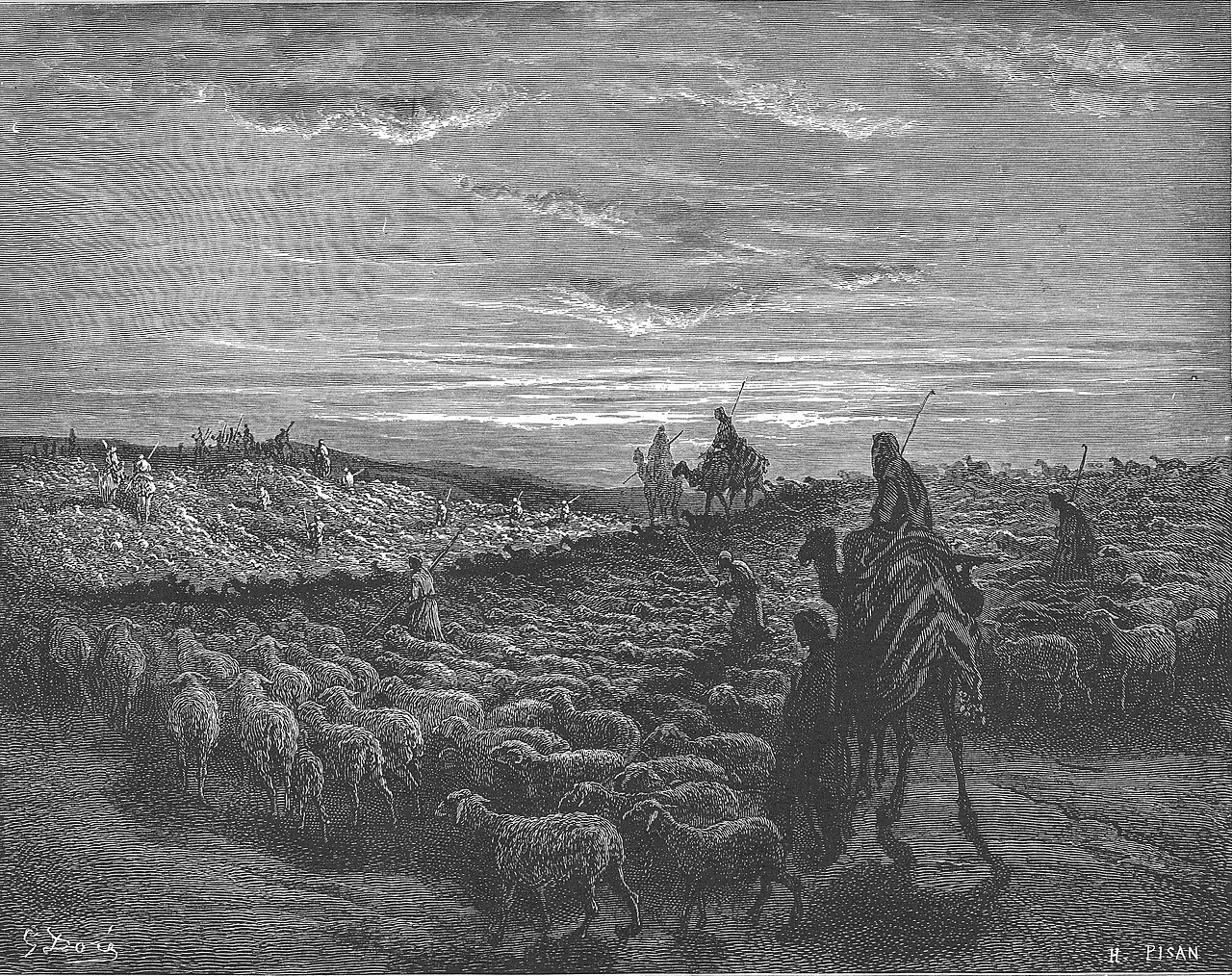
in Genesis 12And Abram took his wife Sarai, his nephew Lot, and all the possessions and people they had acquired in Haran, and set out for the land of Canaan. When they came to the land of Canaan,
BSB
The same verse in ASV and KJV ▾
ASV
And Abram took Sarai his wife, and Lot his brother’s son, and all their substance that they had gathered, and the souls that they had gotten in Haran; and they went forth to go into the land of Canaan; and into the land of Canaan they came.
KJV
And Abram took Sarai his wife, and Lot his brother’s son, and all their substance that they had gathered, and the souls that they had gotten in Haran; and they went forth to go into the land of Canaan; and into the land of Canaan they came.
⋯
This verse in Genesis 12
Commentary
8 notes on this verseThe souls that they had gotten in Haran - This may apply either to the persons who were employed in the service of Abram, or to the persons he had been the instrument of converting to the knowledge of the true God; and in this latter sense the Chaldee paraphrasts understood the passage, translating it, The souls of those whom they proselyted in Haran.
This site's exposition
as the LORD had directed him
on Genesis 12:4-5
Abram leaves at seventy-five, and the text lists what goes with him, his wife Sarai, his nephew Lot, the possessions and the people they had acquired in Haran. Hebrews 11:8 reads the same departure as faith, that he went out without knowing where he was going. The whole household moves on one word from the LORD.
This site's exposition
all the possessions and people they had acquired in Haran
Adam Clarke gives two readings of the people acquired in Haran, servants of the household or people Abram had brought to know the true God. The Aramaic paraphrases take the second. Jamieson, Fausset and Brown count the safe arrival in Canaan as the first promise kept.
The record, by era
The Medieval Church1 voice
Therefore, Sarai took his wife, and Lot his brother's son, and all the substance that they had gathered, and the souls that they had made in Haran; and they went forth to go into the land of Canaan.
The Puritans and the Awakening1 voice
And Abram took Sarai his wife, and Lot his brother's son,.... The son of Haran his brother, not against their wills, but with their full consent: Sarai went readily with him, not only as being his wife, and so obliged by the law of marriage and tie of relation, but on the score of religion; and Lot as being a good man, and so willing to go with him, as his near relation too, for the sake of religion.
The Nineteenth Century3 voices
IF you desire to know the character or a child, you will probably learn much about it from observing the father. The young bird flies and sings as its father did before it. If we would know the life of the child of faith, we should study the history of the "father of the faithful." Abraham, the man of faith, is a type of all believing men, and the narrative of his life, if rightly considered, is the mirror of the history of all the saints of God.
A commentator
Jamieson, Fausset & Brown1802–1910
Commentary Critical and Explanatory on the Whole Bible (1871)
proposed
into the land of Canaan . . . they came--with his wife and an orphan nephew. Abram reached his destination in safety, and thus the first promise was made good.
quarantine:debris (2026-07-29) — starts-lowercase
IF you desire to know the character or a child, you will probably learn much about it from observing the father. The young bird flies and sings as its father did before it. If we would know the life of the child of faith, we should study the history of the "father of the faithful." Abraham, the man of faith, is a type of all believing men, and the narrative of his life, if rightly considered, is the mirror of the history of all the saints of God. The commencement of his career of faith, when he first became separated from his own country and went into the land of Canaan, is a most instructive representation of our effectual calling—when we are, by a work of Omnipotent Grace, separated from the world, and made to obey the great precept, "Come you out from among them, be you separate, and touch not the unclean thing; and I will receive you, and will be a Father unto you, and you shall be My sons and daughters." The life of the Believer is as Abram's was, a separated life, a life regulated by other affections than those which arise from the relationships of flesh and blood. It is a life of walking in the unseen, in which God's command, Presence and approval are paramount considerations. It is a life in which faith guides the soul, sitting like a pilot at the helm of the vessel. Abram denied the flesh, took up the cross, went outside the camp, became sanctified unto the Lord, and lived and died the friend of God and a stranger among men. The commencement of his separated life is a lively picture of the commencement of the same life in ourselves. The calling of Abram is a representation of our calling, and to that matter I shall ask your earnest attention this morning. I. First, EFFECTUAL CALLING IS ILLUSTRATED IN THE CALL OF ABRAM. We have been reading the whole of the story and therefore I shall only need to refresh your memories with it.
The words behind it
26 Hebrew wordsEvery Hebrew word of this verse in the order it stands, with what it means and the door to its own study. The last column counts the times a word stands in the whole Bible: the rarer the word, the more the places it appears belong together.
| Hebrew | Sound | Meaning | Word study | In the Bible |
|---|---|---|---|---|
| וַיִּקַּ֣ח | vaiyikach | and he took | H3947 → | 966 times |
| אַבְרָם֩ | ʾavram | Abram | H87 → | 61 times |
| אֶת־ | ʾet- | <obj.> | H853 → | 10935 times |
| שָׂרַ֨י | sarai | Sarai | H8297 → | 17 times |
| אִשְׁתּ֜וֹ | ʾishto | wife his | H802 → | 781 times |
| וְאֶת־ | veet | and <obj.> | H853 → | 10935 times |
| ל֣וֹט | lot | Lot | H3876 → | 33 times |
| בֶּן־ | ben- | [the] son of | H1121 → | 4930 times |
| אָחִ֗יו | ʾachiv | brother his | H251 → | 630 times |
| וְאֶת־ | veet | and <obj.> | H853 → | 10935 times |
| כָּל־ | kol- | all | H3605 → | 5413 times |
| רְכוּשָׁם֙ | rekhusham | possession[s] their | H7399 → | 28 times |
| אֲשֶׁ֣ר | ʾasher | which | H834 → | 5497 times |
| רָכָ֔שׁוּ | rakhashu | they had accumulated | H7408 → | 5 times |
| וְאֶת־ | veet | and <obj.> | H853 → | 10935 times |
| הַנֶּ֖פֶשׁ | hanefesh | the person[s] | H5315 → | 754 times |
| אֲשֶׁר־ | ʾasher- | whom | H834 → | 5497 times |
| עָשׂ֣וּ | ʾasu | they had acquired | H6213 → | 2628 times |
| בְחָרָ֑ן | vecharan | in Haran | H2771 → | 12 times |
| וַיֵּצְא֗וּ | vaiyetzeu | and they went out | H3318 → | 1067 times |
| לָלֶ֙כֶת֙ | lalekhet | to go | H1980 → | 1546 times |
| אַ֣רְצָה | ʾartzah | [the] land of towards | H776 → | 2504 times |
| כְּנַ֔עַן | kenaan | Canaan | H3667 → | 94 times |
| וַיָּבֹ֖אוּ | vaiyavou | and they came | H935 → | 2568 times |
| אַ֥רְצָה | ʾartzah | [the] land of towards | H776 → | 2504 times |
| כְּנָֽעַן׃ | kenaan | Canaan | H3667 → | 94 times |
וַיִּקַּ֣חand he took
vaiyikachH3947 →966 times
אַבְרָם֩Abram
ʾavramH87 →61 times
אֶת־<obj.>
ʾet-H853 →10935 times
שָׂרַ֨יSarai
saraiH8297 →17 times
אִשְׁתּ֜וֹwife his
ʾishtoH802 →781 times
וְאֶת־and <obj.>
veetH853 →10935 times
ל֣וֹטLot
lotH3876 →33 times
בֶּן־[the] son of
ben-H1121 →4930 times
אָחִ֗יוbrother his
ʾachivH251 →630 times
וְאֶת־and <obj.>
veetH853 →10935 times
כָּל־all
kol-H3605 →5413 times
רְכוּשָׁם֙possession[s] their
rekhushamH7399 →28 times
אֲשֶׁ֣רwhich
ʾasherH834 →5497 times
רָכָ֔שׁוּthey had accumulated
rakhashuH7408 →5 times
וְאֶת־and <obj.>
veetH853 →10935 times
הַנֶּ֖פֶשׁthe person[s]
hanefeshH5315 →754 times
אֲשֶׁר־whom
ʾasher-H834 →5497 times
עָשׂ֣וּthey had acquired
ʾasuH6213 →2628 times
בְחָרָ֑ןin Haran
vecharanH2771 →12 times
וַיֵּצְא֗וּand they went out
vaiyetzeuH3318 →1067 times
לָלֶ֙כֶת֙to go
lalekhetH1980 →1546 times
אַ֣רְצָה[the] land of towards
ʾartzahH776 →2504 times
כְּנַ֔עַןCanaan
kenaanH3667 →94 times
וַיָּבֹ֖אוּand they came
vaiyavouH935 →2568 times
אַ֥רְצָה[the] land of towards
ʾartzahH776 →2504 times
כְּנָֽעַן׃Canaan
kenaanH3667 →94 times
A shaded row is a word that stands 400 times or fewer in the Bible.
The walk
8 stopsEach card is a verse this one points to, and under it the verses that one points to in turn. Where several paths arrive at the same place, that place is listed first: the text keeps returning to it.
Through
Genesis 11:31And Terah took his son Abram, his grandson Lot son of Haran, and his daughter-in-law Sarai the wife of Abram, and they set out from Ur of the Chaldeans for the land of Canaan.…
it leads to
- Nehemiah 9:7
You are the LORD, the God who chose Abram, who brought him out of Ur of the Chaldeans and gave him the name Abraham.
- Acts 7:2–4
And Stephen declared: “Brothers and fathers, listen to me! The God of glory appeared to our father Abraham while he was still in Mesopotamia, before he lived in Haran,
- Genesis 15:7
The LORD also told him, “I am the LORD, who brought you out of Ur of the Chaldeans to give you this land to possess.”
- Joshua 24:2–3
And Joshua said to all the people, “This is what the LORD, the God of Israel, says: ‘Long ago your fathers, including Terah the father of Abraham and Nahor, lived beyond the Euphrates and…
- Genesis 24:10
Then the servant took ten of his master’s camels and departed with all manner of good things from his master in hand. And he set out for Nahor’s hometown in Aram-naharaim.
- Nehemiah 9:7
Through
Acts 7:4So Abraham left the land of the Chaldeans and settled in Haran. After his father died, God brought him out of that place and into this land where you are now living.
it leads to
- Genesis 12:4–5
So Abram departed, as the LORD had directed him, and Lot went with him. Abram was seventy-five years old when he left Haran.
- Genesis 12:4–5
Through
Genesis 14:14And when Abram heard that his relative had been captured, he mobilized the 318 trained men born in his household, and they set out in pursuit as far as Dan.
it leads to
- Judges 18:29
They named it Dan, after their forefather Dan, who was born to Israel—though the city was formerly named Laish.
- Genesis 15:3
Abram continued, “Behold, You have given me no offspring, so a servant in my household will be my heir.”
- Judges 18:29
Where this verse is studied
On this page
Studies10
About Genesis
Who and where
3 names in this verse with a page on the site.
- PersonPatriarchsLotAbraham's nephew — the man who walked by sight toward Sodom and was saved “so as by fire” (2 Pet 2:7–8).
- PlaceThe LevantCanaanThe land God promised to Abraham's seed, walked and marked with altars by the patriarchs and possessed under Joshua four centuries…
- PlaceUpper MesopotamiaHaranThe city in upper Mesopotamia where Terah died and Abram received his call, where Jacob served Laban twenty years for his wives an…
This page draws on Adam Clarke, Commentary on the Bible; Bede, Commentary on Genesis (Hexaemeron); Charles Spurgeon, The Metropolitan Tabernacle Pulpit, Sermon No. 843: “Effectual Calling—Illustrated by the Call of Abram” (lightly modernized text, CCEL edition); Jamieson, Fausset & Brown, Commentary Critical and Explanatory on the Whole Bible; John Gill, Exposition of the Old Testament; John Gill, Exposition of the Old Testament (1748-1763) and Matthew Henry, Commentary on the Whole Bible.